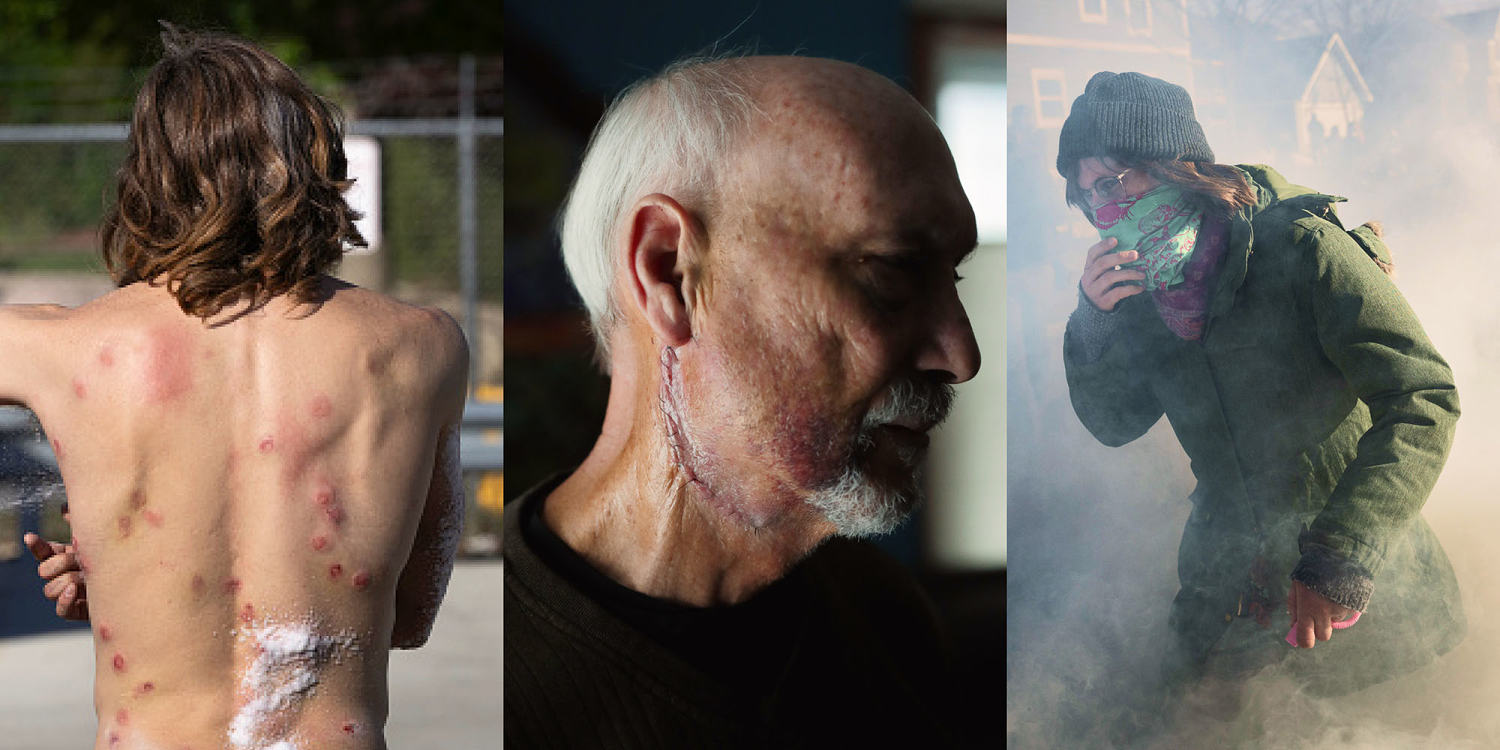
“It’s not every agent. But there is a large majority of them, maybe it’s the new hires or less experienced people, who are on edge, have this power trip, feel above everybody else, and they’re taking it to the extreme,” said Abigail Olmeda, 27, who said she was struck with rubber bullets, one of which hit her in the forehead, while holding a sign and shouting at federal officers during a June protest in Santa Ana, California. She said she experienced brain fog for months.
The rush to put thousands of immigration officers in the streets allowed less time to prepare them for the resistance they encountered, which made escalation — including the use of less lethal weapons — more likely, said Joseph Lestrange, a former head of public safety and border security for ICE’s investigative arm.
“You’re setting officers up for failure, to get hurt and to hurt the public,” Lestrange said.
In its statement, DHS said its officers are “held to the highest professional standard” and given months of training, including how to use “the minimum amount of force necessary to resolve dangerous situations” as well as de-escalation techniques.
DHS said every time an officer uses force it must be reported and reviewed, and that any claim of misconduct is investigated. But the agency did not respond to a request to share how many use of force reports have been filed in the past year, how many investigations of excessive force it has undertaken, and whether any officers were disciplined, fired or charged.
The agency said claims that the officers are not well trained are “shameful and laughable.”
Federal law makes it difficult to sue a federal officer, although people in several cities have announced their intention to try. Many more have submitted their accounts in civil rights lawsuits aimed at slowing the operations.
One of them is Alec Bertrand. On July 10, Bertrand, 30, woke up to messages about DHS arrests at a farm in Camarillo, California. He had seen immigrant communities emptied and silenced by raids and decided to act.
He drove toward the farm and joined protesters chanting and screaming in a roadway standoff with federal officers. Then someone who looked like a supervisor went down the line talking to the officers, Bertrand said. Their postures stiffened, and they adjusted their gas masks. Someone said, “They’re going to shoot.”
Bertrand, a musician and recording engineer, said he heard no warning when the officers opened fire from about 10 feet away. A rubber bullet hit him in the groin, then the shoulder and leg as he turned to run. He felt a heavy thud on his left hand and ducked behind a car. One of his fingers looked mangled. He thinks he was hit with something heavy, like a tear gas canister.
“It felt like a war zone where there’s only one side that has weapons,” Bertrand said. “The only weapon that we had was our speech, our voices.”
NBC News Top Stories
About the Author