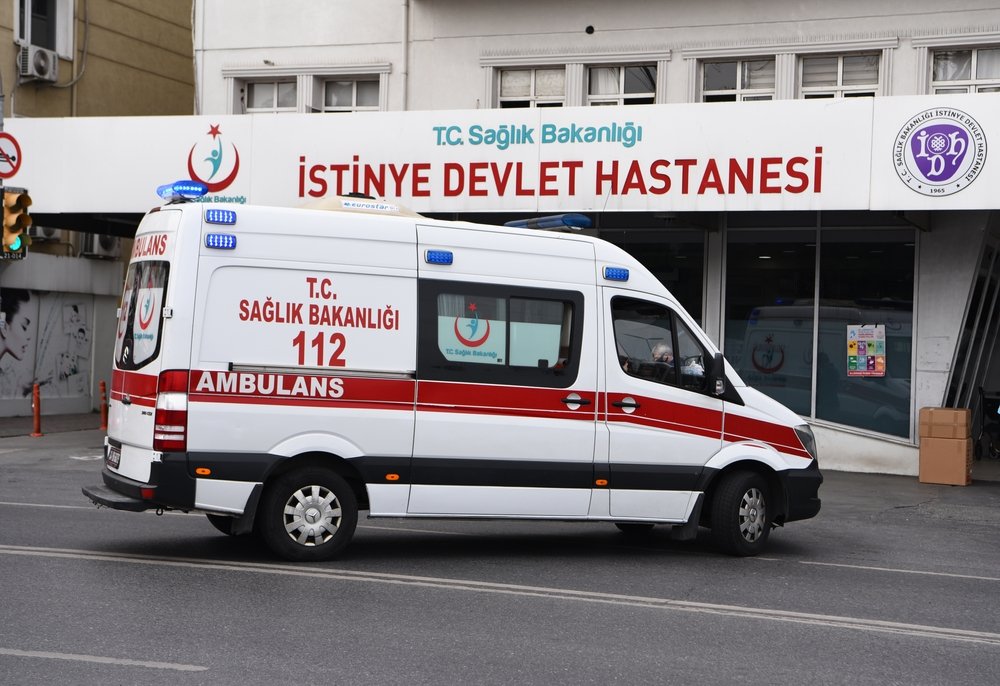
More than 123,000 people sought medical care in Istanbul in 2025 following potential exposure to rabies, underscoring the ongoing public health risks posed by animal bites and scratches in Türkiye’s largest city, according to official health data.
Figures from the Istanbul Provincial Health Directorate show that 123,538 people applied to hospitals last year due to rabies-risk contact, including bites, scratches and exposure of open wounds to infected saliva. As part of preventive treatment, 411,432 rabies vaccine doses were administered at 25 vaccination centers operating across the city.
Rabies is a viral disease transmitted to humans primarily through the bites of infected animals such as cats and dogs, as well as wild animals including foxes, jackals and wolves.
The incubation period typically ranges from 14 to 90 days. Once clinical symptoms appear, the disease almost always results in death. However, health experts stress that rabies is 100% preventable if prophylactic treatment and vaccination are administered in a timely manner.
Global data from the World Health Organization (WHO) indicate that more than 59,000 people die from rabies each year worldwide, highlighting the importance of early medical intervention and public awareness.
Despite the high number of risky contacts, Istanbul has not recorded a confirmed rabies case since 2007, a result attributed to effective surveillance, rapid response protocols and widespread access to vaccination services. Health officials note, however, that the volume of hospital visits reflects continued close contact between people and animals, particularly in urban settings.
In 2025, 83% of rabies-risk contacts in Istanbul involved cats, while 16% were linked to dogs. The remaining cases resulted from contact with animals such as cattle and wild species.
District-level data show that Kadıköy recorded the highest number of rabies-risk incidents, with 8,483 cases, followed by Üsküdar (6,429), Pendik (5,343), Maltepe (5,314), Kartal (4,993) and Küçükçekmece (4,815). The fewest cases were reported in Adalar with 646, followed by Şile (1,264) and Güngören (1,292).
The highest number of rabies vaccine doses was administered at Kartal Dr. Lütfi Kırdar City Hospital, where 54,083 doses were given. It was followed by Bakırköy Dr. Sadi Konuk Training and Research Hospital with 39,826 doses, and Haydarpaşa Numune Training and Research Hospital with 29,175 doses.
Istanbul Provincial Health Director Abdullah Emre Güner said rabies is a deadly disease affecting the central nervous system and requires immediate medical attention after any suspected exposure.
He emphasized that prophylactic treatment should begin as soon as skin integrity is compromised through bites or scratches. Güner also noted that vaccines are monitored through a strict cold-chain system from distribution to administration, ensuring safety and effectiveness.
DAILYSABAH
About the Author