MoneyWatch
Updated on: February 23, 2026 / 5:29 PM EST
/ CBS News
Add CBS News on Google
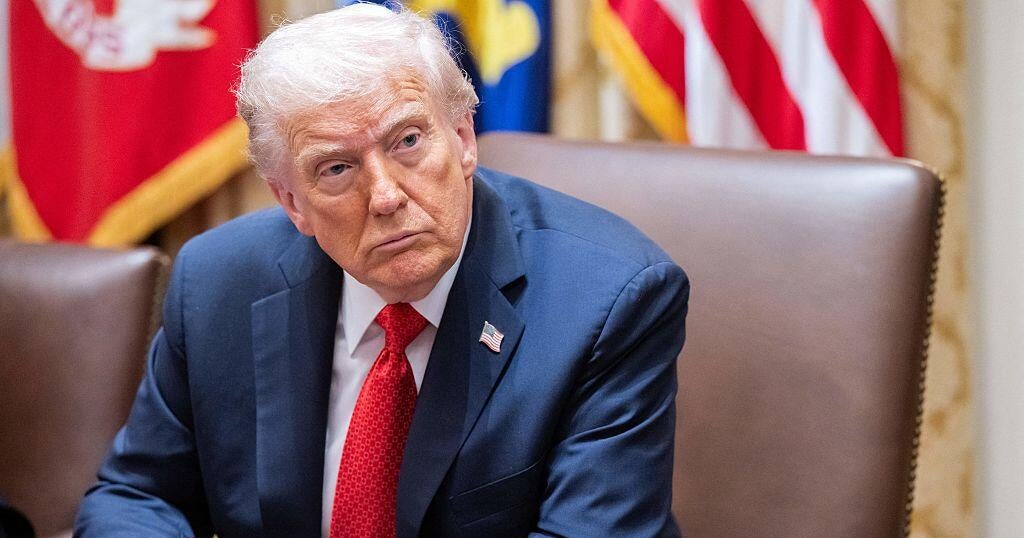
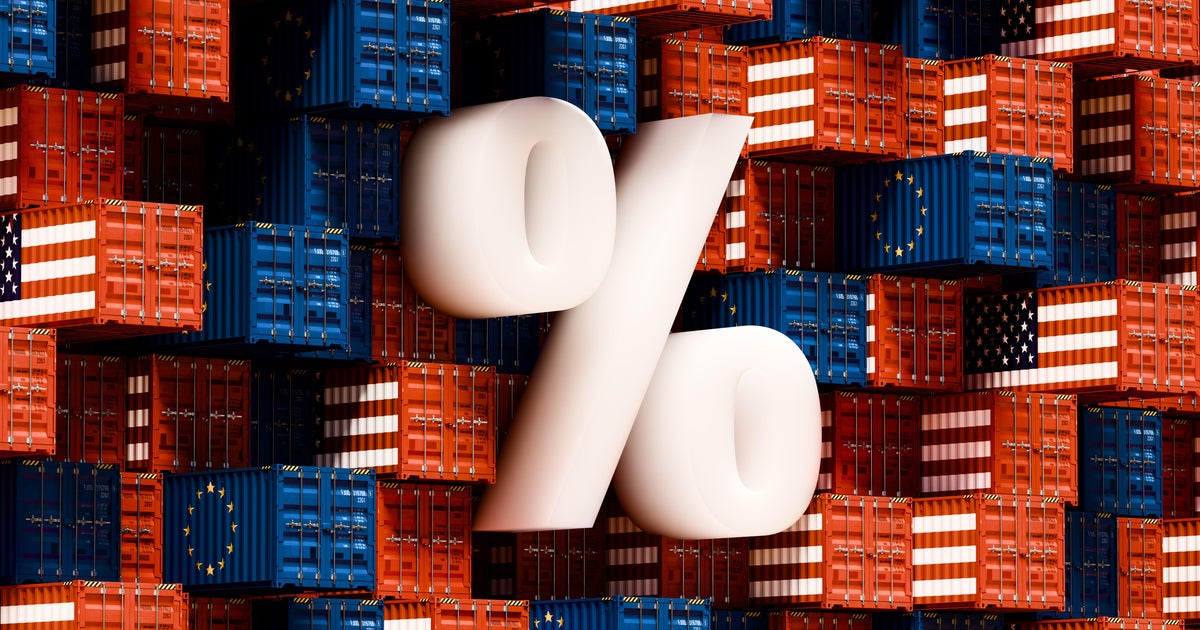
President Trump’s move to invoke an obscure legal tool to impose a global 15% tariff on U.S. imports could face its own legal challenges, trade experts told CBS News.
The White House said in a fact sheet on Friday that the temporary import duty, imposed under Section 122 of the Trade Act of 1974, addresses a “fundamental international payments problem” and that it will help the Trump administration rebalance the nation’s trade relationships.
Mr. Trump’s use of Section 122 to apply new tariffs, which will take effect on Tuesday, is unprecedented, legal experts told CBS News.
“No president has used it until now, so it could be ripe for legal challenges,” Luis Arandia, a partner with Washington, D.C., law firm Barnes & Thornburg focused on customs and international trade partner, told CBS News.
What is Section 122?
Section 122 authorizes the U.S. president to impose tariffs to rectify what the statute describes as “large and serious United States balance-of-payments deficits.”
But trade and legal experts said Section 122 might not apply in the current context because the large U.S. trade deficit, which Mr. Trump has invoked to justify tariffs, does not qualify as a balance of payments deficit. This measure encompasses all the financial and commercial transactions between one country and another.
By contrast, a trade deficit occurs when a country imports more goods and services than it exports, and it is that imbalance that Trump administration officials have pointed to as justifying sharply higher tariffs.
“Section 122 is for a balance of payments crisis, which is when you don’t have enough foreign reserves to pay external debts,” Philip Luck, director of the economics program at the nonpartisan Center for Strategic and International Studies. “The U.S. has a very large trade deficit, but so long as we can continue to sell assets to the global market, we have no challenge conducting international trade.”
The White House did not immediately respond to a request for comment on possible challenges to its legal basis for imposing Section 122 levies.
The scope of Section 122 is also much more limited than the International Emergency Economic Powers Act (IEEPA) — the 1977 law that the Supreme Court ruled last week did not, in fact, legally authorize Mr. Trump to impose more than half of his administration’s tariffs.
Notably, any tariffs implemented under Section 122 can only remain in place for 150 days. giving Mr. Trump’s 15% tariff an expiration date of July 24. After that date, Congress would need to vote to extend the tariffs, and that could prove politically challenging, according to Cato Institute trade expert Colin Grabow.
What is the U.S. tariff rate under Section 122?
The new, global 15% tariff under Section 122 brings the average effective tariff rate to 14.5%, according to Capital Economics, an investor advisory firm.
That figure includes exemptions for goods from Canada and Mexico under the 2020 United States-Mexico-Canada Agreement, plus pharmaceuticals, electronics, agricultural goods, and products like steel and aluminum that are already subject to sectoral tariffs.
Can Section 122 tariffs be extended?
Yes, lawmakers can vote to extend Section 122 tariffs an additional 150 days. But even if Congress opts against that, the Trump administration has signaled it plans to use the five-month period to impose more durable tariffs under alternative legal trade laws.
As such, Section 122 tariffs are effectively a fallback plan for the Trump administration as it tries to match the tariffs that were in place under IEEPA, according to Washington, D.C.-based attorney Nate Bolin, head of K&L Gates’ international trade group.
Bolin also thinks the administration’s use of Section 122 is on a stronger legal footing than its reliance on IEEPA to impose tariffs.
“There have to be these balance-of-payment issues, which the White House has demonstrated,” he told CBS News. “This is reflective of the fact that the administration has had this in the works and has been planning on this for many months.”
What does this mean for U.S. businesses?
The move to replace IEEPA tariffs with Section 122 duties sows more uncertainty for businesses as U.S. trade policies remain in flux, experts said.
“It’s more harmful than having higher tariffs, because businesses don’t want to invest when they’re not sure what is going to happen,” international trade economist Asha Sundaram, chair of the economics department at Northeastern University, told CBS News.
“The issue with uncertainty is that companies don’t know if tariffs will remain at that level or change,” she added. “So they will hesitate to make any business decision that’s medium to long-term. They might even stop investing, and that could potentially have negative implications for growth and jobs.”
Edited by
In:
Tariffs
Trump Administration
© 2026 CBS Interactive Inc. All Rights Reserved.
Home – CBSNews.com
About the Author