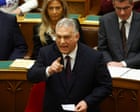
Defending Nato’s eastern flank in case of a potential Russian aggression would cost at least €1.2tn ($1.42 trillion), Polish foreign minister Radosław Sikorski said in a speech to parliament, Reuters reported.
“Defending the countries of Nato’s eastern flank in the event of a potential Russian aggression would cost at least twelve hundred billion euros – twenty-four times more than the Polish defence budget,” he warned.
He compared that to just under €200bn that the EU and its member states have paid to Ukraine since 2022.
“A free Ukraine, as part of the West, is our chance to render Russian imperialism toothless,” he said.
He added:
“Despite what its propaganda claims, Russia is by no means winning. Don’t fall for it. Russia is not, and never has been, invincible.”
Sikorski also paid tribute to the economic contribution of Ukrainian migrants and refugees resident in Poland, adding PLN 100bn (€24bn) to Poland’s GDP, the equivalent of half of the annual budget of Poland’s healthcare system.
Continuing his speech, Sikorski also told Polish parliament that while Washington remains Poland’s most important partner in military cooperation and Warsaw has been and will remain a loyal ally of the US, it cannot be “a sucker”.
In a lengthy passage responding to the changing US defence and foreign policy, he said:
“We view the shifts in the US with understanding, but also with unease. We remember the history of support for Poland from presidents like Woodrow Wilson and Ronald Reagan during the various eras when we fought for our independence.
But we also remember Yalta. After the fall of Nazi Germany, president Franklin Roosevelt sought Stalin’s help in the war against Japan. He secured it, but at the expense of freedom for this part of Europe. The American national interest was served; we were the ones who paid the price.
I submit this for the consideration of those who want international relations to be based solely on a ruthless struggle for narrowly defined interests. It is not for us to define the US national interest. I ask the right side of this chamber: has it not dawned on you that the day before yesterday, the United States – just like China – abstained from the UN general assembly vote on the inviolability of Ukraine’s borders?
If we replace 1945 Japan with today’s China, can we be certain that American interests will remain aligned with Polish ones?
We have been, and will remain, a loyal ally of America – but we cannot afford to be suckers.”
Instead, he stressed that Poland has been radically ramping up its defence spending and is leading the European part of Nato in taking more and more responsibility for defending the continent, while also spending billions on defence purchases, including from the US.
Sikorski also pointedly referenced the Polish victims of military operations in Iran and Afghanistan in an indirect response to Trump’s comment belittling non-US army contributions last month.
He also acknowledged the shifting public attitudes to the US as a result, pointing to a recent poll which showed that 54% of Poles do not consider the US a reliable ally, with only 35% saying they do.
Defending Nato’s eastern flank in case of a potential Russian aggression would cost at least €1.2tn ($1.42 trillion), Polish foreign minister Radosław Sikorski said in a speech to parliament, Reuters reported.
“Defending the countries of Nato’s eastern flank in the event of a potential Russian aggression would cost at least twelve hundred billion euros – twenty-four times more than the Polish defence budget,” he warned.
He compared that to just under €200bn that the EU and its member states have paid to Ukraine since 2022.
“A free Ukraine, as part of the West, is our chance to render Russian imperialism toothless,” he said.
He added:
“Despite what its propaganda claims, Russia is by no means winning. Don’t fall for it. Russia is not, and never has been, invincible.”
Sikorski also paid tribute to the economic contribution of Ukrainian migrants and refugees resident in Poland, adding PLN 100bn (€24bn) to Poland’s GDP, the equivalent of half of the annual budget of Poland’s healthcare system.
US and Ukrainian negotiators meet in Geneva, Switzerland for further talks about ending the Russian invasion of Ukraine amid continuing attacks on Ukrainian cities.
At least 23 people were injured in overnight strikes, with 420 drones and 39 missiles used by Russia to target Ukraine in the latest round of attacks.
“When the whole world demands Moscow to finally stop this senseless war, Putin bets on more terror, attacks, and aggression,” Ukrainian foreign minister Andrii Sybiha said.
Meanwhile, Hungary’s Viktor Orbán appears to be escalating his rhetoric against Ukraine even further, making unsubstantiated allegations that the wartorn country could be planning to disrupt Hungarian energy system.
This morning he posted an “open letter” to Ukraine’s Volodymyr Zelenskyy, alleging that for years he “had been working to force Hungary into the war between your country and Russia,” with alleged support from Brussels and the Hungarian opposition forces.
In a separate clip from a radio interview, Orbán said he had always expected Ukraine to engage in “dirty tricks” alleging a conspiracy to “create chaos and supply insecurity” in Hungary’s energy sector.
Kyiv continues to strongly deny all of Orbán’s allegations and says the disruption to oil transit via the Druzhba pipeline is solely related to damage from Russian strikes.
The Hungarian prime minister’s language appears to be increasingly toughening as we get closer to the 12 April parliamentary election, which could see him ousted from power after 16 years, with the latest polls showing him trailing the opposition party Tisza led by Péter Magyar by as much as 20 percentage points among decided voters.
“It is unacceptable when certain blackmailers in the EU not only block decisions needed for collective defence, but also threaten to halt some energy supplies to Ukraine at a time when our country’s energy system is being brutally bombed,” Ukraine’s Sybiha responded this morning.
It’s Thursday, 26 February 2026, it’s Jakub Krupa here, and this is Europe Live.
Good morning.
The Guardian
About the Author