I spent Thursday morning doing something I rarely do: reading the Italian sports press with a grin on my face. Not a triumphant, chest-thumping grin. More the quiet smile of someone who has lived on the other side of these narratives for decades and finally, unmistakably, recognizes the reversal.
La Gazzetta dello Sport called it “excruciatingly painful.” Corriere della Sera wrote that Juventus “lost a great deal but not their honor.” The old lady’s players left Allianz Stadium to a standing ovation, praised for coming so close to what would have been a historic comeback against Galatasaray in the Champions League.
From the late 1980s through the mid-2000s, Turkish football lived inside a recurring nightmare. A big Western club would come to Istanbul. For stretches of the match, we would genuinely believe this was our night. Then the visitors would walk away with the result.
And every single time, the morning after, Turkish newspapers would serve us the same cold breakfast: “An honorable defeat.” The subtext was always the same: we tried our hardest, and it still wasn’t enough. To quote the Italian press, we “lost a great deal but not our honor.”
It was Galatasaray, more than any other Turkish club, that began dismantling this psychological complex. The two European trophies speak for themselves, but this is about something deeper than silverware. Even in our worst seasons, Galatasaray carried a defiance into European matches that refused to accept the old script. It started with Mustafa Denizli, it matured under Fatih Terim, and it has become a defining characteristic under Okan Buruk.
That defiance is so deeply embedded now that some Galatasaray supporters found themselves unable to fully enjoy Wednesday night’s result. “We advanced but I’m not completely happy,” they said. Think about what it says about how far the mentality has shifted. Thirty years ago, merely competing with Juventus would have been cause for celebrations. Now, advancing past them isn’t enough to satisfy.
I, for one, am satisfied. Completely and without reservation. As Fatih Terim once said in broken Italian: “Finito giocare, resultante importante” (“Game’s over, the result is what matters”).
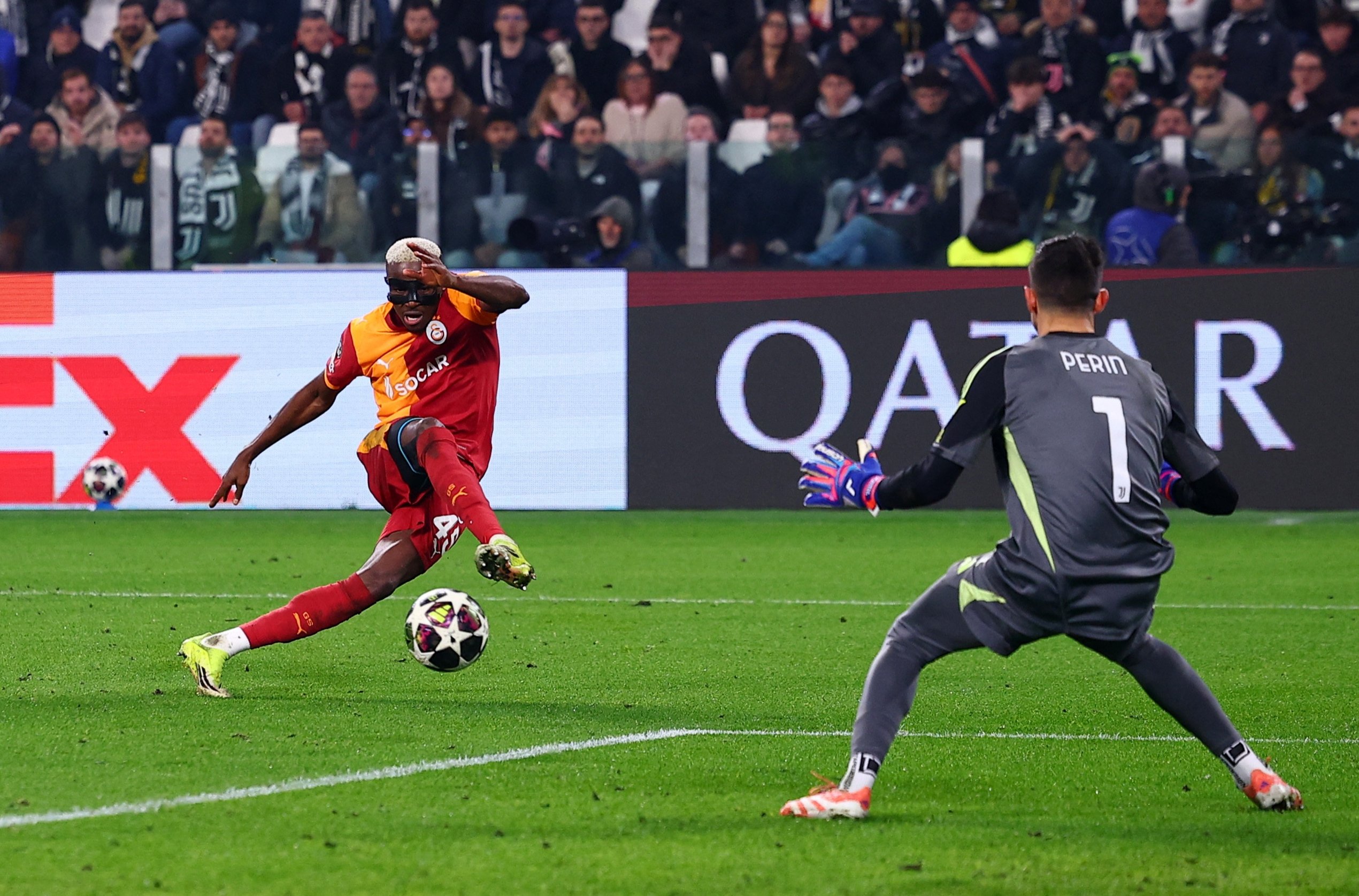
Over two legs, Galatasaray put seven goals past Juventus, which has won two Champions League trophies. We took the second leg to extra time in their stadium, under the most hostile conditions imaginable, and then scored twice to seal the deal.
No, we did not play magnificently. But keep in mind that the entire Italian sporting ecosystem was engineered to break us. In the end, Corriere della Sera described how Juventus “tried to play football from the start” while Galatasaray “targeted the nerves.” That’s the exact same language Turkish journalists used to write about European opponents for 30 years.
What happened on Wednesday night was a cultural inversion. For the first time in my conscious memory as a football fan – and I have been a Galatasaray supporter since 1993 – a major European club and its entire media apparatus responded to elimination by a Turkish team with the exact emotional toolkit that we used to rely on. We didn’t just beat Juventus. We made them feel what we used to feel. And their press wrote about it the way our press used to write about it. The circle is complete.
For the reigning Turkish champions, the Champions League mission is already accomplished. At the start of the season, Galatasaray aimed to qualify for the Round of 16. It already defeated Liverpool, Ajax, Bodø/Glimt, and Juventus this season. One way or another, against Liverpool, Galatasaray will try to make history.
DAILYSABAH
About the Author