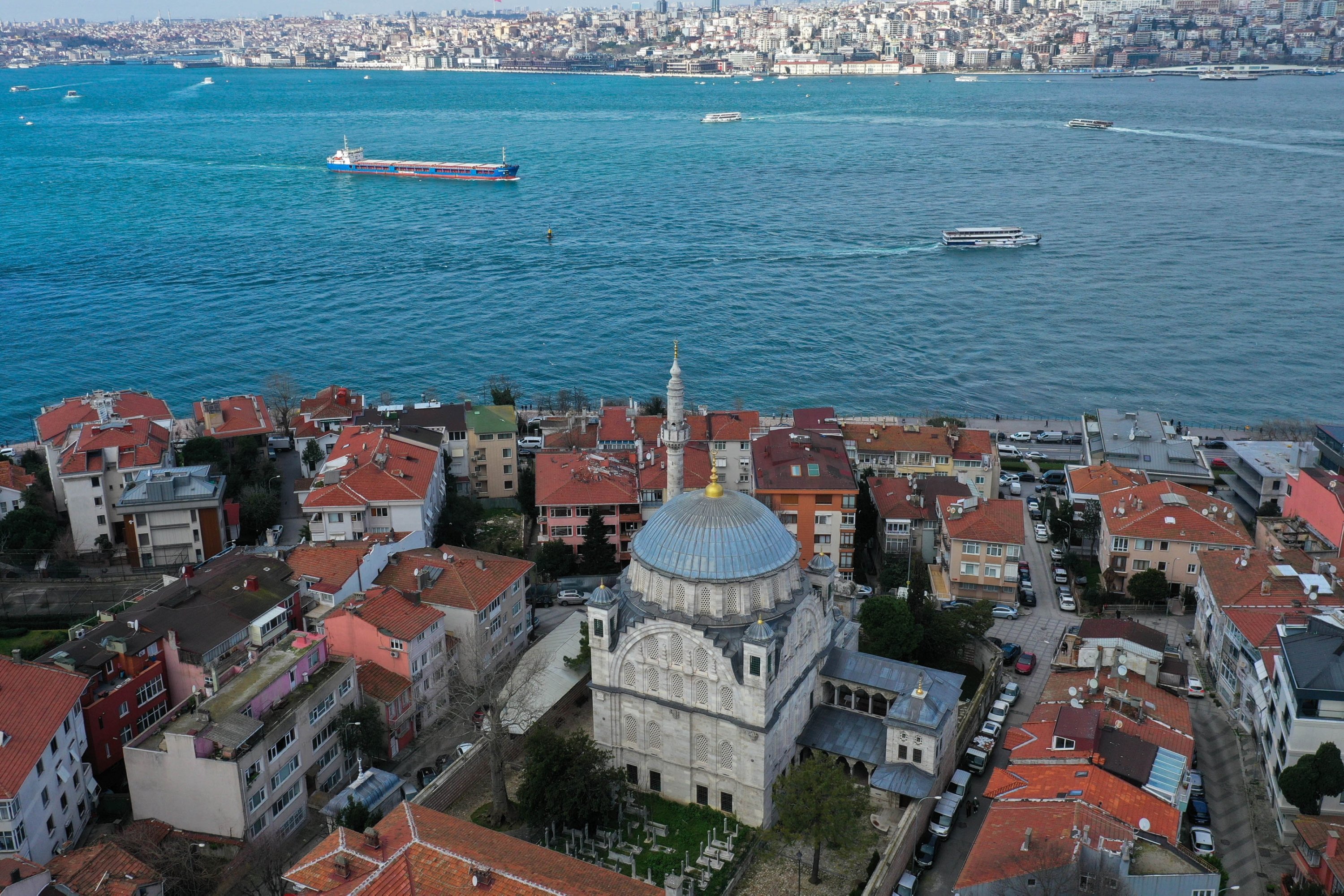
In Istanbul’s Üsküdar, rising at a vantage point overlooking the Marmara Sea and the entrance to the Bosporus, the Ayazma Mosque stands as a remarkable example of 18th-century Ottoman architecture, where Western influences became increasingly visible.
Located on the slopes of Salacak, the mosque embodies the architectural approach of the 18th century, reflecting the growing impact of European styles on Ottoman design. The mosque was commissioned by Sultan Mustafa III in 1760-1761 in honor of his mother, Mihrişah Emine Sultan, and is considered one of the key representatives of Ottoman Baroque in Üsküdar, following the stylistic innovations introduced by the Nuruosmaniye Mosque.
Historical records indicate that the site previously hosted the Ayazma Palace and its gardens. With the construction of the mosque, a bathhouse, numerous shops and inns were established as part of its waqf. Water for the bathhouse and the fountain adjacent to the courtyard was brought from Bulgurlu, demonstrating the early integration of infrastructure with religious architecture.
The mosque is situated in a spacious courtyard surrounded by walls. Visitors approach it via a semi-circular, 10-step staircase, and the gates of the courtyard feature Quranic verses inscribed in Celi Sülüs script.
The prayer hall is rectangular in plan and covered by a single dome resting on four arches. On the left side, facing the street, a sultan’s pavilion extends on stone consoles, featuring a two-story gallery that connects to the mosque’s internal sultan’s gallery. The gilded decorations within this gallery create a visually striking impression.
Although built during a period when European artistic styles were dominant, the mosque preserves key elements of traditional Turkish architecture. The large arches house windows with classic Ottoman features, while the mihrab, minbar and pulpit combine marble and multicolored stones to form a rich and harmonious composition.
On the walls of the mosque, miniature birdhouse-shaped structures rest on small consoles, and in the cemetery, numerous tombs of palace members can be found. The mosque’s primary school, bathhouse, and clock tower have not survived to the present day.
Gilded decorations and marble details fill the interior of Ayazma Mosque, Istanbul, Türkiye, Feb. 24, 2026. (AA Photo)
As a work created during a period of increasing Western influence in Ottoman architecture, the Ayazma Mosque continues to enhance the Üsküdar coastline with its elevated position and commanding silhouette.
Efdaluddin Kılıç, a faculty member in the Department of Turkish-Islamic Art History at Marmara University, explained that Üsküdar was historically a settlement outside the main city of Istanbul, offering views of the city’s silhouette. He highlighted that the mosque was commissioned in the 1760s and that although the site previously contained the Ayazma Palace, no remnants remain.
“The mosque derives its name from the palace,” Kılıç said. “Its interior reflects a predominantly European style of decoration. Structurally, the building represents the European-influenced architectural tendencies of its period. The colors, patterns, and materials used, particularly in the marble mihrab, minbar, and pulpit, evoke European aesthetics.”
Kılıç noted that additional shops were constructed to support the mosque, although some of these structures have not survived. “As with every major mosque, the inclusion of a primary school, bathhouse and fountains enriched social life and contributed significantly to the area. The building was constructed according to the külliye principle, combining religious, educational and social facilities into a unified complex,” he added.
He emphasized the importance of water in Ottoman construction, explaining that bathhouses and fountains were prioritized to ensure workers maintained physical and spiritual cleanliness while constructing the mosque. This attention to both practical and spiritual needs reflects the holistic planning approach of the period.
Kılıç also pointed out the presence of the sultan’s galleries within the mosque, typical of late Ottoman mosque architecture. Regarding the cemetery, he highlighted that prominent palace members are buried there, including tombstones specific to former Janissaries or individuals who passed away after the Vaka-i Hayriye events.
He added that the name of a Bosnian calligrapher appears in the mosque, an unusual feature in Ottoman mosque inscriptions, underscoring the cultural diversity of the period.
At the mosque entrance, an inscription by Veliyüddin Efendi is displayed. Kılıç explained: “Veliyüddin Efendi was among the most skilled practitioners of the talik script when it arrived in Istanbul. He also served as Şeyhülislam and held a significant position in state protocol, leaving a visible mark of his influence on the mosque.”
DAILYSABAH
About the Author