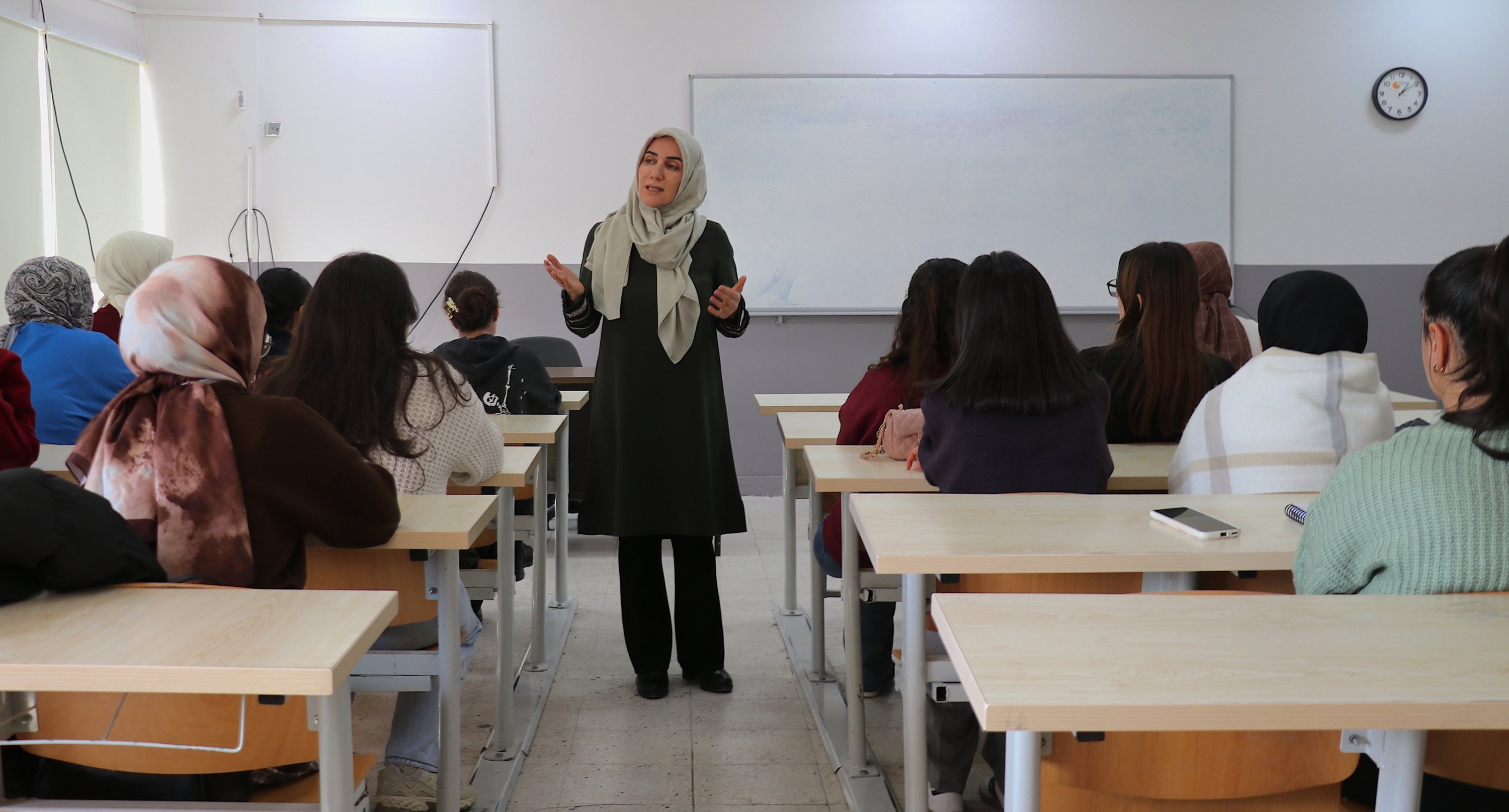
Gül Görmez, an academic removed from her position during the Feb. 28 process known in Türkiye’s political history as the “postmodern coup,” has achieved her goal of becoming an associate professor years later.
Görmez had been working as a research assistant at Van Yüzüncü Yıl University (YYÜ) when the Feb. 28 postmodern coup, a significant turning point in Türkiye’s political landscape, led to her dismissal.
Following the introduction of headscarf freedoms in public institutions in 2013, she returned to her academic career after a 13-year hiatus and worked persistently to realize her interrupted professional ambitions.
This year, in the same month she had been removed from her post years ago, Görmez was promoted to associate professor. She now serves at Van YYÜ’s Faculty of Health Sciences with her new title, reflecting both personal perseverance and professional recognition.
Görmez described the pressures she faced during the Feb. 28 period due to wearing a headscarf. She said her academic career had been unfairly halted.
“I started my academic journey as a research assistant during the Feb. 28 process while pursuing my master’s degree. I faced continuous pressure because of my headscarf, was denied access to laboratories, and could not carry out my academic work. The system attempted to marginalize and remove me from academia,” she said.
Despite these challenges, she emphasized she never gave up her faith or freedom: “As a woman, I was simply following the practices required by my beliefs. My headscarf was not a symbol; it was an expression of my freedom, and I refused to give that up. I was dismissed with disciplinary sanctions for wanting to work while wearing it.”
“I waited 13 years to return, raising three children during this time. When I returned, I rebuilt my academic path, completed my doctorate, was appointed as an assistant professor, and now, I have earned the associate professor title this February. This is profoundly meaningful to me. I endured a period where I could not freely practice my faith, but now I continue my academic career with full freedom,” she said.
Görmez reflected on that period as a moment of female victimization and expressed hope that her journey serves as an example: “If I can now continue my academic career freely while wearing a headscarf, I especially thank our president. I believe Türkiye is moving toward a society where people with differing beliefs can live together democratically and with mutual respect. I hope these advances continue and that women do not face these hardships again.”
She concluded with a broader message of tolerance and democracy: “From this painful experience, we learned that every individual in society, regardless of faith or beliefs, should live freely and in solidarity. I hope this principle continues, and that no one is punished in an undemocratic way for their views or faith.”
On Feb. 28, 1997, Türkiye faced what became known as the postmodern coup, when the military pressured the Islamist-led government to resign without using troops. Through political, bureaucratic and social channels, the military influenced government policies, education and public institutions, most notably enforcing restrictions on women wearing headscarves
DAILYSABAH
About the Author