c549aa69-d0a7-505b-9562-1060a5a61d6b, fnc, Fox News, fox-news/tech/technologies/robots, fox-news/health/health-care, fox-news/health/medical-research/surgery, fox-news/health/cancer, fox-news/tech/technologies, fox-news/tech, article
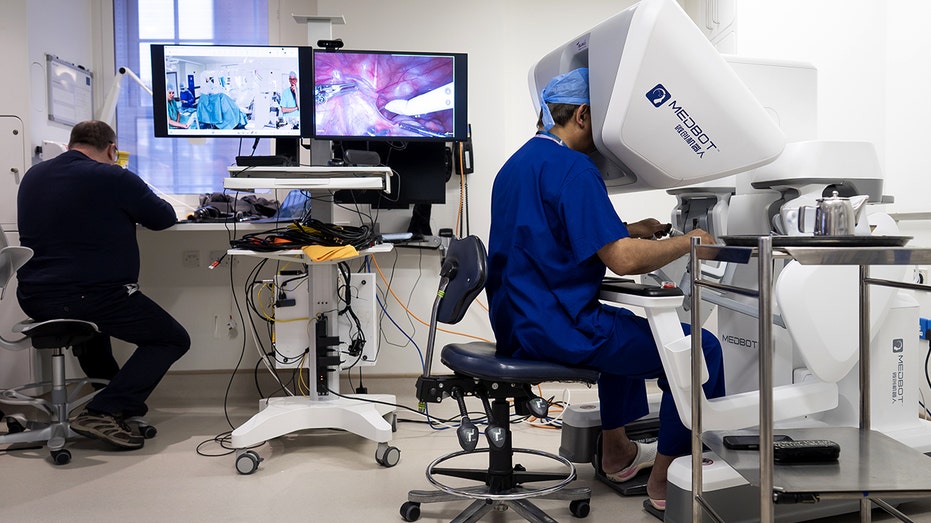
Cancer surgery often requires patients to travel to the specialist. This time, the specialist traveled to the patient. Doctors at The London Clinic remotely guided a robotic system to remove a man’s prostate cancer from 1,500 miles away.
The patient remained in a hospital operating room while the surgeon controlled the procedure from another country. The milestone operation marks the first time a U.K. hospital has successfully performed remote robot-assisted telesurgery on a patient.
Sign up for my FREE CyberGuy ReportGet my best tech tips, urgent security alerts and exclusive deals delivered straight to your inbox. Plus, you’ll get instant access to my Ultimate Scam Survival Guide — free when you join my CYBERGUY.COM newsletter.
The procedure connected two hospitals nearly 1,500 miles apart. The surgeon, Professor Prokar Dasgupta, operated from a robotic control console at The London Clinic’s robotic center at Harley Street.
AI ROBOT PERFORMS GALLBLADDER SURGERY AUTONOMOUSLY
The patient lay in an operating room at St Bernard’s Hospital. Between them sat an advanced surgical robot. The system used was the Toumai robotic surgical system developed by MicroPort MedBot, a platform designed for high-precision minimally invasive procedures.
From the console in London, Dasgupta controlled:
Fiber optic networks carried every movement from the surgeon’s hands to the robot in Gibraltar. A secure network infrastructure designed by Presidio connected the two hospitals. The delay between command and movement was about 48 milliseconds, which is fast enough to feel almost real time.
For delicate procedures like prostate cancer surgery, that speed really matters. Urological surgeons James Allen and Paul Hughes were part of the local surgical team in Gibraltar, ready to step in if the connection dropped or complications occurred. The operation went smoothly.
The patient, Paul Buxton, is a 62-year-old resident of Gibraltar who has lived there for about four decades. Patients who need specialized prostate cancer surgery often travel to larger medical centers such as London or Madrid. That journey can mean long waiting lists, travel costs and weeks away from home.
Buxton avoided that disruption. He received the procedure in his local hospital. He had originally planned to travel to London for surgery but was offered the chance to participate in a telesurgery trial between the two hospitals earlier in February. Reports say he felt fantastic within days. The technology removed a major burden for him and allowed him to recover close to home.
This operation did not appear overnight. Remote robotic surgery has been developing for decades. One of the earliest examples took place during the Lindbergh Operation. In that procedure, surgeons in New York remotely removed a patient’s gallbladder in Strasbourg, France.
HUMANOID ROBOT PERFORMS MEDICAL PROCEDURES VIA REMOTE CONTROL
Technology has improved dramatically since then. Recent developments include cross-continent robotic surgeries between Rome and Beijing. Surgeons have also completed long-distance prostate operations using the same Toumai platform in parts of Africa. The London Clinic procedure signals an important shift. Remote robotic surgery is moving from experimental demonstrations toward practical medical use.
The hospitals plan to demonstrate the technology further by live-streaming a telesurgery procedure to thousands of surgeons at the upcoming European Association of Urology Congress.
Several technologies work together to make remote surgery viable.
Surgeons must see and react instantly during an operation. Even small delays can make precise movements difficult. Modern fiber optic networks and backup 5G connections help keep latency extremely low.
Robotic surgical systems translate a surgeon’s hand movements into smaller and more stable movements inside the patient’s body. That precision often improves outcomes in delicate procedures such as prostate cancer removal.
High-definition 3D cameras allow surgeons to see the surgical area with remarkable clarity. In many cases, the view from a robotic console is clearer than what surgeons see in traditional open surgery.
Remote robotic surgery still faces important hurdles. Infrastructure remains a major challenge. Hospitals must maintain extremely reliable networks with almost no downtime. Cost also plays a role. Robotic surgical systems and specialized networks can cost millions of dollars. Regulation raises additional questions. Surgeons who operate across borders introduce legal and licensing complexities.
Every remote procedure also requires backup plans. Local surgical teams must remain ready to step in if technology fails. For now, hospitals treat telesurgery as an emerging capability rather than a routine practice.
SPACE SURGERY EXPERIMENT COULD PROVIDE PATHWAY FOR MEDICAL CARE IN EARTH’S MOST REMOTE REGIONS
For patients, the long-term implications could be significant. In the future, you may not need to travel to a major medical center for complex procedures. Instead, specialists could operate remotely while you stay in a hospital closer to home. This shift could benefit people in rural communities and regions with limited access to specialists.
Remote robotic surgery may also shorten wait times for certain procedures. Safety will remain the top priority. Hospitals must prove that remote procedures are as reliable as traditional surgery before the technology becomes widespread.
Think your devices and data are truly protected? Take this quick quiz to see where your digital habits stand. From passwords to Wi-Fi settings, you’ll get a personalized breakdown of what you’re doing right and what needs improvement. Take my Quiz here: Cyberguy.com.
For years, remote surgery sounded like something far off in the future. Now it is starting to move into real operating rooms. The procedure connecting London and Gibraltar shows how quickly surgical technology is advancing. Reliable networks and advanced robots now allow surgeons to guide delicate procedures from thousands of miles away. That does not mean remote surgery will become common overnight. Hospitals still need strong network infrastructure, trained specialists and clear safety standards before it spreads widely. Even so, the direction is becoming clear. Distance may no longer prevent patients from accessing world-class surgical care.
Would you feel comfortable having surgery performed by a specialist operating from another city, state] or country if the technology proved safe? Let us know by writing to us at Cyberguy.com.
Sign up for my FREE CyberGuy ReportGet my best tech tips, urgent security alerts and exclusive deals delivered straight to your inbox. Plus, you’ll get instant access to my Ultimate Scam Survival Guide — free when you join my CYBERGUY.COM newsletter.
Copyright 2026 CyberGuy.com. All rights reserved.
Latest & Breaking News on Fox News
About the Author