160187e3-a87e-5cbd-a215-f30705e8eba9, fnc, Fox News, fox-news/travel, fox-news/lifestyle, fox-news/science/wild-nature/sharks, fox-news/science/planet-earth/oceans, fox-news/us/crime/drugs, fox-news/travel/vacation-destinations, fox-news/science/planet-earth/water, fox-news/travel, article
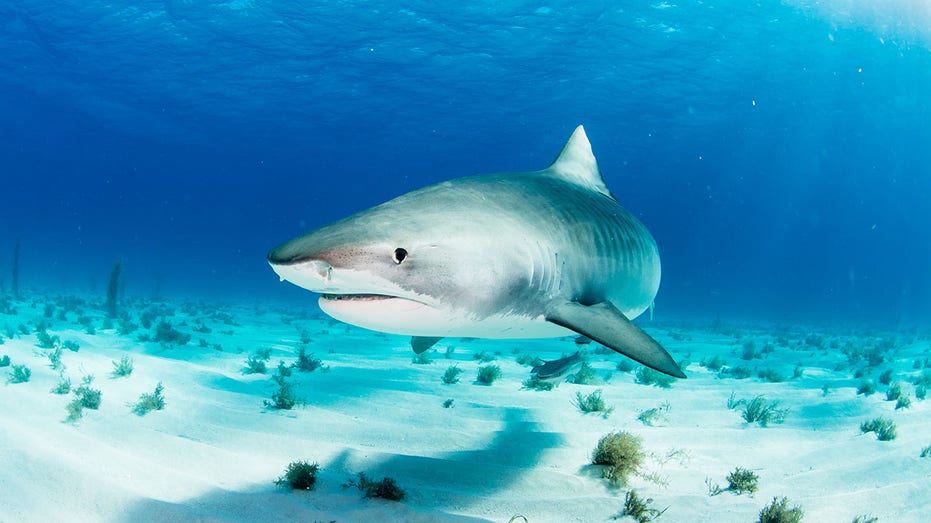
The crystal-clear blue waters of the Bahamas, a paradise for tourists, are also home to sharks — and a new study suggests these sharks are being exposed to drugs.
Researchers in Brazil and Chile analyzed 85 sharks for the presence of caffeine, cocaine and painkillers.
The study titled, “Drugs in Paradise,” was published by scientists in Brazil and Chile in the journal Environmental Pollution.
TOURISTS IN LAS VEGAS PAY $1,000 FOR DINNER ON THE STRIP WHILE SHARKS EAT LIKE ROYALTY
Of the 85 sharks analyzed, containments of emerging concern (CECs) — such as caffeine, cocaine, and painkillers — were detected in 28 sharks off the coast of Eleuthera Island in the Bahamas.
“To the best of our knowledge, this is the first report of caffeine and acetaminophen detected in any shark species worldwide, and the first report of diclofenac and cocaine in sharks from The Bahamas, an environment commonly described as pristine,” the study noted.
CLICK HERE TO SIGN UP FOR OUR LIFESTYLE NEWSLETTER
Scientists analyzed serum samples of tiger sharks, blacktip sharks, Caribbean reef sharks, Atlantic nurse sharks and lemon sharks.
“Pharmaceuticals and illicit drugs are increasingly recognized as contaminants of emerging concern (CECs) in marine environments, particularly in areas undergoing rapid urbanization and tourism-driven development,” the study’s abstract noted.
In 2025, 12.5 million people visited the Bahamas, according to the Bahamas Ministry of Tourism, Investments & Aviation.
The researchers concluded the sharks with CECs showed altered triglycerides, urea and lactate levels.
Lead researcher and Federal University of Paraná biologist Natascha Wosnick told Science News currents could have transported drug traces from sewage or other sources — but divers are the more likely source.
“It’s mostly because people are going there, peeing in the water and dumping their sewage in the water,” said Wosnick.
TEST YOURSELF WITH OUR LATEST LIFESTYLE QUIZ
She also said, “The [sharks] bite things to investigate and end up exposed.”
Past studies have focused primarily on the effects of drugs on invertebrates and bony fish, “but sharks — important players in ocean ecosystems — have been largely left out,” said Smithsonian magazine.
CLICK HERE FOR MORE LIFESTYLE STORIES
The new data also showed that the sharks with contaminated blood “had changes in some biological markers, which can point to how tissues are functioning. Though the researchers don’t know if the alterations are detrimental, the team says they could lead to behavioral changes,” the same source noted.
Latest & Breaking News on Fox News
About the Author
