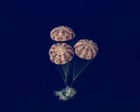
Orion is still in a blackout period, but ground tracking systems, including from the US navy, have sight of the capsule.
We are standing by for the momentary resumption of communications with the astronauts.
The Artemis II crew has begun the reentry to Earth’s atmosphere at a speed of almost 25,000mph, and at a temperature approaching 5,000F.
We won’t hear anything from the astronauts for the next six minutes because of a communications blackout caused by a build up of super hot plasma around the spacecraft.
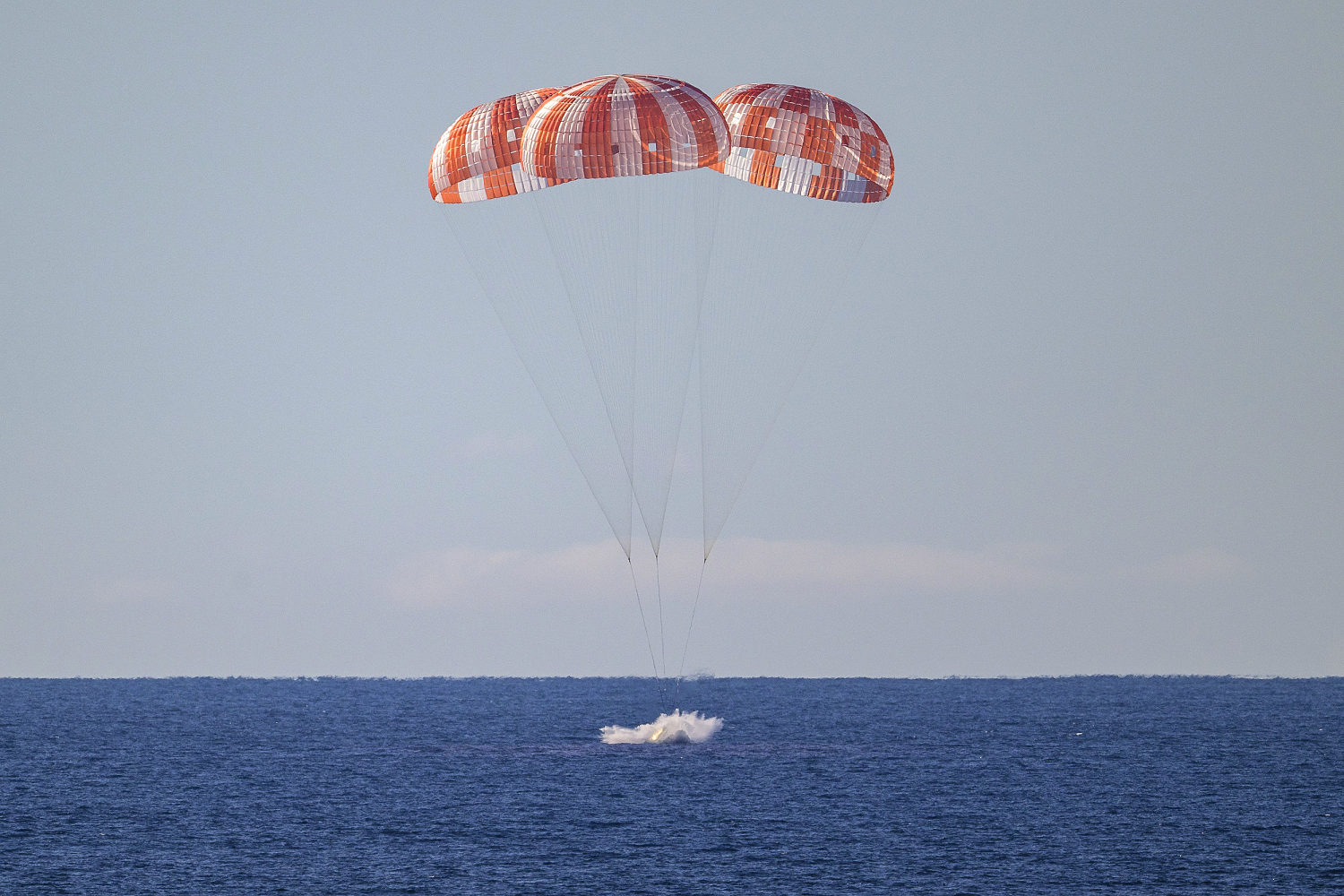
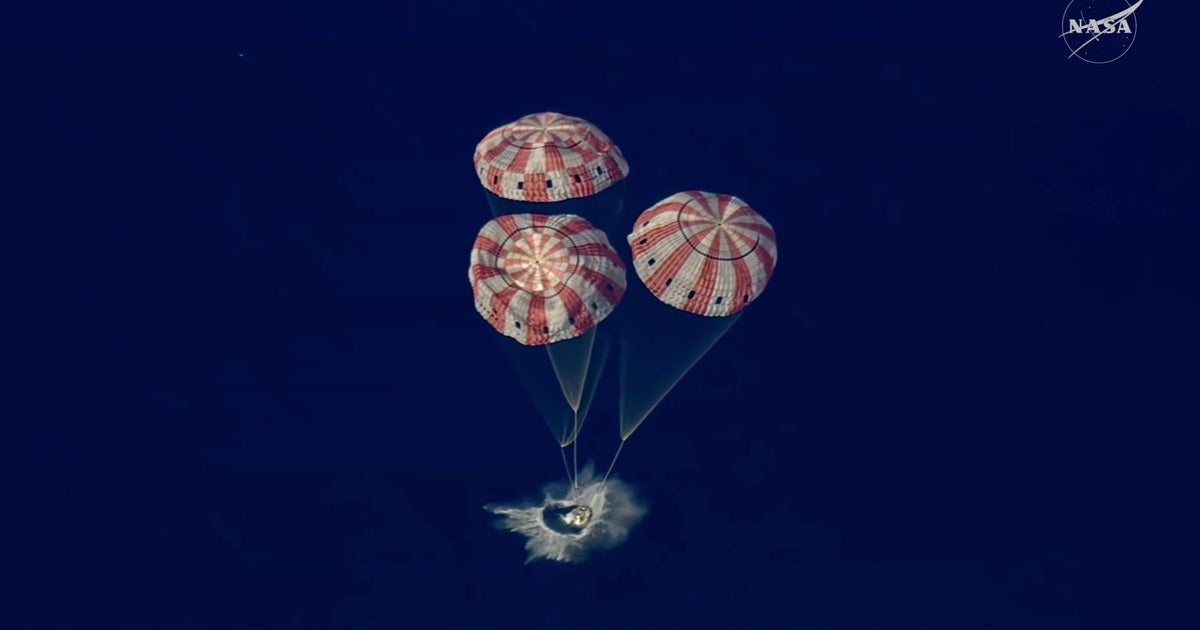
Splashdown of the Orion capsule is still set for 5.07pm PT. Nasa reports no issues, and that weather at the splashdown site in the Pacific Ocean is “go”.
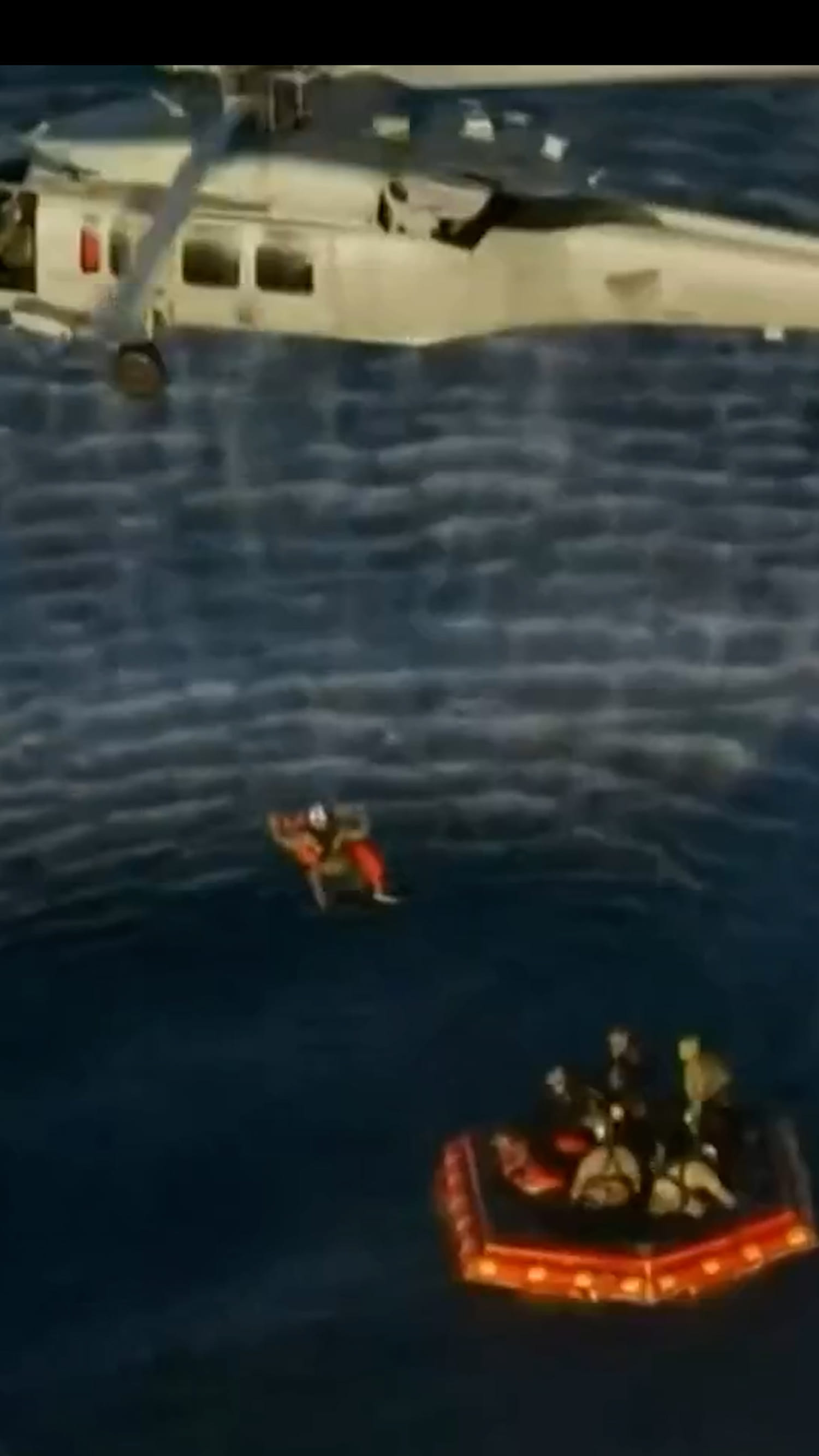
We’re getting pictures on the news wires of the splashdown preparations happening off the coast of California.
US navy divers were preparing to deploy in small boats from the well deck of USS John P Murtha to recover Artemis II crew members.
Orion is descending at a rate of 15,000ft per second as it approaches reeentry.
“All the systems [are] in excellent shape,” Nasa splashdown commentator Derrol Nail says.
Eight minutes until reentry, 21 minutes until splashdown.
Wiseman has just announced: “We have a great view of the moon out of window two. It looks a little smaller than yesterday”.
“Good to have you back,” Nasa’s Jacki Mahaffey, in mission control, replied.
Crew module separation was followed in short order by the final firing of Orion’s thrusters, the so-called “raise burn” that commits the capsule to its final angle of descent for reentry to Earth’s atmosphere.
Reid Wiseman, the Artemis II commander, told mission control he had “a great view” of the newly separated service module as it floated away.
“It’s a beautiful looking machine,” he said. Beautiful or not, the module will now disintegrate on reentry.
We are half an hour from splashdown.
Orion and its European Space Agency-built service module have parted ways, Nasa has confirmed.
The service module will burn up on reentry to Earth’s atmosphere, while the Orion crew capsule is protected by a heat shield.
Orion is now flying alone for the first time in the entire 10-day mission.
Mission control has just given the go ahead for “CM raise”, the firing of thrusters to adjust Orion’s trajectory upwards for reentry, its “final angle of attack”.
All is looking good for separation of Orion from its service module in just a few minutes’ time.
3,300 miles to go!
Here’s another statistic from the mission, the total distance traveled by Artemis II and its Orion capsule since its 1 April launch from Florida’s Kennedy Space Center.
At splashdown, the spacecraft will have traveled 694,481 miles, Nasa says.
All four crew members are “suited and seated” ready for Earth atmosphere reentry, Reid Wiseman, the Artemis II commander, has just confirmed to mission control.
Orion is now below 5,000 miles from Earth.
Nasa’s social media strategy for the Artemis II mission has been extremely proactive. The space agency’s streaming service Nasa+ has presented every step of the mission, alongside a prominent presence on other platforms such as YouTube, Instagram, X and Facebook.
On Friday, Nasa press secretary Bethany Stevens, and deputy press secretary George Alderman, presented their final Nasa Minute of the mission, a bite-sized chunk of video and information giving an umbrella-level view of some of the highlights of the 10-day flight.
We’re less than half an hour away from a vital step in the return of Artemis II, the separation of the Orion crew capsule from the European Space Agency’s service module, which has has provided the crew with power and life sustaining systems over the last 10 days.
It will be followed three minutes later by a short “crew module raise burn”, a 19-second thruster firing that will put Orion at the correct angle of descent for reentry to Earth’s atmosphere.
Commander Reid Wiseman has just said he witnessed a “beautiful” sunrise over the west coast of Australia.
Fox News has just shown video of Nasa administrator Jared Isaacman arriving on board the USS John P Murtha, the navy’s dock ship positioned off the coast of San Diego, California.
The Artemis II astronauts will receive medical checks on board after being taken by helicopter from splashdown site, and if cleared they will then travel by air to Houston’s Johnson Space Center via the US navy base in San Diego.
Dr Richard Scheuring, Nasa’s flight surgeon, has just been speaking from the ship on Nasa TV. He says he chatted with the four Artemis astronauts ahead of their descent, and that they were: “very pumped up, excited, but focused on the job they have to do”.
Scheuring said replacing lost fluids and acclimatizing back to Earth’s gravity would be a priority for the Artemis crew after almost 1o days of weightlessness. He says he’s seen returning astronauts vomiting, nauseous and struggling to walk.
Here’s a terrific graphic from Nasa of the final stages of the flight of Artemis II, from reentry in Earth’s atmosphere, through parachute deployment and its rapid decrease in velocity, to splashdown in the Pacific Ocean.
Artemis II’s Orion capsule is about an hour and a half away from splashdown in the Pacific Ocean, off the coast of San Diego.
Nasa’s live video from inside the capsule has just shown commander Reid Wiseman and pilot Victor Glover exchanging a fist bump as they settle into their seats for final approach and a fiery reentry, known as entry interface, to Earth’s atmosphere at 24,661mph.
Several major descent milestones will happen shortly, including separation of the capsule from its service module, and exposure of Orion’s heat shield that must withstand a temperature up to 5,000F (2,760C).
Splashdown is expected at 5.07pm PT plus eight seconds.
Orion has just passed below 12,000 miles from Earth’s surface, the last leg home from a total voyage of the 10-day mission of 695,000 miles.
Video of a “fist bump” moment between the Artemis II astronauts was posted on X by Nasa a little earlier, showing the camaraderie that still exists between the four of them after 10 days squeezed together inside a space capsule the size of a small camper van.
Jacki Mahaffey, Nasa’s CAPCOM (capsule communicator), told the crew the moment was so touching she wanted to get a print of it.
Reid Wiseman, the Artemis II commander, has just shared his observation of Earth as the Orion capsule descends below 17,000 miles from the planet’s surface.
“There’s a great blue hue to it. It’s beautiful,” he said.
Meanwhile, Nasa’s flight dynamics team has released some more figures about the precise time of descent milestones. It’s getting very technical!
The start of the communications blackout will be 4.53pm and 54 seconds PT; it will last until 4.59:55pm PT. Splashdown time is now estimated for 5.07:08pm PT.
And a weather update: clouds in the splashdown zone are “in the process” of dissipating, winds are down to six knots, waves are under four feet. All criteria are green, and the splashdown is a “go”.
One of the selfies captured by the camera mounted on a solar panel of the Orion spacecraft featured a zero-gravity indicator designed by an eight-year-old schoolboy. The picture shows astronaut Christina Koch and the mascot peeking through one of the spacecraft’s windows.
The smiley-faced plush toy was designed to float under the zero-gravity conditions, indicating to the astronauts they have achieved weightlessness. Lucas Ye, from Mountain View, California, was the mastermind behind it.
“I like rockets, I like Nasa, I like the solar system, I like studying about space,” Lucas said in a video when he made the shortlist for the global “moon mascot” competition, presided over by Nasa and Freelancer, a crowdsourcing company.
Lucas won over 2,600 other entrants.
Nasa says all four of the astronauts’ spacesuits have passed “leak checks” and are, the agency asserts, “in great shape” for reentry.
Splashdown commentator Derrol Nail has also just updated the expected peak speed of Orion at reentry.
He said the flight dynamics team had calculated the spacecraft will reach 24,661.21 mph at 6.54pm and four seconds, 24 seconds into reentry and an expected six-minute communications blackout.
The predicted velocity, while still unofficial, will be 130mph short of the speed record set by the returning Apollo 10 crew in May 1969, Nail said.
The Orion capsule’s glitchy $30m toilet created a little anxiety for the Artemis II astronauts during the mission, and became a source of curiosity on the ground.
The enterprising toilet paper manufacturer Charmin was quick to capitalize on the issue with the spacecraft’s Universal Waste Management System, announcing Friday that it was offering the four lunar flyers free rolls.
“We’re sorry to hear your mission included some unexpected turbulence in the bathroom department,” the company said in a post on Instagram.
“Butt don’t worry, we’ll be ready for your return with a year’s supply of Charmin to ensure a smooth landing for the next time you launch one.”
It is not know yet known if the astronauts are aware of the offer. Meanwhile, just like on a passenger airliner preparing for landing, Orion’s toilet has now been deactivated for remainder of the flight.
The Guardian
About the Author