In 2017, U.S. President Donald Trump signed the Countering America’s Adversaries Through Sanctions Act, commonly known as CAATSA, expanding the United States’ sanctions framework against Russia, Iran and North Korea. However, sanctions against Türkiye were not imposed directly in 2017. They were introduced in December 2020, during the final weeks of the first Trump administration, following Türkiye’s acquisition of the Russian-made S-400 air and missile defense system from Rosoboronexport, Russia’s principal arms-export agency.
Türkiye consequently became the first and, to date, the only NATO ally to be sanctioned under CAATSA. For Türkiye, the measures do not represent the first sanctions-related crisis in its relations with the United States. Türkiye-U.S. relations have previously been affected by arms embargoes, export restrictions, and other measures that limit defense cooperation. Nevertheless, what distinguishes the CAATSA case from earlier disputes is that a fellow NATO member sanctioned Türkiye because of its defense cooperation with Russia. This situation generated not only a profound crisis of confidence in bilateral relations but also a broader debate concerning the meaning of alliance solidarity and the credibility of NATO’s collective security architecture.
Moreover, analyzing the dispute solely as Türkiye’s decision to purchase S-400s would produce an incomplete assessment. At the center of the issue was Türkiye’s long-standing deficiency in air and missile defense. Türkiye required a permanent air-defense capability, particularly because of the Syrian civil war, missile threats along its southern borders, and the wider instability surrounding the country. The issue concerned Türkiye’s sovereign right to protect its territory and airspace, as well as its pursuit of strategic autonomy in defense procurement.
For the U.S., it involved restricting Russia’s defense industry, protecting sensitive F-35 technology and separating NATO systems from Russian-origin platforms. Nevertheless, imposing sanctions without first providing a sustainable and mutually acceptable alternative to meet a NATO ally’s legitimate security requirements created a serious contradiction in terms of alliance solidarity.
Against this background, the question arises whether Trump’s statement during the NATO summit held in Ankara may signal the beginning of a new phase in Türkiye-U.S. relations.
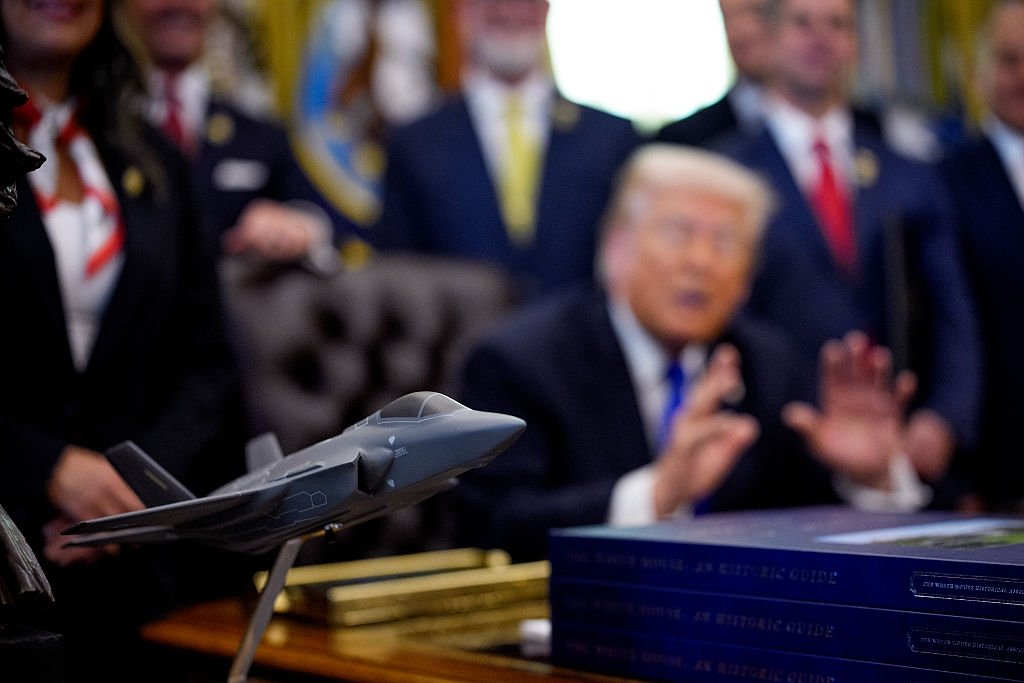
Emphasizing that Türkiye is a friend and an important ally of the U.S., Trump announced that the U.S. Departments of State and the Treasury have been working on the removal of the CAATSA sanctions. He also said that the U.S. is considering resuming the sales of F-35 aircraft to Türkiye. However, this declaration does not mean that the relevant legal and institutional procedures will be completed soon.
Beyond the promise
The removal of CAATSA sanctions, the delivery of F-35s, and Türkiye’s potential reinstatement as a program partner are interconnected but legally and institutionally distinct processes. Each is subject to separate executive, congressional, military and regulatory mechanisms.
The current process should therefore not be analyzed exclusively in terms of personal diplomacy between Trump and President Recep Tayyip Erdoğan. Its broader background includes the S-400 crisis, congressional opposition to Türkiye, the Pentagon’s security concerns, the activities of Greek and pro-Israel advocacy groups, and Türkiye’s changing strategic importance within the regional and international system. The central question is thus whether Trump’s political willingness to remove the sanctions and reopen the F-35 file can be translated into concrete policy despite the institutional and congressional resistance that persists in Washington.
To distinguish CAATSA and F-35 issues, the former mainly covers export, financing and licensing restrictions imposed on Türkiye’s Presidency of Defense Industries. Removing these sanctions would not automatically eliminate all obstacles to an F-35 sale.
The F-35 issue is part of a broader strategic framework involving engines for Kaan, the growth of Türkiye’s defense industry, Türkiye’s reintegration into the Western defense ecosystem and the regional balance of power. Under the National Defense Authorization Act for Fiscal Year 2020, the U.S. Departments of Defense and State must certify to Congress that Türkiye no longer possesses the S-400 system or its related equipment and personnel.
This condition effectively brings the sale or complete removal of the S-400 from Türkiye’s control onto the agenda. Another key question at this point is whether removing the S-400 would be sufficient for Washington. Legally, it could eliminate a major obstacle. Politically, however, the F-35 debate has already moved beyond the S-400.
Israel-Greek opposition
The opposition to lifting CAATSA sanctions and selling F-35 aircraft to Türkiye is not limited to certain members of Congress. Israel has launched a visible pressure campaign, using both diplomatic channels and the American media, to prevent the Trump administration from reintegrating Türkiye into the U.S. defense architecture. In this process, Israel has increasingly aligned its security arguments with those of Greece and the Greek Cypriot administration.
Israeli Prime Minister Benjamin Netanyahu’s appearances on American television before Trump visited Ankara and immediately after the Trump-Erdoğan meeting were the clearest examples of this campaign. His call to block both F-35 aircraft and U.S. engines for Kaan, together with his repeated description of the Greek Cypriot administration as a NATO member, should not be viewed merely as a verbal mistake. The broader objective appears to be to transform opposition to Türkiye from an Israeli security concern into a wider Western alliance issue linked to Greece and the island of Cyprus.
This same framework was reflected in the congressional letter led by Mike Lawler and Brad Sherman, which combined the S-400 issue with Türkiye’s policies towards Greece, the Greek Cypriot administration, Israel and Iran. This discursive parallel indicates the emergence of a common pressure platform connecting the Israel-Greece-Greek Cypriot axis with congressional and lobbying circles in Washington. The hidden dimension of the CAATSA and F-35 files is therefore not merely technical. It is part of a broader political and lobbying effort aimed at limiting Türkiye’s growing regional military capacity.
What happens next?
Even if CAATSA sanctions remain in place, Türkiye’s defense trajectory is unlikely to change. For nearly a decade, Ankara has adapted to restrictions by expanding domestic production, diversifying suppliers and developing alternative partnerships. In practice, each sanction has accelerated the search for new capabilities. The deeper problem is therefore not whether sanctions can stop Türkiye’s defense industry. It is that a NATO ally has been sanctioned by another ally while seeking to meet its own security needs. As in the aftermath of the 1974 Cyprus Peace Operation, this has reinforced Türkiye’s perception of being left alone at critical moments.
If Trump keeps his promise and removes the sanctions, the impact will go far beyond defense procurement. It could mark a turning point in Türkiye-U.S. relations, help restore trust within NATO and open a new phase in Türkiye’s integration with the Western defense system.
The views and opinions expressed in this article are solely those of the author. They do not necessarily reflect the editorial stance, values or position of Daily Sabah. The newspaper provides space for diverse perspectives as part of its commitment to open and informed public discussion.
DAILYSABAH
هلدینگ کاسپین استانبول | خرید ملک در ترکیه | صرافی معتبر ایرانی در ترکیه | خرید و فروش طلا در ترکیه | مهاجرت به ترکیه | واردات و صادرات در ترکیه | نیازمندیهای ترکیه | اخبار ترکیه | اخبار جهانی | توریست ایران | خدمات توریستی در ایران | تورهای گردشگری ایران | هلدینگ اول | خدمات کاریابی و فریلنسری و شغل | مرجع اطلاعات ایران (همه چیز در ایران) | کیف پول و خدمات مالی و پرداخت یار | اخبار ایران | تابلو زنده قیمت ارز در ترکیه و استانبول | صرافی آنلاین ترکیه | قیمت طلا و نقره در ترکیه | سرمایه گذاری در ترکیه | جواهرات در ترکیه | نرخ لحظه ای ارزها در استانبول | قیمت دلار امروز در ترکیه | قیمت دلار استانبول امروز | قیمت لحظه ای دلار | اخبار روز ترکیه استانبول | اپلیکیشن ISTEX | اپلیکیشن قیمت لحظه ای دلار و یورو و لیر و ارزها در ترکیه
About the Author