The Ministry of Agriculture and Forestry said there is no invasion of swarming grasshoppers reaching Türkiye from the Balkans, Africa or any other region.
In a statement issued following social media posts claiming that Istanbul and nearby provinces were experiencing a grasshopper invasion, the ministry said inspections and monitoring by its teams found no grasshopper population threatening agricultural production or causing economic damage in the Marmara region, particularly in Istanbul and Tekirdağ.
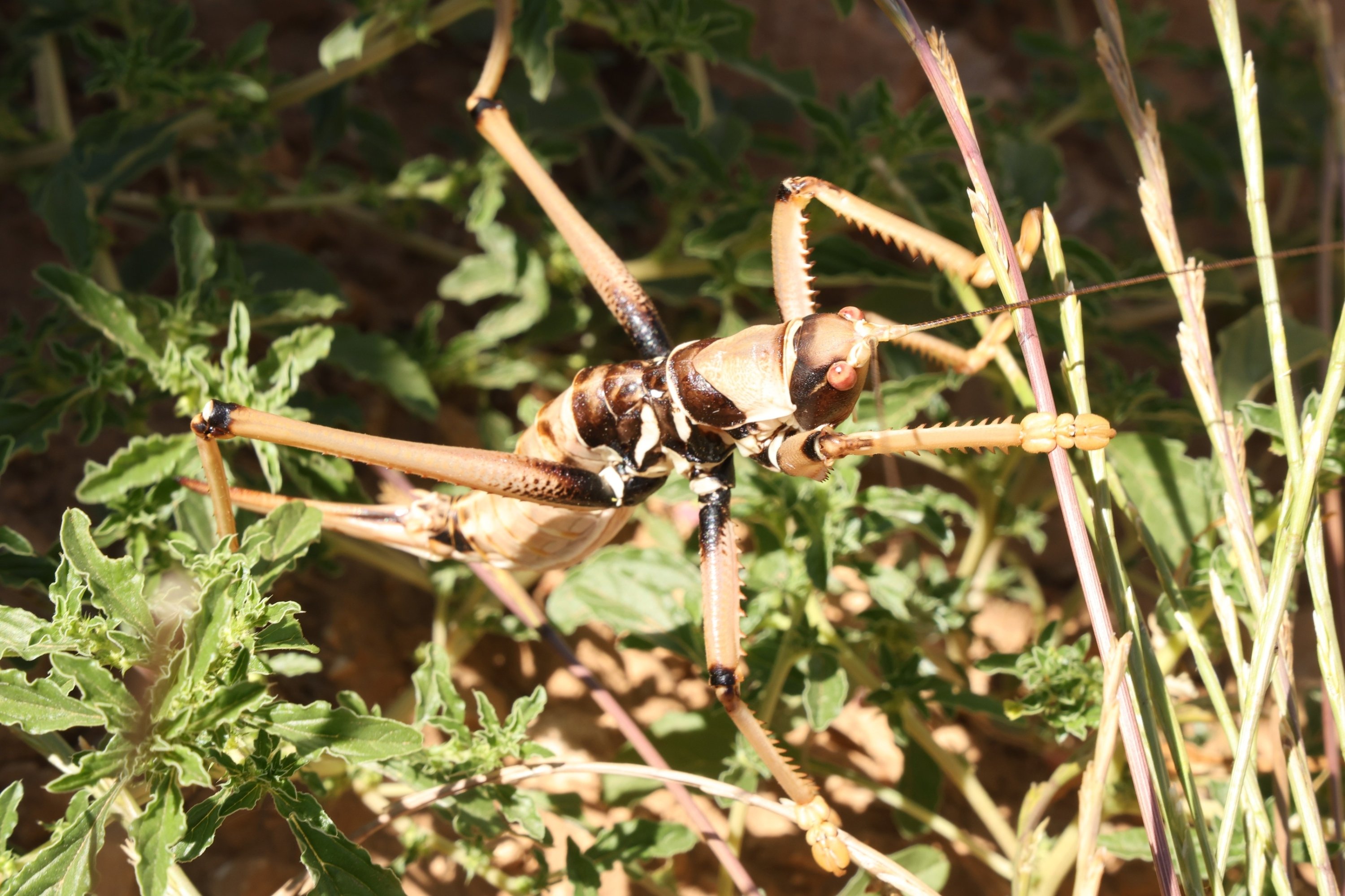
The ministry said species identification of the insects seen in widely shared images revealed that all belong to native grasshopper populations naturally found in Türkiye.
“Contrary to claims, there is no invasion of swarming grasshoppers reaching our country from the Balkans, Africa or any other region,” the statement said.
It added that the species identified in Istanbul is the white-faced bush cricket, which does not harm agricultural production. Instead, it feeds on agricultural pests and contributes to the biological balance.
Grasshopper population monitoring
The ministry noted that Türkiye is home to many native grasshopper species and that populations of some species may increase periodically depending on climate conditions, particularly during egg-laying seasons.
It said the insects can also be carried into residential areas by the wind and become more noticeable during hot weather because they are attracted to light. The ministry stressed that this is a natural process and does not constitute an invasion.
The statement added that grasshopper populations are regularly monitored under the ministry’s Annual Plant Health Protection Program by technical teams in all 81 provinces.
Monitoring efforts in Istanbul and Tekirdağ have also been intensified following recent reports.
The ministry said control measures are implemented immediately if species capable of damaging crops reach economically harmful levels. However, no such situation currently exists.
It added that monitoring, surveillance and pest control efforts aimed at protecting crop production will continue in line with scientific principles.