To recap, the Houthis, who control northern and western Yemen including the coast at the mouth of the Red Sea, announced a naval blockade on Saudi Arabia on Monday.
The announcement already appears to be having an impact. Two tankers which had just loaded Saudi crude bound for China and India at Saudi Arabia’s Red Sea port of Yanbu made U-turns on Tuesday, heading towards the Suez Canal rather than out through the Bab el-Mandeb into the Indian Ocean.
Assessing the situation, British maritime risk management group Vanguard said:
The developments represent the first confirmed changes to commercial tanker routing following the (Houthi) embargo and are likely to increase disruption to Saudi crude exports and regional shipping patterns.”
With the war shutting the strait of Hormuz, the Red Sea has served as the main alternate route out for millions of barrels of Saudi oil per day, diverted by pipeline through Yanbu.
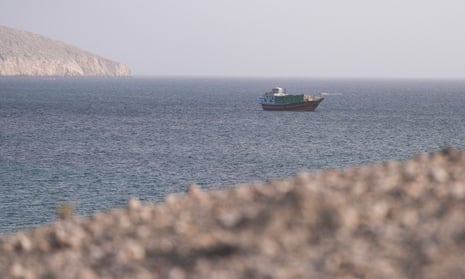
US Central Command (Centcom) has just provided some more information about vessels attacked by Iran in the strait of Hormuz and the flow of oil through the chokepoint.
Over the past three months, Iran has attacked more than 30 commercial vessels transiting the international waterway vital for regional and global trade. The unwarranted attacks have endangered hundreds of innocent mariners and undermined freedom of navigation.
Despite Iranian aggression, the Strait of Hormuz remains open for commercial vessel transit. Since early May, CENTCOM forces have helped facilitate the transit of approximately 900 commercial vessels and 450 million barrels of crude oil.”
US Central Command says its strikes for the night have been completed. The strikes included hitting aircraft hangars and drone storage sites, and lasted about an hour. We’ll have more details as we find out more.
Prior to today’s round of strikes, Iranian authorities say US attacks in just the past three weeks have killed at least 50 people and wounded more than 500 others.
Both the US and Iran have targeted civilian infrastructure relied on by millions of people. Workers on ships, as well as foreign workers and others in Gulf nations, Israel and Lebanon have also been killed during the conflict.
Iran’s Fars news agency is reporting a US strike has hit a military site near Tabriz, the capital city of East Azerbaijan Province, in north-western Iran.
A little more detail on those US strikes: Iranian state media says air defence activity has been heard in western, eastern and north-eastern Tehran. The time in Tehran is 3.40am.
To recap some news from earlier today, Donald Trump said the US will be hitting the Pickaxe Mountain area, located near Iran’s heavily damaged Natanz uranium enrichment facility, “pretty soon”.
It is unclear if today’s US strikes are targeting Pickaxe Mountain.
Pickaxe Mountain is a heavily fortified site that hosts two deeply buried tunnel complexes that experts assess as beyond the reach of the most powerful bunker buster bombs in the US arsenal. The site is linked to Iran’s nuclear program.
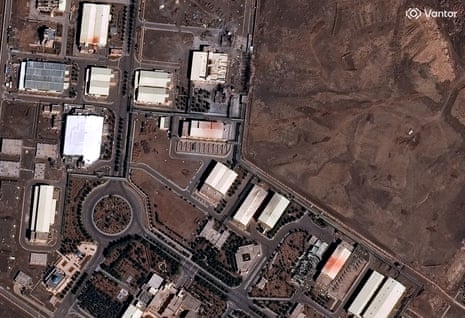
Iran’s military leaders said any attack on nuclear or “other sensitive facilities” would be considered a major escalation, according to a statement reported by Iranian state media.
“We declare that if the invading and terrorist military of that country enters such a phase, we will regard it as an expansion of the war across the region, and all interests of the United States, its allies, and its supporters will become targets of powerful attacks by the Armed Forces of the Islamic Republic of Iran,” said the statement from the armed forces’ Khatam al-Anbiya Central Headquarters.
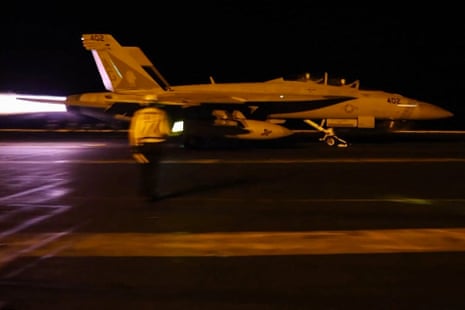
US Central Command has announced it has begun striking military targets in Iran for the 11th consecutive night.
The strikes are designed to continue degrading Iran’s ability to threaten commercial shipping in the strait of Hormuz, it said.
We’ll bring you more details on these strikes as we learn more.
The number of wounded US personnel in the Iran war has grown to well over 500 troops, a US official told the Associated Press.
The total is higher than the Pentagon’s official tally on the Defense Casualty Analysis System, which currently shows 482 wounded.
The US official, who was not authorised to discuss the matter with the media and spoke on condition of anonymity, said the system has a significant lag in reporting injuries. The official said that was a function of its design and not intentional.
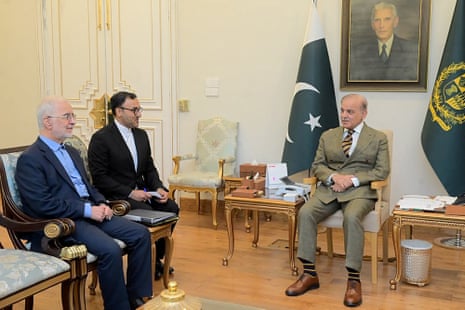
Pakistan’s prime minister Shehbaz Sharif called for restraint from all warring sides during a meeting with Iran’s interior minister on Tuesday.
Sharif “urged all sides to exercise restraint and refrain from actions that could further destabilise the region”, a statement from his office said, adding that he told Iran’s Eskandar Momeni that Pakistan would continue to act as a mediator.
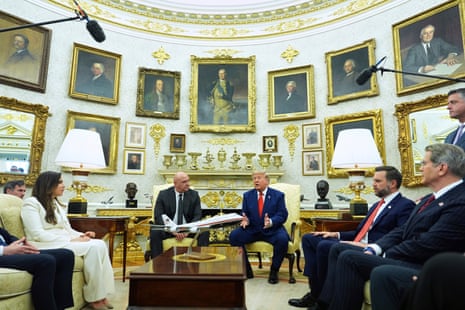
Speaking from the Oval Office, Donald Trump gave a dim view on possible talks, saying the US had “no interest in meeting”.
To recap, the Houthis, who control northern and western Yemen including the coast at the mouth of the Red Sea, announced a naval blockade on Saudi Arabia on Monday.
The announcement already appears to be having an impact. Two tankers which had just loaded Saudi crude bound for China and India at Saudi Arabia’s Red Sea port of Yanbu made U-turns on Tuesday, heading towards the Suez Canal rather than out through the Bab el-Mandeb into the Indian Ocean.
Assessing the situation, British maritime risk management group Vanguard said:
The developments represent the first confirmed changes to commercial tanker routing following the (Houthi) embargo and are likely to increase disruption to Saudi crude exports and regional shipping patterns.”
With the war shutting the strait of Hormuz, the Red Sea has served as the main alternate route out for millions of barrels of Saudi oil per day, diverted by pipeline through Yanbu.
In case you’re just joining us, here’s the main developments to know:
-
US forces bombed targets in the south and west of Iran overnight, while Iran targeted US sites in Bahrain, Kuwait and Jordan and a tanker was hit in the strait of Hormuz at the mouth of the Gulf.
-
Two oil tankers carrying Saudi crude to Asia reversed course in the Red Sea on Tuesday after threats from Yemen’s Iran-aligned Houthis.
-
Donald Trump said the Houthis had not yet shut the Bab el-Mandeb, the “Gate of Tears” strait leading into the Red Sea, and threatened to act against them if they did. “So far it hasn’t happened,” Trump said. “If something like that happens, we take care of it.”
-
Trump renewed his threats to again attack Iran’s nuclear facilities at Natanz “pretty soon“, which he said in June 2025 had been “totally obliterated” after the US military bombed the facility.
-
Defense secretary Pete Hegseth faced questions over the war with Iran, which he estimated has cost $37.5bn so far, as Republicans prepare a $95bn budget package to fund the military, along with other White House priorities.
-
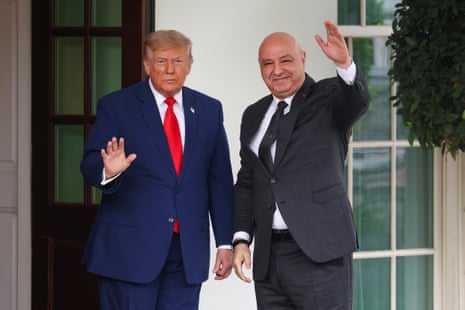
Trump pledged to help Lebanon “a lot” during a White House meeting with the country’s leader, Joseph Aoun. Trump made the surprise announcement that he’d allow American carriers to resume direct flights to Lebanon for the first time in 40-plus years after the US suspended the route.
-
Oil prices gained more than 2% on Tuesday, with Brent crude hovering above $91 a barrel.
The US defense secretary, Pete Hegseth, walked into the Senate on Tuesday to defend the Trump administration’s $87.6bn supplemental funding request, facing lawmakers furious that the US-Israel war on Iran is costing far more than the White House has admitted.
Hegseth and the chair of the joint chiefs, Gen Dan Caine, faced the Senate appropriations committee, chaired by Susan Collins of Maine, as the Pentagon said it was running low on cash to keep the fight going. Of the total request, $67.1bn of the request is earmarked specifically to keep the war effort funded.
It was the pair’s first sustained public questioning since a brief ceasefire collapsed and the war roared back to life. At least two US soldiers were killed in an Iranian attack on Friday, and another died in Iraq destroying an Iranian drone, pushing the American death toll since February to 17. Nearly 100 troops have been wounded in the conflict, officials confirm, though most injuries were minor.
Iran’s top joint military command said it would target the interests of the US and its allies if the American military targeted Iranian nuclear sites, Iran’s state media reported.
The statement by Iran’s Khatem al-Anbiya Central Headquarters comes after Donald Trump said the US will be hitting the Pickaxe Mountain area “pretty soon”.
Lebanese president Joseph Aoun told Donald Trump a full Israeli withdrawal from Lebanese territory was essential to consolidating stability and enabling the state to extend its authority, the Lebanese presidency said.
In their first meeting, the two leaders discussed plans to disarm the Iran-backed militant group Hezbollah and secure Israel’s withdrawal from Lebanon. The Lebanese presidency said they also discussed US support for Lebanon’s army, reconstruction, economic recovery and American investment.
In a statement after the talks, the Lebanese presidency said Aoun stressed to Trump the “urgent need for a complete Israeli withdrawal from Lebanese territory,” calling it “an essential step to consolidate stability and enable the Lebanese state to extend its full sovereignty exclusively through its own forces.”
Yemen’s Iranian-aligned Houthis have warned shipping companies that their tankers risk being attacked if they use Saudi Arabian ports, as the militia moved quickly to enforce a blockade announced the previous day.
The Houthi warning for the Red Sea, coming on top of Iran’s threat to shipping on the other side of the Arabian peninsular in the Gulf, could affect the substantial Saudi oil exports that have so far been unscathed by the months-long conflict and deepen the rapidly escalating crisis in the region.
Underlining how seriously the Houthi threat is being taken, two oil tankers that had loaded Saudi crude this week for China and India made U-turns on Tuesday away from Houthi-controlled coast at the mouth of the Red Sea and headed towards the Suez canal. The Houthis claimed six ships had changed course.
The US’s war in Iran has cost $37.5bn so far, defense secretary Pete Hegseth said, an increase of nearly $8bn since the last public estimate.
Hegseth told lawmakers the figure also included anticipated costs through 30 September.
Donald Trump said he will be directing his administration to “allow all US airline carriers to fly directly to Lebanon so that Americans can easily visit this beautiful land.”
Trump’s announcement, which he made on Truth Social, came after his meeting with Lebanese president Joseph Aoun earlier on Tuesday at the White House.
Since 1985, there have been no direct flights between the US and Lebanon after then US president Ronald Reagan suspended air service following the hijacking of TWA Flight 847.
During the meeting, Trump said he plans to help Lebanon “a lot,” describing it as a “a very badly treated place and country and we’re going to have it properly treated and treated with the respect it deserves.”
The Guardian wp:paragraph
هلدینگ کاسپین استانبول | خرید ملک در ترکیه | صرافی معتبر ایرانی در ترکیه | خرید و فروش طلا در ترکیه | مهاجرت به ترکیه | واردات و صادرات در ترکیه | نیازمندیهای ترکیه | اخبار ترکیه | اخبار جهانی | توریست ایران | خدمات توریستی در ایران | تورهای گردشگری ایران | هلدینگ اول | خدمات کاریابی و فریلنسری و شغل | مرجع اطلاعات ایران (همه چیز در ایران) | کیف پول و خدمات مالی و پرداخت یار | اخبار ایران | تابلو زنده قیمت ارز در ترکیه و استانبول | صرافی آنلاین ترکیه | قیمت طلا و نقره در ترکیه | سرمایه گذاری در ترکیه | جواهرات در ترکیه | نرخ لحظه ای ارزها در استانبول | قیمت دلار امروز در ترکیه | قیمت دلار استانبول امروز | قیمت لحظه ای دلار | اخبار روز ترکیه استانبول | اپلیکیشن ISTEX | اپلیکیشن قیمت لحظه ای دلار و یورو و لیر و ارزها در ترکیه
/wp:paragraph wp:paragraph /wp:paragraph
About the Author