National flag carrier Turkish Airlines (THY) has signed three major agreements to enhance its pilot training quality with new simulator procurement and support sustainable aviation fuel production, its chair said Wednesday.
The deals were signed on the sidelines of the Farnborough Airshow, the premier gathering of the aerospace and defense industry.
Chair Murat Şeker said the airline had concluded agreements with defense technology company Havelsan, Canadian Aviation Electronics (CAE) and the Sustainable Aviation Fuel Financing Alliance (SAFFA) Fund.
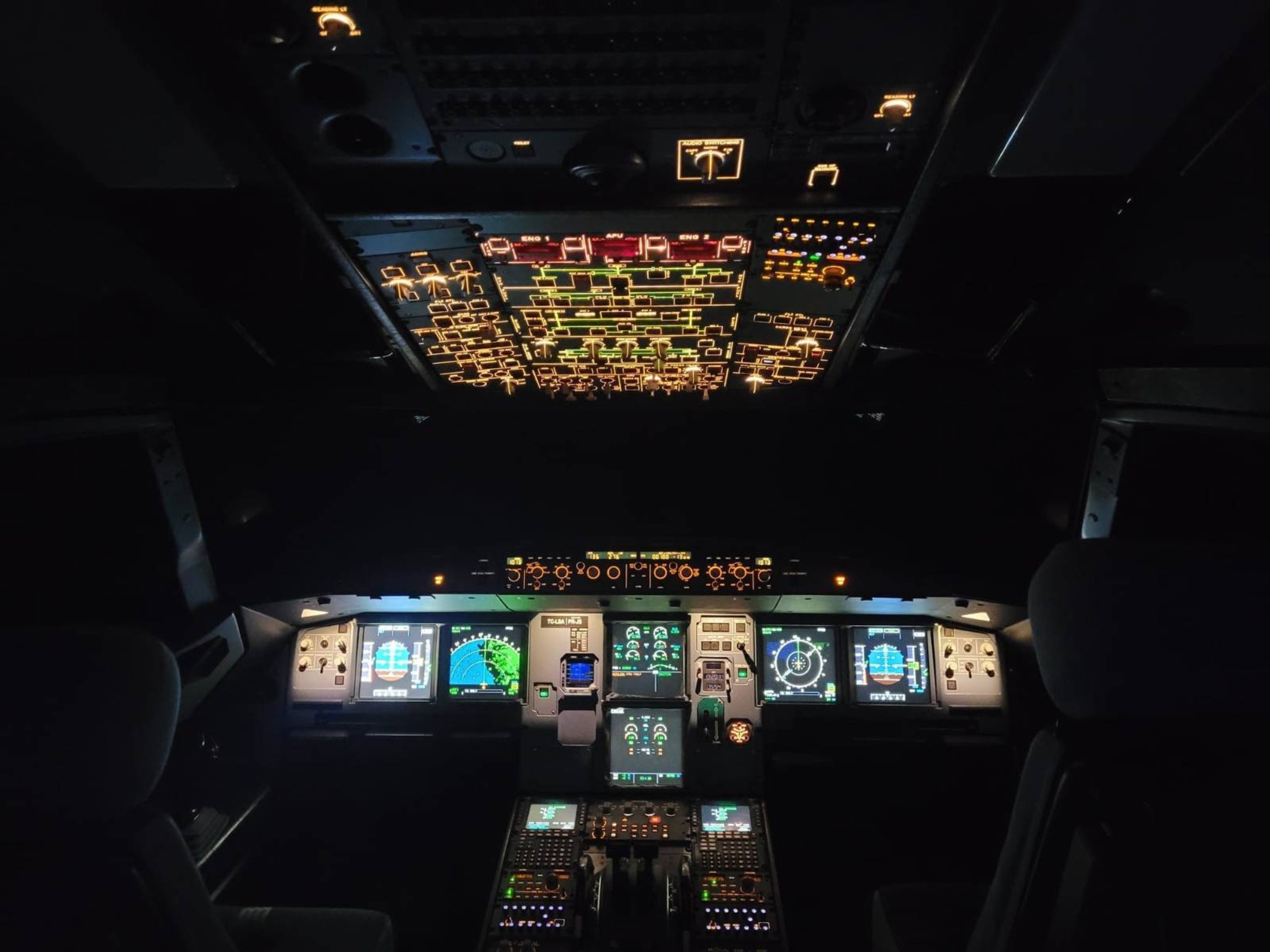
The contract with Havelsan covers eight full-flight simulators and four flight training devices, while the agreement with CAE includes seven full-flight simulators, including two optional units, and two flight training devices.
The orders, covering both narrow-body and wide-body aircraft types, are intended to strengthen the airline’s training infrastructure as its fleet expansion drives demand for more pilots, Şeker said in a post on LinkedIn.
He added that THY also joined the SAFFA Fund, an initiative established to expand sustainable aviation fuel (SAF) production capacity and support the aviation industry’s carbon reduction goals.
“With our long-term growth strategy, our sustainability-focused goals and our vision for supply chain security, we will further expand our investments in the future and transformation of the global aviation industry,” Şeker said.
Turkish Airlines has orders in place for nearly 420 aircraft, including Airbus and Boeing jets, with negotiations continuing for an additional 100 Boeing planes.
The company plans to expand its nonstop long-haul network by deploying ultra-long-range aircraft from late 2027, enabling direct flights to destinations in Australia and South America.
On Tuesday, Şeker said the carrier was also evaluating acquisition opportunities involving airlines, cargo operators and maintenance facilities, with Asia and South America emerging as likely regions for future investments.
Under its 2033 strategy, Turkish Airlines, which already serves more countries than almost any other carrier in the world, plans a major fleet replacement and expansion to around 800 aircraft. Its fleet included over 540 planes as of the end of May.