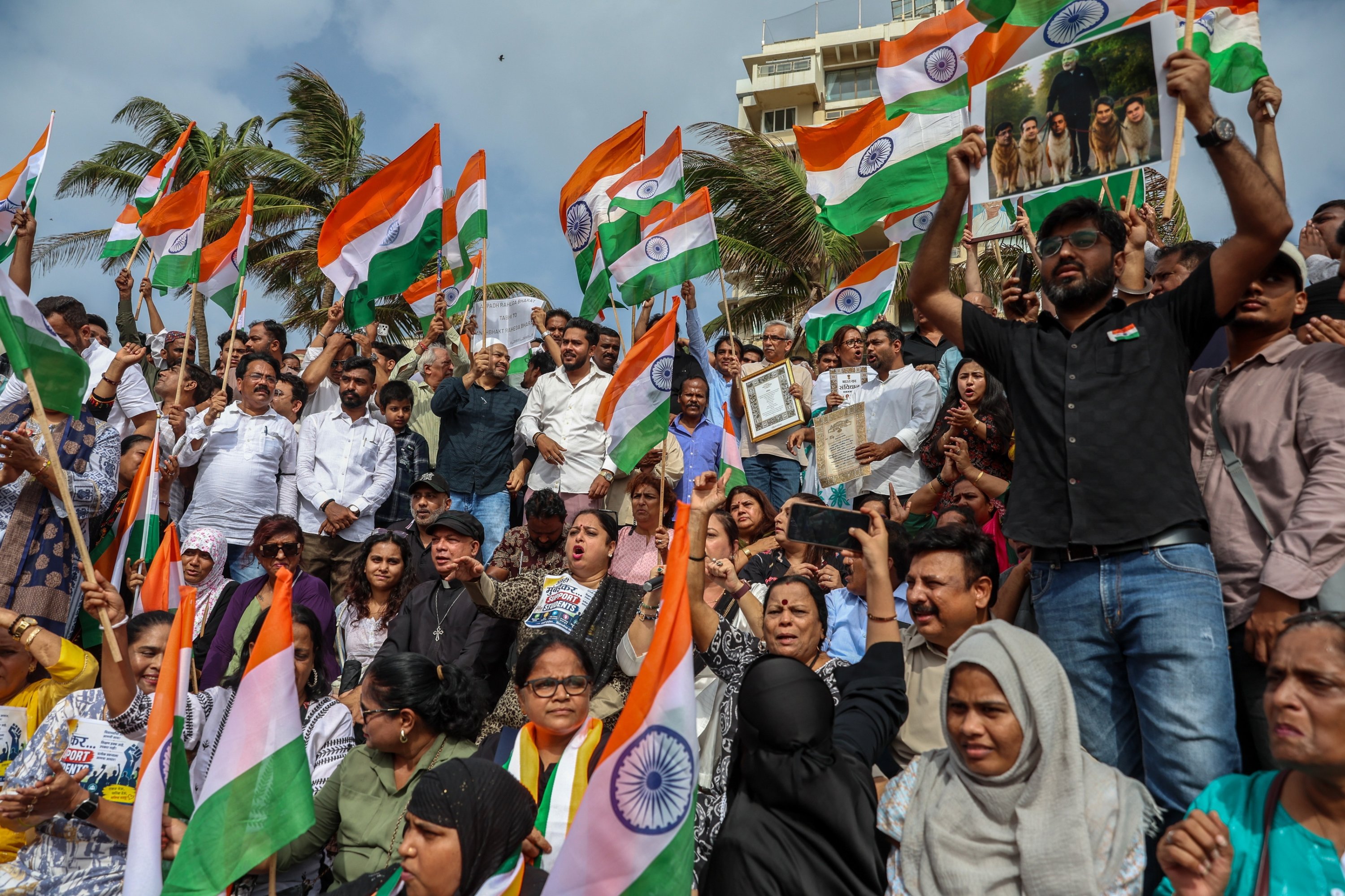
India’s education crisis has taken a major political turn with the resignation of Union Education Minister Dharmendra Pradhan. After weeks of nationwide protests over the NEET-UG paper leak, the government has accepted key demands of the protesters and agreed to withdraw criminal cases against the demonstrators, as the Cockroach Janta Party (CJP) – a name derived from an insult aimed at India’s youth – called off its monthslong sit-in in New Delhi. This marks the first ministerial exit under Prime Minister Narendra Modi’s government in more than a decade.
Even after the early demonstrations ended, the debate is far from over. The government said Pradhan’s resignation was accepted to prevent the issue from being exploited by anti-national elements and to allow students to focus on their future. However, the crisis has evolved far beyond an examination scandal. It has raised serious questions about fairness, accountability and trust in India’s education system, while showing that organised youth protests can push a strong government to respond.
Gen-Z rewriting politics
South Asia has seen a remarkable rise in youth-led politics over the past few years. From Bangladesh to Nepal and now India, all these movements emerged from classrooms, university campuses and social media, rather than being planned or led by the established political parties. Gen-Z has demonstrated how seemingly small grievances can quickly evolve into a serious political challenge for the governments. Despite different immediate triggers, they reflect common structural frustrations regarding limited economic opportunities and distrust of public institutions.
Bangladesh’s political landscape was already politically tense with turbulence and mass arrests throughout late 2023, as the opposition party and civil society groups protested against the January 2024 elections. They demanded a neutral caretaker government to ensure free and fair elections. Prime Minister Sheikh Hasina refused and went ahead with the elections amid an opposition boycott, resulting in an uncompetitive victory.
Later in mid-2024, the Bangladesh Supreme Court’s decision to reinstate the controversial public-sector job quota became the immediate trigger, sending thousands of students onto the streets. As police responded with excessive force, the protests started spreading rapidly from university campuses to cities across the country. By August 2024, the movement dismantled the entire political establishment, ultimately forcing Hasina out of the country after a 15-year rule.
As for Nepal, the 2025 movement began as young Nepali graduates started noticing the lavish lifestyles of politicians’ children while many of them were struggling with unemployment and rising living costs at home. The “Nepo Kids” campaign soon became a symbol of inequality and unfulfilled aspirations among Gen Z who widely shared the photographs of elites’ luxury holidays, expensive cars and extravagant spending across social media.
The government responded with a ban on major social media platforms on the pretext of content regulations. What began as an opposition to political privilege quickly developed into a broader nationwide movement drawing strength from public frustrations, eventually forcing Prime Minister Khadga Prasad Sharma Oli to resign.
India’s turn?
In July 2026, India’s Gen-Z challenged the government’s narrative of India as a rising global power by highlighting the realities of jobless growth, mounting economic pressures, and weakening public accountability.
The repeated examination paper leaks and irregularities affecting students seeking university admissions and government jobs became the immediate trigger. For many young Indians, the issue ran deeper than leaked exam papers. It reflected a growing fear that hard work and merit were losing their value in a system where millions compete for limited opportunities. The early demonstrations in New Delhi were joined by thousands of students, parents and professionals. Human rights activist and education reformer Sonam Wangchuk’s hunger strike, which gained nationwide attention after his forceful detention, further intensified public anger. It was followed by a student-led uprising culminating in the resignation of the union education minister Dharmendra Pradhan.
Pradhan’s resignation indicates that the government has recognized the political sensitivity surrounding youth anger. For the past 12 years, this government sought to project itself as one of the world’s fastest-growing economies, driven by its demographic dividend and expanding global influence. Yet the rise of the CJP suggests that this narrative contrasts sharply with the lived experience of many young Indians.
Moment of reckoning
The scale and nature of this movement’s street mobilization was something new. Modi and his government have weathered major protests over the past decade, including the farmers’ protests, unemployment, economic criticism and sustained opposition campaigns. Yet, this protest achieved something previous protests largely failed to accomplish. Gen Z transformed political mobilization with the use of digital platforms, showing that a movement does not require traditional political machinery to enter the national conversation.
The movement did not subside even after the government accepted several key demands. The initial celebrations over the government’s concessions and the education minister’s resignation quickly turned into a standoff over police crackdowns and legal actions against the protesters.
Social media posts show the country’s streets filled with youngsters, some draped in national flags, chanting slogans directed at the prime minister like, “Each time Modi is scared, he takes refuge in the police,” and “Dharmendra Pradhan is only the beginning; Modi and Amit Shah are next.” Amit Shah, the home minister, is considered the second most powerful man in India after Modi. Very few protest movements managed such derision and satire the way these young protesters did.
For many protesters, the issue has evolved beyond the paper leak. They argue that ending the movement without broader institutional reforms would leave the underlying causes that produced the crisis.
What to expect next?
The biggest question facing the CJP is whether it can transform public anger into a lasting political force. Its strength lies in the issues it represents; concerns over fairness affect millions of young Indians. However, viral momentum alone rarely produces lasting political change. It requires leadership, organization and a coherent agenda that goes beyond opposition to the government.
Whether India’s youth movement ultimately follows a trajectory similar to Bangladesh or Nepal remains uncertain at the moment, yet it has achieved something significant. It not only turned youth problems into a national debate about accountability and the credibility of public institutions, but also challenged the crafted perception of political invincibility that surrounded the government for much of the past decade.
The anti-corruption movement that transformed India’s political mood before the 2014 general election that brought the Bharatiya Janata Party (BJP) to power also began with a single grievance before growing into a wider debate about governance and accountability. Today’s protests may differ in their demands and leadership, but they raise many of the same questions about public trust and institutional credibility.
Most importantly, with the politically crucial Uttar Pradesh state assembly elections scheduled for early next year, the BJP faces a critical test of whether it can retain the confidence of young voters increasingly concerned about unemployment, institutional fairness, and shrinking opportunities. If those concerns remain unaddressed, this movement may be remembered not only for forcing a minister’s resignation, but also for the emergence of India’s Gen Z as a consequential political force.
The timing makes this challenge particularly significant. The internal pressure is rising at a time when India is also confronting growing external economic and foreign policy challenges. History suggests that governments usually survive isolated crises, but they become vulnerable when multiple grievances begin to reinforce one another.
DAILYSABAH
هلدینگ کاسپین استانبول | خرید ملک در ترکیه | صرافی معتبر ایرانی در ترکیه | خرید و فروش طلا در ترکیه | مهاجرت به ترکیه | واردات و صادرات در ترکیه | نیازمندیهای ترکیه | اخبار ترکیه | اخبار جهانی | توریست ایران | خدمات توریستی در ایران | تورهای گردشگری ایران | هلدینگ اول | خدمات کاریابی و فریلنسری و شغل | مرجع اطلاعات ایران (همه چیز در ایران) | کیف پول و خدمات مالی و پرداخت یار | اخبار ایران | تابلو زنده قیمت ارز در ترکیه و استانبول | صرافی آنلاین ترکیه | قیمت طلا و نقره در ترکیه | سرمایه گذاری در ترکیه | جواهرات در ترکیه | نرخ لحظه ای ارزها در استانبول | قیمت دلار امروز در ترکیه | قیمت دلار استانبول امروز | قیمت لحظه ای دلار | اخبار روز ترکیه استانبول | اپلیکیشن ISTEX | اپلیکیشن قیمت لحظه ای دلار و یورو و لیر و ارزها در ترکیه
About the Author