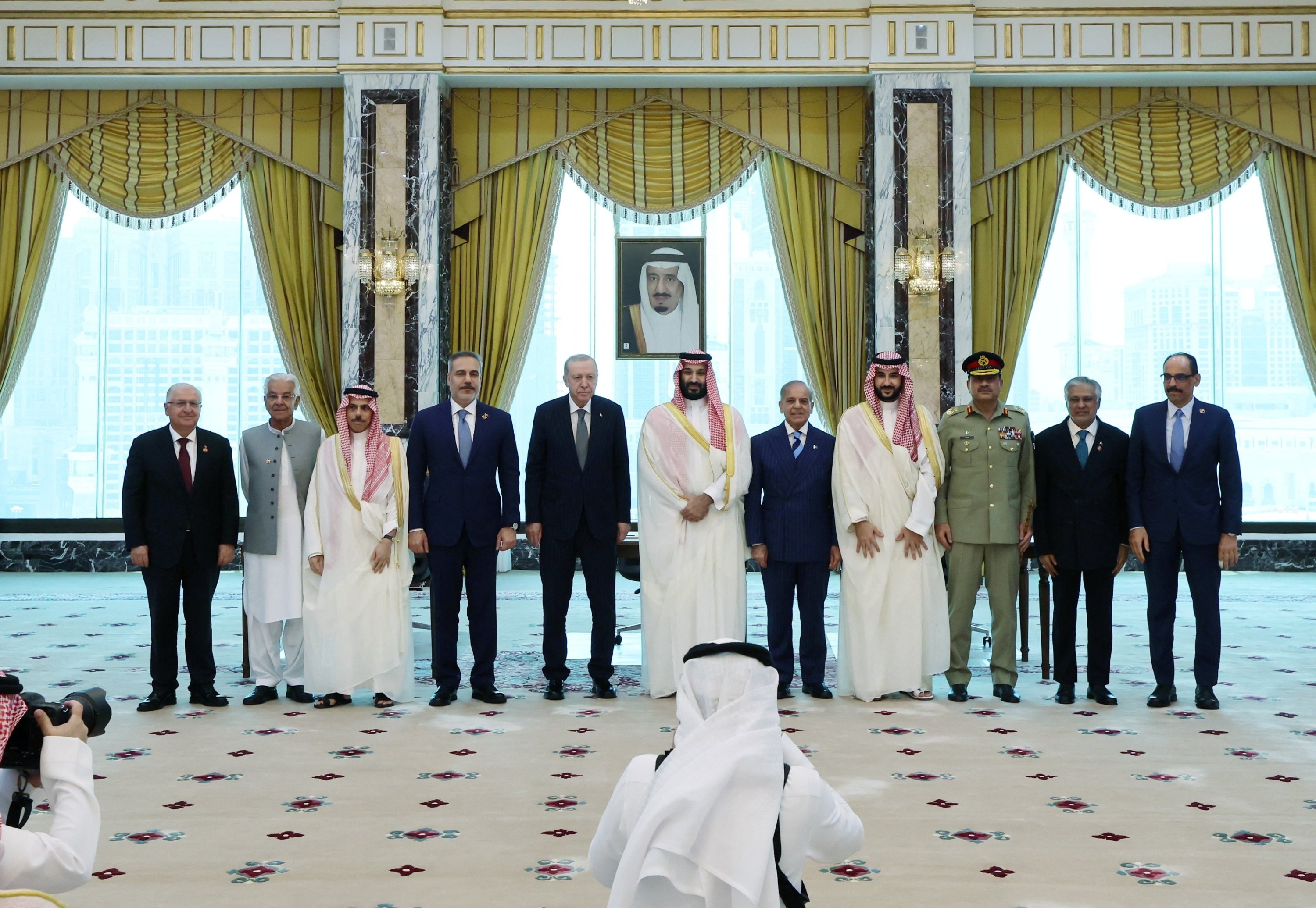
Three regional powers, namely Türkiye, Saudi Arabia, and Pakistan, have signed a joint defense pact on Friday in the Muslim world’s holy city of Mecca.
The International and regional developments of the past decade, including the COVID-19 pandemic, the conflict between Ukraine and Russia, Israel’s expansionist policies leading to a genocide in Gaza and its attacks on Syria and Lebanon, and finally the U.S.-Iran war, have caused a tectonic shift in security, political and economic areas. Moreover, the Iran war has caused new tremors shaking security fault lines in the region. In addition to the energy crisis caused by the closure of the Strait of Hormuz, the unpredictable security environment, while it has broken the previous status quo, the formation of a new status quo and a seemingly permanent equation is not yet clear on how it will be formed. Moreover, the uncertainty about the U.S.’s long-term prospects for the region and how it will end the war in Ukraine, continue backing Israel, and manage the rivalry with Russia and China further complicates the reliability of Washington in terms of security.
At this specific time, the historic Mecca declaration is being signed.
The strength of these three powers is indeed complementary.
Türkiye’s defense industry capacity and joining the deal as NATO’s second biggest army is further strengthened with Saudi Arabia’s financial power and strategic geography and Pakistan’s nuclear capability.
According to the Makkah Joint Defense Agreement, the aim is to “strengthen collective deterrence against any act of aggression, and stipulates that any armed attack against any one of the three States shall be regarded as an attack against them all.”
In other words, the deal constructs a new security architecture as the region is undergoing significant structural security dynamics.
The deal points to the need for collective security and defense action beyond relying on traditional partners and supporters.
Finally, the deal comes at a time of instability in the region that has affected everyone, from Gaza to GCC countries to Iraq, Syria and Lebanon. This deal has established an “axis of stability that will also counter any actors seeking to block prospects of a peaceful, stable and prosperous future for the region’s people.
The views and opinions expressed in this article are solely those of the author. They do not necessarily reflect the editorial stance, values or position of Daily Sabah. The newspaper provides space for diverse perspectives as part of its commitment to open and informed public discussion.