One hundred years ago, the quiet waters of the Bosporus welcomed one of the first international commercial and passenger flights linking Europe with the young Republic of Türkiye. Today, few remember the remarkable seaplane base that made it possible.
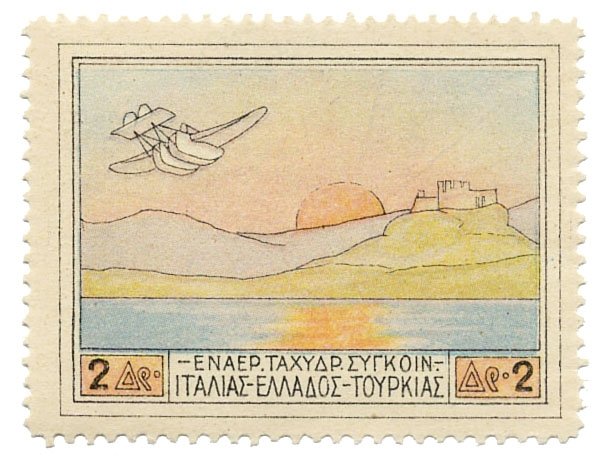
Imagine looking up over the Bosporus on a summer day in 1926. Instead of the familiar silhouettes of ferries and cargo ships, a seaplane appears on the horizon, descending gracefully onto the calm waters of Büyükdere, far from the hustle and bustle of Istanbul. Having departed from Brindisi, with a stop in Athens, it gently lands in the sheltered bay at the northern entrance to the Bosporus. For the first time in history, Italy and Türkiye are connected not only by sea, but also through the skies.
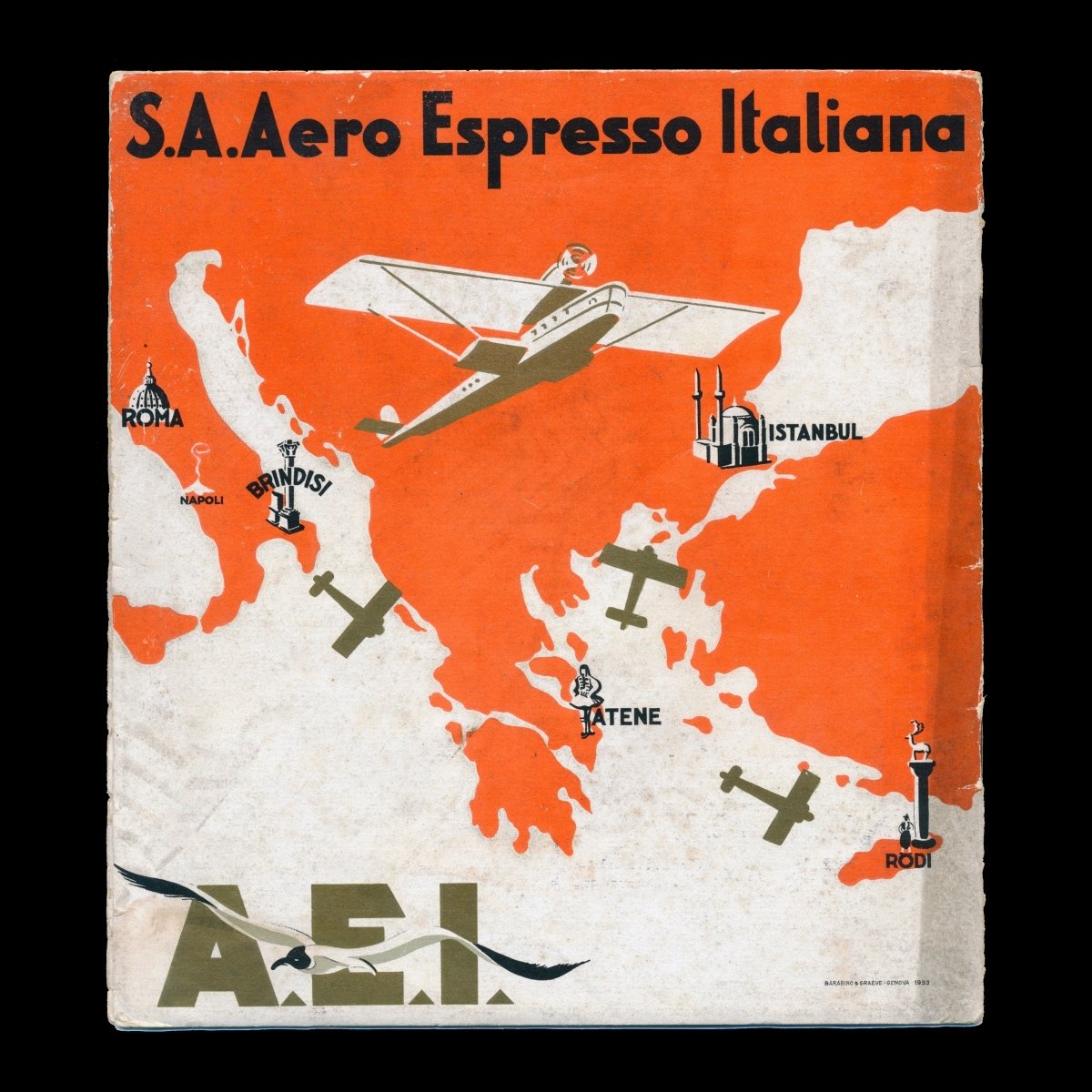
This August marks the centenary of that pioneering flight, one of the earliest regular international air connections in the Eastern Mediterranean. The 1920s were the heroic age of civil aviation, especially for Italy, when governments and private companies sought to transform travel through new aerial routes that dramatically shortened distances once covered only by sea. Among these ambitious ventures, the Brindisi-Athens-Istanbul service quickly became one of the most important in the Eastern Mediterranean, reducing a journey of several weeks to only a couple of days, including the stops.
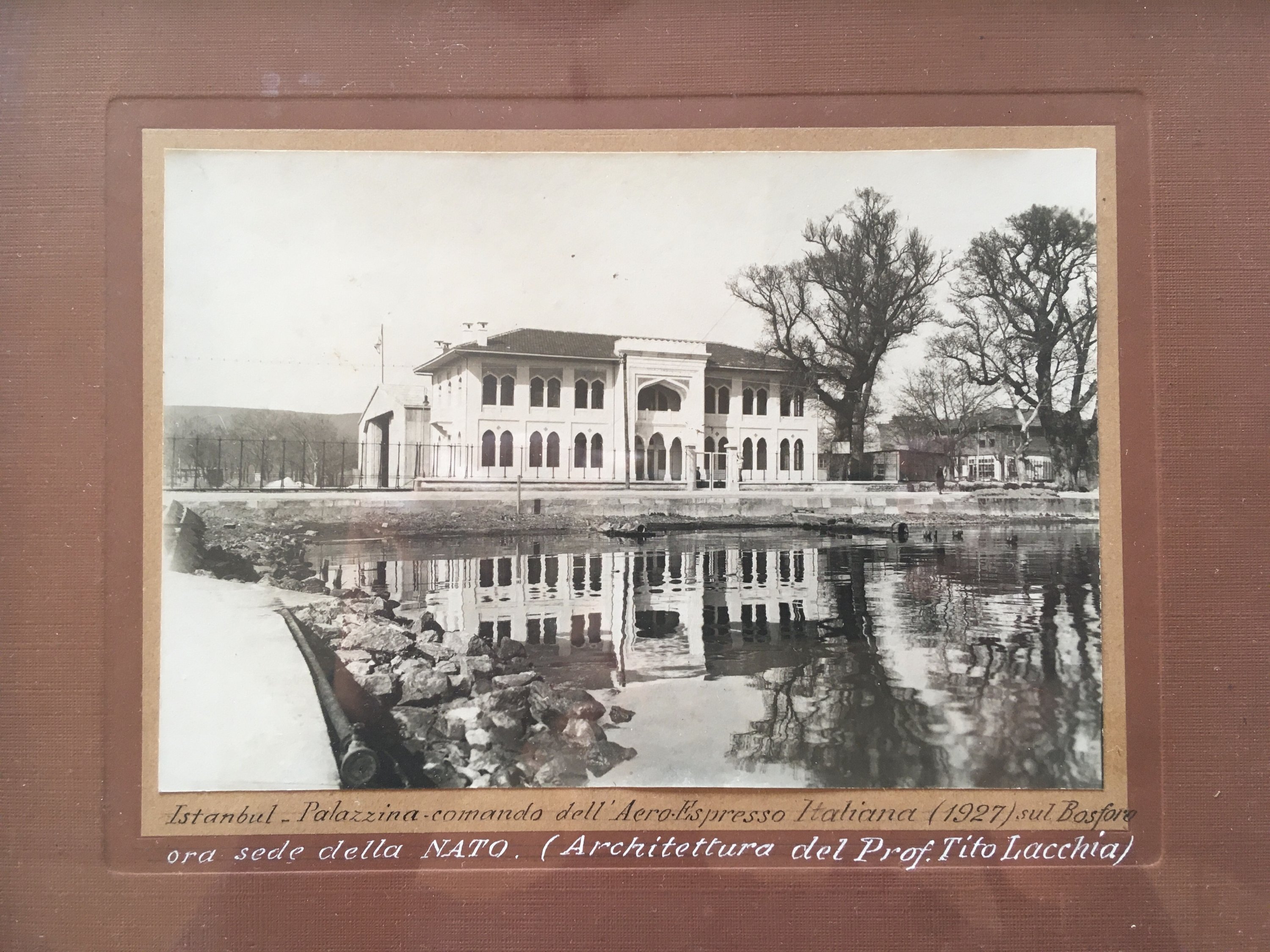
Yet the achievement left behind more than an aviation milestone. It also produced an architectural legacy that has almost vanished from public memory: the Büyükdere Seaplane Base, or idroscalo, the headquarters of the Aero-Espresso Italiana (AEI), the Italian company that established this pioneering air connection between Italy and Türkiye.
Connectivity in 1920s
Situated on the European shore of the Bosporus, in the sheltered bay of Büyükdere, the AEI complex functioned both as a passenger terminal and as the operational headquarters of the company’s expanding network. From here, passengers, mail and goods traveled regularly between Brindisi, Athens and Istanbul, strengthening commercial, diplomatic and cultural relations across the Mediterranean.
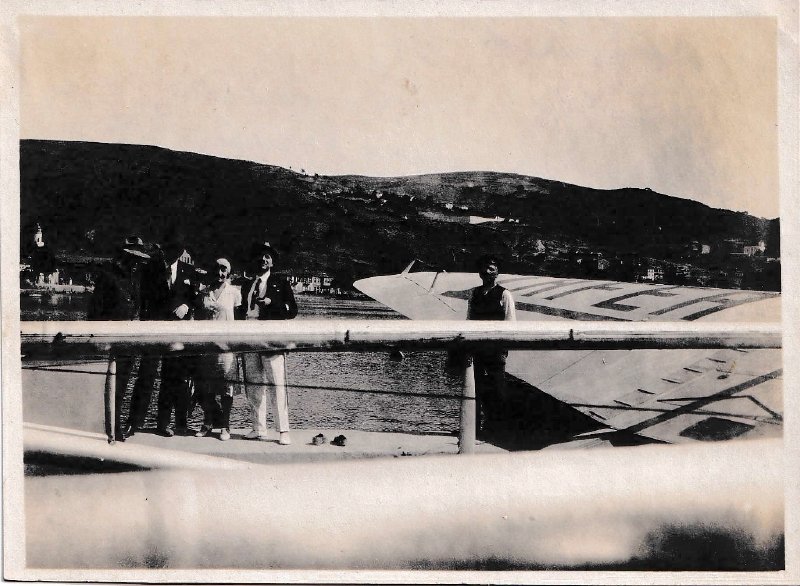
The AEI seaplanes were not merely a means of transportation; they became symbols of a new connectivity. Their services combined cargo and airmail operations with the travel of diplomats, prominent passengers and wealthy travelers eager to experience air travel.
They also played an important role in maintaining cultural connections between cities: newspapers printed in Athens were flown to Istanbul, helping the Greek community that remained in the city after the war to preserve its ties with Greece.
In the following years, the route was extended to the Island of Rhodes, further integrating the Italian-administered Dodecanese into the company’s growing network across the Eastern Mediterranean.
Büyükdere Seaplane Base
The headquarters of the seaplane base was designed and built between 1926 and 1927 by the Italian architect Tito Lacchia, who spent nearly two decades working in Istanbul and whose contribution to the city’s architectural history has only recently begun to receive scholarly attention.
What makes the Büyükdere headquarters particularly fascinating is not only its strategic location and pioneering function, but also its architectural language. At a time when many Italian architects working abroad were embracing the Rationalist and Novecento styles increasingly associated with Fascist Italy, Lacchia deliberately chose a different path. Rather than exporting the architectural vocabulary then fashionable in Italy, he designed the main building of the complex in harmony with the architectural culture of the young Turkish republic.
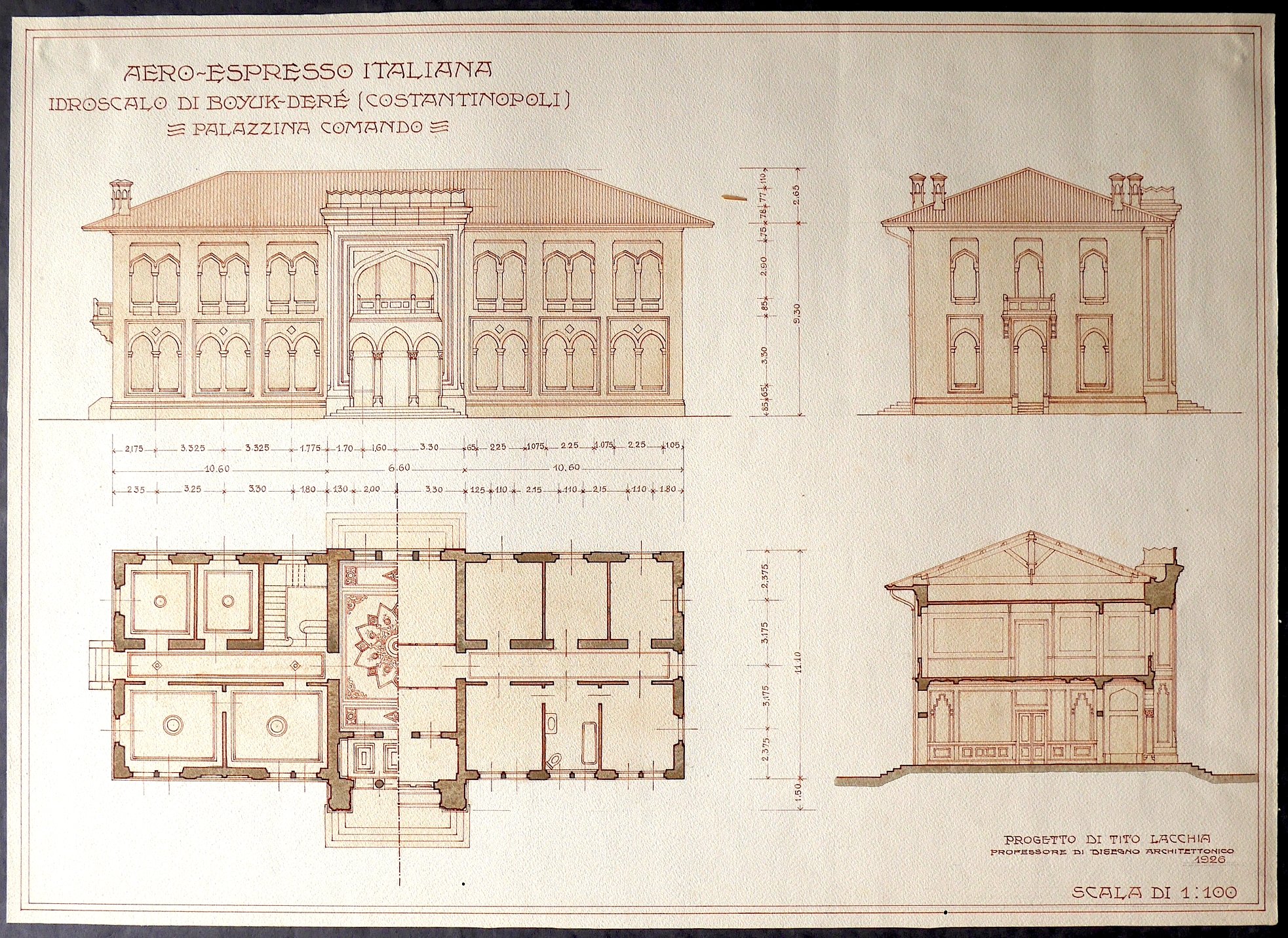
Lacchia’s decision was neither accidental nor merely aesthetic. It reflected the cosmopolitan spirit of Istanbul during the 1920s, a city where Western and Ottoman traditions continued to intersect and overlap in unexpected ways.
While many of his Italian contemporaries were exporting the monumental language promoted by Fascist Italy across the Eastern Mediterranean – from Albania to Libya and the Dodecanese – Lacchia instead embraced the local architectural vocabulary. Perhaps he was influenced by the Levantine Giulio Mongeri’s suggestions, with whom he worked for a period after he arrived in Istanbul in 1913. The result was a building that belonged naturally to its surroundings, demonstrating how architecture could become a bridge between cultures rather than an instrument of political representation and imposition.
The composition of the headquarters building clearly recalls the First National Architectural Movement, well represented by architects such as Mongeri and the Turkish Vedat Tek and Kemalettin Bey. Symmetrical façades, pitched roofs with deep eaves, references to Seljuk and Ottoman architecture, elegant decorative details and ceramic turquoise tiles inspired by Iznik floral and geometric motifs all contribute to a building that sought to express a modern national identity while remaining deeply rooted in Türkiye’s architectural heritage.
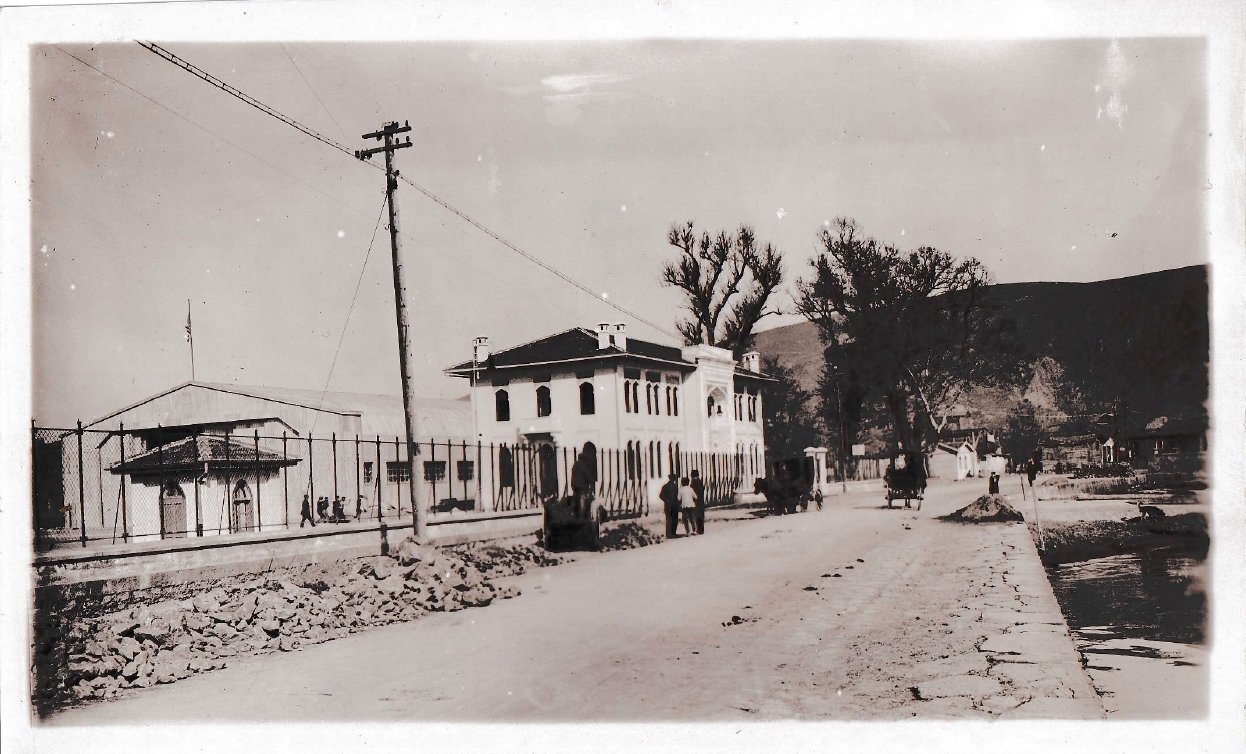
The entire complex, illustrated in the detailed German blueprints produced by the Istanbul Maps Company between 1926 and 1928, clearly expresses the functional logic of the seaplane facility: the administrative headquarters was placed near the Bosporus shore, while the hangars, repair workshops and service buildings for technical staff and crews were arranged according to their operational needs, creating a direct relationship between the architecture and the movement of aircraft along the waterfront and the stream nearby.
Gateway between two nations
The Büyükdere Seaplane Base also marked an important moment in Lacchia’s professional career. More than simply designing a transportation facility, the architect created a symbolic gateway between two nations. Every passenger arriving from Italy encountered, before anything else, an architecture that consciously spoke the language of the young Turkish republic rather than that of contemporary Italy. In this sense, the building functioned not only as a transportation hub but also as a subtle expression of cultural dialogue during a time of profound political change.
At a moment when national identities and political ambitions were being reshaped across the Mediterranean – from the nation-building project of the new Republic to Benito Mussolini’s vision of a renewed Roman Empire – Lacchia achieved something remarkable: He created a building that was at once international in function and deeply rooted in its local context, without ever resorting to the rhetoric of power.
Ironically, only a few years later Türkiye itself would embrace a radically different architectural direction. During the 1930s, under Mustafa Kemal Atatürk’s ambitious modernization program, reinforced concrete, functional planning and international modernism became powerful symbols of the republic’s future, particularly in the rapidly developing capital, Ankara. In retrospect, the Büyükdere Seaplane Base represents one of the last significant public buildings inspired by the First National Style before modernism became the dominant architectural language of the new republic.
The importance of these pioneering flights across countries and the history behind the construction of the complex extended far beyond space and architecture. Long before the age of mass tourism and global air travel, these seaplanes carried diplomats, businesspeople, journalists and correspondence, weaving together two countries that were both looking toward the future during the interwar years. Moreover, seaplanes not only established one of the first rapid aerial links between Istanbul and Europe but also transformed perceptions of the city through the new experience of the aerial gaze.
Still remembered
Yet despite its historical significance, the Büyükdere Seaplane Base has largely vanished from collective memory. Very little has been written about this pioneering airport, and even fewer people realize that one of Türkiye’s earliest aviation infrastructures once stood quietly on the shores of the Bosporus.
Remarkably, the main building itself still survives. Externally, it has remained almost unchanged, continuing to overlook the same waters where the pioneering seaplanes once landed after crossing the Mediterranean. Unfortunately, the other facilities, including the hangars and offices, were demolished and rebuilt later to serve new purposes. Its history, however, reflects the profound political and technological transformations of the 20th century. As civil aviation gradually shifted from seaplanes to land-based airports, the Büyükdere base inevitably lost its original function. With the opening and expansion of land-based aviation infrastructure, especially at Yeşilköy Airport, the Bosporus seaplane terminal gradually lost its significance.
In 1934, Aero Espresso Italiana (AEI) was absorbed into the newly established Ala Littoria, Italy’s first state-owned national airline. Founded on Oct. 28, 1934, and headquartered in Rome, Ala Littoria unified the country’s principal commercial aviation companies – SAM, SANA, SISA, and AEI – under a single national carrier, marking the end of AEI as an independent company and its integration into Italy’s centralized civil aviation system, closely aligned with Mussolini’s policy of consolidating the country’s commercial aviation under state control.
During the late 1930s, the complex entered a new phase of its existence under Turkish administration, while its strategic waterfront location led to military use during and after World War II. A handwritten annotation left years later by Tito Lacchia on one of his photographs further records that, in the post-war years, the former Aero-Espresso headquarters was occupied by NATO forces.
Today, the complex serves as the headquarters of the Turkish coast guard and remains inaccessible to the public. The seaplanes have long disappeared, but the elegant building still preserves the memory of one of the Bosporus’ most extraordinary forgotten landmarks.
A century after those pioneering flights first linked Türkiye and Italy, the story of Büyükdere and its seaplane base deserves to be rediscovered. It is more than the story of a forgotten transportation hub or an Italian architect who built it. It is the story of technological optimism, architectural dialogue and international cooperation during the formative years of the Turkish republic.
Standing on the waterfront today, it is difficult to imagine seaplanes descending onto the Bosporus, surrounded by the fishing village of Büyükdere, the elegant summer embassies and yalı lining the shore, and the green hills that once framed this quiet stretch of coastline. Yet for a brief and remarkable moment, this peaceful corner of Istanbul became one of the most picturesque aerial gateways between Europe and the Near East. Recovering its history means restoring to the Bosporus one of its most fascinating and almost forgotten chapters.
The views and opinions expressed in this article are solely those of the author. They do not necessarily reflect the editorial stance, values or position of Daily Sabah. The newspaper provides space for diverse perspectives as part of its commitment to open and informed public discussion.
DAILYSABAH
هلدینگ کاسپین استانبول | خرید ملک در ترکیه | صرافی معتبر ایرانی در ترکیه | خرید و فروش طلا در ترکیه | مهاجرت به ترکیه | واردات و صادرات در ترکیه | نیازمندیهای ترکیه | اخبار ترکیه | اخبار جهانی | توریست ایران | خدمات توریستی در ایران | تورهای گردشگری ایران | هلدینگ اول | خدمات کاریابی و فریلنسری و شغل | مرجع اطلاعات ایران (همه چیز در ایران) | کیف پول و خدمات مالی و پرداخت یار | اخبار ایران | تابلو زنده قیمت ارز در ترکیه و استانبول | صرافی آنلاین ترکیه | قیمت طلا و نقره در ترکیه | سرمایه گذاری در ترکیه | جواهرات در ترکیه | نرخ لحظه ای ارزها در استانبول | قیمت دلار امروز در ترکیه | قیمت دلار استانبول امروز | قیمت لحظه ای دلار | اخبار روز ترکیه استانبول | اپلیکیشن ISTEX | اپلیکیشن قیمت لحظه ای دلار و یورو و لیر و ارزها در ترکیه
About the Author