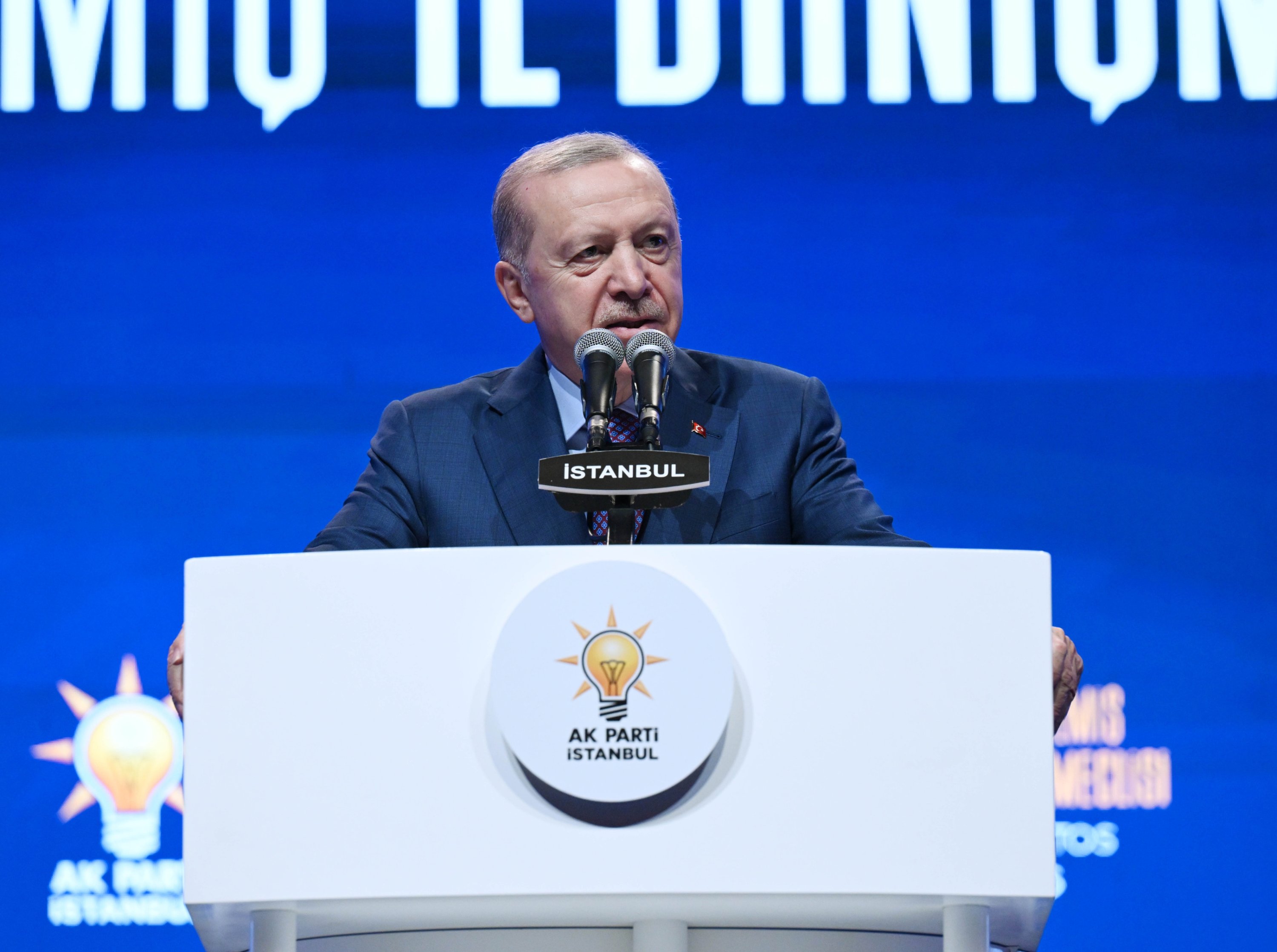
Founded on Aug. 14, 2001, the Justice and Development Party (AK Party) is celebrating its 25th anniversary today. A quarter of a century – easier said than done. Moreover, these 25 years have coincided with an extraordinarily turbulent period for Türkiye and its surrounding region, marked by crises and major upheavals. For a political movement to remain at the center of the country’s politics for 25 years through a period that witnessed numerous major challenges – from global economic crises to regional wars, from the July 15 coup attempt to terrorist attacks, and from the pandemic to the Feb. 6 earthquakes – is in itself a remarkable phenomenon that deserves careful consideration. Just 15 months after its establishment, the AK Party came to power on its own in the Nov. 3, 2002 elections and has succeeded in finishing first in every general election held since then. Therefore, the AK Party’s 25-year story is not merely the story of a political party’s long tenure in power; it is also the story of Türkiye’s profound social transformation over the past quarter century.
The most distinctive feature of this long period has been the extraordinarily strong relationship of trust that President Recep Tayyip Erdoğan has built with broad segments of society. Political parties may wear down over time, organizations may change, policies may be criticized, and voters’ attitudes toward a party may fluctuate. Indeed, the AK Party has not been immune to any of these dynamics over the past 25 years. Yet the relationship voters have established with President Erdoğan has gone far beyond the conventional relationship between a political party and its electorate. At times, a significant portion of the public has drawn a distinction between the AK Party and the president, keeping their criticism of the party separate from their trust in Erdoğan. As a result, a lasting relationship of trust and loyalty has emerged on a scale that very few leaders – perhaps none – in Türkiye’s recent political history have been able to achieve.
It would be insufficient to explain this relationship solely in terms of charismatic leadership. The real issue is that broad segments of society have seen Erdoğan as one of their own and have been able to establish a strong connection between Erdoğan’s political journey and their own life stories. For many years, large segments of society had felt distant from the state and the political center, facing visible or invisible barriers in many spheres, from education and bureaucracy to the economy and culture. For the first time, they saw the political center opening itself up to them. Many steps – from lifting the headscarf bans and abolishing the university entrance coefficient system to extending education and healthcare services to even the most remote parts of the country and expanding social policies – were not merely technical changes in public policy from the perspective of ordinary citizens. Each of these developments also strengthened the sense that “This country is my country too; this state is my state too.” Therefore, this is perhaps the most important place to look in order to understand the resilience of the AK Party’s social base.
The second defining feature of the AK Party era can be described as the “mass expansion of access.” Over the past quarter century, service capacity has expanded on a scale incomparable with the past in almost every field – from education and health care to transportation and energy, and from social policy to digital infrastructure – and these services have been made accessible to much broader segments of society. Building hospitals, schools, universities, roads, or airports is, of course, important for any country. Yet genuine social transformation occurs when people who previously could not benefit from such opportunities gain access to them. Education is one of the most striking examples. The expansion of enrollment from preschool through secondary and higher education, the substantial increase in the number of classrooms and teachers, the extension of higher education to every province, and, in particular, the historic transformation in girls’ access to education have not only expanded the capacity of the education system but have also transformed Türkiye’s social structure.
A similar transformation has taken place in health care. Türkiye moved from a system in which health care services were accessible mainly in major cities and to certain segments of society toward a far more inclusive system in which citizens can access health care services wherever they live. In transportation, divided highways, bridges, tunnels, high-speed rail lines, and airports have not only improved physical infrastructure but have also shortened the distances between cities and regions. The expansion of energy infrastructure represents another dimension of the same transformation. Taken together, all these developments suggest that what Türkiye has essentially experienced over the past 25 years is a major “revolution in access.”
The political and social consequences of this revolution in access are even more significant than the investments themselves. This is because social groups that had remained on the periphery for many years began to move toward the center through these services. A young person born in a small town in Anatolia could gain access to university education and then move from university into academia, the bureaucracy, or the business world. Children from families that had previously remained outside the center for economic, cultural, or geographical reasons gained opportunities for social mobility. In other words, during this period Türkiye succeeded in incorporating, on a much broader scale, human resources that it had long been unable to utilize sufficiently into the development process. The country’s entire accumulated capacity, its full range of human resources, and its entire geography became part of the development process. Therefore, when we look back at this remarkable quarter-century story, we see a much more fundamental transformation beyond the figures and physical investments: Türkiye has now become a country capable of mobilizing all of its human resources, its entire geography, and all segments of society in the development process.
One of the enduring effects of the AK Party era lies precisely here. The social base of development has broadened. Instead of economic and social dynamism being concentrated in just a few major centers such as Istanbul, Ankara, and Izmir, the infrastructure and production capacities of cities across Anatolia have been strengthened. With the development of transportation and communication infrastructure, the relationship between the periphery and the center has been reshaped. This process has facilitated the growth of a new middle class, the emergence of new entrepreneurial groups, and greater visibility for segments of society that had previously been underrepresented in the public sphere.
The results of the same approach can also be seen in Türkiye’s production and technological capacity. The transformation and expansion of capacity in the defense industry – from UAVs and armed UAVs to domestically produced naval vessels, from air defense systems to satellite and communications technologies – has become one of the most visible examples, and perhaps the most important symbol, of this transformation. What matters here, however, is not merely the products that have emerged. Far more significant is the fact that an increasingly broad ecosystem – ranging from universities and engineering companies to technoparks and SMEs – has been mobilized around a common objective.
The transformation in Türkiye’s approach to foreign policy is likewise inseparable from this growing sense of self-confidence. Over the past 25 years, Türkiye has evolved from a country that largely observed developments in its region from a distance into an actor seeking to articulate its own positions and priorities more assertively. This has, of course, entailed costs, tensions, and debates. Yet one of the defining characteristics of this period has been Türkiye’s effort to carve out a more autonomous space for itself on the basis of its own capabilities, rather than defining its position within the international system solely according to boundaries drawn by others. Accordingly, a wide range of policies – from the drive for greater self-reliance in the defense industry to energy policies, from transportation corridors to Türkiye’s openings toward Africa and Asia – can be seen as different manifestations of this broader endeavor.
This quarter-century has also been a period during which Türkiye has faced exceptionally severe challenges. Global economic crises, the Gezi events, the Dec. 17/25 process, terrorist attacks, the July 15 coup attempt, the war in Syria and the migration of millions of people to Türkiye, the COVID-19 pandemic, global supply-chain crises, and finally the devastating earthquakes of Feb. 6, 2023… Each of these events, on its own, was significant enough to destabilize the political and economic balance of a country. Therefore, in assessing the AK Party’s 25 years, it is necessary to consider not only the investments made during periods of relative stability, but also how state capacity was preserved and continually rebuilt in the face of successive crises.
Of course, Türkiye is no longer confronted with the problems of 2002; instead, it is facing a new set of challenges, many of which have emerged from the very transformation of the past quarter century. 25 years ago, people’s primary demand was access to public services; today, we have entered a stage in which the quality of those services is increasingly being questioned. In education, the central issue is no longer access itself, but rather the quality of what is accessed and the disparities in quality across institutions. In health care, the challenge of access is increasingly giving way to questions of service quality and the sustainability of the system. Income distribution, the cost of living, housing, young people’s expectations for the future, and social mobility are among the defining issues of the new era. A young population, once one of Türkiye’s greatest advantages for development, is now giving way to the risk of an aging society as fertility rates decline rapidly.
Gaining admission to a university was once a major goal in itself; today, young people are asking what kind of future a university education will provide them. There was a time when building a road, a hospital, or a school met a major public expectation; today, citizens demand a higher quality of life, greater economic security, better jobs, fairer opportunities, and broader spaces in which they can express themselves. Therefore, the politics of the second-quarter century cannot be built simply by repeating the achievements of the first. It will depend on accurately understanding the new social reality created by those very achievements, rapidly developing solutions to emerging challenges, and making those solutions accessible to broad segments of society.
The founding dynamics of the AK Party possess the capacity to recognize and respond to such phase transitions. After all, the AK Party was able to generate such broad social support in 2001 precisely because it correctly understood the prevailing social conditions and the transformation underway, and translated the demands arising from that transformation into politics. Today, Türkiye stands on the threshold of another major social transformation. New generations have emerged that are better educated, more urbanized, more digitally connected, more engaged with the wider world, and more diverse in their expectations. From artificial intelligence and demographic transformation to climate change and new forms of work, the issues that will shape the next quarter century are markedly different from those of the past. Therefore, for the AK Party, its 25th anniversary should be seen not merely as an occasion to commemorate past achievements, but also as an important opportunity to understand Türkiye’s new social reality and to develop the language and vision of the next quarter century. Thus, after 25 years, the issue is no longer simply to recount how far Türkiye has come. The real question is how to build Türkiye’s second-quarter century on the foundations of this substantial legacy in a sound and sustainable manner.
The views and opinions expressed in this article are solely those of the author. They do not necessarily reflect the editorial stance, values or position of Daily Sabah. The newspaper provides space for diverse perspectives as part of its commitment to open and informed public discussion.
DAILYSABAH
هلدینگ کاسپین استانبول | خرید ملک در ترکیه | صرافی معتبر ایرانی در ترکیه | خرید و فروش طلا در ترکیه | مهاجرت به ترکیه | واردات و صادرات در ترکیه | نیازمندیهای ترکیه | اخبار ترکیه | اخبار جهانی | توریست ایران | خدمات توریستی در ایران | تورهای گردشگری ایران | هلدینگ اول | خدمات کاریابی و فریلنسری و شغل | مرجع اطلاعات ایران (همه چیز در ایران) | کیف پول و خدمات مالی و پرداخت یار | اخبار ایران | تابلو زنده قیمت ارز در ترکیه و استانبول | صرافی آنلاین ترکیه | قیمت طلا و نقره در ترکیه | سرمایه گذاری در ترکیه | جواهرات در ترکیه | نرخ لحظه ای ارزها در استانبول | قیمت دلار امروز در ترکیه | قیمت دلار استانبول امروز | قیمت لحظه ای دلار | اخبار روز ترکیه استانبول | اپلیکیشن ISTEX | اپلیکیشن قیمت لحظه ای دلار و یورو و لیر و ارزها در ترکیه
About the Author