
Every summer evening, Gulshan follows the same routine. She washes the floor of her one-room home several times so it cools a little for her four children to sleep on. Last summer, the family saved enough to buy a desert cooler, which uses evaporation as a cheaper alternative to air conditioning.
The family uses the appliance cautiously to save on energy costs. But even when it is on, Gulshan, who does not use a surname, has to dampeneveryone’s clothes before sleeping. The 39-year-old and her children now have rashes and one has a skin infection from the wet cloth against their skin.
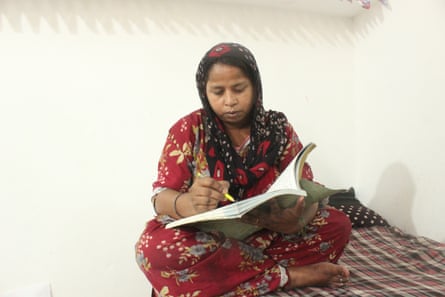
This summer, Gulshan started jotting down these coping strategies in a garmi khata, or heat registry. “I feel relieved that at least somebody might read my family’s experiences,” she says.
They are one of 40 households in Sunder Nagri, a slum in north-east Delhi, documenting their experiences of surviving the city’s increasingly longer and more frequent heatwaves.
Over the last few years, cities across India have begun drawing up heat action plans – agreements formulated by a municipality or district administration on how to prepare for and respond to extreme heat.
While some incorporate data such as satellite-derived land surface temperatures to identify heat hotspots, there are still significant gaps in information on people, making it difficult to understand how heat is experienced differently across communities.
Aravind Unni, an urban planner and researcher in Delhi, says: “Experiences of heat are vastly different depending on geography, income, occupation, gender, caste, class.
“While we have some meteorological data on heat, what’s absolutely missing is people, community – what they feel, what they experience.”
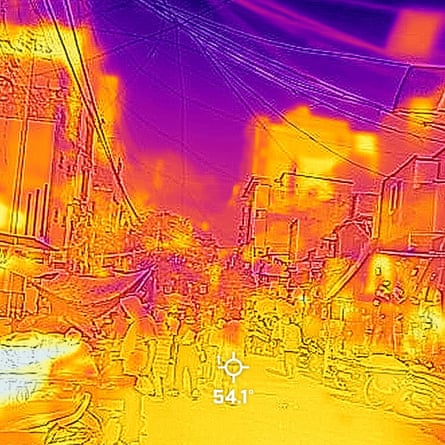
Most data collated in heat planning is usually just meteorological, such as air temperatures and heatwave thresholds.. The idea for the heat diaries was to “move beyond just the numbers”, says Nibedita Saha, a Greenpeace India researcher who worked on the project.
Aakiz Farooq, a senior campaigner at the group, says the team contemplated how best to encapsulate experiences and thought: “What if they become their own storytellers, they write their own evidence, they write their own testimonies?”
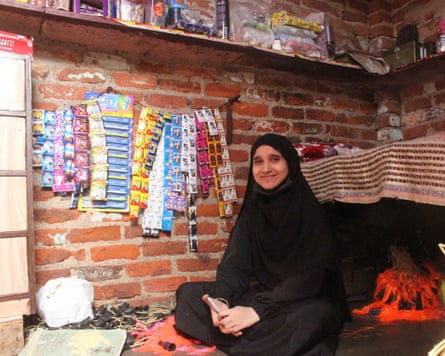
Arshi, 19, who lives in one room with five other family members, is a distance-learning student at Delhi University. She also works at home making decorative tassels for trucks.
She makes about 150 rupees (£1.17) working with her mother and sister for a day. “Sometimes I go to the college library just to sit in the air-conditioned space for a while. But I have to come back home so I can help my sister and mother,” she says. These experiences are part of Arshi’s diary.
The diaries, which ask about daily routines, work, home, mood and families, are intended to serve as comprehensive journals of residents’ daily lives.
Arshi’s small brick house is extremely humid, and while the temperatures are lower after rain, the combination of heat and humidity means everyone is sweating profusely.
The ambient air temperature insideis 29.3C (85F), but with relative humidity at 84.6%, the “feels-like” temperature is 36.3C (97F).
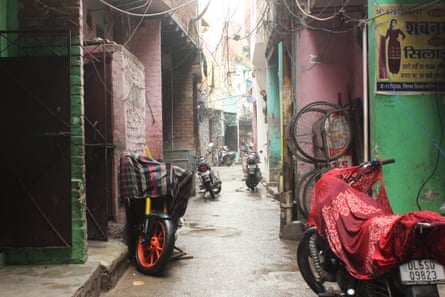
Raja, a 21-year-old street vendor, experiences temperatures as high as 45C during peak summer months as he sells vegetables from his pushcart. The fresh produce spoils quickly, leading to losses, and he has noticed a drastic drop in numbers of people on the street, which also reduces his income.
Every night, he returns to a home with limited ventilation and no cooling source beyond a ceiling fan. As the gap between day and night temperatures narrows year after year in Delhi, people in homes such as Raja’s get no respite, even after the sun sets. “I started sleeping out on the roof in May so I could feel some air,” he says.
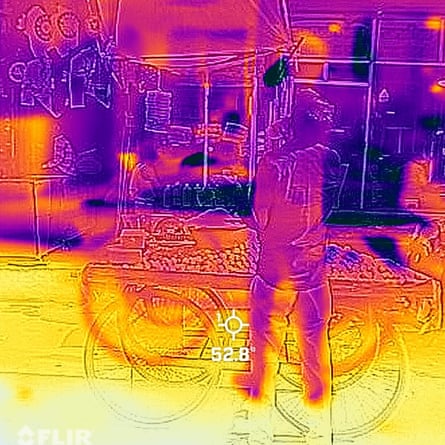
Workers such as Raja, Unni says, could be better protected by public policy if the state knew of their experiences at a micro-level and establish systems to provide compensation.
When Sunder Nagri’s residents set out to map heat indices within their neighbourhood, they found that some streets, including where Raja sells vegetables, reflected temperatures on the ground of more than 54C (129F). The residents are attempting to find pragmatic solutions, such as shade, water sources or increased greenery.
This summer, satellite analysis found striking differences across Delhi. For instance, an analysis by the news magazine India Today found an average land-surface temperature of nearly 44C in the south-west district of Mahipalpur, by the airport, compared with about 37C just 2 miles (3km) away in the leafy, upmarket suburb of Vasant Kunj.
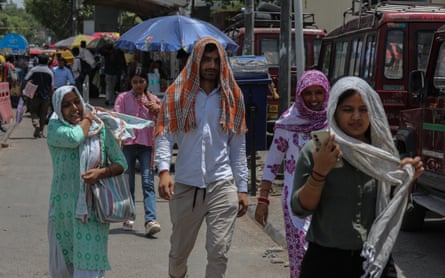
Unni feels the diaries and community heat mapping can help form urban resilience policy, but says a big stumbling block is that “Indian cities do not have the administrative capacity or infrastructure to have decentralised action”.
The diaries have now been submitted to India’s National Human Rights Commission, urging it to recognise extreme heat as a human rights issue and recommend measures to protect people.
Farooq says the team also plans to share the testimonies with ministries, policymakers and MPs to push for more targeted measures to protect people from extreme heat.
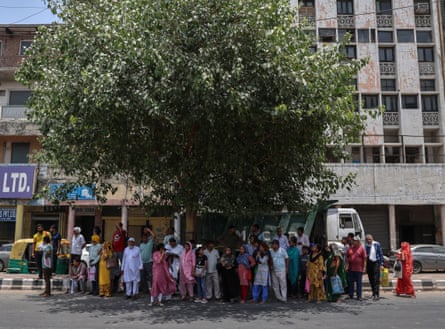
He says they are also working to develop the testimonies into evidence of impacts and injuries that could be used for lawsuits to increase accountability, given the supreme court’s 2024 ruling that protection from the most adverse impacts of the climate crisis forms part of the right to life.
On 4 August, India’s government added heatwaves to the list of nationally notified disasters, allowing states to access emergency relief funds.
Unni and Farooq say it “would be ideal” if the decision meant funds could support local action guided by community participation.
Arshi also feels more hopeful after the new guidelines. “Even if the government sees something as small as our rising medical and electricity costs and tries to help with that, it would feel like a win for me. At least they would have seen what we are going through,” she says.
The Guardian wp:paragraph
هلدینگ کاسپین استانبول | خرید ملک در ترکیه | صرافی معتبر ایرانی در ترکیه | خرید و فروش طلا در ترکیه | مهاجرت به ترکیه | واردات و صادرات در ترکیه | نیازمندیهای ترکیه | اخبار ترکیه | اخبار جهانی | توریست ایران | خدمات توریستی در ایران | تورهای گردشگری ایران | هلدینگ اول | خدمات کاریابی و فریلنسری و شغل | مرجع اطلاعات ایران (همه چیز در ایران) | کیف پول و خدمات مالی و پرداخت یار | اخبار ایران | تابلو زنده قیمت ارز در ترکیه و استانبول | صرافی آنلاین ترکیه | قیمت طلا و نقره در ترکیه | سرمایه گذاری در ترکیه | جواهرات در ترکیه | نرخ لحظه ای ارزها در استانبول | قیمت دلار امروز در ترکیه | قیمت دلار استانبول امروز | قیمت لحظه ای دلار | اخبار روز ترکیه استانبول | اپلیکیشن ISTEX | اپلیکیشن قیمت لحظه ای دلار و یورو و لیر و ارزها در ترکیه
/wp:paragraph wp:paragraph /wp:paragraph
About the Author