Home – CBSNews.com
On this “Face the Nation with Margaret Brennan” broadcast, moderated by Margaret Brennan:
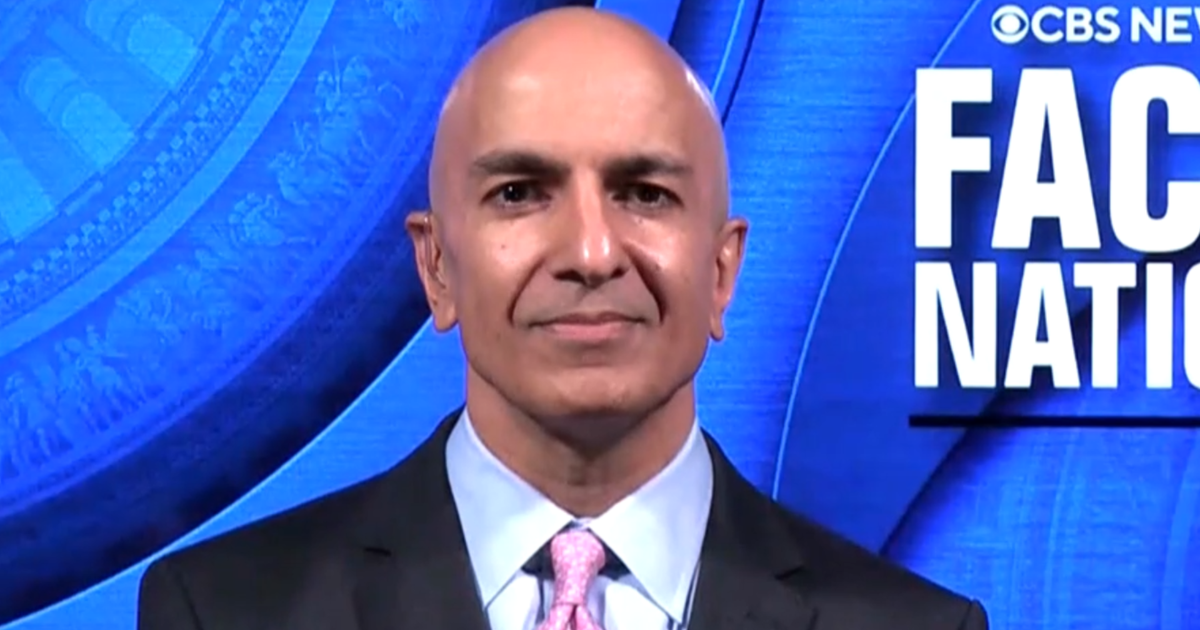
- Neel Kashkari, Minneapolis Fed president and CEO
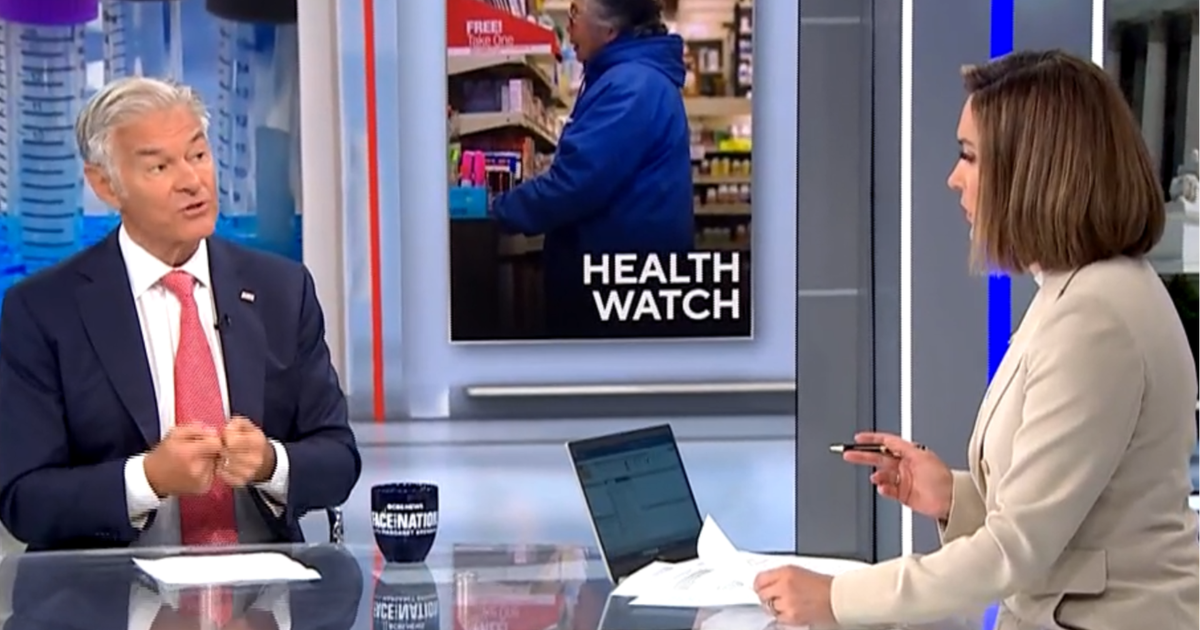
- Dr. Mehmet Oz, Centers for Medicare & Medicaid Services administrator
- Dr. Scott Gottlieb, former FDA commissioner
- Rep. Byron Donalds, Republican of Florida and candidate for governor
- Rep. Seth Moulton, Democrat of Massachusetts and Senate primary candidate
Click here to browse full transcripts from 2026 of “Face the Nation with Margaret Brennan.”
MARGARET BRENNAN: I’m Margaret Brennan in Washington.
And this week on Face the Nation: new warning signs for the U.S. economy and mounting costs for American families.
As Washington prepares for race cars to speed down its streets today, many Americans are focused on a different pace, the struggle to keep up with the rising cost of living and a growing sense of economic uncertainty, and a new trade war this weekend with neighboring Canada, with the U.S. moving to raise tariffs on everything from building materials to hockey sticks and Canadian alcohol.
(Begin VT)
MARK CARNEY (Canadian Prime Minister): That America is trying to break us so they can own us.
(End VT)
MARGARET BRENNAN: Will prices be pushed even higher?
We will discuss the outlook for the economy with Minneapolis Federal Reserve President Neel Kashkari.
Then: another growing concern for Americans, the skyrocketing cost of health care. We will hear from the administrator of Medicare and Medicaid, Dr. Mehmet Oz. Former FDA Commissioner Dr. Scott Gottlieb will also join us to discuss the growing list of food recalls and outbreaks as President Trump makes a new pick to lead the Food and Drug Administration.
Finally, Florida Congressman Byron Donalds, fresh off his win in the GOP gubernatorial primary, will join us.
And we will ask Democratic Congressman Seth Moulton of Massachusetts about his push to oust a senator from his own party.
It’s all just ahead on Face the Nation.
Good morning, and welcome to Face the Nation.
Americans are waking up to an economy in uncharted territory. The country’s debt hit a record $40 trillion last week, and fears of persistent inflation and uncertainty about the Iran war sent financial markets reeling, driving borrowing costs, including those for the U.S. government, to their highest levels in two decades.
The Treasury Department intervened midweek to help, but, by Friday, the relief had evaporated. For everyday Americans, higher yields benefit savers, but they make mortgages and other loans more expensive.
For more on what’s next for the American economy, we’re joined by Neel Kashkari, president and CEO of the Federal Reserve Bank of Minneapolis.
Welcome back to Face the Nation.
NEEL KASHKARI (President, Federal Reserve Bank of Minneapolis): Thanks for having me, Margaret. Great to be with you.
MARGARET BRENNAN: So, when we spoke back in may, I asked you about the debt level America has. You said you didn’t see an immediate crisis brewing, but at some point this is going to become a problem.
We just hit $40 trillion. Are we at the point where this is a problem?
NEEL KASHKARI: Well, Margaret, if you look at the Treasury yields, yields are high, 4.7 percent, for example, on the 10-year Treasury.
They’re high relative to recent history. They’re not high relative to more – longer American history. In the early 2000s, the 10-year Treasury and the 30-year Treasury were around these levels. In the ’90s, They were meaningfully higher than they are now.
And there’s no sign of Treasury market dysfunction or breaking down in financial markets. There are a lot of different factors that go into those Treasury yields. Inflation and the outlook for inflation is one of those factors. That’s the Fed’s job.
But there are many other factors. Like, it’s the A.I. investment, government borrowing, economic growth. All of those end up going together to set these long-run Treasury yields.
MARGARET BRENNAN: But we saw this bond sell-off. We saw extraordinary action by the Treasury secretary, Scott Bessent, to intervene.
He said what was happening was due to traders having bad information. Is that what’s happening?
NEEL KASHKARI: Well, I’m going to leave it to the treasury secretary to manage the Treasury debt market. That’s the job of the Treasury Department. The Fed’s job is really to take care of the inflation piece of it.
We are all absolutely committed to getting inflation back down to 2 percent. But, long run, it’s going to be fundamentals of debt issuance, of investment, of economic growth and productivity. Long run, that’s what sets the Treasury yields, not just in the U.S., but government bond yields all around the world.
MARGARET BRENNAN: No. And I appreciate, as a Central Banker, you don’t want to get involved in fiscal policy or what the markets are doing day to day.
But there is this debate right now about whether something more fundamental is shifting. Investor Mohamed El-Erian wrote in “The New York Times”: “There’s a breathtaking leap in the cost of borrowing. If it persists, it could mark the beginning of a structural economic shift more enduring and more globally consequential than most previous episodes of market volatility.”
Is that overstating things? Are we in the midst of a huge shift?
NEEL KASHKARI: Well, there are a lot of different factors going on at the same time. So the stock market, as you know, has been really bullish for the last several years, really excited about A.I. and the prospects that will lead to productivity growth.
A more optimistic take on these market moves is that the bond market is catching up to the stock market, and the bond market is seeing a higher growth trajectory. If the global economy is in for higher productivity growth and higher growth, you would also expect to see higher yields all around the world.
Now, I’m not endorsing that view. I’m not saying that’s right, but there are many different ways that you could see bond yields go up globally. It is – Mr. El-Erian is right. These moves are happening all around the world at the same time. I think that there are negative views of what could be driving that.
There are also more optimistic views. It’s hard to know right now which is the bigger driver.
MARGARET BRENNAN: Well, the vice president, J.D. Vance, in a TV interview said Secretary Bessent has a – quote – “very discrete plan to shrink the nation’s debt.”
Mr. Bessent is holding a press conference tomorrow, or supposed to, and he said he’s going to do things about fiscal consolidation. What are the things that people at home should be listening for that say America’s debt load is really being dealt with now, that this isn’t a problem?
NEEL KASHKARI: Well, I just think you can look to the Congressional Budget Office, which makes forecasts of debt – U.S. debt and deficits for decades out into the future.
And many Fed leaders have said for a long time that the debt trajectory is on an unsustainable path. I think, ultimately, it’s up to our fiscal actors. That’s the Treasury and the executive branch working with Congress to design a fiscal package that can change that and put it on a sustainable path.
But, obviously – you said it a moment ago – that’s not the Fed’s role. The Fed’s role is to take whatever they decide to do, put that into our forecast of the economy, and then our job is to take that and get inflation back down to our 2 percent target and achieve our dual mandate goals. And my colleagues and I are all committed to doing so.
MARGARET BRENNAN: Right.
And you have a meeting at the end of this week, I understand, out in Jackson Hole. But I’m wondering how all these dots connect, because do you think that this kind of activity and level of concern in the markets is going to make your job harder when it comes to making some decisions or cause the Fed to intervene?
NEEL KASHKARI: I don’t think so, right?
As I mentioned a few moments ago, there’s every indication that the U.S. Treasury market is functioning as it should…
MARGARET BRENNAN: OK.
NEEL KASHKARI: … that trades are taking place, that there’s liquidity in the market.
And so that enables us to focus on the federal funds rate as our primary policy tool to get inflation back down. And so I think we have the freedom to do what we need to do to achieve our goals that Congress has assigned us.
MARGARET BRENNAN: OK.
At that last Fed meeting that was held, you dissented from the broader decision to hold interest rates steady. You said there have now been five years of persistently high inflation and sort of, like, let’s get on with it, was my understanding. You were saying, let’s start to possibly raise rates. You mentioned a quarter-of-a-percentage point.
Are you still thinking that that’s necessary next month?
NEEL KASHKARI: Well, I want to get – more data is yet to come between now and our next FOMC meeting. So I don’t want to prejudge things.
But what’s happening in the Middle East, the conflict with Iran, is now a big driver of what’s happening on inflation, because, as you know, energy goes into every facet of the U.S. economy. And the longer that conflict, the more turmoil there is, the longer it goes on, the bigger effect it ends up having on the U.S. economy and on inflation.
And even if it’s driven by geopolitical factors like that, ultimately, it does affect inflation. Ultimately, it does have a bearing on the Federal Reserve’s mandate. And so, the longer that goes on, the less confident I am that inflation is going to return to target.
You know, for the – for five years, we have been saying inflation is going to return to target in the next year or two. It just keeps getting pushed out. Eventually, we’re going to have to do more. And I’m not sure if we’re there yet. We need to see more data, but – I don’t want to prejudge the next meeting, but I’m not feeling confident right now that inflation is heading back down to target in a short period of time.
MARGARET BRENNAN: And we should say that, at that press conference Secretary Bessent is expected to have tomorrow, he’s supposed to talk about switching to financial warfare, or I guess returning to where we were and maybe ratcheting it up with financial warfare against Iran.
It seems that that’s the foot forward, rather than military conflict. Does that change anything for you?
NEEL KASHKARI: I don’t – it’s too soon to know.
MARGARET BRENNAN: OK.
NEEL KASHKARI: I don’t know what the secretary will announce, and I don’t know what the implication will be for energy prices and commodity prices.
MARGARET BRENNAN: Yes. Yes.
Let me ask you as well about what we heard in the last few days about the trade tension with Canada. You are in Minnesota, a key border state there. Prime Minister Carney said there will be new retaliatory tariffs rolling out next week on steel, dairy, appliances, ag equipment, pulp and paper, electronics.
You have got a lot of cross-border trade here. Do you have any indication how significant the impact will be?
NEEL KASHKARI: Well, Canada is an important trading partner for America. We talked about the five years of elevated inflation.
That has largely been driven by what we call supply shocks. One of those supply shocks is the trade and tariff conflicts. And so, to the extent that we can get to a new – a new normal, a level of whatever the trade dynamic is going to be, once we can get to that steady state, then businesses can adjust and the inflationary impact can fade into the background.
The longer there’s back-and-forth on the trade front, just like the longer there’s back-and-forth in the conflict of Iran, the imprint in inflation end up being extended and delayed. And so that’s another factor to pay close attention to.
MARGARET BRENNAN: Right. Well, we will follow that. And we appreciate your insight, as always.
Neel Kashkari, thanks for joining us this morning.
Face the Nation will be right back.
(ANNOUNCEMENTS)
MARGARET BRENNAN: And we are joined now by the administrator of the Centers for Medicare and Medicaid Services, Dr. Mehmet Oz.
Welcome back to Face the Nation.
DR. MEHMET OZ (Administrator, Centers for Medicare and Medicaid Services): Thanks for having me.
MARGARET BRENNAN: It is unquestionable here that health care costs are projected to rise in 2027, and this is a top concern, we see it in our polling, in terms of economic worry for the average American.
There’s some good news, and I know you’re watching this portion of it. There’s this 3.1 percent drop year-over-year in drug prices, according to the Consumer Price Index for the month of July. Now, that’s not all drugs, and generics played a role here. I know the administration wants to take credit for it.
But can you give us some projection here? Are we going to see a further drop in drug prices, and, if so, where, how much, who’s going to benefit?
ADMINISTRATOR DR. MEHMET OZ: Well, I think drug prices are going to continue to drop. This is just what the doctor ordered.
To be clear, this is the number one issue that Americans fear about health care costs, because it comes out of their pocket. So let’s put this in context.
If you’re sitting at home right now, and you go to a drugstore because a doctor prescribed a medication, especially a branded product, that might change your life for the better, hopefully, one in three times, roughly, you will leave empty-handed because you can’t afford the medication.
Now, when you see drug prices drop as fast as they have over the past year, the fastest drop we’ve had in 63 years, and it’s accelerating, which is why I’m confident that it’s going to continue, you change that dynamic. Now, the question is, why? How did that happen?
And one of the realities is that we leave empty-handed from the drugstore because our drugs cost much more than they cost in other countries. And the president recognizes, and it really bothered him, and it has for years. The real question is, why didn’t we deal with it earlier?
So the president gave us a very clear mandate at the very beginning of the administration, because these processes take time. He said: I don’t want you to hurt productivity, creativity, innovation in the pharmaceutical sector, but they are not allowed to charge three times more for the exact same products made often in U.S. facilities than they pay in Europe or Asia.
So we went after this issue. Most favored nation drug pricing is the result. We’re not telling companies what they can charge. We’re saying, whatever you charge overseas, you got to charge here. No more of this global freeloading. And, thankfully, the 17 companies representing 85 percent of the drug sector all came on board.
And here’s the good news. Their market capitalization on Wall Street actually went up, because they – the market wants stability. What we want is better prices for the American people, and we got it.
MARGARET BRENNAN: Yes.
ADMINISTRATOR DR. MEHMET OZ: And just to put it in context, this increasing savings that we’re seeing, the additional amount of savings we’re getting, primarily driven not just by having the medications at most favored nation pricing, but available to the American people on TrumpRx.gov, is seismic in its nature.
MARGARET BRENNAN: Well, you know more people want more information, and these deals aren’t being published. There’s some questions from lawmakers about it.
I have seen reporting that 17 drugmakers agreed to these most favored nation prices, but that Medicare and Medicaid recipients don’t yet get full access to the programs. When will they? How much cheaper will it be? What kind of drugs?
ADMINISTRATOR DR. MEHMET OZ: Well, Medicare beneficiaries are rapidly getting access to these deals. By the way, we want to codify…
MARGARET BRENNAN: But they don’t have access to this program fully.
ADMINISTRATOR DR. MEHMET OZ: No, they do. They do.
For example, the GLP-1 medications, the so-called fat shot, as the president calls them, they’re now available to eligible Medicare beneficiaries for $50 a month. Margaret, these drugs were over $1,000 a month before we came in this administration.
So that’s driving a lot of the savings. That’s the number one category, by the way, of all drugs. And guess where the number one zip code is for GLP- 1s today in America? It’s the Upper East Side of Manhattan. The rich people get access to these drugs because they want to look better when they go out to the Hamptons for the weekend.
MARGARET BRENNAN: But what…
ADMINISTRATOR DR. MEHMET OZ: But the people who need them, the seniors…
MARGARET BRENNAN: Yes.
ADMINISTRATOR DR. MEHMET OZ: … who are overweight, can now for the first time afford these drugs; $50 a month means you can do something to help yourself lose weight, reduce blood pressure, reduce diabetes, and all the downstream costs that would have been incurred no longer happen.
MARGARET BRENNAN: So, they have full access, is what you’re saying. It’s not just the GLP-1s?
ADMINISTRATOR DR. MEHMET OZ: Medicare beneficiaries have full access to some of the drugs.
MARGARET BRENNAN: Some. OK.
ADMINISTRATOR DR. MEHMET OZ: Like, the fertility drugs, they don’t need those quite as much…
MARGARET BRENNAN: Yes.
ADMINISTRATOR DR. MEHMET OZ: … even though fertility drugs are down 90 percent. So we have delivered these medications as they make sense.
And going forward – this is the reason I’m optimistic – all new drugs released in America from these large companies…
MARGARET BRENNAN: Yes.
ADMINISTRATOR DR. MEHMET OZ: … will be at most favored nation drug pricing. So we will get better and better and better.
MARGARET BRENNAN: So you acknowledged earlier this week in an interview with my colleague Major Garrett on CBS that that Biden era 2022 law that allowed Medicare to haggle with drugmakers was helpful to you in this, that that was kind of part of opening the door.
I remember, at that time, there was a lot of concern and criticism about that law that it would hurt innovation, that it would hurt the pub – the marketplace. How is it that you are now embracing it and making sure that it’s not doing that?
ADMINISTRATOR DR. MEHMET OZ: The risks of the IRA, which is the – the law that drove this, is that it’ll coerce companies to do things they don’t want to do, so they’ll just stop innovating.
Now, the way you avoid that is by negotiating fairly with these companies. The first year of the program, it wasn’t actually that effective in saving money. This past year, we got aggressive in the pricing, but, again, doing it in a fair way. So we’re able to double the savings for the American people.
I want to point out that drug prices and affordability are bipartisan beneficial issues.
MARGARET BRENNAN: Yes.
ADMINISTRATOR DR. MEHMET OZ: There are – Republicans and Democrats use medications.
MARGARET BRENNAN: Yes.
ADMINISTRATOR DR. MEHMET OZ: We want to use every tool we have in our toolkit to get there. I mean, there’s no question that the TrumpRx.gov, most favored nation drug pricing is the major driver. It dwarfs any other initiative, in – opportunity out there.
But every tool I have, including these negotiations, we will use.
MARGARET BRENNAN: We’ve been talking about the national debt, $40 trillion.
Medicare Trustees project – projects that it’ll be insolvent in seven years, and that at that point payments would be cut 11 percent. That’s according to the Committee for a Responsible Budget. I know you’re trying to reduce waste, fraud, and abuse, but even with that housekeeping, you got a significant problem here.
There are Republican lawmakers who want the White House to do more, who are asking for it. What’s the plan?
ADMINISTRATOR DR. MEHMET OZ: Well, the plan is the Great American Health Act, and that is going to include codifying the most favored nation Drug Pricing, which helps.
The fraud, waste, and abuse issue is – is important. And I will just put it in the context of what you just gave me. The insolvency of the Medicare trust fund, which is going to happen in six to seven years…
MARGARET BRENNAN: Yes.
ADMINISTRATOR DR. MEHMET OZ: … it’ll last twice as long. Think about that, twice as many years of benefits, if we just take the fraud out of Medicare. Forget about everything else.
Just this past year, we cut $42 billion of fraud from Medicare by never leaving the money out of the door, and that is – those are kinds of benefits. We’re seeing dramatic changes in durable medical equipment fraud by a nationwide moratorium.
MARGARET BRENNAN: Forty-two billion. The federal government paid $1.2 trillion on Medicare.
ADMINISTRATOR DR. MEHMET OZ: Yes. That’s just the beginning. That was last year. We hadn’t even gotten to full speed.
MARGARET BRENNAN: Yes.
ADMINISTRATOR DR. MEHMET OZ: But let me just point one reality out. This is important. The fraud doesn’t just steal money. It steals our trust.
And we have states that are not working closely with us on these issues, and that’s because, in some cases, what’s fraud to us objectively is actually a feature for the states.
MARGARET BRENNAN: But you’re acknowledging that, while important work, is not sufficient to that massive financial problem…
ADMINISTRATOR DR. MEHMET OZ: The even bigger benefit…
MARGARET BRENNAN: … that more needs to be done. Is there a plan to do so past the midterms and after January?
ADMINISTRATOR DR. MEHMET OZ: I will give you the plan we’re already acting on.
Without question, what’s even bigger as an opportunity to save us money is the use of technology, including artificial intelligence; 50 percent of doctors today use artificial intelligence to reduce bureaucratic load, take care of the paperwork; 50 percent of doctors use it to get better advice that they give to their patients.
We have a health tech ecosystem run by Amy Gleason at – within our agency that has been massively effective in recruiting. Every company you have ever heard of has joined us…
MARGARET BRENNAN: Yes.
ADMINISTRATOR DR. MEHMET OZ: … 800 companies, in a pledge to participate.
I will give you one hard number. Last year, when I would sit here with you…
MARGARET BRENNAN: Yes.
ADMINISTRATOR DR. MEHMET OZ: … 5 percent of Americans had access to their medical records so they could use them wherever they wanted, including putting them in – in an A.I. frontier model.
Today, it’s over 50 percent. We’re dramatically changing how information flows to the system. And this is a big deal, because, historically people put…
MARGARET BRENNAN: Yes.
ADMINISTRATOR DR. MEHMET OZ: … gates down, they blocked data because they were making money. We’re not allowing that. We’re enforcing the rules.
And the president drove these changes…
MARGARET BRENNAN: OK.
ADMINISTRATOR DR. MEHMET OZ: … in executive orders that demand that people providing health care also provide the medical records to you.
MARGARET BRENNAN: Right.
ADMINISTRATOR DR. MEHMET OZ: Because you know who owns the medical records?
MARGARET BRENNAN: Yes.
ADMINISTRATOR DR. MEHMET OZ: You, the patient, because you’re paying for them.
MARGARET BRENNAN: Yes, but the – I’m talking about government spending.
But let me ask you about something else, and that’s keeping people healthy. The CDC released new numbers last week showing 92 percent of the nation’s kindergartners were vaccinated for measles in the last school year, but that’s below the 95 percent herd immunity threshold.
Now, the administration has started really encouraging people to get the MMR vaccine, but President Trump also said this. Take a listen.
(Begin VT)
DONALD TRUMP (President of the United States): And then three separate vaccinations given at separate times, together, there could be a possibility they’re quite lethal, And separately, it looks like they are not at all lethal, but just very effective. So, the MMR, we want to have separate, separate visits, separate times.
(End VT)
MARGARET BRENNAN: The president twice said the shot may be lethal. Do you want to clarify that?
ADMINISTRATOR DR. MEHMET OZ: We want patients to get the treatments that their doctors are recommending to them, but we also want parents to have the autonomy to decide what their kids receive.
My job at CMS…
MARGARET BRENNAN: On the MMR vaccine specifically?
ADMINISTRATOR DR. MEHMET OZ: On the MMR vaccine, but all the vaccines. My job is to pay for the vaccines.
MARGARET BRENNAN: But he said it was the MMR vaccine, he used the term lethal. That’s what I’m asking you to clarify.
ADMINISTRATOR DR. MEHMET OZ: The – the – the president wants Americans, and he said this many times, to get vaccinated as their doctors recommend, as long as they have a choice in the matter.
The challenge we’re running into is that many states have not clarified that. And, actually, it’s harder for parents to ask these difficult questions. And, Margaret, here’s the real issue.
MARGARET BRENNAN: The MMR vaccine is not offered in three separate shots. Merck, which produces it, said they couldn’t offer that for another 10 years. Currently, it is only offered as a single shot. The president called that single shot lethal. Do you want to clarify that?
ADMINISTRATOR DR. MEHMET OZ: No, that’s – the MMR vaccine is not a lethal vaccine, and it is offered in other countries, the measles, in particular, separately, like in Japan.
MARGARET BRENNAN: And they had problems with it in Japan once they started separating things out.
ADMINISTRATOR DR. MEHMET OZ: Well, that’s…
(CROSSTALK)
MARGARET BRENNAN: And it’s increased costs. So, for, like, the vaccines for kids program that you run for low-income kids…
ADMINISTRATOR DR. MEHMET OZ: Well, we’re going to pay…
MARGARET BRENNAN: … what is it going to do to them?
ADMINISTRATOR DR. MEHMET OZ: We’re going to pay for the vaccines no matter what. The question – again, this comes back to a much more fundamental issue, Margaret.
Do parents have the right to ask questions? We already experienced what happened during COVID when we took away that right from parents. They were forced to give their kids COVID vaccines.
MARGARET BRENNAN: They were not forced to give their kids COVID vaccines.
ADMINISTRATOR DR. MEHMET OZ: Well, they were – they were pushed hard and oftentimes hindered from doing what they wanted to do, like going out socially, if their kids were not included in these programs. What we should, as a nation…
MARGARET BRENNAN: There was no federal mandate.
ADMINISTRATOR DR. MEHMET OZ: No, of course. It’s not up to the state. It’s not up to the federal government. It’s up to the state. States do this.
The request of the president is to make sure that states offer parents either eligibility because of religious beliefs or other reasons why they may not want to have their kids take all the vaccines in order.
Let’s pick a specific example, hepatitis B. Hepatitis B is a vaccine I happen to like. I got the hepatitis B vaccine, but it helps adults avoiding issues if they’re involved, for example, in my case, as a doctor, if I just hit myself with a needle with a patient. But, usually, it’s for drug abusers and for people who are involved in…
MARGARET BRENNAN: Or infants who could be exposed by a caregiver, by someone in their house, by a parent unwittingly, which is why it provided to children.
ADMINISTRATOR DR. MEHMET OZ: Extraordinarily, extraordinarily rare, and it’s hard to design an entire program around just that possibility. The reality is, if a parent wants to delay this vaccine from the hour the child is born…
MARGARET BRENNAN: Yes.
ADMINISTRATOR DR. MEHMET OZ: … for a few years because they don’t think they’re going to be in those high-risk categories, why not give the parent that choice?
MARGARET BRENNAN: OK.
ADMINISTRATOR DR. MEHMET OZ: Again, we’re going to pay for it no matter what.
MARGARET BRENNAN: OK.And we’ll talk to a gubernatorial candidate about whether he’s going to change that in his state, since it’s up to states. But we’ll have to leave that here.
We’ll be right back. Stay with us.
(ANNOUNCEMENTS)
MARGARET BRENNAN: We will be right back with former FDA Commissioner Dr. Scott Gottlieb, Republican gubernatorial nominee Byron Donalds, and Congressman Seth Moulton of Massachusetts.
(ANNOUNCEMENTS)
MARGARET BRENNAN: We turn now to former FDA Commissioner Doctor Scott Gottlieb. He sits on the boards of Pfizer and UnitedHealth.
Welcome back to “FACE THE NATION.”
There was some good news this week. And I want to have you weigh in on it.
We heard about this experimental mRNA therapeutic cancer vaccine that allows people with high-risk melanoma to live longer. So, it doesn’t prevent cancer. People hear vaccine, they might think that. But rather it’ a collaboration between Moderna and Merck that is an effective treatment so far.
How do you understand this mRNA breakthrough?
DOCTOR SCOTT GOTTLIEB (Former FDA Commissioner): You know, this can be highly significant. This is something that we’ve been working on for 30 or 40 years right now. And what’s changed is that we have the ability to find proteins on the surface of cancer cells that can be used to try to train the immune system to identify cancer and prevent cancer reoccurrence (ph).
And so, this isn’t a vaccine in a traditional sense. This is a form of cancer immunotherapy where you’re delivering mRNA to try to train the body on proteins that are found on the surface of cancer cells so that you can teach the t-cells in the body to spot the cancer should it recur.
And what the trial demonstrated – and we don’t have the full results. We have to wait for the top-line results to come out. But what the trial demonstrated was that it prevents cancer recurrence so that basically when the body is trained on these specific antigens, the t-cells can be able to spot the cancer if it should recur in other parts of the body.
I lost sound. I apologize.
MARGARET BRENNAN: Oh, it’s OK. Can you hear me now, Doctor Gottlieb? Can you hear me now? I think we’re trying to fix that.
Let me take a quick commercial break and let’s see if we can get this fixed so all of us can hear each other.
We’ll be right back.
(ANNOUNCEMENTS)
MARGARET BRENNAN: Welcome back to “FACE THE NATION.”
We had been having some technical issues, but I believe we can now, once again, hear Dr. Gottlieb, the former FDA commissioner, and that he can hear us.
Sorry about those problems there. You can hear us?
DOCTOR SCOTT GOTTLIEB: Thanks.
MARGARET BRENNAN: Great.
DOCTOR SCOTT GOTTLIEB: I can.
MARGARET BRENNAN: I wanted to pick up, when we left you, you had been explaining the promising mRNA research. In terms of what the White House has said about this breakthrough, they said it vindicated HHS’ decision to reduce federal funding of mRNA vaccine research, arguing the private sector can do it. What do you make of that spin?
DOCTOR SCOTT GOTTLIEB: Yes, look, I think that the statements from HHS pertain in particular to mRNA vaccines used for infectious diseases. This is different. Like I said, this is not a vaccine in the traditional sense. It’s a cancer immunotherapy. I think it’s a misnomer to call it a vaccine. There’s a lot of different strategies that we use to try to train the immune system to identify cancer, and prevent cancer recurrence right now, including CAR T cells and other kinds of strategies that have been around for decades.
And that’s what this is. It happens to uses MRNA to try to elicit those cancer antigens, those cancer proteins that are going to ultimately train t-cells to identify cancer that might have spread to different parts of the body and weren’t excised with surgery or with up-front chemotherapy. But it’s not a vaccine.
MARGARET BRENNAN: Yes.
DOCTOR SCOTT GOTTLIEB: This is training the immune system to identify cancer and prevent recurrence.
MARGARET BRENNAN: OK.
You were the FDA commissioner at the beginning of the first Trump administration. And I know you’ve said to date, you think the FDA has been doing a pretty good job handling these foodborne outbreaks that the country has been experiencing.
HHS is pushing back pretty hard on any criticism of what’s going on, saying that when it comes to recalls, they’re at the lowest levels in more than a decade. Does that mean they’re doing their job really well, or does that mean they’re not doing their job?
DOCTOR SCOTT GOTTLIEB: Yes, look, I wouldn’t point to recalls as a measure of whether they’re doing a good job or not doing a good job. Recalls really don’t comport with whether or not the overall program is effective. And I don’t think the program is not being effective. I think if you look at this year, there haven’t been more outbreaks in what we traditionally see, with the exception of that cyclospora outbreak, which was an extraordinary outbreak and I think points to real problems with produce that we are sourcing from portions of Mexico, where you can’t send in inspectors. Mexicans and the U.S. can’t send inspectors into those regions because they’re controlled by cartels.
As far as the recalls themselves, these are largely voluntary. There’s only been one mandatory recall in the history of the FDA. That was back in 2018. We took it when I was there. So, these are voluntary recalls by companies. And there could be the fact that recalls are down because companies aren’t taking recalls. It could be that recalls are down because they’re not identifying outbreaks. And, in fact, recalls aren’t down. When you look at the actual numbers, recalls are up slightly. It’s just not been the metric I would point to, to access the overall effectiveness of the program.
MARGARET BRENNAN: Yes.
DOCTOR SCOTT GOTTLIEB: I think the FDA has done a reasonable job this year getting on top of these outbreaks when they’ve been identified by CDC.
MARGARET BRENNAN: The FDA oversees roughly 20 percent of the U.S. economy. This is an important agency with oversight of food and drugs. The president did make a new selection. He says Dr. Heidi Overton should be the next commissioner. She’s going to face some skeptics in Congress, including Republicans. Senator Bill Cassidy, who cited her lack of managerial experience and, as he put it, her “active role in the nonsensical vaccine executive order” makes him question her commitment to standing up for science and children’s health.”
Do you think she is a strong candidate?
DOCTOR SCOTT GOTTLIEB: I think she could be a strong candidate. Look, she has a deep policy background, having worked in the White House on the Domestic Policy Council for two years and oversaw FDA from that position.
If you talk to people inside the agency, both senior career staff as well as the politicals, they feel very confident in her leadership. She has protected the agency on certain issues. They felt that she helped them advance their public health prerogatives.
She also worked on the Covid response, trying to get testing back up and running in the early days of Covid and was effective in that role if you talk to talk people who worked with her. So, I think she could be quite good in this role.
I think this is, first and foremost, a policy role. It’s really not an operational role. I think you need to have good operational people around and. You have to hire and retain good people and put them in key roles. You need strong leadership in the centers. And I think she has a sense that she needs to do that. She’s been around FDA long enough to know that.
But this is a policy role. It’s a political job.
MARGARET BRENNAN: Yes.
DOCTOR SCOTT GOTTLIEB: She certainly has that experience. And I think having that relationship to the White House is going to be important.
MARGARET BRENNAN: Well, she’s going to take questions about comments she has made about the abortion drug Mifepristone. She seemed to indicate she wants more federal restrictions on it. She stood next to the president in that Oval Office event where he – and she personally praised European countries who do not mandate vaccines for school but still have high vaccination rates. How tough is this confirmation hearing going to be?
DOCTOR SCOTT GOTTLIEB: Well, look, I don’t think she’s going to lose votes because she’s not skeptical of vaccines enough. I think she’s going to lose votes if people perceive her as being weak on that issue. There’s three senators in particular that, I think, are going to be concerned about that. If you look at the criticism she’s been getting on X, it’s mostly from the anti-vaxers.
I think she’s reasonably good on these issues. I think that press conference was unfortunate. I think, unfortunately, it’s table stakes these days to getting a high-level appointment in a public health job in this administration to evidence some mixed messaging around vaccines. I’d like to see someone make a very full-throated statement in support of the childhood immunization schedule and basic protections for children. That’s not what we’re getting these days.
I think hopefully when she has time to explain herself before Congress and get into this in a most substantive way and not just a press conference in the White House, you’re going to hear something more thoughtful from her. That’s my expectation. That would be my hope.
MARGARET BRENNAN: We will watch it, if that hearing is scheduled.
Doctor Gottlieb, I’m glad we got you back and we could – we could hear you.
DOCTOR SCOTT GOTTLIEB: Thanks.
MARGARET BRENNAN: We’ll be back in a moment.
(ANNOUNCEMENTS)
MARGARET BRENNAN: We go now to Florida Republican Congressman Byron Donalds. He’s also now his party’s gubernatorial nominee in the sunshine state.
Welcome to “FACE THE NATION.”
REPRESENTATIVE BYRON DONALDS (R-FL): Good morning, Margaret. Good to be with you.
MARGARET BRENNAN: So, you’re a sitting congressman but this job that you are running for would make you the chief executive of the third largest state in the country. So, you’ll have a lot of decision-making power over a number of things, including health policy. And I want to ask you about that because Florida has been at the forefront of the push to roll back vaccine mandates. In your state, the Department of Health can change some. Others, like polio and MMR vaccines are mandated under Florida law. If you’re elected, are you going to go to the Department of Health and the state legislature and ask for repeals? If so, which ones?
REPRESENTATIVE BYRON DONALDS: Well, first of all, Margaret, it’s good to be with you.
Number one, I know that Governor DeSantis and our surgeon general, Doctor Ladapo have already made moves on the rule-making vaccines, the one – and put those under – essentially giving parents the ability to make those decisions for their children. I agree with that decision.
When it comes to polio, MMR, those are things that we want to make sure we study and really engage in before we make those determinations and work with the legislature before we make any of those decisions about requirements for those vaccines.
I think it’s important also to note that President Trump did allow for expansion and really put, quite frankly, reversing the concentration around the vaccine schedule. I know that my oldest son, he’s 22 years old, the vaccination schedule for him was very different for kids today. And so, spreading out that vaccination schedule, I think, does make sense. It gives the infant human body the ability to actually absorb and deal with that rate of vaccination.
But if we’re going to talk health care, the bigger issue we have in the state of Florida is costs. And, number one, the Affordable Care Act is not working for Floridians. We have seen premiums jump over the last 15 years since it passed. Deductibles, out of control, 15 – for the last 15 years. And so, the current structure of health insurance in our country, under the Affordable Care Act, is not working – is not working for families, whether it’s Florida or anywhere else in the United States.
MARGARET BRENNAN: Yes.
REPRESENTATIVE BYRON DONALDS: This is why my proposal is price transparency. We want doctors’ offices and hospitals –
MARGARET BRENNAN: Yes.
REPRESENTATIVE BYRON DONALDS: To post a real cash price for the top 20 services that they provide.
MARGARET BRENNAN: Right.
REPRESENTATIVE BYRON DONALDS: So, Floridians have an opportunity to see the real price, see the real cost and make determines about where they get their healthcare.
MARGARET BRENNAN: Right.
REPRESENTATIVE BYRON DONALDS: I think that’s much more of a constructive conversation about costs and health care and trying to stabilize prices than just simply vaccinations.
MARGARET BRENNAN: Right. But that also doesn’t address coverage for them or how they pay for them. But I hear you. I’m sure a lot of people would like to know what they’re paying.
But in terms of keeping people healthy, nearly all of Florida is below the 95 percent immunization rate for herd immunity for measles. So, is your message to Florida parents, get your kids vaccinated against that one?
REPRESENTATIVE BYRON DONALDS: No. Actually, my message to Floridians and, quite frankly to Americans is, the reason why we have seen a measles outbreak in certain parts of the country is because of rampant illegal immigration into the United States from the previous administration.
Margaret, before Joe Biden went into office, when our borders were basically secure –
MARGARET BRENNAN: What evidence do you have of that?
REPRESENTATIVE BYRON DONALDS: Margaret, we’ve seen the outbreaks in El Paso, Texas, in southwest Florida, where I live, and many other parts where you know that you have a situation, people have come into the country illegally, have not had that vaccination schedule. And not the ones today on young kids, that parents do have concerns about. I’m talking about previous ones, where people weren’t even getting the measles vaccine or mumps and rubella.
MARGARET BRENNAN: So, you want them to be vaccinated?
REPRESENTATIVE BYRON DONALDS: So, the key thing is you, number one, you’ve got to control immigration into your country. You can’t have an entire segment of people, more than 10 million, come into your country without that vaccination schedule. That’s how you end up having some of these outbreaks.
MARGARET BRENNAN: OK.
REPRESENTATIVE BYRON DONALDS: And so that’s number one. But number two, and I will tell, we can talk vaccinations, but the real issue in health care is the cost for Americans and the cost for Floridians.
MARGARET BRENNAN: Yes.
REPRESENTATIVE BYRON DONALDS: And we have already seen that the regulatory framework of the Affordable Care Act is driving up costs on every American.
MARGARET BRENNAN: OK.
REPRESENTATIVE BYRON DONALDS: And that’s what I want to stay focused on as the next governor of Florida.
MARGARET BRENNAN: OK. So, you want vaccinated immigrants.
Let me ask you about some of those immigrants. There are –
REPRESENTATIVE BYRON DONALDS: Actually, I want – I just want legal immigrants.
MARGARET BRENNAN: Uh-huh. OK.
REPRESENTATIVE BYRON DONALDS: To be clear, I just want legal immigration with assimilation.
MARGARET BRENNAN: That’s what I want to ask –
REPRESENTATIVE BYRON DONALDS: We cannot have open borders. And we cannot have illegal immigration in our country.
MARGARET BRENNAN: I want to ask you about legal immigration.
There were 158,000 Haitians legally living in Florida under Temporary Protected Status, or TPS, until the Trump administration ended the program.
You know, when it comes to Haiti, the State Department tells Americans, don’t go there for any reason at all. There’s crime, there’s terrorism, there’s no health care access, there’s kidnapping. You said that this TPS program was just to be a temporary refuge, but aren’t all those conditions I listed there the reason you would want temporary refuge? Shouldn’t there be some protection?
REPRESENTATIVE BYRON DONALDS: Well, Margaret, number one, let’s be – let’s be specific to Haiti.
I’ve actually had meetings with the transitional government and the ambassador for the transitional government. They’re working on security forces right now as we speak to begin to stabilize Haiti. They’ve got about a quarter to half of the country under control from the gangs that basically took over Haiti. And – that’s number one.
Number two, you just said it at the top, TPS is a temporary program. The Biden administration, through enforcement, took the “t” off the program. They turned that into a permanent program. Not to mention catch and release. Not to mention how they bastardized asylum and didn’t allow for true asylum cases to come to the United States. They blew up the borders. More than 10 million people came into our country.
MARGARET BRENNAN: Yes.
REPRESENTATIVE BYRON DONALDS: And so, yes, there has to be a standard when it comes to immigration.
MARGARET BRENNAN: Yes.
REPRESENTATIVE BYRON DONALDS: The Trump administration, in my view, making sure that it’s a temporarily program is correct. But we are also working with the transitional government to make sure that the right security forces are in Haiti to stabilize that country.
MARGARET BRENNAN: Yes.
REPRESENTATIVE BYRON DONALDS: So, that entire process is going to take time. What you can’t do on immigration is just say that every program just run into perpetuity –
MARGARET BRENNAN: Right.
REPRESENTATIVE BYRON DONALDS: With no end, because once you do that, you have the wrong incentive to make sure that people can return to their home country, stabilize that country and make sure that it returns to normalcy.
MARGARET BRENNAN: I hear you. I hear you. And hopefully you have your earpiece in there.
Congressman Carlos –
REPRESENTATIVE BYRON DONALDS: I got it. I got it.
MARGARET BRENNAN: OK. Carlos Jimenez, your fellow Floridian, said deporting Haitians under TPS would be a huge mistake for Florida. Another Florida Republican, Maria Elvira Salazar says those TPS holders are part of the backbone of our workforce in critical sectors like healthcare.
So, do you all have a plan to replace the loss of 100,000 Haitians who work in healthcare in Florida if they are deported?
REPRESENTATIVE BYRON DONALDS: Well, let’s just be very clear. You’re talking about the labor force in Florida.
MARGARET BRENNAN: Yes.
REPRESENTATIVE BYRON DONALDS: What we want to do is – the number one, we want to make sure that our kids coming out of high school are having internships and apprenticeships and a necessary workforce training to be able to work, whether it’s health care or any other job field.
Right now half – about a third to a half of our kids are going into the college/university system. The other half, quite frankly, there is no strategy or plan for them to be successful. This is why I have a launchpad initiative in Florida where if you’re a junior or a senior in high school, you can actually have those apprenticeships and internships so that by the time you graduate high school, you’re walking directly into the job.
MARGARET BRENNAN: Yes. But this is an immediate shortage of healthcare workers.
REPRESENTATIVE BYRON DONALDS: Hold on, Margaret. Hold on, Margaret. Number – hold on, Margert. Number two. Number two, there are jobs available in Florida. We want to change adult re-education, adult education, career source, have that really be super charged so people can transition from one job or going into those fields. That’s number two.
Number three, and this is a broader American issue.
MARGARET BRENNAN: Yes.
REPRESENTATIVE BYRON DONALDS: You cannot let the borders of our country be blown wide open and then talk about, well, we need people in this field or that field and not actually have consistent immigration policies.
MARGARET BRENNAN: Yes.
REPRESENTATIVE BYRON DONALDS: And so a lot of what you’re talking about really stems from terrible decisions when it comes to immigration from the Biden administration –
MARGARET BRENNAN: Yes, I was asking about your plan.
REPRESENTATIVE BYRON DONALDS: And, quite frankly, the problem with Democrats, like Angie Nixon, like David Jolly, that’s the problem that we are presented with.
MARGARET BRENNAN: Yes.
REPRESENTATIVE BYRON DONALDS: We have to have a stable standard in immigration and naturalization –
MARGARET BRENNAN: Yes.
REPRESENTATIVE BYRON DONALDS: And that comes with following the laws, not letting Democrats ignore our law, allow for illegal immigration, and look at the problems.
MARGARET BRENNAN: Right. That’s federal. I was asking about your plan in your state to make up for the shortage of healthcare workers that are about to be deported. But we have to leave it there.
REPRESENTATIVE BYRON DONALDS: Margaret, I just – I just – I just gave you the plan, Margaret. I just –
MARGARET BRENNAN: Yes. I hear you. It’s going to take a while.
REPRESENTATIVE BYRON DONALDS: Margaret, I just gave you’re the plan. But I’m also a member of Congress. And so, you have to have a standard for immigration, while making sure that our children in our schools today
MARGARET BRENNAN: OK. OK.
REPRESENTATIVE BYRON DONALDS: And young people working today have the ability to move into those fields and those careers –
MARGARET BRENNAN: OK.
REPRESENTATIVE BYRON DONALDS: While making enough money to build the American dream for themselves.
MARGARET BRENNAN: We’ll watch your campaign.
Thank you very much. Congressman Donalds, who is standing for gubernatorial race in November.
We’re going to turn now to another congressman, and that is Seth Mouton, who joins us from Salem, Massachusetts.
And Congressman Mouton wants to be senator Mouton. He’s launched a primary challenge to Ed Markey.
Good to have you on the program, Congressman. The last –
REPRESENTATIVE SETH MOULTON (D-MA): Good to see you, Margaret.
MARGARET BRENNAN: The last time we saw a young challenger go after Senator Markey’s seat, Markey won. How do you get the partisan enthusiasts to show up for you when he’s got Senator Bernie Sanders and AOC behind him?
REPRESENTATIVE SETH MOULTON: Well, as “The Boston Globe” said in endorsing me – which was a switch for them, by the way, because they endorsed Senator Markey six years ago – the future is now. The world has changed. And Senator Markey is very much running the same campaign he did back in ’20 when all those same people endorsed him.
But in the last debate that we just had this week, he explained to Massachusetts voters that he can’t understand the different apps on his phone. He doesn’t know which ones use A.I. And then he tried to clean it up by explaining that A.I. is like an automobile and we need to regulate it the way we regulate seatbelts.
So, the point is, the world has just moved on. It’s not a personal thing with Ed Markey. In fact, he and I agree on most policies. It’s about whether one Senate seat should belong to one person while the world is moving on without him. He’s been there for – he’s been in Washington for 50 years, Margaret.
MARGARET BRENNAN: Yes. And you have focused on the need for generational change for some time.
You tried to oust Nancy Pelosi from leadership in 2016, 2018. You pushed then for generational change. You ran for president in 2019. In 2024 you were the third member of Congress to say Biden should not run again.
So, big picture, it looks like you’ve been saying the Democratic Party has been on the wrong path for a very long time.
REPRESENTATIVE SETH MOULTON: Yes, that’s fair. I mean this is very authentic to me. For the very first time I ran for Congress against a nine- term incumbent in my own party and I had many of those same establishment endorsers of Ed Markey campaigning against me. I’ve been willing to challenge the establishment when I don’t think it’s getting the job done.
And I’ll be the first to admit that it’s not always popular, right? It doesn’t always resonate with people. But right now, it’s desperately needed. More than seven out of 10 Democrats in Massachusetts say they want new Democratic Party leadership.
On day one of this campaign I said I’m not going to vote for Senator Schumer for senator leader – for Senate leader.
MARGARET BRENNAN: Yes.
REPRESENTATIVE SETH MOULTON: Well, not only is Markey supporting Schumer, he just took $62,000 from Schumer’s fund to flip Senate seats. Money that Democrats raised across the country to go to Maine and Ohio and Alaska to flip seats from red to blue, he took that away from that victory fund to bail out his own campaign.
So, this is just a time when we do desperately need to challenge party leadership. And it is, as you said, very authentic to my history.
MARGARET BRENNAN: I want to ask you about something you were also out on a limb on, and that was five years ago this week 13 service people, 170 Afghans were killed in the attack on Abbey Gate during that chaotic withdrawal from Afghanistan. You were very critical of President Biden and how he carried that out. And you said, “Washington should be ashamed of the position we put our service members in.”
Right now, the current president has banned Afghans from entering this country. What are you going to do to help those people left behind?
REPRESENTATIVE SETH MOULTON: Well, first of all, we are literally working on this issue every single day, Margaret, behind the scenes. And my office got –
MARGARET BRENNAN: Not much is happening, though.
REPRESENTATIVE SETH MOULTON: Look, my office got so much experience working with all these cases and trying to get individuals out of Afghanistan. We were able to, on our own, just rescue dozens and dozens ourselves. And in the face of this horrific Trump administration, where their policies are basically just racist, essentially, in saying that they don’t want anybody who doesn’t – isn’t a white person coming into America, they are basically ground the immigration program from Afghanistan to a halt.
So, the first thing we’re doing is, behind the scenes, we’re still working with veterans from across the country to get Afghans to safety. The second thing we’re doing is we’re fighting on policy because we have to change this policy. We have to fundamentally reform immigration. And, of course, we should support the allies who put their lives on the line, not just for their country but for ours alongside our troops.
But the third thing I’m doing, which is really the key point here with all of this, is I’m fighting to get majorities in the House and the Senate. While Senator Markey is taking money away from the Victory Fund, I’m raising millions of dollars through Serve America, as I have for years, to support Democrats who are going to flip seats across the country.
MARGARET BRENNAN: Well –
REPRESENTATIVE SETH MOULTON: We’ve already flipped 24 seats from red to blue.
MARGARET BRENNAN: Yes.
REPRESENTATIVE SETH MOULTON: We need to continue that work so we win majorities.
MARGARET BRENNAN: All right. Well, we’ll see because you’ve got this inner party fight first, September 1st.
Seth Mouton, we’ll be watching what happens. Thank you for your time today.
We’ll be right back.
(ANNOUNCEMENTS)
MARGARET BRENNAN: That’s it for us today. Thank you all for watching. Until next week. For “FACE THE NATION,” I’m Margaret Brennan.
(ANNOUNCEMENTS)
wp:paragraph
هلدینگ کاسپین استانبول | خرید ملک در ترکیه | صرافی معتبر ایرانی در ترکیه | خرید و فروش طلا در ترکیه | مهاجرت به ترکیه | واردات و صادرات در ترکیه | نیازمندیهای ترکیه | اخبار ترکیه | اخبار جهانی | توریست ایران | خدمات توریستی در ایران | تورهای گردشگری ایران | هلدینگ اول | خدمات کاریابی و فریلنسری و شغل | مرجع اطلاعات ایران (همه چیز در ایران) | کیف پول و خدمات مالی و پرداخت یار | اخبار ایران | تابلو زنده قیمت ارز در ترکیه و استانبول | صرافی آنلاین ترکیه | قیمت طلا و نقره در ترکیه | سرمایه گذاری در ترکیه | جواهرات در ترکیه | نرخ لحظه ای ارزها در استانبول | قیمت دلار امروز در ترکیه | قیمت دلار استانبول امروز | قیمت لحظه ای دلار | اخبار روز ترکیه استانبول | اپلیکیشن ISTEX | اپلیکیشن قیمت لحظه ای دلار و یورو و لیر و ارزها در ترکیه
/wp:paragraph wp:paragraph /wp:paragraph
About the Author