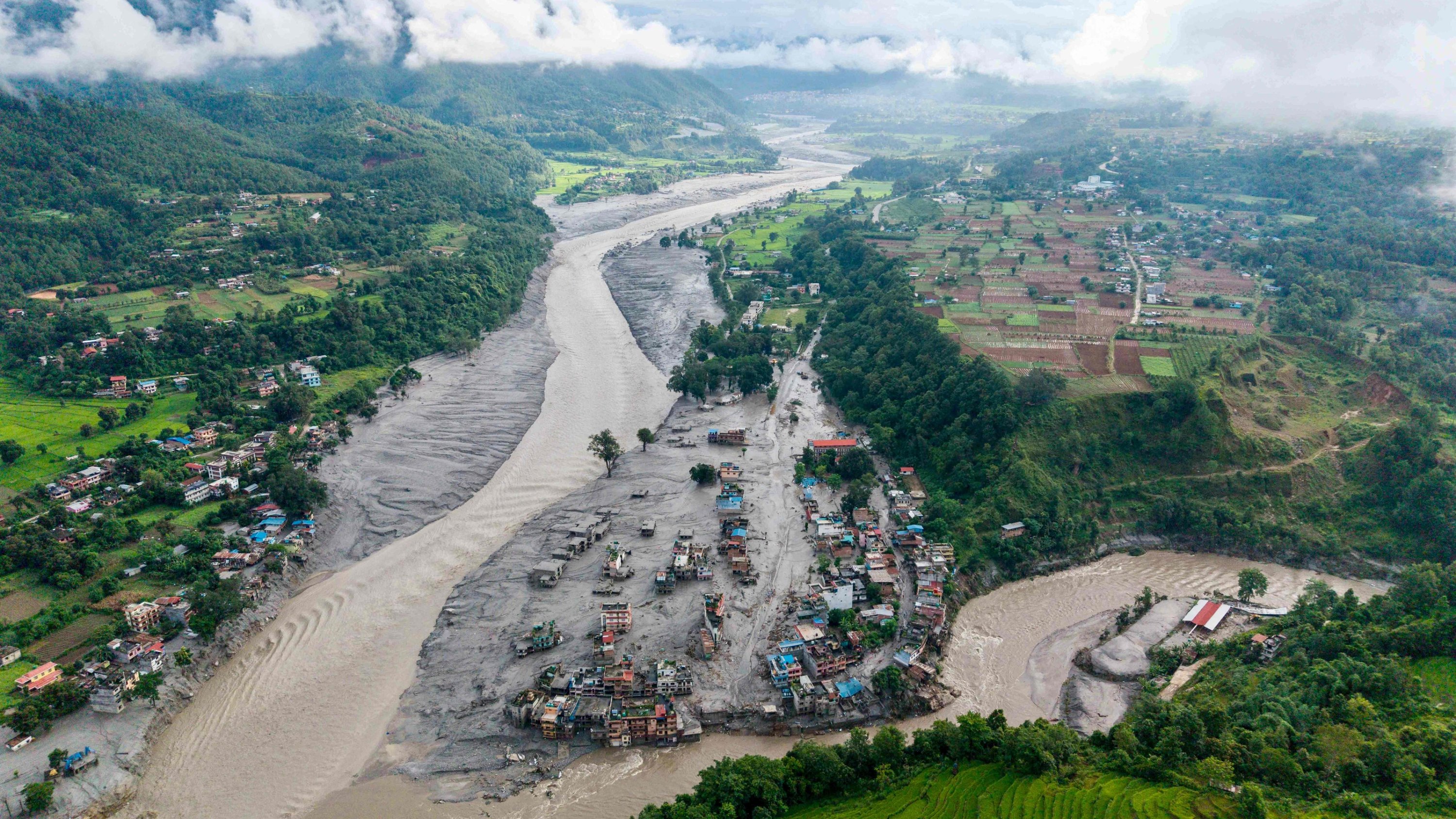
A landslide-dammed lake along the Nepal-China border began overflowing Friday, raising fears of another surge in already devastated areas and forcing authorities to temporarily suspend rescue operations.
Residents in Nepal’s Rasuwa district, near the border with China’s Tibet region, were seen scrambling up hillsides to escape a possible rise in river levels, according to a Reuters witness.
The threat of the lake bursting prompted Chinese authorities to withdraw all rescue personnel and vehicles to a designated safe area, state broadcaster CCTV reported. Nepalese authorities also halted rescue operations for 90 minutes as a precaution, according to an army officer.
The latest threat comes two days after a devastating flash flood swept through the Himalayan region, killing at least 469 people in Nepal and leaving nearly 1,000 others missing across Nepal and Tibet.
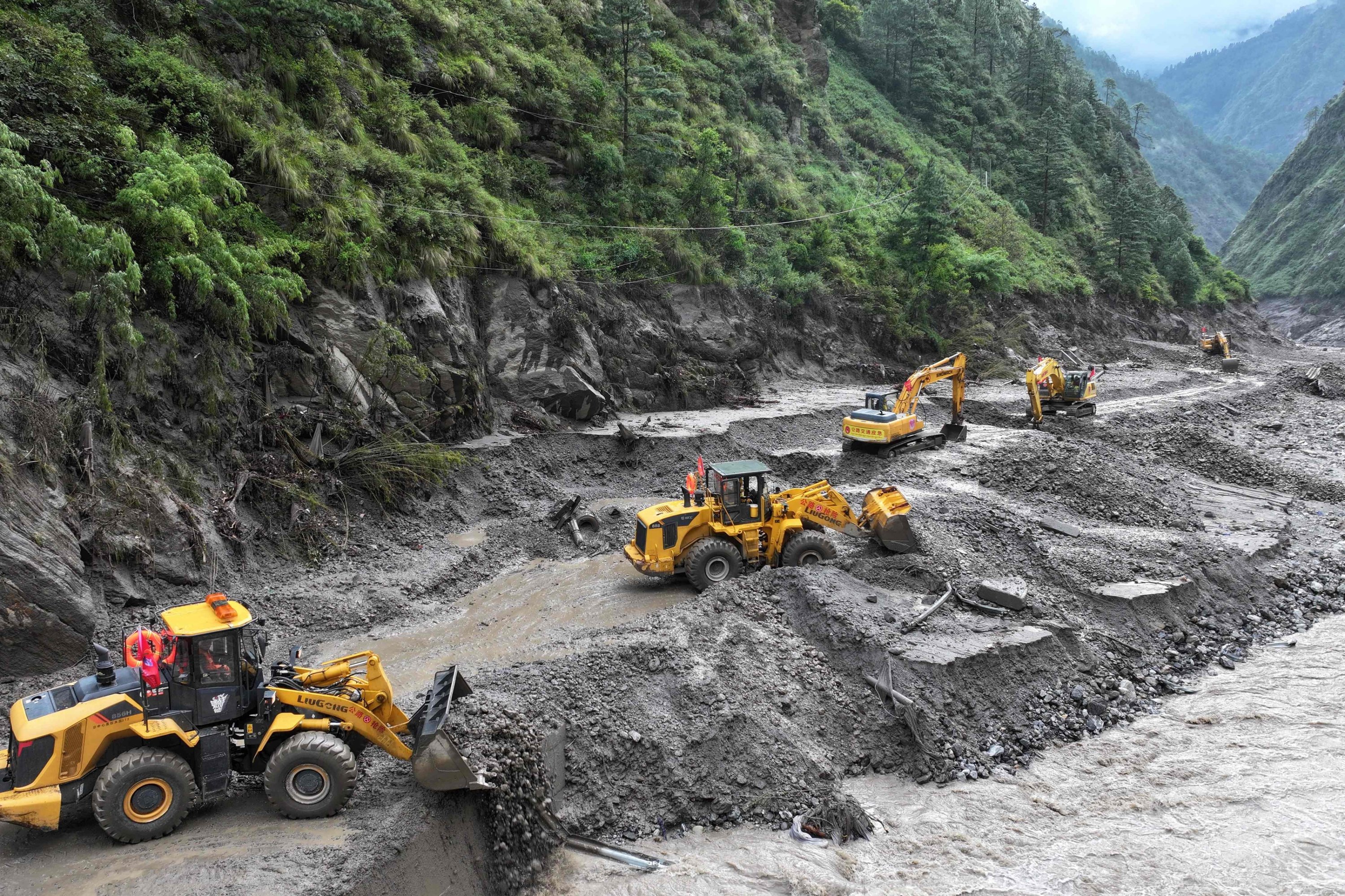
The disaster began Wednesday when a glacier collapse unleashed a massive torrent of rock, ice, mud and debris into the region’s mountain river systems. The flood tore through villages and valleys, destroying power stations, roads and bridges along a key route connecting Kathmandu with Lhasa in Tibet. The route is also popular with trekkers and religious pilgrims.
At least 540 foreigners are among those reported missing, authorities said.
The floodwaters left behind a huge accumulation of debris that formed a barrier lake, creating the risk of additional flooding for communities already devastated downstream.
China sent an eight-member engineering team Thursday to carry out aerial surveys and create 3D models of the lake as authorities assessed the threat and worked to determine how best to manage the rising water.
By Friday, the lake’s reservoir had topped 2.5 million cubic meters of water, up from an estimated 1.5 million to 2 million cubic meters recorded by the engineering team a day earlier.
Torrent tore through border crossing
Downstream in Nepal, authorities received a warning that the glacial lake had broken its banks, said Narendra Pariyar, the most senior bureaucrat in hard-hit Rasuwa district.
“We can see that the level of water in the river is rising,” he said, adding that it was unclear how high the water level was at the time.
Earlier, Nepalese rescue teams used helicopters to search for survivors and drop emergency supplies to thousands of people cut off in towns and valleys, while emergency services, some using sniffer dogs, recovered dozens of bodies swept down into the plains.
Dibga Tamang was among the last people rescued from Rasuwa on Thursday, when he was airlifted with three others to an army camp in Nuwakot.
“All of our people have gone. They are dead,” Tamang said. “I have no one left waiting for me. Everything and everyone is gone. The end.”
While offers of assistance were pouring in, Nepal said it did not need help from other nations with search-and-rescue missions.
“The offer for help is natural. Our security agencies are doing the search-and-rescue operation. For now, we don’t require such help,” Lok Bahadur Chhetri, a spokesperson for the Foreign Ministry, said Friday.
A South Korean rapid response team was already in Kathmandu but had not been deployed because the Nepali government did not yet have a plan to accept foreign rescue teams, according to the Foreign Ministry in Seoul.
Chinese rescuers had yet to reach the worst-hit area on the Chinese side of the border, the Gyirong border crossing, by Thursday evening, state media reports indicated, as crews worked to clear debris from the key access road leading to the area.
Dramatic footage Wednesday showed enormous torrents of muddy water and debris tearing through structures in the border crossing area within seconds and engulfing people trying to flee.
The tally of missing people in Tibet’s Gyirong County was 558, Chinese state broadcaster CCTV said Thursday, including 260 foreign nationals. So far, just three people had been confirmed dead on the Chinese side.
China’s Premier Li Qiang, the country’s No. 2 official, arrived at the disaster-stricken site in Gyirong on Thursday afternoon, state-run Xinhua News Agency said. The visit suggested Beijing was treating the disaster as a matter of the highest national priority.
Buildings ‘wiped out like toothpicks’
Around the world, relatives of those missing were desperate for information about their whereabouts.
Sneha Sudhir was one of 10 women whose husbands had set out from Nepal on a trek to Tibet’s Mount Kailash when the region was struck by the disaster.
The men, all from Northern Virginia, are among dozens of Americans missing.
“Where are they?” Sudhir said tearfully from her home in Chantilly, Virginia, on Thursday.
Sudhir said the women were supporting each other and reaching out to officials, politicians, friends and family in the United States and India, hoping for word.
“Everybody is taking turns in shedding their tears, wiping it off and getting back to work,” she said.
President Donald Trump said the U.S. had offered support to Nepal.
“Nobody’s ever seen anything quite like that, where very powerful, strong, well-built buildings were wiped out like they were toothpicks. It’s a terrible thing. We are sending aid and we’ve spoken to the leadership and we let them know anything they want, they’ll have.”
DAILYSABAH
هلدینگ کاسپین استانبول | خرید ملک در ترکیه | صرافی معتبر ایرانی در ترکیه | خرید و فروش طلا در ترکیه | مهاجرت به ترکیه | واردات و صادرات در ترکیه | نیازمندیهای ترکیه | اخبار ترکیه | اخبار جهانی | توریست ایران | خدمات توریستی در ایران | تورهای گردشگری ایران | هلدینگ اول | خدمات کاریابی و فریلنسری و شغل | مرجع اطلاعات ایران (همه چیز در ایران) | کیف پول و خدمات مالی و پرداخت یار | اخبار ایران | تابلو زنده قیمت ارز در ترکیه و استانبول | صرافی آنلاین ترکیه | قیمت طلا و نقره در ترکیه | سرمایه گذاری در ترکیه | جواهرات در ترکیه | نرخ لحظه ای ارزها در استانبول | قیمت دلار امروز در ترکیه | قیمت دلار استانبول امروز | قیمت لحظه ای دلار | اخبار روز ترکیه استانبول | اپلیکیشن ISTEX | اپلیکیشن قیمت لحظه ای دلار و یورو و لیر و ارزها در ترکیه
About the Author