Home – CBSNews.com
American diplomats and at least some of their family members are beginning to return to U.S. embassies in the Middle East after many were ordered to leave their posts during the early days of the war with Iran.
Although most embassies are not returning to full strength immediately, starting this week the State Department has begun to lift certain staffing and other restrictions on personnel.
The changes are not necessarily reflective of a shift in the Trump administration’s policy toward Iran, which is now focused on economic rather than kinetic military warfare. Instead, the changes are mainly due to the legalities of human resources policy, which limits the time diplomats may be away from post while still being paid and collecting benefits for themselves and their families.
On Friday, the day the Iran war hit its six-month mark, embassies in Qatar, Kuwait and Bahrain announced they would allow diplomats’ family members to return, although in Bahrain and Kuwait it applies only to those older than 18.
Earlier in the week, all family members of U.S. government employees in Israel, as well as those who are over 21 of those who work in Lebanon, were given the go-ahead to return.
Naim Qassem, the head of the militant group Hezbollah, on Friday again rejected a deal struck between Israel and Lebanon, and said his Iran-backed group refused to “surrender,” nearly six months after war erupted with Israel.
“We are against the framework agreement and call for its downfall,” Qassem said in a televised address broadcast on the group’s Al-Manar television channel.
Israel and Lebanon began U.S.-sponsored direct talks after Hezbollah drew Lebanon into the Middle East war on March 2 by attacking Israel, which responded with massive strikes and a ground invasion that Lebanese authorities say have killed more than 4,300 people.
At talks in late June, Lebanon and Israel signed a framework deal that calls for the disarmament of Hezbollah, a gradual withdrawal of Israeli forces from south Lebanon and the deployment of the Lebanese army to the region, starting in “pilot zones.”
“The framework agreement is illegitimate, unlawful, humiliating, destructive to Lebanese sovereignty,” Qassem said Friday.
“We do not agree to the ‘pilot zones’ or to what comes from them,” he said.
Although violence has dropped since the Israel-Lebanon framework agreement in June, Lebanon still reports regular Israeli strikes, artillery shelling and broad demolition of civilian buildings in southern villages and towns.
Israeli forces are operating inside a self-declared “security zone,” which runs about six miles deep inside Lebanese territory along the border.
Qassem said his group supported the implementation of a November 2024 ceasefire that sought to end a previous war with Israel.
“We will keep our heads high and we will not surrender,” he vowed.
Iran left the door open to diplomacy on Friday, six months into a war with the United States that has upended the Middle East, but only if Washington abandons its pressure campaign.
“Putting diplomacy back on track isn’t impossible. It hinges on U.S. understanding of one simple fact: pressure doesn’t work,” Iranian Foreign Minister Abbas Araghchi posted on X.
Diplomatic efforts, spearheaded by mediators including Pakistan and Qatar, have tried for months to bring an end to the war started by the U.S. and Israel in late February to no avail.
“The U.S. should build trust, speak respectfully, acknowledge our rights, and uphold commitments,” Araghchi continued.
In the latest effort to reinvigorate diplomacy, Araghchi met his Qatari counterpart on Thursday in the Iranian capital to discuss the Strait of Hormuz, closed by the Islamic republic at the start of the war, at the tail end of a week of intense Iranian talks with Oman and Pakistan.
CBS/AFP
Sen. Jack Reed, the top Democrat on the Armed Services Committee, released a blistering assessment of the war with Iran on the six-month mark of the conflict.
“When he unilaterally launched this war, Trump promised he would destroy Iran’s nuclear program, eliminate its missile and drone arsenal, dismantle its defense industrial base, wipe out its proxy networks, and topple the regime in a matter of weeks,” Reed wrote in a statement. “Six months later, not a single objective has been achieved. Indeed, he has weakened our position in the Middle East and the world significantly.”
Reed, who served in the 82nd Airborne Division and taught at the U.S. Military Academy, has been a consistent critic of the war. One day before Israel and the U.S. launched strikes on Iran, he urged the Trump administration to do otherwise. He noted, presciently, that while the “U.S. military could devastate Iran’s armed forces,” the administration “has failed to make a case to Congress or the American people about what would follow.”
“Six months into this disaster, Congress has seen no framework for ending the war, and Trump has failed to provide a definition of victory,” he said Friday. “The President has waged this war without public support or congressional consent, and it is far past time for accountability.”
The U.S. Treasury Department is due to cut off a major Egyptian bank’s operations in the United Arab Emirates from the U.S. financial system, a U.S. official confirmed Friday, as Washington pushes to choke Iran off economically.
The move impacts UAE branches of Egypt’s second biggest bank, Banque Misr. U.S. Treasury Secretary Scott Bessent laid out plans earlier this week for Iran’s “economic asphyxiation” six months into a war on Tehran.
“Treasury promised to sever every economic lifeline Tehran has left and finally end the threat of the Iranian regime,” Bessent said in a statement. “We also warned that Iran’s enablers cannot continue to enjoy access to the U.S. dollar and the global financial system. Banque Misr UAE decided to find out the hard way, and today, we are taking the first step in holding it accountable for its continued, egregious support of the Iranian regime.”
The U.S. also announced sanctions against Reza Mohammad Taeedi, the manager of the Iranian Bank Melli’s Dubai branch, and Kameng Trading Limited, a Hong Kong-based company the Treasury accused of being a front to launder funds for a sanctioned Iranian exchange house.
CBS/AFP
Russia and Iran made “very good progress” in talks held this week about transferring Russian gas to Iran via an overland pipeline through Azerbaijan, Iran’s ambassador to Russia, Kazem Jalali, told IRNA, Iran’s state-owned official news outlet.
The two sides — Iran’s Ministry of Petroleum and Russia’s state-owned Gazprom energy company — agreed to transfer an initial capacity of 150 million cubic meters per day through the pipeline, Jalali said.
The total would be equivalent to just shy of 1 million barrels per day. For comparison sake, about 21 million barrels of oil traveled through the Strait of Hormuz on a daily basis prior to the war, according to the U.S. Energy Information Administration.
“We have reached an understanding on all these issues. Therefore, we are no longer at the initial stages of this project; rather, we have made very good progress,” Jalali told IRNA. He said “one or two” issues remained to be ironed out.
Iran has consistently pursued different ways of acquiring oil and gas since the U.S. implemented a blockade on all traffic through the Strait of Hormuz entering or exiting Iranian ports.
Iran’s foreign ministry released a new statement on Friday calling the latest sanctions on the country “economic terrorism” and continuing to say they are an assault on Iranian sovereignty and in violation of the U.N. charter — both claims the country has been making for days.
The statement said the imposition of sanctions “constitutes US state terrorism against Iran and the world.”
“The US abuse of the dollar as a tool to intimidate other countries in order to force them to follow its interventionist policies, which violate international law, in relation to Iran, constitutes a violation of the national sovereignty and right to self-determination of all member states of the United Nations,” the statement said. “US sanctions against Iran, due to both their nature and consequences, constitute a flagrant violation of the UN Charter.”
Foreign Minister Abbas Araghchi made similar statements in a letter to U.N. Secretary-General Antonio Guterres earlier this week. He called for the U.N. to condemn the U.S. actions against the sovereignty of Iran.
“Unfortunately, the indifference and appeasement of the United Nations system and its member states toward the flagrant violations of international law by the United States and [Israel] have led to the emergence of an extremely dangerous pattern of lawlessness and the commission of the gravest international crimes by them, the consequences of which have placed the entirety of human civilization under an unprecedented threat,” the statement written Friday read.
China is the only notable country so far to agree with Iran’s claims that the sanctions violate U.N. law and to have said they will not comply with them.
“Undoubtedly, the Iranian nation, united and of one mind, relying on its vast civilizational heritage and the inspiring religious and national teachings, and drawing upon the great experiences of recent decades, will repel the malignity of its evil enemies and will increase the power and strength of our homeland day by day,” the statement said.
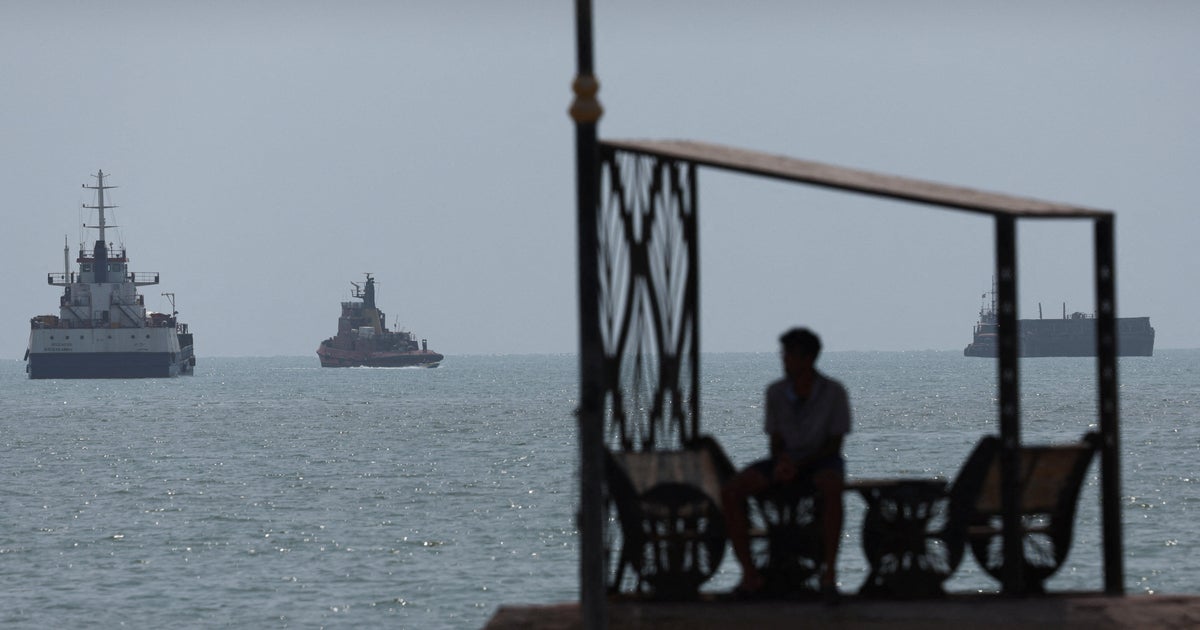
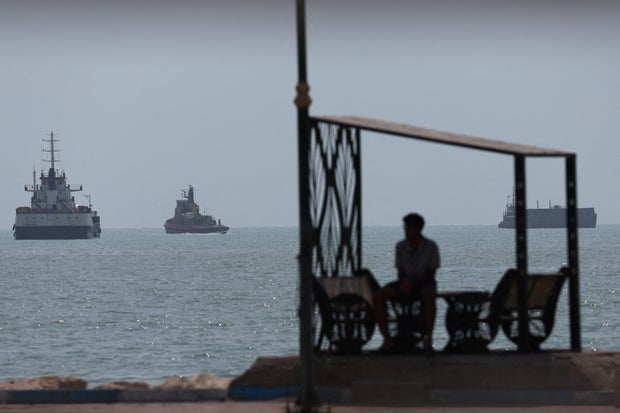
Around 6,000 sailors on 400 ships are still unable to leave the Strait of Hormuz, the United Nations’ International Maritime Organization said Friday.
“Thousands of seafarers in the region continue to live and work under conditions of heightened risk and uncertainty,” IMO Secretary-General Arsenio Dominguez said, providing the figures in a statement marking six months since the war’s start.
He said the conflict was still causing major disruptions to vital supply chains for fuel and other commodities, with consequences around the world.
“The deterioration of maritime security around the globe — from the Black Sea to the Red Sea and Gulf of Aden — is detrimental to us all,” Dominguez said. “But it is particularly distressing for the thousands of innocent seafarers affected.”
Despite the IMO’s announcement of a “large-scale” plan to help rescue thousands of mariners still trapped in the Gulf, only 136 vessels and about 2,900 seafarers have been evacuated, and none since the end of June, when the effort was paused amid renewed attacks by Iran and the U.S.
At least 19 mariners have been killed in the region since Feb. 28, when the U.S. and Israel jointly launched the war on Iran.
The head of the U.S. military’s Central Command, Adm. Brad Cooper, has echoed President Trump’s insistence that the Strait of Hormuz shipping lanes are clear of sea mines, saying they are “open, and momentum is building.”
He acknowledged, however, that vessels still seek direct U.S. military protection to use the vital waterway, which Iran has scared many commercial shippers away from since the U.S. and Israel launched their joint war on Iran six months ago — driving global oil prices up by about 30% compared to pre-war levels.
In a video statement posted online Thursday evening, Cooper said the U.S. military had “meticulously and quietly” cleared mines laid months ago by Iran’s Islamic Revolutionary Guard Corps.
“Internationally recognized transit routes in the strait are free of Iranian sea mines thanks to the incredible work of the U.S. military,” he said. “Today, international shipping lanes are open, and momentum is building.”
Mr. Trump said Thursday the U.S. helped 24 oil tankers transit the strait the previous night, reiterating his insistence that the waterway was de-mined, which he’d said several times before Cooper released his statement.
But two dozen ships is a far cry from the roughly 120 that would typically transit the strait daily before the U.S. and Israel launched their joint war on Iran, and shippers remain highly wary of using the waterway given Iran’s ongoing threat to vessels that risk passage without coordination with Tehran.
Majid Asgaripour/WANA/REUTERS
Some U.S. allies have also said they do not believe the strait has been fully de-mined, according to a Wednesday report by Bloomberg.
Regardless of whether mines still lurk in the water, Iran’s threat to attack ships has kept traffic to a minimum. Even as he touted building momentum, Cooper acknowledged that ships still want direct U.S. assistance to make the passage, saying: “Over the past several months, U.S. forces have assisted nearly 1,500 commercial vessels in transiting the strait by providing coordinated protection.”
He said while the U.S. had enabled those ships to move 750 million barrels of crude oil out of the Persian Gulf, “Iran has exported zero barrels of oil from its shores since we resumed the naval blockade in mid-July.”
Iranian Oil Minister Mohsen Paknejad acknowledged on Thursday that the country’s exports had “declined to some extent” — which is likely a significant understatement — but he insisted “the sale of our oil outside our territorial waters, in distant waters — meaning the delivery of oil to our customers — has continued,” despite the U.S. blockade.
Analysts note Iran can also export its energy products over land, including to its most valuable trade partner, China.
Treasury Secretary Scott Bessent laid out plans this week for the “economic asphyxiation” of Iran, warning of dire consequences for countries that don’t join the campaign.
Iran’s leaders, however, dismissed the impact of the new measures, having already endured decades-long crippling sanctions since shortly after the 1979 revolution.
And analysts say a successful chokehold on the Islamic Republic would require cooperation from China — but that’s unlikely.
Bessent told China to “get with the program,” but Beijing instead has defended its cooperation with Tehran and vowed to safeguard its interests.
Foreign Ministry spokesperson Lin Jian reiterated China’s “firm opposition to illegal unilateral sanctions without the basis of international law and without authorization from the U.N. Security Council,” adding that “economic warfare and extreme pressure do not help solve problems; they only further intensify conflicts, cause risks to spill over, disrupt the global economic and financial order, and harm the legitimate rights and interests of other countries.”
Lin said China’s cooperation with Iran was “conducted within the framework of international law and should not be disrupted or undermined.”
Before the war, Tehran exported millions of barrels of oil a day, mostly to China. Despite China buying less Iranian oil than it had been, the purchases remain an important source of revenue for Iran.
Although most ship traffic in the vital Strait of Hormuz is still blocked and the U.S. is blockading Iranian ports, China isn’t totally cut off from Iran’s crude thanks to the highways and railways of Central Asia, said Sun Degang, a professor of political science at Shanghai’s Fudan University.
CBS/AFP
It’s been six months since the United States and Israel attacked Iran with the perennial goal of transforming the Middle East through military force. The region has changed, but not in the way they had hoped.
The Islamic Republic survived the assassination of its top leaders and weeks of heavy bombing, and found a potent form of leverage in the Strait of Hormuz. Gulf Arab nations saw worrying gaps open up in the American security umbrella they have relied on for decades — and some are looking at alternatives.
Israel has once again thrashed its enemies without defeating them, and after nearly three years of war in Gaza and new land seizures, is at risk of a generational rupture with the U.S., its closest ally. Hopes of normalizing relations with Saudi Arabia — another enduring U.S. and Israeli aspiration — have dimmed even further.
When they attacked Iran on Feb. 28, the U.S. and Israel hoped to topple its clerical leadership and replace it with a pro-Western government. Instead, they’ve ended up with a “hardened and very radical regime,” said Barbara Leaf, a former ambassador who served as assistant secretary of state for the Middle East in the Biden administration.
“That is going to be exceptionally difficult to deal with, to say the least,” she said. Iran’s “confidence has grown over the months that it can not only survive, but it can prevail, it can reset the regional landscape.”
President Trump insisted Thursday that Iran is “begging to make a deal,” as Iranian officials push back against the U.S. and talks between the two countries remain stalled.
“I don’t want to meet, they do,” he said in a Truth Social post that lashed out at a Fox News report.
Mr. Trump told reporters earlier Thursday his administration is “not looking to meet” with Iran, arguing the naval blockade on Iranian ports and ever-tightening sanctions on Iran’s economy have inflicted severe damage on the country.
Publicly, Iranian officials have stood firm, vowing to keep the Strait of Hormuz closed to shipping traffic unless the U.S. returns to a temporary deal the two sides struck earlier this summer. Mr. Trump claims the strait is open, but ships have been hesitant to sail through the vital waterway.
Meanwhile, Qatar’s foreign minister visited Tehran on Thursday and urged the two sides to “resume the diplomatic process.”
President Trump fired back at a reporter Thursday who asked whether the U.S. would institute sanctions on Chinese banks that cooperate with Iran, responding, “Who says I’m not?”
The president was asked about the potential punishment for China after officials in that country said they would not support U.S. sanctions on Iran. China is Iran’s largest trade partner.
“Well, who said I’m not? You said, ‘Why not?’ I mean, who said I’m not?” Mr. Trump responded. “You don’t know if I’m doing it. Well, I don’t have to announce everything, do I?”
Treasury Secretary Scott Bessent said last week that China should “get with the program” in regard to sanctions during an interview with CNBC. However, Chinese officials called the sanctions “illegal” and “unilateral” and said they would not enforce them.
Bessent and Mr. Trump have called the sanctions unprecedented and said they will lead to the total economic isolation of the country. Iran has criticized the sanctions, but also said it has been preparing for the sanctions for two years.
A total of 75 ships heading into or exiting Iranian ports redirected by U.S. military blockade on the Strait of Hormuz, according to U.S. Central Command.
The update was the first since Monday, when CENTCOM said 71 ships had been redirected since the blockade went back into place on July 14.
President Trump again touted the blockade’s effectiveness in a White House Oval Office event Thursday.
“The Strait of Hormuz is open. We have control and we have the blockade,” Mr. Trump said. “Iran’s not getting anything through. Nothing is getting through. Not one ship has gotten through.”
wp:paragraph
هلدینگ کاسپین استانبول | خرید ملک در ترکیه | صرافی معتبر ایرانی در ترکیه | خرید و فروش طلا در ترکیه | مهاجرت به ترکیه | واردات و صادرات در ترکیه | نیازمندیهای ترکیه | اخبار ترکیه | اخبار جهانی | توریست ایران | خدمات توریستی در ایران | تورهای گردشگری ایران | هلدینگ اول | خدمات کاریابی و فریلنسری و شغل | مرجع اطلاعات ایران (همه چیز در ایران) | کیف پول و خدمات مالی و پرداخت یار | اخبار ایران | تابلو زنده قیمت ارز در ترکیه و استانبول | صرافی آنلاین ترکیه | قیمت طلا و نقره در ترکیه | سرمایه گذاری در ترکیه | جواهرات در ترکیه | نرخ لحظه ای ارزها در استانبول | قیمت دلار امروز در ترکیه | قیمت دلار استانبول امروز | قیمت لحظه ای دلار | اخبار روز ترکیه استانبول | اپلیکیشن ISTEX | اپلیکیشن قیمت لحظه ای دلار و یورو و لیر و ارزها در ترکیه
/wp:paragraph wp:paragraph /wp:paragraph
About the Author