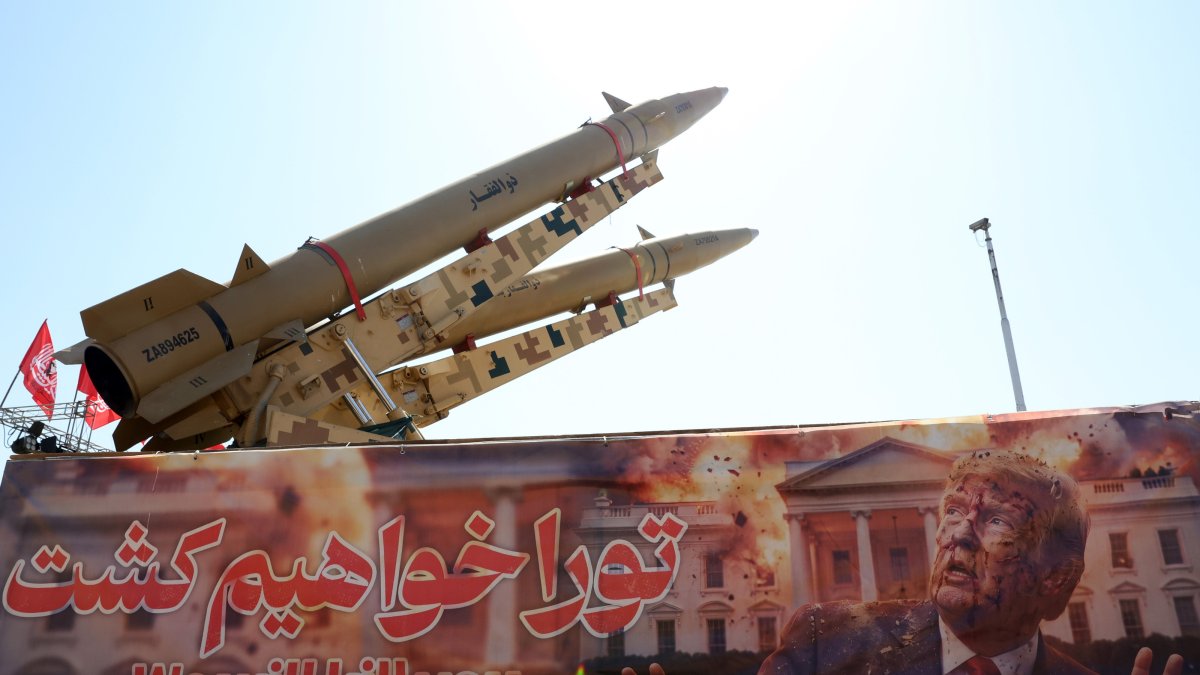
Iranian leaders are increasingly acknowledging the economic toll of the war with the United States, with the supreme leader urging the government to address growing hardships and President Masoud Pezeshkian saying foreign trade has fallen by a third because of U.S. sanctions and a blockade.
Yet Tehran showed no sign of backing down Saturday, vowing to withstand U.S. pressure, pursue diplomacy and maintain what it described as control over the Strait of Hormuz.
The strategic waterway gives Iran significant leverage because any disruption there could affect global energy markets.
The government said in a statement carried by state media that easing economic pressures caused by sanctions and war remained a central priority. Its measures include curbing inflation, stabilizing markets, creating jobs, directing investment toward domestic production and gradually reducing the country’s reliance on the dollar.
Six months after the United States and Israel launched the war, negotiations remain deadlocked, while President Donald Trump’s administration has intensified efforts to squeeze Iran financially through what it has described as an “economic D-Day.”
Sanctions compound toll on Iran economy
Washington has warned countries to cut business ties with Iran or face secondary sanctions, though the Treasury Department stopped short of imposing penalties against major Iranian trade partners such as China and India, which could have repercussions for the U.S. and global economies.
The Treasury imposed sanctions on Egypt’s Banque Misr for doing business with Tehran, proposing a rule that would cut off the bank’s branches in the United Arab Emirates from dollar transactions.
Egypt’s central bank said it and the foreign ministry were in contact with U.S. officials regarding the matter, adding that the measure was limited to Banque Misr’s UAE branch and its U.S. dollar transactions with correspondent banks.
Banque Misr later said in a statement that it was reviewing the U.S. Treasury notice, adding that its branch in the UAE continued to provide banking services to customers in line with applicable rules and procedures.
The U.S. also imposed sanctions on an entity based in Hong Kong and a person linked to Iran’s Bank Melli, according to a notice posted on the Treasury’s website.
The sanctions drive is compounding the toll of the war on Iran’s economy, where annual inflation reached 66% last month.
Supreme Leader Ayatollah Mojtaba Khamenei, who has not been seen publicly since he was injured in the initial Feb. 28 attack that killed his father and predecessor, Ayatollah Ali Khamenei, called on the government to tackle the economic hardship.
“There is the need to seriously address the chain of economic and livelihood challenges, such as inflation, unemployment, management of prices and the market for goods and services,” according to a written statement attributed to Khamenei.
President Masoud Pezeshkian told state media that Iranian exports and imports had slumped nearly 35% because of U.S. sanctions and a naval blockade of Iranian ports.
But he said Iran was able to sell about 90 million barrels of oil during the short-lived memorandum of understanding that the U.S. and Iran signed in June, when Washington permitted Iranian oil sales.
Iran vows to pursue diplomacy and defense
With the U.S. focused on its economic pressure campaign, others have sought to revive diplomatic efforts to end the war.
Qatari Prime Minister Sheikh Mohammed bin Abdulrahman Al Thani met with Iranian leaders in Tehran on Thursday. He said he had stressed during the meeting the importance of returning to the prewar status of open shipping through the Strait of Hormuz.
Iranian Foreign Minister Abbas Araqchi on Friday described the talks with Al Thani as “creative.”
In Saturday’s statement, Iran said diplomacy and defense were “two complementary, coordinated and inseparable wings” for protecting the country’s national interests, security and territorial integrity. It said it would pursue both tracks in a balanced manner.
Qatar, a U.S. ally and Gulf neighbor to Iran, and Pakistan helped broker the June memorandum of understanding that led to a brief ceasefire before disagreements over the vital strait caused it to unravel. Before the war, the waterway carried 20% of the world’s oil and LNG.
U.S. military commanders say American forces have cleared sea mines from the strait that had been laid months ago by Iran’s Islamic Revolutionary Guard Corps.
Trump has repeatedly said the Strait of Hormuz is open, but the Revolutionary Guards’ navy said in a statement that such claims “are an obvious lie,” reiterating that the waterway remained closed to ships without Iranian permission.
Only seven commodity vessels transited the strait on Thursday, down from 17 a day earlier and below the 10-day average of 15, preliminary shipping data showed Friday.
DAILYSABAH
هلدینگ کاسپین استانبول | خرید ملک در ترکیه | صرافی معتبر ایرانی در ترکیه | خرید و فروش طلا در ترکیه | مهاجرت به ترکیه | واردات و صادرات در ترکیه | نیازمندیهای ترکیه | اخبار ترکیه | اخبار جهانی | توریست ایران | خدمات توریستی در ایران | تورهای گردشگری ایران | هلدینگ اول | خدمات کاریابی و فریلنسری و شغل | مرجع اطلاعات ایران (همه چیز در ایران) | کیف پول و خدمات مالی و پرداخت یار | اخبار ایران | تابلو زنده قیمت ارز در ترکیه و استانبول | صرافی آنلاین ترکیه | قیمت طلا و نقره در ترکیه | سرمایه گذاری در ترکیه | جواهرات در ترکیه | نرخ لحظه ای ارزها در استانبول | قیمت دلار امروز در ترکیه | قیمت دلار استانبول امروز | قیمت لحظه ای دلار | اخبار روز ترکیه استانبول | اپلیکیشن ISTEX | اپلیکیشن قیمت لحظه ای دلار و یورو و لیر و ارزها در ترکیه
About the Author