Kazakhstan took the first major step into a new era of its political system with the parliamentary elections held on Aug. 23. The vote was significant as it marked the first time the 145-member “Kurultai,” established following the new Constitution adopted in 2026, was elected.
The new Constitution was approved with 87.15% of the vote in a referendum held in March, and the new arrangement entered into force on July 1. Under the new system, the bicameral parliamentary structure made up of the Senate and the Mazhilis was abolished and replaced with the 145-member Kurultai. Electing lawmakers through proportional representation from a single nationwide constituency also became one of the fundamental elements of the new legislative order.
Of more than 12.6 million registered voters, approximately 9.35 million cast their ballots, putting turnout at 74.08%. The Adilet Party won 110 seats with 71.17% of the vote. Auyl secured 6.26%, Respublica 5.56%, Aq Zhol 5.21% and the National Social Democratic Party 5.11%, all clearing the 5% electoral threshold to win representation in the Kurultai.
The results indicate that a political ground has emerged on which the reforms carried out under President Kassym-Jomart Tokayev can be implemented within the new institutional structure. What will give real meaning to the new political balance created by the election, however, is how this support is used in the coming period.
For Kazakhstan, the main issue going forward will be turning the political stability that emerges as the role of the new constitutional order and the Kurultai within the political system takes shape into a capacity that supports economic development and the country’s regional weight.
First test of new order
Behind Kazakhstan’s political transformation lies a reform process that gained momentum after 2022. The reforms launched following the events of January 2022 brought comprehensive changes to the structure of state institutions, mechanisms of political representation and decision-making processes. The new Constitution carried this process into a new institutional framework.
The most notable element of the new system is that the bicameral parliamentary structure has been replaced by the single-chamber Kurultai. The new Constitution defines the Kurultai as the country’s highest representative body and the institution that exercises legislative authority. Electing lawmakers for a five-year term and applying a proportional representation system by treating the entire country as a single constituency represent a significant change in Kazakhstan’s legislative structure.
The Aug. 23 election therefore amounts to the first political test of the new system. Adilet’s securing a strong majority with 110 seats creates a wide political space for the government to advance its reform agenda through the legislative process. The entry of Auyl, Respublica, Aq Zhol and the National Social Democratic Party into the Kurultai also allows different political approaches to be represented in the new legislative body.
The real question now is how this political structure will function. A strong majority can provide stability and predictability in decision-making processes. At the same time, the extent to which the Kurultai carries the economic and social expectations of different segments of society onto the legislative agenda will reveal the representative capacity of the new system. For this reason, the success of the Kurultai will be assessed through the policies it produces during the legislative process and the contribution it makes to decision-making mechanisms.
Regulations to be prepared in areas such as economic reforms, social policies, regional development and public administration will give concrete form to the political weight of the new legislative body. The performance of the other parties during the legislative process will also show how the balance between the strong majority and the different channels of political representation will be established.
What matters here is that this structure develops a working culture over time. How the Kurultai evaluates government policies during the legislative process, and the extent to which committees and lawmakers contribute to shaping public policy, will reveal the institutional character of the new constitutional order.
In this respect, the election result marks the start of a new stage in the institutionalization of this reform process. The extent to which the framework created by the new Constitution is reflected in public policy will be one of the main political indicators of the coming period.
Astana’s regional weight
The significance of the election is not limited to the domestic political structure. Kazakhstan’s economic capacity and geopolitical position also make political stability important for the country’s regional weight.
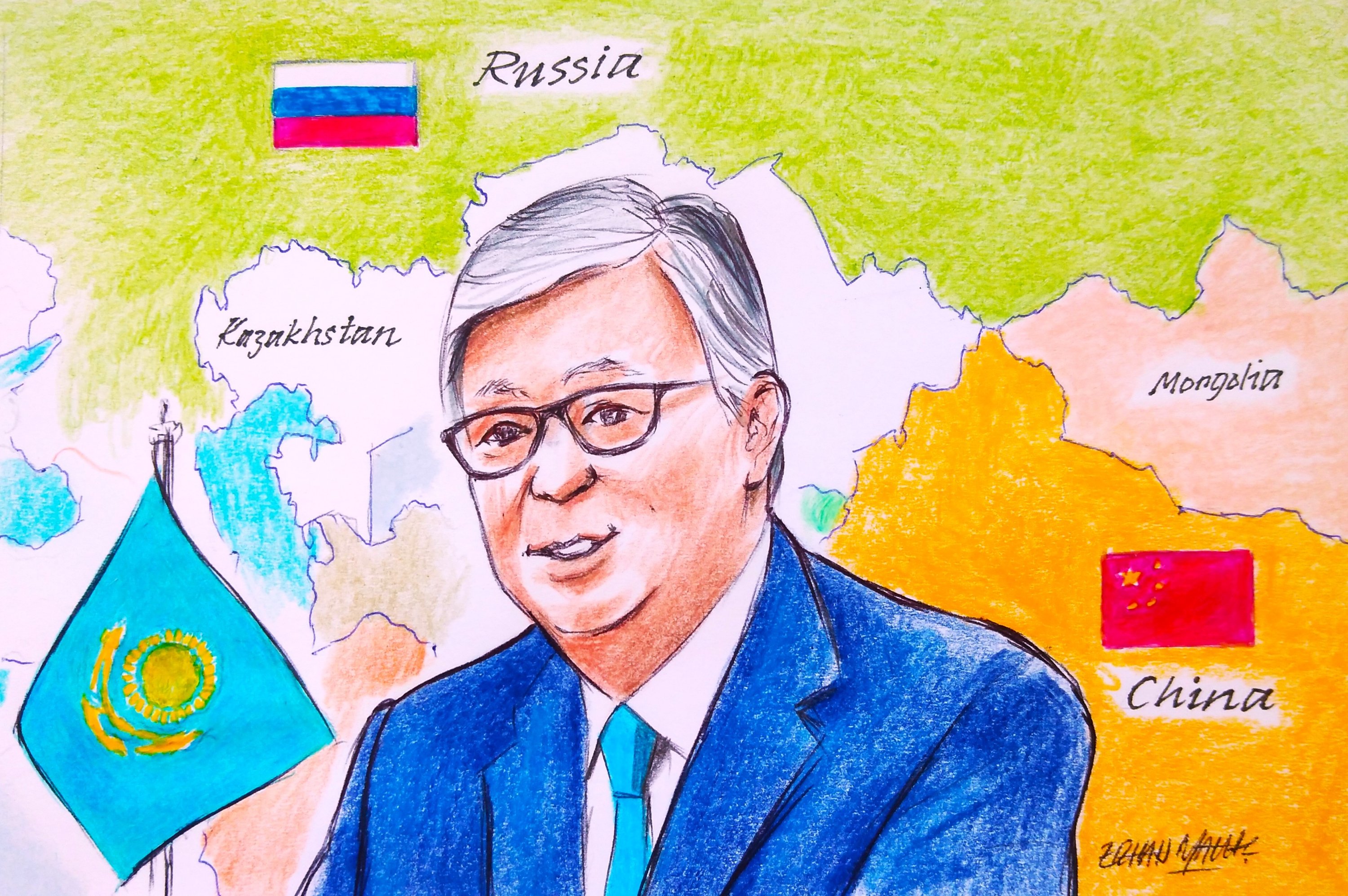
Located between Russia and China, Kazakhstan is one of the strategic centers of Central Asia. The growing importance of the Middle Corridor, driven by the diversification of trade links between Europe and Asia, further strengthens Astana’s position. Kazakhstan’s central location on transport routes running through the Caspian Sea to Azerbaijan and on to Türkiye and Europe offers the country new opportunities from an economic and geopolitical perspective.
Energy resources and critical minerals are also among the elements supporting this strategic position. As energy security and access to critical raw materials gain growing strategic importance in the global economy, the resources Kazakhstan possesses allow Astana to diversify its relations with its economic partners in Europe and Asia.
These developments also align with the multi-vector foreign policy Kazakhstan has pursued in recent years. Astana is preserving its historical and economic ties with Russia while developing its relations with China, and it is increasing its economic and diplomatic contacts with the European Union, the United States and the Turkic states. Sustaining this balancing policy at a time when competition among major powers is intensifying is closely tied to Kazakhstan’s ability to preserve its political and economic stability.
One of the main advantages of Kazakhstan’s multi-vector approach is its ability to diversify its various areas of partnership without turning them into alternatives to one another. While the Middle Corridor strengthens connectivity with Europe, trade with China, economic relations with Russia, and cooperation with the Turkic states in transport and energy expand Astana’s external economic options. This diversity can help Kazakhstan manage the pressures arising from competition among major powers in a more balanced way.
The new Kurultai’s role in this area can be assessed through its work in building the legal and economic ground that external economic openings require. Decisions to be taken in areas such as transport infrastructure, energy investments, mining and trade and investment legislation could affect Kazakhstan’s position in the Middle Corridor and in critical mineral markets.
For the Middle Corridor in particular, political stability and economic regulations must complement one another. The corridor’s transformation into a permanent trade route depends on the predictability of a broad economic framework that extends from customs procedures to the investment environment. For this reason, the contribution the new political structure makes to economic decision-making processes will also help shape Kazakhstan’s role in regional connectivity.
With the Aug. 23 election, the first major threshold for Kazakhstan’s new political architecture has been crossed. The point that will draw the most attention in the coming period will be which policies the strong majority chooses to pursue and what kind of legislative practice the Kurultai develops in the process. For Kazakhstan, the success of the new era will be measured by whether the political support that emerged at the ballot box is turned into strong institutions, effective public policies and sustainable economic gains.
The views and opinions expressed in this article are solely those of the author. They do not necessarily reflect the editorial stance, values or position of Daily Sabah. The newspaper provides space for diverse perspectives as part of its commitment to open and informed public discussion.
DAILYSABAH
هلدینگ کاسپین استانبول | خرید ملک در ترکیه | صرافی معتبر ایرانی در ترکیه | خرید و فروش طلا در ترکیه | مهاجرت به ترکیه | واردات و صادرات در ترکیه | نیازمندیهای ترکیه | اخبار ترکیه | اخبار جهانی | توریست ایران | خدمات توریستی در ایران | تورهای گردشگری ایران | هلدینگ اول | خدمات کاریابی و فریلنسری و شغل | مرجع اطلاعات ایران (همه چیز در ایران) | کیف پول و خدمات مالی و پرداخت یار | اخبار ایران | تابلو زنده قیمت ارز در ترکیه و استانبول | صرافی آنلاین ترکیه | قیمت طلا و نقره در ترکیه | سرمایه گذاری در ترکیه | جواهرات در ترکیه | نرخ لحظه ای ارزها در استانبول | قیمت دلار امروز در ترکیه | قیمت دلار استانبول امروز | قیمت لحظه ای دلار | اخبار روز ترکیه استانبول | اپلیکیشن ISTEX | اپلیکیشن قیمت لحظه ای دلار و یورو و لیر و ارزها در ترکیه
About the Author