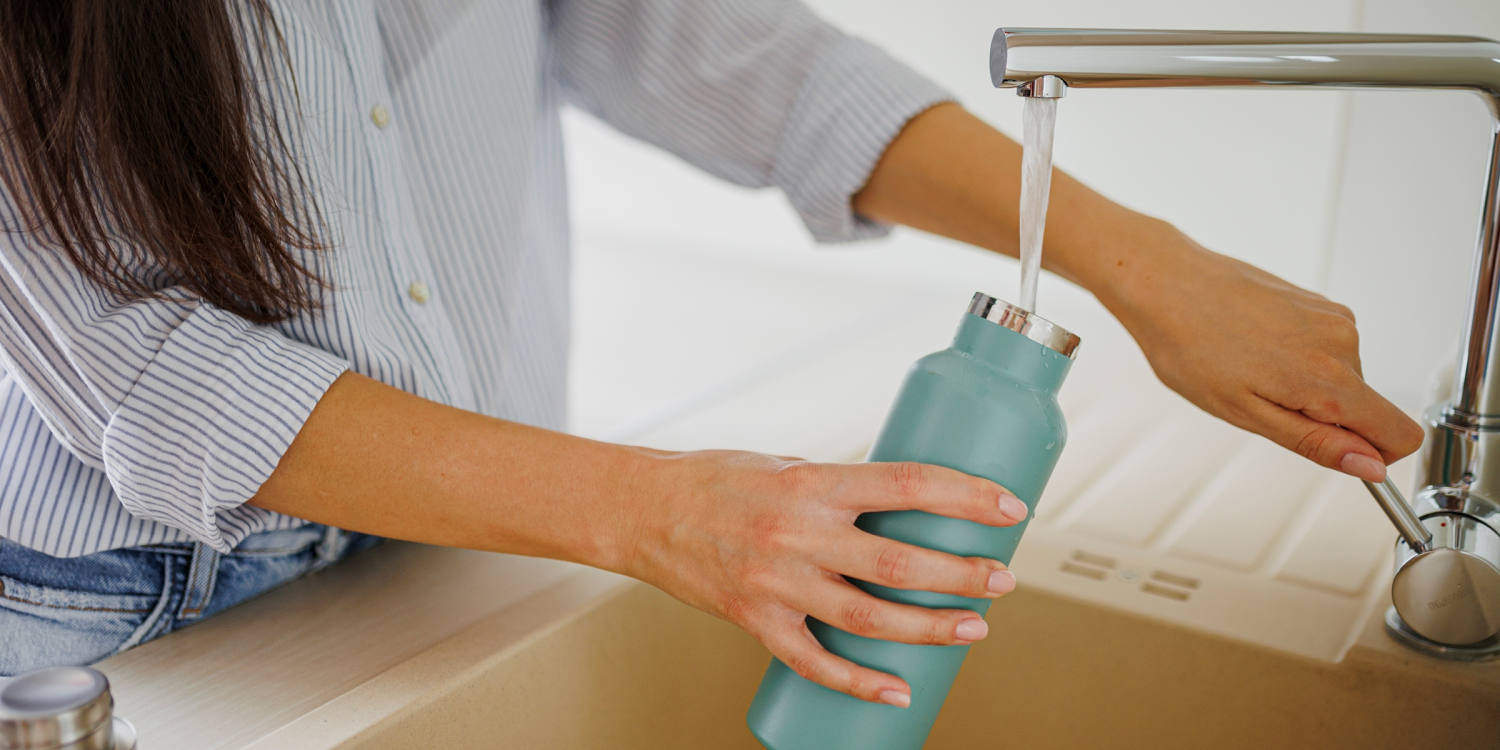
Today, it would probably be hard to come across someone who doesn’t have at least one or more reusable water bottles, from Stanley, Owala, Hydroflask or another popular brand. It’s no secret that we take staying hydrated very seriously, but whether or not we’re as on top of cleaning our reusable water bottles is another story.
Just like drinking your daily recommended amount of water is important, keeping your water bottle clean and free of grime, mold and bacteria is a must. To find how to clean a reusable water bottle the right way, and how often you should be doing it, I spoke to multiple microbiology experts for their guidance and recommendations for products.
What should you use to clean a reusable water bottle?
To properly clean a reusable water bottle at home, you should follow the methods you use to clean plates, glass cups and other everyday items that you eat or drink from. A mix of lukewarm water and mild liquid dish soap are all you need, according to Dr. Sharon Nachman, chief of the division of pediatric infectious diseases at Stony Brook University’s Renaissance School of Medicine.
Mild dish soap is ideal since it has surfactants, an active ingredient that makes water molecules more fat soluble and decreases the surface tension of water, according to our experts. “[This makes it] easy to destroy microbes,” says Dr. Philip Tierno, clinical professor at the department of pathology at NYU Grossman School of Medicine. This way, you can “make it very hostile for an organism to survive.” Tierno also recommends using lukewarm water, since water that is too cold has a harder time dissolving soap, which can hinder its effectiveness.
In addition to soap and water, you can also use common ingredients you may already have in your pantry, like distilled white vinegar or baking soda. Distilled vinegar, though not a powerful killer of germs, can remove fatty particles, according to Tierno, who also says that baking soda can be effective in releasing “gaseous material” to help extract particles.
As far as tools go, you may also need more than just your average sponge for a thorough cleaning. Certain parts of a reusable water bottle, such as the straw and lid, have small crevices and spaces that are hard to reach with just a sponge. Consider using tools like a small, bristled cleaning brush for straws and lids.
The best products to clean your water bottle
To find the best products to clean a reusable bottle (like a Stanley tumbler), we asked our experts in microbiology and infectious diseases what to look for. Every item on this list is in line with their guidance and has at least a four-star average rating from at least 500 shoppers on Amazon or is a direct recommendation from the NBC Selected team.
This is one of the best all-purpose cleaning products I’ve ever used, and it’s commonly recommended by many cleaning experts I’ve spoken to. Regular Dawn dish soap is an excellent mild soap that’s great for cleaning more than just dishes — it’s a great cleaning product for household surfaces like countertops and home appliances like refrigerators.
This sprayable version, however, makes it even more powerful. I use it on dishes and to clean multiple areas of my home, including my kitchen and bathroom. Plus, since it’s a spray, I can easily clean the inside of my water bottle with it, as well as the outside and the lid.
If your reusable water bottle has a wide opening, you can easily clean it by hand with a sponge or scrub brush and you only really need to worry about cleaning the straw, then this is what you should get. It’s a set of 10 thin wire brushes with small bristles attached at the top that make cleaning the inside of a reusable straw easy. Each brush has a long handle so that you can push the bristles through the straw, and around the crevices of the lid, around the cap and carrying handle. Additionally, the brushes are top-rack dishwasher safe, according to the brand.
If you want a truly easy way to clean your reusable water bottle, you should consider these tablets from Bottle Bright. They clean your bottle as they dissolve in water, so you don’t even have to use a scrub brush or sponge. Simply fill your bottle with water, drop in a tablet, which according to the brand, is made from plant- and mineral-based ingredients, and then rinse it out. They’re made from a mix of baking soda, hydrogen peroxide, wood pulp, citrus and salt. Shoppers say the tablets help get rid of stains on their water bottle, including coffee stains.
Finish makes the best dishwasher detergent pods that I’ve used and if your reusable water bottle is dishwasher safe, then they’d be great to use for cleaning that as well. The pods have a fresh scent and they do a great job of getting rid of food residue and stains on glass and ceramic dishes, including drinking glasses, baking dishes, plates and water bottles. Plus, my favorite thing about using detergent pods from Finish is that they rarely ever leave water stains or droplets on my dishes.
I, like many people, have an Owala reusable water bottle that I love, but the brand also sells a bottle- and straw-cleaning brush set. This set includes a thin bristled brush for cleaning the inside of the straw as well as a long handled brush with a removable top that you can use to clean the interior of your water bottle, including the sides and bottom. The set is dishwasher safe and each of the brushes has a loop on the end so you can store them in a closet or on a wall.
How to clean your reusable water bottle
You should clean your bottle every day or at least every other day, at the end of the day so that the next morning it’s ready to use when you wake up, according to our experts. In the sections below, we outline the different steps required for cleaning based on what materials you use.
How to clean a reusable water bottle with soap and water
- Squeeze a small amount of liquid dish soap in the bottle, then add a small amount of lukewarm water to the inside of the bottle.
- Use a sponge to gently scrub the inside and outside.
- Repeat the above process with the lid and straw of the water bottle. Use a small straw-cleaning brush to clean the inside of the straw and around any crevices on the lid, including under the drinking spout, if applicable.
- Thoroughly rinse the inside and outside of the water bottle, as well as the straw and lid. Allow all of the pieces to air dry completely.
How to clean a reusable water bottle with baking soda
- Pour any remaining water out of the bottle and rinse the inside and outside with lukewarm water.
- Add about a tablespoon of baking soda to the inside of the bottle and fill it up entirely with lukewarm water and stir. Let the bottle sit overnight.
- If your bottle has a lid and straw, Nachman recommends simply washing those parts by hand with soap and water.
- Pour out the mixture and rinse the bottle, straw, and lid.
How to clean a water bottle with distilled white vinegar
- Pour any remaining water out of the bottle and rinse the inside and outside with lukewarm water.
- Fill the bottle about three quarters of the way with lukewarm water. Fill the rest with distilled white vinegar. (Nachman recommends a four to one ratio or a five to one ratio of water to vinegar, though this will vary depending on the size of the bottle.)
- As mentioned above, wash the lid and straw (if applicable) by hand with soap and water.
- Pour out the mixture and rinse the bottle, straw and lid.
How often should you clean a reusable water bottle?
You should empty and clean your reusable water bottle daily, says Nachman “[This] means taking it apart, dumping the water and cleaning all the pieces of it every day,” she says. “Standing water is never good in a water bottle.” If water sits in a bottle for a long time at the right temperature, it can start to grow bacteria, according to Nachman.
Though it may seem excessive, cleaning your water bottle daily prevents the buildup of microbes, which are microscopic organisms that exist in various settings, including the human body. Some microbes are innocuous, while others cause illnesses,according to research at the National Library of Medicine (NLM). Bacteria, for example, are a common type of microbe, some of which can make people sick, according to the NLM.
Cleaning your water bottle daily is a necessity, according to experts we spoke with. Though it’s unlikely someone will get a severe infection simply by drinking from a water bottle that is not clean, it’s important to clean it regularly, especially when you consider your daily diet.
When you eat meals throughout the day without brushing and flossing, you’re left with small particles of food sitting in your mouth. The bacteria that develops in your mouth as a result, is known as flora. These particles can then backwash into the bottle and develop into a substrate, where microbes will begin to produce, according to Tierno.
In fact, this is what causes bottles to smell bad and water to develop a bitter taste, he says. When you eat while drinking from your water bottle, the bacteria in the bottle digests the food transmitted from your saliva. The smell that results is a telltale sign you need to clean your bottle.
The answer depends on a couple of factors. Nachman does not recommend it since dishwashers require detergent pods, which are much more powerful than standard liquid dish soap and could damage your bottles. Additionally, Tierno discourages dishwashing as it may not be as thorough as cleaning a water bottle by hand. Dishwashers may have difficulty properly spraying and cleaning the entirety of the bottle and pieces.
That said, there may be some benefits to using the dishwasher to clean your water bottle. Some dishwashers have “germicidal” cycles, which are sometimes called the sanitize cycle. These use high heat to kill germs and can be effective with water bottles, according to Tierno.
Meet our health experts
At NBC Selected, we work with experts who have specialized knowledge and authority based on relevant training and/or experience. We also ensure all expert advice and recommendations are made independently and without undisclosed financial conflicts of interest.
- Dr. Sharon Nachman is chief of the division of pediatric infectious diseases at Stony Brook Children’s Hospital. Nachman’s expertise includes infectious diseases, including epidemiology, immunizations, coronavirus and influenza.
- Dr. Philip Tierno is the director of microbiology and immunology and a professor of microbiology & pathology at NYU Langone Medical Center. Tierno is the author of several books on microbiology, including “The Secret Life of Germs” and “First, Wear a Face Mask.”
Why trust NBC Selected?
I’m a commerce editor at NBC Selected, where I write about deals, sale events, shopping guides, product roundups and more. I’ve written several cleaning articles, including how to clean hardwood floors, coffee makers, air fryers and stainless steel appliances. For this story, I spoke with several experts for their guidance.
Catch up on NBC Selected’s in-depth coverage of personal finance, tech and tools, wellness and more, and follow us on Facebook, Instagram, Twitter and TikTok to stay up to date.
NBC News Top Stories wp:paragraph
هلدینگ کاسپین استانبول | خرید ملک در ترکیه | صرافی معتبر ایرانی در ترکیه | خرید و فروش طلا در ترکیه | مهاجرت به ترکیه | واردات و صادرات در ترکیه | نیازمندیهای ترکیه | اخبار ترکیه | اخبار جهانی | توریست ایران | خدمات توریستی در ایران | تورهای گردشگری ایران | هلدینگ اول | خدمات کاریابی و فریلنسری و شغل | مرجع اطلاعات ایران (همه چیز در ایران) | کیف پول و خدمات مالی و پرداخت یار | اخبار ایران | تابلو زنده قیمت ارز در ترکیه و استانبول | صرافی آنلاین ترکیه | قیمت طلا و نقره در ترکیه | سرمایه گذاری در ترکیه | جواهرات در ترکیه | نرخ لحظه ای ارزها در استانبول | قیمت دلار امروز در ترکیه | قیمت دلار استانبول امروز | قیمت لحظه ای دلار | اخبار روز ترکیه استانبول | اپلیکیشن ISTEX | اپلیکیشن قیمت لحظه ای دلار و یورو و لیر و ارزها در ترکیه
About the Author