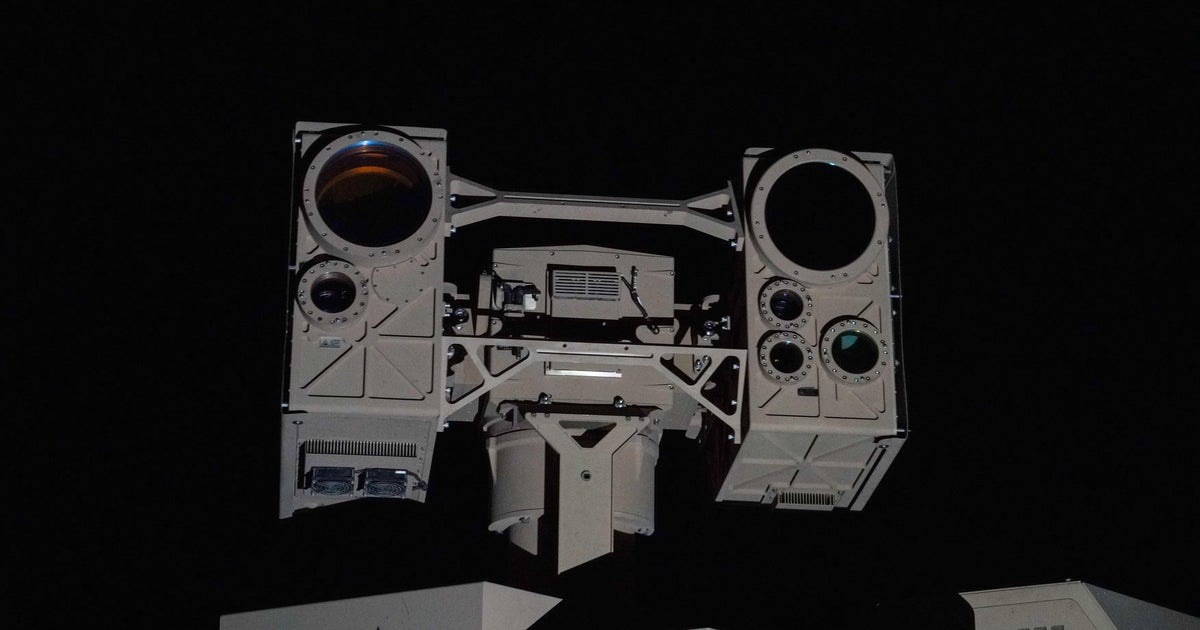
Home – CBSNews.com
McAllen, Texas — Less than two weeks after the military first used a high-energy laser weapon system to down suspicious drones, military officials told CBS News there has been a roughly 75% decrease in the number of drones probing the southern border in the Rio Grande Valley.
The system made its debut by taking down three drones on Aug. 25 and 26 after months of training that included an episode that caused the Federal Aviation Administration to briefly shut down El Paso’s airport earlier this year. Since then, military officials told CBS News there is regular coordination with the FAA to ensure the laser does not pose a risk to civilians.
Your browser does not support the video tag.
The U.S. military already has tools that use jamming to send some of the dozens of drones that appear daily back to where they came from, but the laser gives the option to bring a drone down if it is a suspected threat. Since the beginning of the year, the military has stopped 300 drones officials say are linked to cartels, including eleven the laser took down over a span of ten days.
“When you just send it back and then it comes back up or is defeated temporarily, but the game changer is ensuring that that tool can’t be used again against you,” said Army Col. Robert Felicio, commander of the 130th Maneuver Enhancement Brigade that’s deployed to the border.
Felicio in an interview with CBS News said there has been a “significant” change in activity since the laser entered the picture. He didn’t disclose the daily number of drones his unit sees but Air Force Gen. Gregory Guillot, the head of U.S. Northern Command, told lawmakers in 2024 there are approximately 1,000 drone incursions at the southern border each month.
Felicio and other military officials acknowledged the recent drop may have also been caused by other variables, like the cartels finding different routes, but it occurred after the laser’s debut.
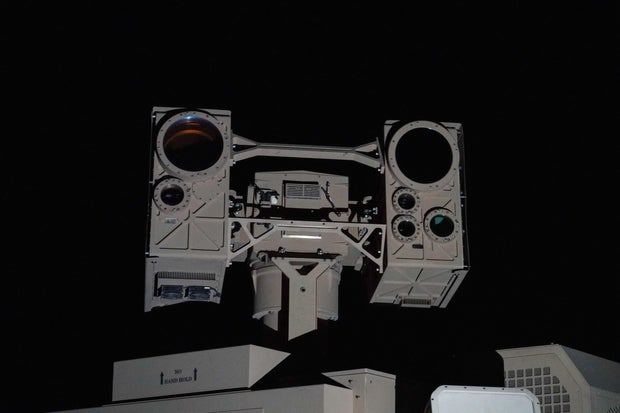
Defense Department
How does the laser work?
During a test of the system CBS News viewed exclusively on Friday, soldiers sent up a small quadcopter drone over an empty field near the border wall. Inside a vehicle with the laser mounted on top of it, other soldiers tracked the drone using an Xbox controller and a camera feed displayed on an i-pad-like device. Once they had the target drone in sight, they deployed the laser to zap it.
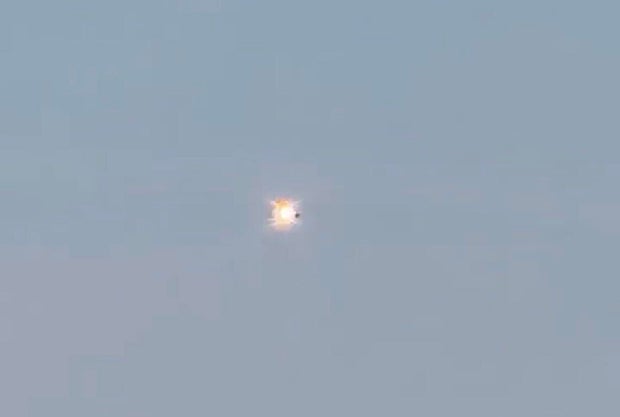
Defense Department
The only visible effect was a brief flash of light when the beam hit the drone to bring it down. During the test, the laser did not appear as a long continuous light but rather an invisible almost instantaneous heat beam that hit precise points on the drone. When the drone was recovered, it had a damaged propeller and was missing its battery but was still identifiable.
The laser the Army used in the test is a version of a system called LOCUST produced by the company AeroVironment. A spokesperson for the military’s Joint Task Force Southern Border said there are “multiple” of the systems along the border and just this week, the Army awarded its first-ever contract for high energy lasers — $465 million to AeroVironment.
Army Lieutenant Owen Farquer, who is one of the operators of the system, said using the X-Box controller has been intuitive for many of the soldiers who grew up playing video games.
Not a silver bullet but is another tool
The laser is not a silver bullet solution for countering drones, in part because they’re less effective if there are atmospherics like rain or vapor that can reduce the beam’s power. The Navy’s top officer Admiral Daryl Caudle wrote an opinion piece in The Washington Post this week calling for more investment in high energy laser weapons because they’re another tool even if there are some limits to their use.
Officials, like Caudle, argue it is a cost-effective system. An individual unit may cost around $17.4 to $25 million, according to Laser Wars, a Substack about military laser technology, citing budget documents. Each shot only costs around $3, according to AeroVironment. Other types of air defense systems have interceptors that each cost millions of dollars.
In addition to the laser system’s own limitations, there are risks to using it near civilians. For instance, CBS News reported in February that FAA officials had initially raised concerns about using the laser near civilian aircraft because a misfire that hits a plane would cause an instant disaster.
Felicio said there is coordination with the FAA to “ensure this technology is employed safely,” including checking the requirements the FAA has before and after the use of the laser. He didn’t disclose which side of the border the recent take downs occurred but said the U.S. government is also coordinating with Mexican authorities on tracking potential threats.
The type of threat drones from cartels pose
Officials told CBS News one of the reasons the cartels use drones, which can vary in size but generally look like small quadcopters, is to survey where U.S. service members and law enforcement are so they know which areas to avoid when smuggling people or drugs across.
Army Lt. Col. Ray Richards, the head of the 211th Military Police Battalion from the Massachusetts National Guard that is deployed to the border, said disrupting the drones has a financial impact on the cartels.
“When you think of 75% reduction of that capability and how that spreads based on X amount of dollars are tied to that — I think when you talk about disruption to the cartels, that is a huge part of that story,” Richards told CBS News.
The cartels are also using armed drones inside Mexico to attack rival groups, according to a recent report from the National Counterterrorism Innovation, Technology, and Education Center, which is funded by the Department of Homeland Security. The report found that there have been 221 incidents between 2021 and 2025 that resulted in 77 fatalities in different areas of Mexico.
Military officials are weighing the threat that could pose to the roughly 8,000 U.S. service members along the border and to law enforcement personnel.
Felicio and Richards took CBS News to an overlook in the Rio Grande Valley to illustrate how little separation there is between where U.S. personnel are posted and where the drones come from. CBS News did not see any drones but was told that service members tracked the same drone passing near the overlook three different times before we arrived.
Felicio said they sometimes see the same drones over and over again, which is where the laser could make a difference.
“if I just keep making it go back and then it comes back again – if it’s an immediate threat, I’m getting rid of it, but long term, I’m just allowing the cartel to continue to use that thing, whereas if I am able to use the [laser], now that’s gone,” Felicio said. “That’s, I think, really where this is making a huge difference.”
wp:paragraph
هلدینگ کاسپین استانبول | خرید ملک در ترکیه | صرافی معتبر ایرانی در ترکیه | خرید و فروش طلا در ترکیه | مهاجرت به ترکیه | واردات و صادرات در ترکیه | نیازمندیهای ترکیه | اخبار ترکیه | اخبار جهانی | توریست ایران | خدمات توریستی در ایران | تورهای گردشگری ایران | هلدینگ اول | خدمات کاریابی و فریلنسری و شغل | مرجع اطلاعات ایران (همه چیز در ایران) | کیف پول و خدمات مالی و پرداخت یار | اخبار ایران | تابلو زنده قیمت ارز در ترکیه و استانبول | صرافی آنلاین ترکیه | قیمت طلا و نقره در ترکیه | سرمایه گذاری در ترکیه | جواهرات در ترکیه | نرخ لحظه ای ارزها در استانبول | قیمت دلار امروز در ترکیه | قیمت دلار استانبول امروز | قیمت لحظه ای دلار | اخبار روز ترکیه استانبول | اپلیکیشن ISTEX | اپلیکیشن قیمت لحظه ای دلار و یورو و لیر و ارزها در ترکیه
/wp:paragraph wp:paragraph /wp:paragraph
About the Author