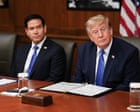
Spanish hotel chains. A Canadian mining firm. European shipping giants. Visa and Mastercard. Scores of foreign companies have been driven out of Cuba this summer over fear of being hit with potent, new secondary sanctions. Marco Rubio, the secretary of state, told Axios last month there are “no escape valves” from his unprecedented pressure campaign against the island.
But not everybody is losing out. Agrowing cast of Washington and Florida insiders – from billionaire Trump cronies and Rubio-linked lobbyists to Cuban exiles – are jockeying for control of the communist-ruled island-nation’s key assets, charging top dollar to help clients navigate the ever-expanding web of sanctions, and positioning themselves for lucrative business opportunities in the case of regime collapse.
Since an executive order signed by Donald Trump on 1 May drove Canada’s Sherritt International from its nickel and cobalt mining joint venture with the Cuban state, two rival US bids to buy out its stake have been presented to US authorities.
Ray Washburne, the vice-chair of Trump’s 2016 Victory Committee who organized last week’s Republican Midterm Convention in Dallas, is clashing with Albert Huddleston, another Texas oil tycoon with close ties to the White House. Both are hoping to swoop in, despite nine-figure claims on Sherritt’s Cuba holdings by Citigroup and Office Depot – Fortune 500 corporations. Washburne did not respond to the Guardian and the consortium group including Huddleston declined to comment.
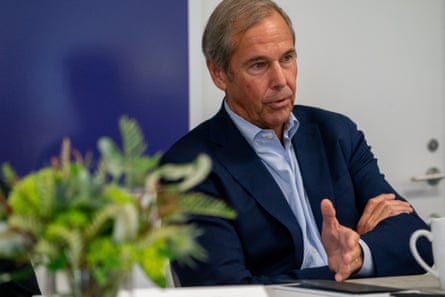
A similar approach is being pursued by Australia’s Antilles Gold Ltd, which after being blacklisted over its Cuba operations in June received the green light from the Trump administration to negotiate the transfer of its stake in a Cuban copper-gold mine to the New York-based, multibillion-dollar investment fund, Global Emerging Markets.
“If I had done during the Biden administration what Trump’s friends have done now, I’d have been put in jail,” said a person with several decades of experience in Cuba policy who requested anonymity.
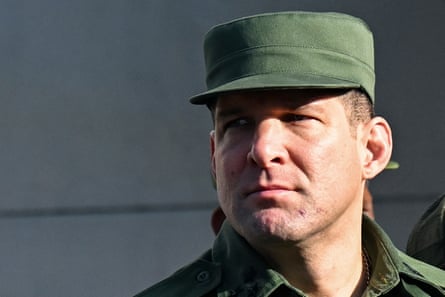
Sources tell the Guardian that several Trump Organization executives who had previously traveled to the island to explore real estate deals and who even registered the Trump trademark there in 2008 have in recent months returned to Cuba under the aegis of Dominari Holdings for meetings. The executives are said to have met with Raúl Guillermo Rodríguez Castro, the grandson of former Cuban president Raúl Castro, dubbed “the Crab”, to explore opportunities amid the departure of Spanish hotel giants Meliá and Iberostar, which had been operating on the island since the 1990s.
Neither Antilles nor Dominari returned calls for comment.
But American investors aren’t the only ones sensing opportunity in Rubio’s effort to coerce the sanctions-battered country of his parents’ birth into becoming economically dependent on the US.
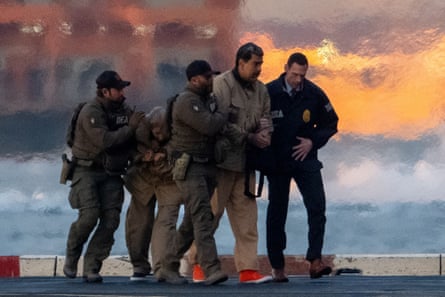
Cubans have been living under an effective fuel blockade since January 2026: the Trump administration cut oil shipments to the island from the island’s main ally after abducting Nicolás Maduro, the Venezuelan president; it then nixed oil deliveries from Mexico by threatening tariffs on any country sending petroleum to the island.
Treasury department-authorised oil exports from Florida and Texas to the island’s private sector, however – all but non-existent last year – have shot up to over $160m so far this year.
Meanwhile, Florida shipping lines such as Crowley, a donor to Cuban-American Republican lawmakers from Florida, Mario Díaz-Balart and María Elvira-Salazar, seem to be beneficiaries of fresh sanctions that have hit foreign shippers and forced Cuba-bound commerce to reroute through Florida, according to informed sources who spoke with the Guardian. Crowley declined to comment.
And as UN human rights experts warn that Washington’s latest measures “knowingly deprive a population of the means to survive”, Franklin Graham, the Trump-allied CEO of evangelical aid organization Samaritan’s Purse recently secured a $40m federal contract to distribute humanitarian aid in Cuba – despite lacking the capacity to effectively implement such a contract on the island, according to sources familiar with the matter. A spokesperson for Samaritan’s Purse said: “Details about aid for Cuba are still being developed and are not yet finalized.”
Ironically, some of those who have called most vociferously for harsher sanctions are also cashing in.
In July, Madrid-based Vima World SL, a leading player in the island’s food industry which partners with GAESA, the Cuban military conglomerate that controls large swathes of the island’s economy and has become the main target of the US squeeze, hired top Washington lobbying firm Continental Strategy – led by Cuban-American allies of Rubio who oversaw the maximum pressure Cuba policy as officials in the first Trump administration – for matters related to trade, foreign relations and the food industry.
Continental’s executives include Carlos Trujillo, Trump’s former ambassador to the Organization of American States John Barsa, Trump’s former acting USAID administrator and Alberto Martinez, Rubio’s former chief of staff. The firm, which terminated its contract with Vima this month after netting nearly $40,000 according to corporate disclosures, has been known for providing lobbying and government relations services to clients staunchly opposed to the one-party state, including MasTec, the telecom company owned by Rubio’s friend Jorge Mas Santos; American Sugar Refineries, owned by Trump-ballroom donor and Rubio patron Pepe Fanjul; and General Cigar Co, which is fighting Cuba’s state-owned tobacco enterprise in US court for the rights to the Cohiba cigar trademark.
“It’s been interesting to watch how quickly some hardline ideologues become pragmatists once there’s money on the table,” one person familiar with the contract told the Guardian, noting that Continental has taken on other Spanish firms with Cuban business interests “trying to get on the right side of sanctions, like banks and hotel chains”.
Other organizations that for years have won seven-figure grants from US federal agencies are capitalizing on the Trump administration’s push to force sweeping political and economic change on the island.
Lobbying disclosure forms filed in July by a newly formed group made up of former employees at the US taxpayer-funded Foundation for Human Rights in Cuba (FHRC), alongside longtime Republican lobbyist Otto Reich and the husband of top Rubio state department aide Viviana Bovo, indicate it is “advising [the] State Department on [an] economic development plan for a future free and democratic Cuba, including energy-sector development and compensation for owners of property/business expropriated by the Cuban government”.
Reich and Tony Costa, the Foundation for Human Rights chairman, are involved in efforts to mobilize billions of dollars in private investment from wealthy Cuban exiles for a post-communist Cuba through the newly created Cuban-American National Chamber of Commerce (CANCC).
To get their priorities heard by lawmakers and officials in Washington, FHRC and another attendee of the CANCC gatherings, Armando Labrador, a Miami-based plastic surgeon who regularly meets with state department officials and wants to become Cuba’s next leader, have paid DC lobbying firm The Cormac Group a combined $100,000 since December.
For another US taxpayer-funded non-profit that had been the subject of an internal Biden administration inquiry that was quickly shut down by powerful House appropriators, the administration’s unprecedented economic siege could not have come at a better time.
Just before the July release of a heavily criticized state department report referring to Cuba as a nearby terror hub plotting to conquer the US, Digital News Association Inc received a fresh $250,000 contract from the US government’s office of Cuba broadcasting for “investigative journalism, research and media production”, after which its main site launched an online interview series repeating Trump administration claims of Cuba’s purported threat to US national security.
Vima, Continental, Cormac and Digital News did not return calls for comment.
“The cause is regime change,” said Erik Cartelle, a consultant working to connect prominent exiles with Rubio’s state department. “I have clients that want to do a lot of business in Cuba, and the administration is banking on Cuban-Americans going to Cuba and investing, but if there’s a deal that’s going to be had with the regime, it needs to take into account the diaspora’s wishes. You’ve got to listen to this community.”
The Guardian wp:paragraph
هلدینگ کاسپین استانبول | خرید ملک در ترکیه | صرافی معتبر ایرانی در ترکیه | خرید و فروش طلا در ترکیه | مهاجرت به ترکیه | واردات و صادرات در ترکیه | نیازمندیهای ترکیه | اخبار ترکیه | اخبار جهانی | توریست ایران | خدمات توریستی در ایران | تورهای گردشگری ایران | هلدینگ اول | خدمات کاریابی و فریلنسری و شغل | مرجع اطلاعات ایران (همه چیز در ایران) | کیف پول و خدمات مالی و پرداخت یار | اخبار ایران | تابلو زنده قیمت ارز در ترکیه و استانبول | صرافی آنلاین ترکیه | قیمت طلا و نقره در ترکیه | سرمایه گذاری در ترکیه | جواهرات در ترکیه | نرخ لحظه ای ارزها در استانبول | قیمت دلار امروز در ترکیه | قیمت دلار استانبول امروز | قیمت لحظه ای دلار | اخبار روز ترکیه استانبول | اپلیکیشن ISTEX | اپلیکیشن قیمت لحظه ای دلار و یورو و لیر و ارزها در ترکیه
/wp:paragraph wp:paragraph /wp:paragraph
About the Author