September has always seemed to me a far more convincing beginning than January.
January may possess the official authority of the calendar, with all its resolutions, declarations and rather exhausting expectations of self-reinvention, but September offers something subtler and, to my mind, considerably more persuasive: the feeling that life, having briefly loosened its structure during the summer months, is gathering itself again, returning to its rooms, its desks, its studios and its conversations, not necessarily transformed, but somehow renewed by the very act of return.
Perhaps this is an emotional inheritance from childhood, when September meant unopened notebooks, sharpened pencils, books whose spines had not yet been bent, classrooms waiting to be entered and that incomparable sensation of beginning a new year in a familiar place as a slightly different person. A summer had passed; we had grown, although perhaps only by a few centimeters, and the world seemed to grant us another chance to start.
I have never entirely lost that feeling.
Even now, September makes me want to return to the studio, stretch a new canvas, reorganize the books on my desk, write the first sentence of something whose conclusion I do not yet know, and, most importantly, go out into the city again, because the Fall in Istanbul is not merely the end of summer. It is the moment when the city’s intellectual and artistic metabolism accelerates, when galleries reopen their doors, museums unveil the exhibitions they have been preparing in silence, artists emerge from the solitude of their studios, collectors return from summer and the scattered community of art begins, quite literally, to gather again.
There is something deeply appropriate about art choosing September for its return, because art itself is founded upon the possibility of beginning again. Every blank canvas is an argument against finality. Every exhibition proposes that another arrangement of objects, images and ideas might make us see the world differently; every new season quietly insists that despite everything that has already been painted, photographed, sculpted, filmed, written and exhibited, something remains unsaid.
This year, Istanbul seems particularly determined to prove the point.
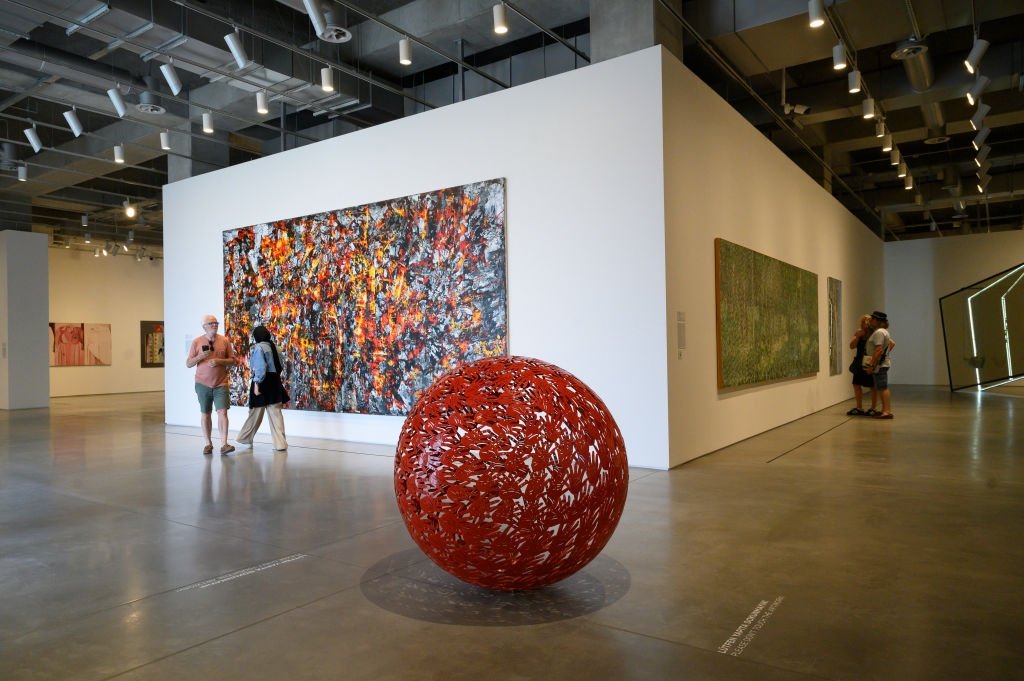
The new season announced itself early at Istanbul Modern Art Museum, where “Beneath the Same Blue,” the museum’s tenth collection exhibition, opened on Sept. 8, bringing together 230 works by 119 artists and spreading beyond the permanent collection gallery across the museum’s four floors.
Elsewhere, the city’s cultural geography has begun to rearrange itself with remarkable speed. In Akaretler, Artweeks Istanbul’s “Collectors” edition opened on Sept. 17 and will remain until Nov. 8, bringing selections from the collections of Banu and Hakan Çarmıklı, Öner Kocabeyoğlu and Tansa Mermerci into the historic Sıraevler and, importantly, opening them to the public free of charge.
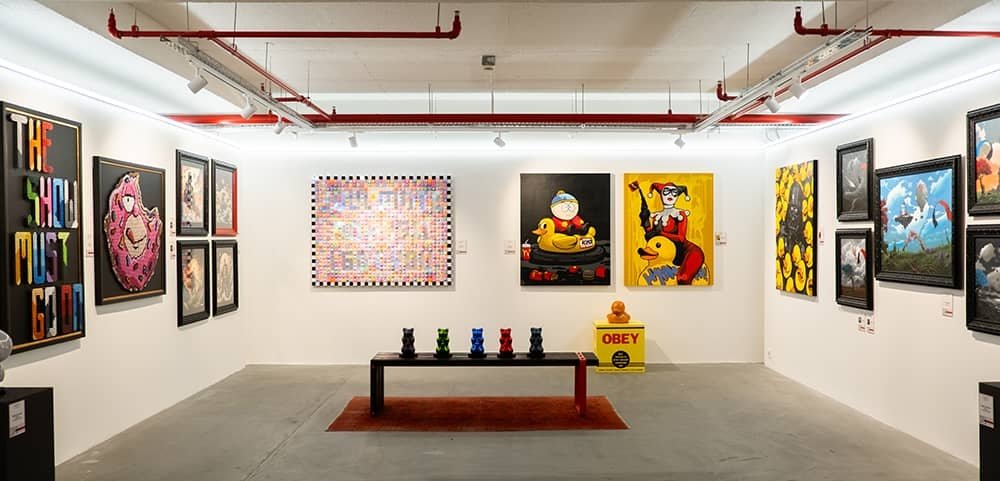
I find this emphasis on collecting particularly compelling because a collection, at its best, is never simply an accumulation of expensive objects. It is an intellectual and emotional autobiography assembled slowly through other people’s creations. A collector chooses one work, then another and eventually connections emerge between objects that their makers could never have anticipated, until taste becomes a kind of authorship and the collection begins to reveal not only what its owner possesses but what he or she has repeatedly chosen to look at, question and live beside.
Opening those private narratives to the city transforms possession into encounter, which is precisely what a serious art week should do.
One of the most exciting exhibitions is Ugo Rondinone’s “the sun and the mountain” at Dirimart Dolapdere, which opened at the beginning of the month and can be visited until Nov. 8. Rondinone’s “the sun and the mountain” at Dirimart carries, for me, an unusually personal resonance this September, and perhaps this is the exhibition I am most excited to encounter. Only this summer, while traveling through Nevada, I made a point of visiting Rondinone’s “Seven Magic Mountains” in the desert outside Las Vegas: seven monumental towers of fluorescently painted boulders rising, almost impossibly, from the vast and austere landscape of the Mojave.
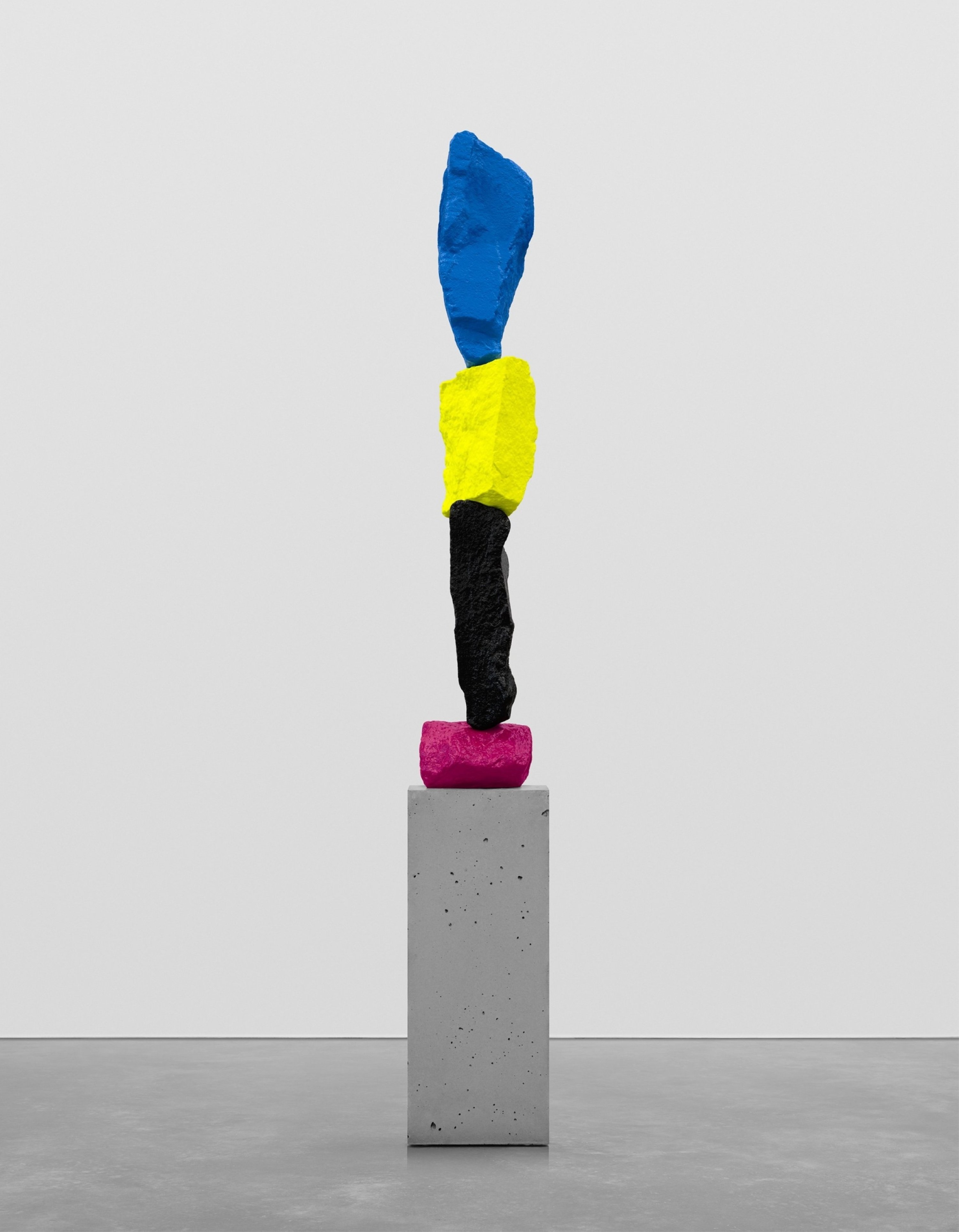
I had known the work through photographs for years, yet nothing prepared me for the strange exhilaration of actually standing before it, where those almost artificial colors seemed simultaneously to contradict the desert and to belong to it, as if someone had inserted a contemporary totem into geological time. What stayed with me was precisely that tension in Rondinone’s language between the primordial and the synthetic, nature and human intervention, permanence and spectacle, and so there is something wonderfully serendipitous about returning from Nevada to find his work waiting for me in Istanbul. To encounter an artist first beneath the immense desert sky and then again, only weeks later, within the urban density of Dolapdere feels almost like continuing a conversation across two landscapes. Perhaps this is also one of the great pleasures of looking at art seriously: artworks begin to mark our personal geography, attaching themselves to journeys and memories until art history is no longer something we encounter only in books or museums, but something through which we remember where we have been.
For several weeks in September, contemporary art creates an alternative map of Istanbul.
Akaretler leads to Karaköy; Karaköy to Tophane; Tophane climbs toward Pera; Pera extends toward Dolapdere and Piyalepaşa; another route takes us north along the Bosporus toward Rumelihisarı.
And perhaps that is precisely what an art season does to a city: it transforms the city into a world of wonders.
We think we are traveling to exhibitions, yet art is quietly making us travel through Istanbul. A building we have passed a hundred times suddenly acquires significance because art is inside it; a neighborhood becomes part of our mental map because a gallery has moved there; an old industrial structure is temporarily converted into a place for aesthetic speculation. Art interrupts the efficiency with which familiarity teaches us not to look.
Then comes the great concentration of the month.
From Sept. 23 to 27, Contemporary Istanbul returns to Tersane Istanbul for its 21st edition, bringing 70 galleries from 16 countries, 736 artists and 1,372 artworks to the Golden Horn, while 22 new international participants broaden its geographical field.
It is easy and occasionally fashionable to dismiss art fairs as temples of commerce, but doing so ignores the complicated ecology that surrounds the transaction. Yes, artworks are sold, galleries need revenue, collectors acquire and artists require sustainable careers; nevertheless, what cannot be measured on a price list is the density of encounters produced when artists, galleries, curators, writers, collectors and institutions from different geographies occupy the same temporary space.
A conversation beside a painting may become a studio visit months later; a studio visit may eventually become an exhibition; a curator may remember an artist encountered almost accidentally; a collector may buy the first work of what, decades later, becomes a significant collection. The visible fair lasts only days, while its invisible consequences may continue for years.
In Istanbul, this takes on a particular significance because the city has never truly been merely the overused “bridge between East and West.” Bridges connect two supposedly stable points, whereas Istanbul has historically been something much more unstable and interesting: a place where worlds overlap, contradict, borrow from and transform one another, producing identities that cannot easily be reduced to either side.
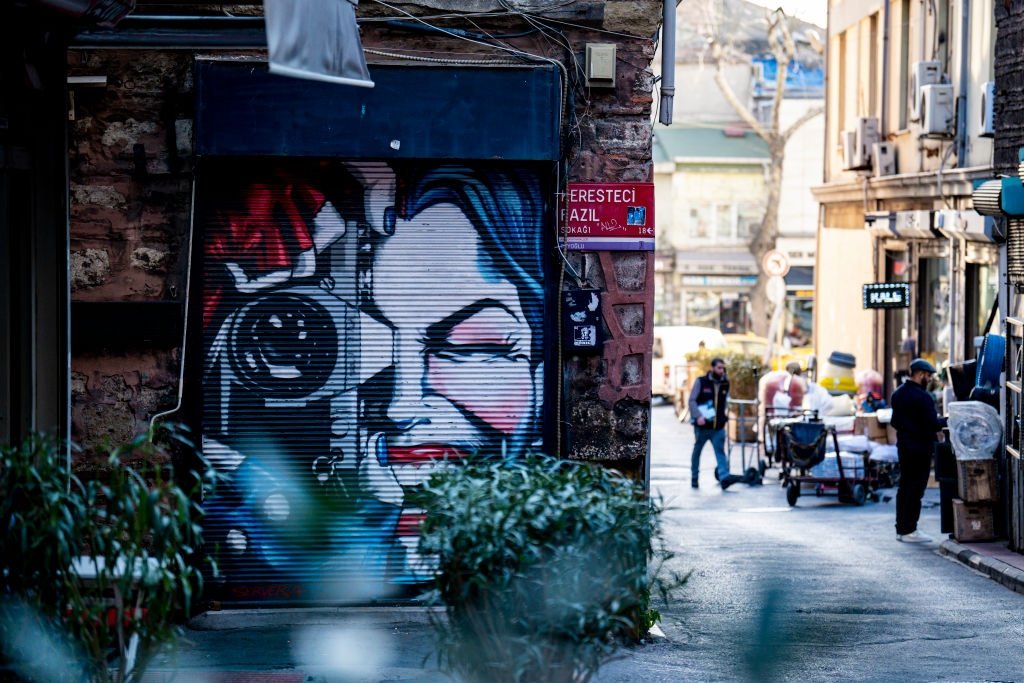
Contemporary art thrives in precisely such ambiguity. And September does not end when the fair closes.
This is when the idea of an “art week” becomes insufficient; what Istanbul is creating is closer to an art season in the fullest sense, one in which painting, photography, installation, archives, film, performance, collecting and public conversation overlap until culture begins to inhabit the city rather than simply taking place inside designated cultural buildings.
Perhaps this is the deeper reason September matters to me. It is a liminal month from the Latin limen, meaning threshold, suspended between summer and autumn, departure and return, memory and expectation. The heat has not entirely disappeared, yet the light has changed; the city is familiar, yet something has shifted within it and for a brief period we occupy that rare psychological territory in which the old season has loosened its hold while the new one has not yet acquired the weight of routine.
Art belongs naturally to such thresholds because making art means repeatedly consenting to uncertainty.
A painter standing before an empty canvas does not know exactly what the painting will become; a curator beginning an exhibition cannot entirely predict the relationships that will emerge between works; the person acquiring a first artwork cannot know what collection may eventually grow around it. Creation requires us to act before certainty arrives.
Perhaps this is what I love most about the refreshing spirit of September. It is an act of faith in a future that has not yet acquired its form.
And so, while January demands resolutions, September offers something far more generous: an opening.
As an artist, I recognize that sensation intimately. There comes a moment after an exhibition, after travel, after distraction, when I return to the studio and confront an empty canvas; strangely, however many paintings one has made, the blank surface never becomes entirely familiar, because every beginning asks the same impossible question in a slightly different form: What now?
Perhaps this city asks itself the same question every September. Istanbul’s answer this year is unusually rich.
It answers through paintings and photographs, through private collections made public, through historic buildings inhabited by contemporary works, through artists arriving from elsewhere and artists who have spent their lives here, through the Golden Horn crowded with galleries and the Bosporus reflecting the first softer light of autumn.
The new art season has begun, but nothing has yet been decided. And that is September’s greatest luxury: for a few luminous weeks stretched even to October, the pages are still mostly blank, the canvases unfinished, the exhibitions newly opened and the art conversations of the year only just beginning.
Everything remains possible, and I love that spirit of possibilities that September grants us.
DAILYSABAH
هلدینگ کاسپین استانبول | خرید ملک در ترکیه | صرافی معتبر ایرانی در ترکیه | خرید و فروش طلا در ترکیه | مهاجرت به ترکیه | واردات و صادرات در ترکیه | نیازمندیهای ترکیه | اخبار ترکیه | اخبار جهانی | توریست ایران | خدمات توریستی در ایران | تورهای گردشگری ایران | هلدینگ اول | خدمات کاریابی و فریلنسری و شغل | مرجع اطلاعات ایران (همه چیز در ایران) | کیف پول و خدمات مالی و پرداخت یار | اخبار ایران | تابلو زنده قیمت ارز در ترکیه و استانبول | صرافی آنلاین ترکیه | قیمت طلا و نقره در ترکیه | سرمایه گذاری در ترکیه | جواهرات در ترکیه | نرخ لحظه ای ارزها در استانبول | قیمت دلار امروز در ترکیه | قیمت دلار استانبول امروز | قیمت لحظه ای دلار | اخبار روز ترکیه استانبول | اپلیکیشن ISTEX | اپلیکیشن قیمت لحظه ای دلار و یورو و لیر و ارزها در ترکیه
About the Author