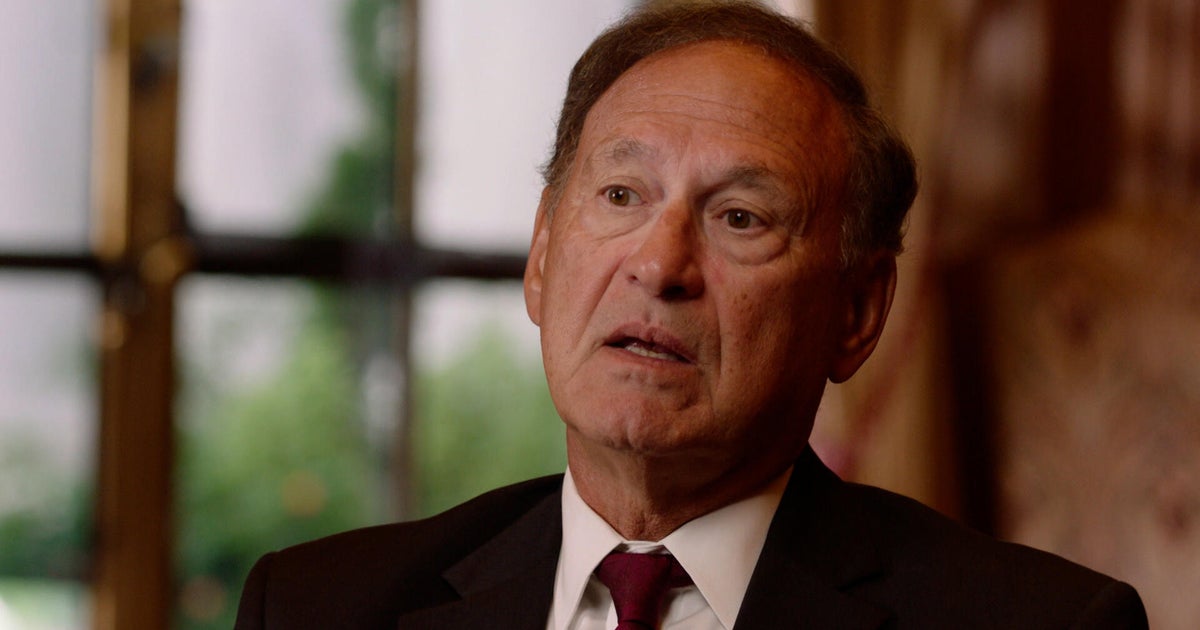
JD Vance has parachuted into the midterm election campaign on a rescue mission in a new guise: a risk management consultant. Speaking in the flat language of the expert hired to identify threats, weaknesses and losses affecting a business’ reputation, he has presented his executive summary for limiting vulnerabilities and a scenario for averting disaster.
“There’s a lot of good that’s been done, but there’s a lot of work left to do,” he informed his clients on 15 September about the words to use. “Give us another chance, or give us another couple of years, to continue to work on the amazing things that we’ve been doing for the past two years.” He turned the focus to harm reduction rather than total agreement and then shifted the equation to a negative binary choice. “Even if you don’t agree with us on every issue, the other party is consumed by craziness.”
His proposal for a “another chance,” however, did not acknowledge harm, express remorse or offer any pledge to change. Skipping the apology avoided admitting error, wrongdoing or enlightenment. The lack of an apology allowed Vance–and Donald Trump–to maintain a posture of unwavering strength, to demand continued fealty and to maintain their pretenses.
Vance’s strategy does double duty by firmly establishing his stake to become the prospective successor to Trump as the Republican presidential candidate in 2028. He himself embodies “another chance.” But his implicit self-characterization creates an indelible political identity that the man of many identities must carry forward through this campaign and the next.
Every vice-president seeking to become president is inevitably “another chance.” Vance carries the burden of one of the most unpopular presidents of modern times. His game plan depends upon more than calculated forgetfulness. Abject failure should be seen as “amazing” success. Explaining away Trump means never having to say you’re sorry.
Vance’s plea for “another chance,” however, has not produced the desired effect. Instead of Ma miganions aroused to march in a phalanx through Trump’s Arch of Triumph, Vance’s defensive positioning has dampened fervor while opening the door to criticism within his party. Beleaguered Republican senate candidates who had been in lockstep with Trump have suddenly started to flake off. Yet even as they edge away, they still take timid steps.
Mike Rogers in Michigan had previously argued that congressional efforts to limit Trump’s authority in the Iran War would “not be good for America” and dismissed concerns about rising fuel costs. “We’re going to be fine, we got plenty of oil,” he said. Senator Ashley Hinson in Iowa insisted that the U.S. needed to “finish the job,” voting numerous times against invoking the War Powers Resolution to force an end to U.S. involvement or curb executive authority without congressional approval.
Then Rogers reversed himself, “I think the best option now is to wind it down… The time is now.” Hinson followed suit, pleading that “the war needs to be brought to a successful and immediate end.”
The panicked Republicans are not really defectors. None of them has offered a single reason why any Trump policy has been flawed, damaging or counter-productive. But now they want out, somehow to reduce their vulnerabilities. They demand an export ban on diesel as a panacea, which the Financial Times reports “wouldn’t be workable” and would have unintended consequences that would lead eventually to fuel price spikes.
The Republicans without a cause are seeking “another chance” without being able to articulate a difference from the past. They are pivoting into a void.
Having supported Trump down the line they would prefer not to be held responsible for the consequences. But their fracturing underscores that the president and the policies they supported are the source of their quandary.
The Republican freak-out validates voters’ anxieties that continuing the Trump status quo carries unacceptable risk. Rogers, Hinson and others cannot be dismissed as Democratic complainers. Their attempt to distance themselves grounds the Democratic criticism in more than partisanship and undermines the simple choice of rejecting the Democrats as the radicals. Intra-party disintegration makes the Trump administration, not the opposition, appear more unpredictable and untrustworthy.
The uneasy Republicans’ bid for “another chance” subverts Vance’s framing of the midterms as a judgment about who flew over the cuckoo’s nest. “So, to the American people, I’d say, send these people packing, put them in the mental hospital, do not put them in Congress, because even if you don’t agree with us on every policy issue, at least we’re motivated by common sense and American interest.”
Vance’s pitch relies on vapid “common sense,” but when Republicans turn tail the illusion of irresistible power is shattered and the dogma loses its magnetism. It is the Republicans above all who are neutralizing Vance’s damage control. His request for “another chance” to manage voter dissatisfaction through relative comparison places a marker against which the uncertainty, doubt and fear of Republicans is gauged.
At a pep talk to House Republicans, Vance suggested what he thought was a clever pointer about how to demonize Democrats. “And if you are one of the few Republicans who’s running against a Democrat who’s not that crazy, then just talk about Abdul El-Sayed,” he said.
But Vance’s advice overstretched his less-than crazy defense, not least with El-Sayed polling ahead of Rogers. Vance disclosed the hollowness and falsity of his strategy by acknowledging that Democrats are “not that crazy” and that the insinuation must be contrived, a trick he has done before.
Vance’s insistence on making the election into a contest of who is crazier is his most self-defeating idea. In that competition, Trump will always be the winner. The Economist/YouGov poll, taken at the same moment Vance delivered his advice, showed that 51 percent of registered voters selected the word “dangerous” to describe Trump, alongside 53 percent choosing “corrupt” and 47 percent “out-of-touch.” Only 18 percent called him “steady.”
Vance’s simplification discards the cult of personality in which the leader can do no wrong and ideology brooks no debate. The leader must always be uniquely capable, his words unassailable and the movement always winning, so much you’ll get tired of it.
Vance’s imploring introduces an element of skepticism. He shifts the basis for support from zealotry to a cold calculation. Ideology is unmasked, vision lost, the leader becomes fallible. Without unquestioning belief, the cult of personality no longer is attributed magic but depends on risk management.
When Vance confesses that it is the Trump administration that is the incumbent regime that must be defended and Republicans are banging to get out of Trump’s Iran War, resentment cannot be easily mobilized against “the deep state,” “the establishment” or “globalist elites.” When Trump rolled out the red carpet for the Chinese Communist leader Xi Jinping, he rolled it over the trope against Democrats as “communists.”
Once again, “another chance” Vance has inverted his personal identity, contradicting the character he projected in Hillbilly Elegy, his foundation myth. Scourged by his dysfunctional upbringing he rejected the endless excuses of his alcoholic and drug addicted mother and accepted the raw honesty and moral clarity of his “Mamaw” and “Papaw,” and found the road to redemption.
Vance wrote urgently about the danger of false messiahs blaming scapegoats such as immigrants instead of offering hard truths of responsibility to working-class people. He depicted himself as a “cultural emigrant,” bearing authentic Appalachian values among the “elite” toward whom he had an “almost primal scorn.”
In 2016, Vance referred to Trump as “reprehensible”, “an idiot”, and wondered to a friend if he was “America’s Hitler”. Vance wrote in the Atlantic that Trump was like “cultural heroin” and offered private advice to Hillary Clinton’s campaign, according to Chris Whipple’s profile of him in Vanity Fair.
Vance was recruited to Silicon Valley as a venture capitalist set up by Peter Thiel of the Paypal Mafia and co-founder of Palantir, who had notoriously stated: “I no longer believe that freedom and democracy are compatible.” When Vance ran for the US Senate from Ohio in 2022, Thiel bankrolled his campaign to the tune of $15m. Vance transformed himself into the stalwart Trump supporter. “I regret being wrong about the guy,” he said. But he didn’t explain the inner process of his Damascene conversion.
After barely serving in the Senate, his new best friends, Tucker Carlson and Donald Trump Jr, promoted him to Trump into the vice-presidency. During the 2024 campaign, Vance cemented his latest new identity by scapegoating Haitian immigrants for supposedly eating pets. He confessed he made it up. “If I have to create stories so that the American media actually pays attention to the suffering of the American people, then that’s what I’m going to do,” he admitted.
Vance announced he had converted from evangelical Protestantism to Catholicism, and he has clashed with Pope Leo. “I think it’s very, very important for the pope to be careful when he talks about matters of theology,” Vance said in April about Leo, channeling Trump’s spirit of retribution. Leo replied that he had “no fear” of the Trump administration for “speaking out loudly of the message of the Gospel, which is what I believe I am here to do.”
In June, Vance published another memoir, Communion: Finding My Way Back to Faith, in which he credits Thiel – “possibly the smartest person I ever met” – for his conversion, but mentions Leo only in passing, avoiding reference to his feud. Vance identifies himself with a narrow “postliberal” rightwing movement. The Catholic theological historians James M Patterson and Thomas D Howes, in their new book, Why Postliberalism Failed, explicitly describe Vance’s new-found faith as “an ideology that failed.”
Vance’s ritualistic non-apology, “another chance”, is a sheer power play that repudiates his original transformation as described in Hillbilly Elegy in which he achieves mature reflection by the grace of accepting personal responsibility.
More dangerously to him, his opportunism may have closed off his opportunity. Vance has cornered himself into perhaps not simply his latest but his last political identity–the unapologetic apologist–from which he cannot escape through the election of 2028. In calling for “another chance”, Vance may have run himself out of identities.
-
Sidney Blumenthal, former senior adviser to President Bill Clinton and Hillary Clinton, has published three books of a projected five-volume political life of Abraham Lincoln: A Self-Made Man, Wrestling With His Angel and All the Powers of Earth. He is a Guardian US columnist and co-host of the Court of History podcast
The Guardian wp:paragraph
هلدینگ کاسپین استانبول | خرید ملک در ترکیه | صرافی معتبر ایرانی در ترکیه | خرید و فروش طلا در ترکیه | مهاجرت به ترکیه | واردات و صادرات در ترکیه | نیازمندیهای ترکیه | اخبار ترکیه | اخبار جهانی | توریست ایران | خدمات توریستی در ایران | تورهای گردشگری ایران | هلدینگ اول | خدمات کاریابی و فریلنسری و شغل | مرجع اطلاعات ایران (همه چیز در ایران) | کیف پول و خدمات مالی و پرداخت یار | اخبار ایران | تابلو زنده قیمت ارز در ترکیه و استانبول | صرافی آنلاین ترکیه | قیمت طلا و نقره در ترکیه | سرمایه گذاری در ترکیه | جواهرات در ترکیه | نرخ لحظه ای ارزها در استانبول | قیمت دلار امروز در ترکیه | قیمت دلار استانبول امروز | قیمت لحظه ای دلار | اخبار روز ترکیه استانبول | اپلیکیشن ISTEX | اپلیکیشن قیمت لحظه ای دلار و یورو و لیر و ارزها در ترکیه
/wp:paragraph wp:paragraph /wp:paragraph
About the Author