The alignment in Türkiye-U.S. relations during Donald Trump’s second presidential term has enhanced the two countries’ capacity to manage regional crises. In this new period, issues such as Syria, Gaza, Iran, the Russia-Ukraine War, Iraq, energy security, and regional transportation corridors have increasingly been addressed within a common diplomatic framework. From a broader perspective, the overarching objective remains to keep diplomatic channels open across a conflict-ridden region, support cease-fires, safeguard the territorial integrity of states, ensure the security of trade routes, and establish the foundations for postwar economic reconstruction and development.
Stability in Syria
Türkiye and the United States supported the unity of the Syrian state and gave full support to the Sharaa government. In the Türkiye-U.S. joint statement dated May 20, 2025, the two countries stated their determination to increase cooperation and coordination on stability and security in Syria. The joint statement set out the objective of a stable Syria that is at peace within itself and with its neighbors, preserves its territorial integrity, and does not allow terrorist organizations to operate.
This means that, from the perspective of Türkiye-U.S. relations, the Syria file is no longer addressed solely through the debate over “which actor will work with whom,” but rather through the integrity of the Syrian state, the fight against terrorism, the return of refugees, border security, and regional stability.
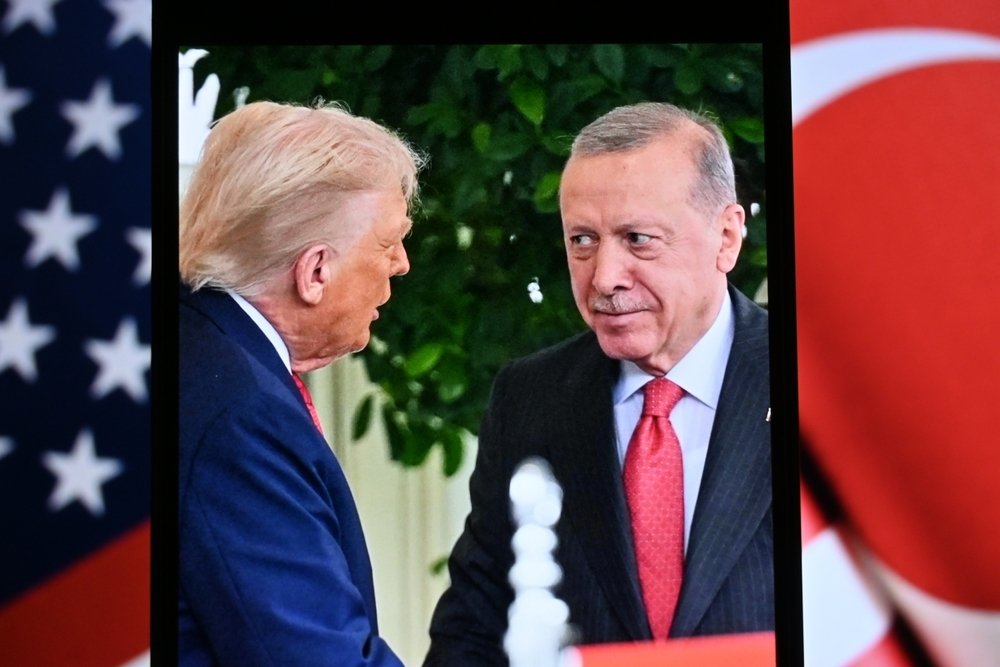
At the meeting between President Erdoğan and President Trump in January 2026, the implementation of the cease-fire and integration process in Syria, Türkiye-U.S.-Syria coordination, and the Gaza Peace initiative were also addressed together. Foreign Minister Hakan Fidan stated that Ankara and Washington were cooperating to ensure the stability of the new Syria.
The diplomacy conducted by Tom Barrack, the U.S. ambassador to Türkiye and special envoy for Syria, also drew attention during this process. Barrack achieved an important step for the future of Syria and regional security through his efforts toward the dissolution of the YPG. Barrack supported addressing the rights of the Kurds not through a separate state or a permanent armed structure, but within a united Syrian state. This approach directly overlapped with Türkiye’s position regarding Syria’s territorial integrity and the elimination of terrorist structures.
Instead of allowing a separate armed structure in Syria to evolve from a conflict zone toward statehood, its integration into the Syrian state has created a new space not only in terms of security, but also for the country’s reconstruction and economic stability.
Development in Iraq
Iraq is also becoming an important component of the Türkiye-U.S. regional approach. The conclusion of the primary U.S. mission in Iraq has ushered in a new phase focused on strengthening Iraq’s own security capabilities and revitalizing its economy. For Türkiye, Iraq’s stability is both a security concern and a strategic opportunity to advance the Development Road Project and strengthen trade connectivity between the Persian Gulf, Türkiye, and Europe. Within this broader economic and security framework, a new Iraq is emerging through closer cooperation with both Türkiye and the U.S.
In 2026, deepening security cooperation between Türkiye and Iraq, along with efforts to eliminate PKK-linked armed groups in Sinjar, became important priorities in strengthening Iraqi state authority. Ensuring security in Iraq involves not only reducing the terrorist threat but also establishing the necessary conditions for securing oil fields, increasing energy production, and attracting international investment.
In July 2026, the Turkish Petroleum Corporation (TPAO)’s participation in a consortium with British BP and American ConocoPhillips to develop the Kirkuk oil fields brought Türkiye, the U.S., and the U.K. together in a joint project in Iraq’s energy sector. Consequently, strengthening security and state authority in Iraq, expanding energy production, attracting international investment, and enhancing regional economic connectivity began to converge within a common strategic framework.
This picture shows that security and development in Iraq cannot be considered separately: the elimination of the PKK and affiliated armed structures, the strengthening of state authority, the increase in oil production, and the development of energy and trade connections through Ceyhan and the Development Road are interconnected components of the same regional transformation.
Ending wars, preventing spillover
Another domain of alignment was Gaza. The demand for peace in Gaza, which Türkiye has consistently emphasized, was compatible with the Trump administration’s approach. In the autumn of 2025, Trump, together with Türkiye, Egypt, Qatar, and other regional actors, put the first phase of a cease-fire process aimed at ending the war in Gaza into effect. In the joint statement dated Oct. 13, 2025, Trump stated that he would work together with these countries toward ending the war in Gaza, ensuring security, and achieving lasting peace.
Thus, Türkiye’s diplomatic contacts in the region and Washington’s new peace initiative converged around the same diplomatic table. The relations Türkiye established with regional actors and the U.S. global diplomatic network began to converge on common ground within the same framework.
Türkiye’s diplomatic role also came to the fore in preventing the Iran war from spreading across the region. During the war, Ankara maintained contacts with both Washington and Tehran while also conducting intensive diplomacy with Pakistan, Saudi Arabia, Qatar, and other regional countries. This diplomatic traffic was effective in preventing the war from spreading across the Middle East.
Türkiye’s fundamental approach was to prevent the conflict from expanding, keep diplomatic channels open, and create the basis for negotiations between the U.S. and Iran to move forward again. In this respect, Türkiye acted as one of the important actors in diplomatic efforts aimed at preventing the war from turning into a regional conflict, rather than becoming a direct party to the U.S.-Iran tensions.
From Caucasus to Black Sea
Another dimension of the Türkiye-U.S. dialogue in terms of regional peace is the Caucasus and the Black Sea. Türkiye has been supporting normalization between Azerbaijan and Armenia and the development of regional transportation links for years. Washington’s active hosting of the peace process between Azerbaijan and Armenia in 2025 under the Trump administration was also a positive development from Türkiye’s perspective.
On Aug. 8, 2025, the text of the peace agreement between Azerbaijan and Armenia was initialed in Washington, and a joint declaration was signed. During this process, the Trump Route for International Peace and Prosperity (TRIPP) project, which envisages establishing a transit connection between Azerbaijan and Nakhchivan through Armenia, also came onto the agenda. This development is important in terms of strengthening stability in the South Caucasus, developing the connection between Türkiye and Azerbaijan, strengthening cooperation across the Turkic World, ensuring the security of the Middle Corridor, and diversifying Europe-Asia trade routes.
In the Black Sea, Türkiye’s role as a mediator is vital. The Grain Corridor initiative established by Türkiye and the United Nations in 2022 was an important example of ensuring the delivery of Ukrainian grain to world markets under wartime conditions. Türkiye, which also hosted peace talks, once again found common diplomatic ground with the U.S. following Trump’s return to the presidency. Trump also sought to end the war and held former President Joe Biden responsible for what he described as an unnecessary war.
While Türkiye continued its active diplomacy and hosting efforts for peace in 2025, Trump’s U.S. also continued its initiatives aimed at ending the war. In 2026, Washington and Ankara continued their work on peace with separate agendas but on the same broad diplomatic ground.
In the Black Sea, Türkiye’s security and diplomatic initiatives intersect with U.S. initiatives aimed at ensuring safe navigation. The Black Sea Mine Countermeasures Task Group (MCM Black Sea), established in 2024 under Türkiye’s leadership together with Romania and Bulgaria, continued its activities in 2026, creating a concrete mechanism for maritime security.
In March 2025, the U.S. also reached separate understandings with Russia and Ukraine on safe navigation in the Black Sea, preventing the use of force, and preventing commercial vessels from being used for military purposes. Following attacks on Turkish-owned commercial vessels in 2026, Ankara once again made the safe navigation of civilian vessels in the Black Sea one of its priority issues.
Red Sea, Horn of Africa
The impact of the Türkiye-U.S. dialogue in terms of regional security is not limited to the Middle East. The Red Sea and the Horn of Africa are among the most critical transit areas for Europe-Asia trade. Any security problem affecting maritime transportation through the Bab el-Mandeb Strait, the Gulf of Aden, and the Suez Canal can affect global supply chains extending from Europe to Asia.
The Ankara Declaration, resulting from Ankara’s diplomatic process between Somalia and Ethiopia, created a basis for resolving maritime access and sovereignty issues through negotiations. This demonstrates Türkiye’s expanding diplomatic role along the Red Sea-Horn of Africa axis. The U.S. welcomed the Ankara Declaration and commended Türkiye’s leadership, while supporting Somalia-Ethiopia security cooperation and the fight against the terrorist organization al-Shabab. Türkiye and the U.S. have also worked together through the Somali Quint, alongside Qatar, the United Arab Emirates, and the United Kingdom, on Somalia’s sovereignty, territorial integrity, security, and the terrorist threat in the Horn of Africa.
At same table in new period
For lasting regional peace, not only cease-fires but also the security of energy, trade, and transportation routes is necessary. Türkiye’s position is vital here. Türkiye, where the energy and transportation connections between Iraq, the Caucasus, Black Sea, the Eastern Mediterranean, Europe, and Central Asia intersect, is also important for the U.S. in terms of Europe’s energy security and regional economic connectivity.
In 2026, the U.S. Trade and Development Agency’s (USTDA) provision of technical support for the development of Türkiye’s small modular reactor (SMR) infrastructure provided a concrete example of how the security dimension of Türkiye-U.S. relations has expanded to encompass energy technology.
During Trump’s second term, the areas of common work in Türkiye-U.S. relations have expanded, from stability and counterterrorism in Syria, security and the Development Road in Iraq, and the cease-fire and reconstruction in Gaza, diplomacy on Iran, to peace and transportation connections in the Caucasus, safe navigation in the Black Sea, maritime security in the Red Sea, diplomatic engagement in the Horn of Africa, and new cooperation in energy.
Türkiye-U.S. relations are therefore no longer limited to bilateral ties between Ankara and Washington. As Türkiye’s regional relationships intersect with the U.S.’ global diplomatic and economic capacity, the two countries have developed a broader field of cooperation that can contribute to managing regional crises while supporting peace, security, energy supply, trade corridors, reconstruction, refugee returns, and economic recovery, from the Middle East and the Black Sea to the Caucasus and the Red Sea.
The views and opinions expressed in this article are solely those of the author. They do not necessarily reflect the editorial stance, values or position of Daily Sabah. The newspaper provides space for diverse perspectives as part of its commitment to open and informed public discussion.
DAILYSABAH
هلدینگ کاسپین استانبول | خرید ملک در ترکیه | صرافی معتبر ایرانی در ترکیه | خرید و فروش طلا در ترکیه | مهاجرت به ترکیه | واردات و صادرات در ترکیه | نیازمندیهای ترکیه | اخبار ترکیه | اخبار جهانی | توریست ایران | خدمات توریستی در ایران | تورهای گردشگری ایران | هلدینگ اول | خدمات کاریابی و فریلنسری و شغل | مرجع اطلاعات ایران (همه چیز در ایران) | کیف پول و خدمات مالی و پرداخت یار | اخبار ایران | تابلو زنده قیمت ارز در ترکیه و استانبول | صرافی آنلاین ترکیه | قیمت طلا و نقره در ترکیه | سرمایه گذاری در ترکیه | جواهرات در ترکیه | نرخ لحظه ای ارزها در استانبول | قیمت دلار امروز در ترکیه | قیمت دلار استانبول امروز | قیمت لحظه ای دلار | اخبار روز ترکیه استانبول | اپلیکیشن ISTEX | اپلیکیشن قیمت لحظه ای دلار و یورو و لیر و ارزها در ترکیه
About the Author