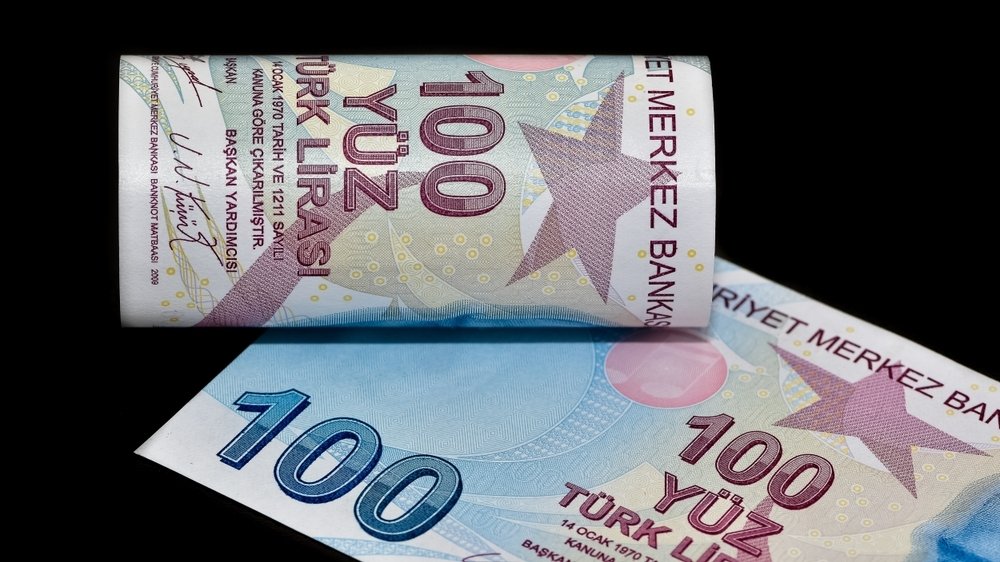
Turkish households’ confidence in the lira remains resilient, a leading rating agency suggested in a report, also suggesting that the country’s economy can withstand the effects of the energy shock resulting from the Middle East war despite the upward pressure on inflation.
The resilient household confidence in the Turkish lira and declining demand for foreign currency have also allowed the Central Bank of the Republic of Türkiye (CBRT) to partially rebuild its foreign exchange reserves, according to S&P Global Ratings’ analysis of the Turkish economy.
In this context, household confidence in the Turkish lira remained resilient throughout the year. As of September, foreign-currency deposits accounted for 38.7% of total bank deposits, unchanged from the beginning of the year.
Meanwhile, the impact of the fund investigation that began in September and the liquidation of certain investment funds remained limited, according to the S&P.
Although forced asset sales triggered a sharp correction in the stock market and led to the liquidation of approximately $18 billion in funds, the CBRT’s rapid provision of liquidity and the targeted measures implemented within the regulatory framework prevented “financial contagion.”
The fact that funds leaving these investments largely flowed into Turkish lira-denominated bank deposits rather than foreign-currency deposits suggests that these developments did not trigger a broader loss of confidence in the Turkish lira.
Moreover, according to the analysis, the energy price shock following the war in the Middle East is expected to put upward pressure on inflation in Türkiye. Inflation is forecast to average 30.9% this year and 21.7% in 2027.
S&P Global Ratings’ stable outlook for the Turkish economy reflects its assessment that Türkiye can withstand the ongoing energy price shock, provided that policymakers maintain tight monetary and wage-setting policies and avoid further depleting foreign exchange reserves.
Economic growth in Türkiye is expected to reach 3% this year, compared with 3.7% last year. Due to the war in the Middle East, this year’s growth forecast is 0.4 percentage points lower than the agency’s previous estimate. Economic growth is expected to accelerate again in 2027, reaching 3.7%.
The budget deficit, which stood at 2.6% of gross domestic product (GDP) last year, is forecast to widen slightly this year, approaching 3% of GDP. Meanwhile, public debt as a share of GDP is expected to remain low, staying below 30%.
In its latest assessment, published in April, S&P Global Ratings affirmed Türkiye’s credit rating at “BB-/B” and maintained its outlook at stable. The agency subsequently skipped its scheduled review of Türkiye, which had been expected on Oct. 16.
DAILYSABAH
هلدینگ کاسپین استانبول | خرید ملک در ترکیه | صرافی معتبر ایرانی در ترکیه | خرید و فروش طلا در ترکیه | مهاجرت به ترکیه | واردات و صادرات در ترکیه | نیازمندیهای ترکیه | اخبار ترکیه | اخبار جهانی | توریست ایران | خدمات توریستی در ایران | تورهای گردشگری ایران | هلدینگ اول | خدمات کاریابی و فریلنسری و شغل | مرجع اطلاعات ایران (همه چیز در ایران) | کیف پول و خدمات مالی و پرداخت یار | اخبار ایران | تابلو زنده قیمت ارز در ترکیه و استانبول | صرافی آنلاین ترکیه | قیمت طلا و نقره در ترکیه | سرمایه گذاری در ترکیه | جواهرات در ترکیه | نرخ لحظه ای ارزها در استانبول | قیمت دلار امروز در ترکیه | قیمت دلار استانبول امروز | قیمت لحظه ای دلار | اخبار روز ترکیه استانبول | اپلیکیشن ISTEX | اپلیکیشن قیمت لحظه ای دلار و یورو و لیر و ارزها در ترکیه
About the Author