Vogue World Milano was held beneath the vaulted glass domes of Italy’soldest shopping arcade, featuring Gigi Hadid in archival Valentino couture and robots dancing on the catwalk while Miuccia Prada scowled at them. A splashy event staged in the midst of a month of fashion shows in New York, London, Milan and Paris, in which 97.5% of models were a size four or under, what ticked people off most was the presence of trillion-dollar pharma company Eli Lilly on the list of sponsors.
Eating disorder advocates spoke out against the association between an aspirational fashion show and the manufacturer of the weight-loss drugs Zepbound and Mounjaro.
Fans of doublespeak, however, would have found much to enjoy in the language an Eli Lilly spokesperson used to defend the partnership, saying it collaborates with “cultural platforms like Vogue … because that is where conversations about bodies and health take place. Lilly is working to shift the conversation about weight from aesthetics to health and to challenge the stigma people with obesity face every day.”
So to summarise, Eli Lilly is partnering with Vogue – a byword for fashion, glamour and thinness for more than a century – in order to shift the conversation away from aesthetics.
But Eli Lilly is not alone in serving word salad in this bewildering moment.
We are living through a strange time in the language around bodies. Body positivity – a movement which peaked in the late 2010s, and argued that no one body type is morally, sexually or aesthetically superior to any other – has all but vanished within mainstream visual culture. At the same time, much of its social training lingers.
During the body positivity movement’s peak, of the late 2010s, many of us learned to try to think differently about bodies – our own, and other people’s. All bodies are beautiful, we were told, first by activists, then by brands which used those ideas to sell deodorant. At the same time, phrases such as “fat shaming” and “body shaming” went viral as high-profile women revealed the pain wrought by relentless objectification by industry gatekeepers, trolls, fans and the media in the previous decade. We learned, too, that casual body chat could be actively damaging for people suffering from eating disorders. Diet chat became taboo. Self-acceptance, not skinniness, was the prize, we learned – or, at least, we tried to.
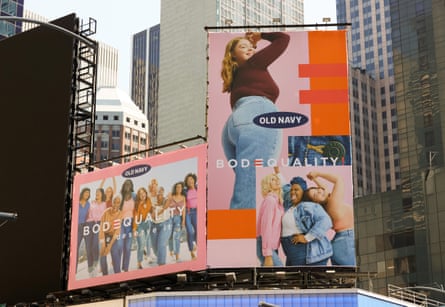
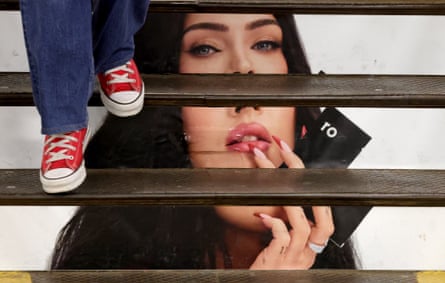
We are now in a very different moment, with ideals shaped by a very different set of cultural and economic forces. Self-improvement strategies are pushed at us near-constantly. Social media feeds are thick with thin fitness influencers, GLP-1 before and afters, and injector-influencers advising us how we can jab our way to our best ever faces. A million GLP-1, Botox and plastic surgery adverts stare down at us from billboards and in doctor’s offices. The dominant narrative suggests we can have near-perfect control over our bodies, if we just have the time, taste and budget. Self-acceptance feels like a relic from the pre-Covid era.
Still, in many circles, it remains socially frowned on to talk about weight loss as an aesthetic goal – even as weight loss could scarcely be more high profile, with many GLP-1 drug adverts citing average pounds lost, and telehealth companies targeting slim people who want to lose the “last 10lb” on social media.
It remains taboo to overtly venerate thinness – particularly within the sanctioned spaces of media interviews or marketing for large corporations – or even to admit to noticing thinness in other people, yet slimness has never been more culturally rewarded. It’s hard to ignore the reality that so many high-profile people, now, from actors playing cops on TV, to Instagram chefs to musicians selling us beauty products, appear to be shrinking. What we’re left with is a world in which skinny bodies are lionized in fashion, culture and daily life, but to either admit a desire to conform, or express concern about it, feels socially verboten.
What body positivity was
Body positivity has radical roots, said Tigress Osborn, chair of the National Association to Advance Fat Acceptance (NAAFA). The phrase has been used by eating disorder therapists, and “especially fat liberation and fat activists”, she said, since at least the 1990s. Osborn views the phrase in tandem with other “body liberation” movements, including Health at Every Size, which argues that higher bodyweight should not be pathologised, and also “bodily autonomy”, not only in terms of sexual freedom or reproduction, but meaning “you own yourself and you get to do what you want” with your body.
Its mainstream adoption began with plus-sized people, who posted pictures, on Tumblr and Instagram, along with captions of self-love and self-acceptance along with the hashtag #BoPo. Gradually, those ideas went viral.
What followed was heralded as a golden age of body inclusivity. In 2015, the model Tess Holliday was billed as “the world’s first size 22 supermodel” on the cover of People magazine. The rise of celebrities who didn’t fit the usual skinny celebrity mould like Meghan Trainor, with her 2014 body positivity anthem All About that Bass, and plus-sized superstar Lizzo, who rapped joyfully about “getting thicker” became part of a cultural narrative. Mainstream brands soon jumped on board, with campaigns urging body positivity through the purchase of self-tan and leggings. Luxury fashion tentatively followed suit, with US Vogue featuring a plus-sized model, Ashley Graham, on its cover for the first time in 2017, though the composition of the shot – wedged between straight-sized models, so that the contours of her body were not visible – raised immediate questions about the authenticity of this apparent milestone. Though, by the time Lizzo covered US Vogue in 2020, as the first Black plus-sized woman to do so, presented in a full-body shot wearing tomato red Valentino chiffon, the movement’s impact on the highest echelons of fashion felt more certain.
The way body positivity was embraced by the fashion industry could sometimes feel hollow. Osborn describes peak body positivity as: “you go, girl!” She said that it was still “radical to declare that you love yourself in a world that is constantly telling you that you should hate yourself” but said the industry’s focus was only on the “personal and individual” and not about trying to “change or dismantle systems”.
Others said it glorified obesity. One plus-sized influencer, Gabriella Lascano, said that the cultural movement ignored health concerns and encouraged her to put her own wellbeing at risk. (The CDC links obesity to an increased risk of many serious diseases and conditions, though fitness is a better indicator of health than BMI and it is a misconception that better health always means a smaller body.)
What most people agreed on was that its adoption by companies wishing to sell products often felt inauthentic.
In mainstream consumer spaces, brands from Dove to Aerie to Lane Bryant were using body positivity slogans, and more diverse models and influencer-ambassadors, to try to sell products.
The more mainstream things got, said former body-positivity activist Matthew Diaz, the more the same beauty standards it was supposedly railing against came into play. Those being “lifted up”, he said, were only “slightly outside what would be considered acceptable by the norm, but by no means representative of the biggest swaths of the community”.
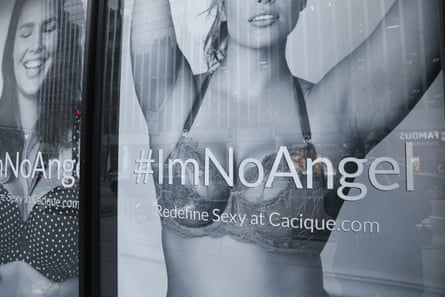
As a consequence, Diaz grew to question the term itself which, he said, “still focuses a lot on appearances, but just allows for more diversification”. He is now a “body neutrality advocate” a concept which, “decentres your appearance. The issue isn’t that my body isn’t right. The issue is that I am deriving all of my value from it.”
Within luxury fashion, body positivity did have a limited impact. In the late 1990s and 2000s, plus-sized models were virtually nonexistent on luxury catwalks. Extreme catwalk skinniness, on the other hand, was so ubiquitous that it prompted frequent public outcries, and industry initiatives were established to protect models, particularly after two models died from complications of anorexia in 2006.
During the body-positivity era, according to online publication the Fashion Spot, which tracked catwalk diversity between 2015 and 2022, there was a trend towards diversity: only six plus-sized models walked in the fall 2016 season, but there were 50 in fall 2020, and a record 103, or 2.34% of all castings, in fall 2022. Since then, though, according to Vogue Business, which uses slightly different metrics and began tracking shows in 2023, size diversity has decreased. Ninety-five per cent of looks were shown on straight-size models in 2023 and 2024. That has risen to 97% in the two years since.
Many household name brands didn’t do body positivity at all (one academic study found that Calvin Klein, Versace and Chanel did not use a single plus-sized model between 2013 and 2018.) Even so – from a very low bar – the presence of even a couple of plus-sized models in, say, every third or fourth fashion week show felt like progress.
Behind the scenes, though, inclusivity wasn’t really part of the business model, said Michaela Stark, an artist, model and couturier who worked in fashion at the peak of body positivity. Brands often didn’t actually make clothes in plus sizes, even when they modelled them on plus-sized models (as was the case with Paloma Elsesser’s 2022 I-D cover, on which she later commented: “I am not just going to wear a stretchy dress. I’m wearing the Miu Miu” – when Miu Miu did not make clothes in her size in reality.)
For hundreds of years, said Stark, “every single micro level of fashion has catered to creating clothes for an ultra-thin body. Brands would have to invest a whole lot of money and expertise into reinventing that.” That didn’t happen.
She would sometimes help cast diverse models for brands, and the process could be painful. At one shoot for a magazine in Paris, a creative director asked her to cast models as though from a shopping list, she said: “It was like: one Black, one Asian, one old, one fat. You’re not casting these people because of who they are. You’re just trying to tick every box,” she said. She modelled herself and remembers a stylist telling her: “You look like a squished sausage!” Her own artistic work – she creates corsets which accentuate rolls of flesh – was branded as “body positivity” which did not sit right with her, “not because I don’t strongly believe in the ethos, but because, in the peak, you could feel people doing it for cultural validation”.
The impacts of body positivity, even at its peak, remain contested. Several studies found viewing body positive imagery beneficial for individuals’ mood and body satisfaction in the short term; others claim otherwise. But it was this inauthenticity that put off the next generation of young fashion fans, said Anastasia Vartanian, who writes as @FatAnnaWintour – a name wittily capturing the tension she felt as a curvy, teenage Tumblr fashion obsessive. They found the worthiness “cringy”, she says, and overcorrected. Among young people now, “it’s almost now cool to be problematic,” she says. As the Y2K trend infiltrated young people’s wardrobes, she started noticing “a lot of worship of old 2000s runways” online, featuring pictures of very thin models posted with captions along the lines of: “bring back real models!” and “fashion’s not the same any more!”
Vartanian said what has happened since “is really wild. It’s unsettling how a lot of people in the public eye are so very thin. And it feels as though we’re living in a twilight zone where you can’t comment on something that’s clearly unhealthy without sounding mean. But some people are using the language of body positivity, even body neutrality, towards what is clearly anorexia, and I’m finding that such a headfuck.”
An unnamable thing called thinness
What body positivity has changed, and profoundly, is language. In the 00s it was commonplace for objectively slender celebrities to be labelled “porky” in the tabloids, acceptable for Victoria Beckham to be weighed on live TV, for Karl Lagerfeld to say “no one wants to see curvy women” or blame “the hole in social security” on “all the diseases caught by people who are too fat” (Lagerfeld lost 90lb himself in the early 2000s. Perhaps he was hungry.)
It was normalized, too, for Victoria’s Secret models to detail their grueling preshow routines. In 2011, for example, model Adriana Lima said she did not eat solid food for nine days before walking the catwalk in her undies. And who could blame her? Because, during this time, famous women were constantly told they were too fat by producers and impresarios. It was so normalised that when, in 2004, Simon Cowell told a 19-year-old X Factor auditionee she was too overweight to be a pop star, Sharon Osbourne – the good cop in this scenario – invited her to the next round by saying, with a kind smile: “Mrs, go on a diet.”
Much of the pushback against this kind of talk came from high-profile women themselves, who spoke out against the scrutiny they had faced for decades. Ashley Graham, for one, wrote a viral essay declaring: “The cycle of body-shaming needs to end. I’m over it.” Jessica Simpson, Keira Knightley, Hayley Atwell, Jennifer Lawrence all made similar comments. In a receptive, peak #MeToo era, the tide turned.
Then came Ozempic. Even body-positivity icons including Trainor and Lizzo lost weight with semaglutides. Oprah, whose yo-yo diets and weight struggles had been watched like a soap opera for decades by the public, spent most of 2023 talking about her GLP-1 weight loss experiences while promoting a book she co-authored, Enough: Your Weight, Your Health, and What It’s Like to Be Free.
Fans expressed disappointment as these women became icons for something else entirely: the idea that, deep down, we had all wanted to be thin anyway. As ever, individual women were taken to task, and were understandably annoyed about it. As Adele said: “It’s not my job to validate how people feel about their bodies – I feel bad that it’s made people feel horrible about themselves but it’s not my job. I’m trying to sort my own life out.”
The average GLP-1 weight loss is 10-20% within one year, meaning many plus-sized people who take GLP-1s remain plus-sized afterwards, Lizzo included. Yet the narrative about fatness has shifted profoundly.
Now, talking about weight loss for aesthetics remains taboo – but talking about weight and health is a different story. For people in larger bodies, whom others believe would be healthier if slimmer, “it emboldens literally everyone,” said Osborn. “People get to tell themselves that they’re being kind to you by telling you that you should be using it.” This pressure, she feels, is at odds with bodily autonomy: “If you want to lose weight with these drugs that’s your business. But you shouldn’t be sociopolitically coerced into it.”
Weight goes unsaid
In June 2021, at the same time the first GLP-1, Wegovy, was approved for weight loss, social media was shifting profoundly. TikTok was booming; it became the world’s most-downloaded app in 2022. The workings of its algorithm, though notoriously opaque, were very different from what had come before. It’s For You page apparently served content based on demographics and engagement, rather than prioritizing content from accounts users had chosen to follow.
This seemed to skew thin: studies found that TikTok perpetuated “toxic diet culture” and promoted the misconception that “weight is the most important measure of a person’s health”. Instagram’s feed changed accordingly. The idea that our better selves could “curate our feed” – a frequent refrain in the body positivity era, when campaigners urged us to follow accounts representing a variety of different bodies – no longer felt possible.
Many women reported feeds flooded with GLP-1 content, fitness chat and plastic surgery before-and-afters. Eating disorders had mushroomed during Covid and, for some, this contributed to very serious mental health issues. In 2025, TikTok announced that it had banned a hashtag – #SkinnyTok – which promoted disordered eating. But much worrying content still remains, and is very easily accessed. Amanda Raffoul, a University of Toronto assistant professor, explains that “the particular unique danger of the modern age of social media is the algorithmic funneling”, because content is pushed “to people who might not have been seeking it out in the first place”. The apps are doing better, she said, in banning “blatantly pro-eating disorder” content. But there is so much “grey area content that platforms are either not succeeding, or maybe don’t care to do a good job in eliminating, because it reaches larger audiences and is more profit-generating”.
Images of certain celebrities have fuelled week-long churn cycles, as when Ariana Grande appeared looking desperately thin in her Petal music video. The debates about whether it was OK to comment about her appearance fuelled the story for days. And there isn’t a right answer, said Raffoul, adding that even those working to combat eating disorders struggle. If you were worried about a person in your real life circle, she said, the advice would be straightforward: “you ask them about how they’re feeling. But we can’t ask a celebrity, ‘Hey, girl, how you doing?’ And those people have social capital.” Picking apart an individual is counterproductive, but also: “what message are we relaying if we say nothing?”
There is no right answer, so debates abound, which appears to be how the algorithm likes it.
And still, for all of the noise in the comments, in the legitimized spaces of school gates and red carpet interviews and offices, the idea that we might want to be skinny is only ever uttered in a whisper.
Fitness does a lot of heavy lifting. As one nutritionist, Hadlee Garrison, put it in a recently posted video liked by 40,000 people, titled “Girl from 2006 meets girl from 2026”, we have developed a new lexicon. Influencers talk about macros, not calories. Looking snatched or toned, not looking skinny. Our feeds are full of advice on eating more protein, achieving calorie deficits, but never diets.
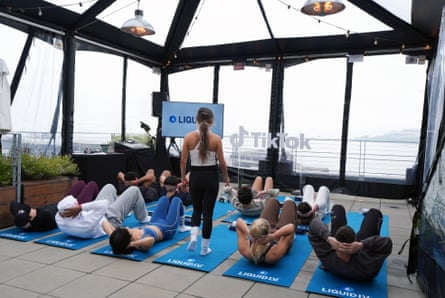
As 2026 girl explains, she never weighs herself. “The scale is such a flawed metric,” she said. “I do a body-composition scan. It tells your fat percentage, visceral fat, lean mass, water weight, metabolic age.”
This week’s Victoria Secret show demonstrated the shift. Preparation, in 2026, is not about avoiding food, said Rosie Huntington-Whiteley. It’s “a mindset more than anything” it’s about “feeling strong and fit, as opposed to thinking about a number on the scales or on a measuring tape”. Yes, there is strength training, rest, hydration and protein, lymphatic drainage, cold plunges and facials, but “nothing is off the table for me ever with my diet”.
And so word salad abounds.
Fashion magazines that would never openly applaud skinniness run galleries titled: “Abs Are the Best Beauty Flex at the 2026 Grammys”. Influencer-injectors claim they would never comment on, for example, Susan Dell’s face – before unpicking “why this look can happen and what you can do if you feel like it’s happening to you”, and asking, amusingly, while pointing at a picture of Dell’s face: “now, what are the key features that stand out that look human?”
Demi Moore, who looks about 25 in her 60s, stars in People magazine’s World’s Most Beautiful People issue, while saying her appearance “doesn’t define my value or who I am”, then promotes Lancome’s Absolue Longevity MD range which, she said, is “moving away from this idea that we’re fighting something through anti-ageing”. The product’s aim, rather, is to “reverse the skin’s visible biological age at every life stage”, which sounds quite similar.
What we are left with is doublespeak – as the rhetoric popularised in the body positivity era is skewed to fit a very different purpose – or silence, as friends shrink before our eyes and we don’t say a word, or celebrities become stick-thin and it feels unsisterly to notice. In many real-life circles, weight becomes the great unsaid, an issue that is too grave to look at directly. Only in the anonymity of the comment section, are bodies truly discussed – ad nauseam and for hours.
Recently, though, when the Practical Magic 2 star Joey King responded to speculation that she had had a facelift at 26 – after the internet described her as “snatched” on the Met Gala red carpet – she revealed her actual pregame tactics. A 36-hour fast – “No food, nothing but water … I don’t promote that,” she said – and lymphatic drainage. There was remarkably little pushback or handwringing about that online – rather it was presented in some headlines using the body-positivity era language of her “shutting down” facelift rumours. Perhaps, finally, there was nothing to argue about. At least she was being honest.
The Guardian wp:paragraph
هلدینگ کاسپین استانبول | خرید ملک در ترکیه | صرافی معتبر ایرانی در ترکیه | خرید و فروش طلا در ترکیه | مهاجرت به ترکیه | واردات و صادرات در ترکیه | نیازمندیهای ترکیه | اخبار ترکیه | اخبار جهانی | توریست ایران | خدمات توریستی در ایران | تورهای گردشگری ایران | هلدینگ اول | خدمات کاریابی و فریلنسری و شغل | مرجع اطلاعات ایران (همه چیز در ایران) | کیف پول و خدمات مالی و پرداخت یار | اخبار ایران | تابلو زنده قیمت ارز در ترکیه و استانبول | صرافی آنلاین ترکیه | قیمت طلا و نقره در ترکیه | سرمایه گذاری در ترکیه | جواهرات در ترکیه | نرخ لحظه ای ارزها در استانبول | قیمت دلار امروز در ترکیه | قیمت دلار استانبول امروز | قیمت لحظه ای دلار | اخبار روز ترکیه استانبول | اپلیکیشن ISTEX | اپلیکیشن قیمت لحظه ای دلار و یورو و لیر و ارزها در ترکیه
/wp:paragraph wp:paragraph /wp:paragraph
About the Author