Spanish prime minister Pedro Sánchez and Castilla–La Mancha president Emiliano García-Page have just briefed the media on the latest on the train crash on Wednesday.
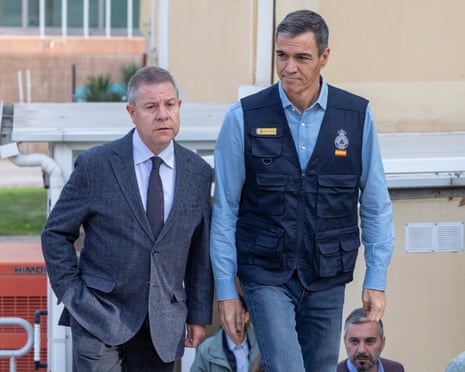
69 people have been confirmed dead, but the toll may rise further, with at least 70 people reported missing. Some may be among those yet to be identified, with emergency services having so far confirmed the identities of only 13 people. A further 31 body bags containing partial remains also await identification, making the process “very complex.”
Sánchez added that there may be up to 27 nationalities among the affected, with authorities working in close coordination with relevant embassies and consulates.
Out of 110 people hospitalised after the incident, 71 have been discharged, and 39 remain in hospitals.
The prime minister also acknowledged that the confidence in the country’s high-speed train, once a source of national pride, is “broken” as he pledged to work on restoring it in the future.
“The government’s job is not just to make the diagnosis, but to offer solutions so that a tragedy of this magnitude never happens again. And that’s what we’re doing,” he said.
Puente says that the control centre had 16 controllers at the time of the crash, which falls within “completely normal conditions”.
He says the control centres have seen an increase of operators from 1,008 in 2016 to nearly 1,700 today, with additional technological improvements.
“It is simply incorrect to suggest the service is understaffed,” he says.
But he says all of this “does not mean there is nothing that needs to be improved,” as he repeats his earlier line that Spain should not have to deal with two major train crashes in nine months.
“We know this will not be easy … but I assure you we will spare no effort to overcome this crisis,” he says.
Puente says it remains unclear what caused the communications failure that originally caused the six affected trains to stop. He says the system operator is waiting for judicial approval to access its logs.
But he says that signalling failures are “not uncommon,” and in either case systems are designed in such a way to handle them without issues.
He says there were some 170 similar signalling incidents in 2026, which “may appear high to the general public, but falls within the normal range by European standards,” and below recovered averages.
He says that safety system rely on physical infrastructure, which can fail or be affected by acts of vandalism or theft, “which, unfortunately, occurs quite frequently.”
He says the LZB system is “a robust, highly-reliable” system which remains in use in several other countries, including Austria, Germany, and the UK, even as it’s being phased out in favour of a newer single European ERTMS system.
He says Spain is “the frontrunner” in implementing the ERTMS system, ahead of EU-specified deadlines, but explains why the rollout has been hit by some delays. The system is expected to be fully operational on Madrid-Sevilla route in early 2027, he says.
He then goes into explaining how the backup automatic braking system ASFA is meant to be work, and how it was applied to this case.
Peunte begins by paying tribute to all affected by the incident.
He says that “at present, evidence points to a failure within Adif’s command and control centre,” but adds that investigators are still looking “to clarify what exactly happened.” He says he still has confidence in the system.
“I want to make it clear that I will not use any worker as a shield, nor will I prejudge where responsibility lies,” he says.
He says he will not “hide behind anyone” and wants to lead the work to “provide explanations, review what happened,” and make sure it will not happen again.
He rejects calls for his resignation, saying that any decision on this should be based on “facts” and not “in reaction to the pressures of the moment.”
“My duty now is not to discuss my position, but to resolve the problem, clarify what happened, and offer clear explanations,” he says.
He says the public does not expect mistakes will never happen, but wants the authorities to “honestly” respond and ensure they do not happen again.
“That is my commitment and responsibility,” he says.
He then goes through the chronology of the incident, setting out what we know at this stage, as set out in our video explainer below.
Puente is now speaking.
I will bring you the key lines.
As we are still waiting for Puente’s press conference, we are getting more information about foreign victims of the crash.
A Czech citizen died in Wednesday’s train crash in Spain, the Czech foreign ministry has confirmed, according to the ČTK news agency.
Earlier today, Portugal also confirmed that its citizen was among the victims (11:09).
Meanwhile, the operator who cleared the high-speed Renfe Ave train to resume its journey before colliding with the stationary Iryo service has declined to be interviewed by the Civil Guard, according to Spanish media reports.
The revelation comes after several recordings from the incident were leaked to Spanish media, revealing parts of the critical communications in the final minutes before the crash and apparent confusion about the operation of the systems.
Separately, the train drivers’ union cautioned against drawing early conclusions about the incident, insisting on an extensive investigation into possible systemic failures that led to the tragedy.
We are also expecting to hear from Spain’s transport minister Óscar Puente in the next 10-20 minutes.
I will bring you the key lines here.
Sources at Spain’s foreign ministry have confirmed that at least 51 foreign nationals from 23 different countries were involved in the crash.
Of those, two are believed to have died, nine were injured, and 18 are largely unharmed; the status of 22 remains unclear.
These numbers are likely to change as the identification process continues.
Portuguese authorities have confirmed that one crew member killed in the accident was Portuguese, according to El País and EFE.
Spanish prime minister Pedro Sánchez and Castilla–La Mancha president Emiliano García-Page have just briefed the media on the latest on the train crash on Wednesday.
69 people have been confirmed dead, but the toll may rise further, with at least 70 people reported missing. Some may be among those yet to be identified, with emergency services having so far confirmed the identities of only 13 people. A further 31 body bags containing partial remains also await identification, making the process “very complex.”
Sánchez added that there may be up to 27 nationalities among the affected, with authorities working in close coordination with relevant embassies and consulates.
Out of 110 people hospitalised after the incident, 71 have been discharged, and 39 remain in hospitals.
The prime minister also acknowledged that the confidence in the country’s high-speed train, once a source of national pride, is “broken” as he pledged to work on restoring it in the future.
“The government’s job is not just to make the diagnosis, but to offer solutions so that a tragedy of this magnitude never happens again. And that’s what we’re doing,” he said.
Meanwhile, we are getting a line from Russian-occupied Oleshky confirming that evacuations are now under way, as part of a US-brokered localised ceasefire to provide humanitarian aid to the city’s residents.
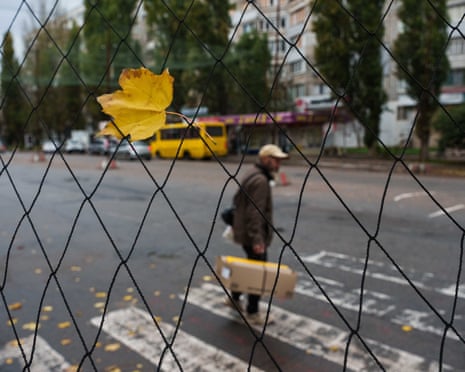
527 people are expected to return to Ukraine-controlled territories, Ukraine’s prime minister Sergii Koretskyi said, quoted by Interfax.
Speaking to parliament, he added that they would travel through Russia to Belarus, where they would then enter Ukraine through the Kyiv and Chernihiv regions.
Russian human rights commissioner Yana Lantratova claimed that some people wanted to be evacuated to Russia, too.
Spain continues investigating Wednesday’s deadly train crash in Toledo province, which killed 69 people, and left many more injured.
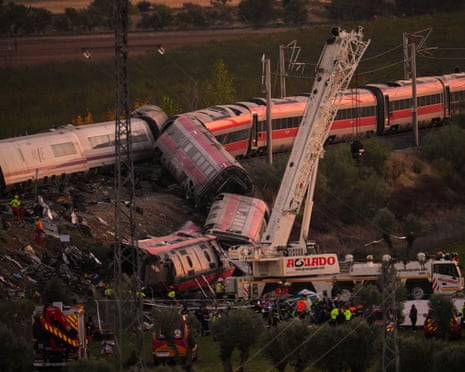
An initial interim report by the independent body investigating the crash confirms the high-speed Ave train was travelling at between 160 and 200km/h when it collided with the stationary train ahead of it.
Despite a lot of attention on leaked recordings of conversations between the operations centre and drivers affected by a signalling failure in the Urda area, the full investigation is likely to take weeks if not months. The investigators were not able to speak to some of the key witnesses so far, the interim report said.
But, as our Spain correspondent Sam Jones notes in his analysis, the effect on Spain’s politics can be more imminent given next month’s parliamentary elections.
“The crash could sap Sánchez’s recently resurgent momentum and the issue of rail safety now threatens to overshadow his attempts to defend his record and remain in the Moncloa palace.”
Elsewhere, I will be keeping an eye on France and Italy, with more protests planned in both countries as populations continue to show their frustrations with the state of education, the cost of living and other issues.
French interior minister Laurent Nuñez warned of “a very high risk” of violent disorder this weekend, as he blamed “the radicalised far-left” and the Yellow Vest movement for urging more people to attend demonstrations with “quite radical” messages.
In Italy, “massive” students protests are expected in Rome, Milan, the student movement said.
I will bring you all the latest.
And later the attention will turn to Canada, as it continues discussing its new relationship with the EU at a summit in Montreal – whether through an “associate membership” or some other form of partnership. We will hear from Mark Carney and Ursula von der Leyen.
It’s Friday, 30 October 2026, it’s Jakub Krupa here, and this is Europe Live.
Good morning.
The Guardian wp:paragraph
هلدینگ کاسپین استانبول | خرید ملک در ترکیه | صرافی معتبر ایرانی در ترکیه | خرید و فروش طلا در ترکیه | مهاجرت به ترکیه | واردات و صادرات در ترکیه | نیازمندیهای ترکیه | اخبار ترکیه | اخبار جهانی | توریست ایران | خدمات توریستی در ایران | تورهای گردشگری ایران | هلدینگ اول | خدمات کاریابی و فریلنسری و شغل | مرجع اطلاعات ایران (همه چیز در ایران) | کیف پول و خدمات مالی و پرداخت یار | اخبار ایران | تابلو زنده قیمت ارز در ترکیه و استانبول | صرافی آنلاین ترکیه | قیمت طلا و نقره در ترکیه | سرمایه گذاری در ترکیه | جواهرات در ترکیه | نرخ لحظه ای ارزها در استانبول | قیمت دلار امروز در ترکیه | قیمت دلار استانبول امروز | قیمت لحظه ای دلار | اخبار روز ترکیه استانبول | اپلیکیشن ISTEX | اپلیکیشن قیمت لحظه ای دلار و یورو و لیر و ارزها در ترکیه
/wp:paragraph wp:paragraph /wp:paragraph
About the Author