
Donald Trump is waging a brazen effort to interfere with voting in this year’s midterm elections, escalating concerns that the federal government will try to slow down certification of election results – a strategy that could create chaos when the new Congress is seated next year.
Experts are certain the administration’s efforts to subvert America’s elections will not work. And some have bemoaned “fearmongering” about far-fetched scenarios that are unlikely to go anywhere in court.
But after the attack on the Capitol on January 6, 2021, voting lawyers and other democracy groups aren’t dismissing the possibility of anything.
The potential for interference is related to how close the contest winds up being, said Ned Foley, a professor at the Ohio State University and an expert on disputed elections.
“The more it looks like a blowout or a ‘blue tsunami’, the harder it’s going to be for any attempt to make mischief to get any traction,” he said.
“I put the probability of these impactful nightmare scenarios materializing at under 50%, so I’m not expecting them to make a difference,” he added. But, he said there are “risks of weird things happening, and you need to pay attention to them even if the risk is rather low”.
The Trump administration’s efforts to interfere began last year with an effort to collect detailed voter roll information from nearly every state. And it has continued into the final days of the election, in which the government has sought to sequester ballots in California and filed a legally thin lawsuit to try to stop the certification of election results in Alaska, where there is a hotly contested US Senate race.
The US constitution gives the states, not the federal government, authority to run elections. And it gives the president no power when it comes to voting.
“The type of conduct we have seen from the administration right now is unlike anything we have ever seen as far as federal attempts to interfere with the elections,” said Danielle Lang, a voting rights attorney at the Campaign Legal Center, a watchdog group. “It’s amounting to relatively little because the federal government is just not in charge of the levers of election administration and it can’t force itself to be involved in those levers of election administration.”
Here are some of the main ways Trump and his allies have sought to interfere with the election process – or could.
Using emergency power
Some of Trump’s allies on the right have encouraged him to invoke emergency powers to exert influence over elections, including potentially seizing voting equipment and sending troops to the polls. Trump has refused to rule out such ideas.
The move would be illegal – the president has no power, emergency or otherwise, over elections. Courts would likely quickly step in and stop such efforts.
But even if courts do step in to prevent things like ballot seizures, it could still cause chaos, confusion, and delay in a post-election period where there is uncertainty about the election results.
Stopping certification
The Trump administration’s most aggressive judicial effort to interfere in the election so far has come in Alaska, where it has taken the extraordinary step of asking a federal court to step in before election day and block certification if the Republican candidate loses.
Alaska has an extremely competitive US senate race this year between Republican Dan S Sullivan and Democrat Mary Peltola, and the outcome could determine which party controls the chamber. In a complicated twist, there is also a Dan J Sullivan on the ballot. The Alaska supreme court allowed Dan J Sullivan to stay on the ballot earlier this year in response to a ruling from the Alaska division of elections disqualifying him.
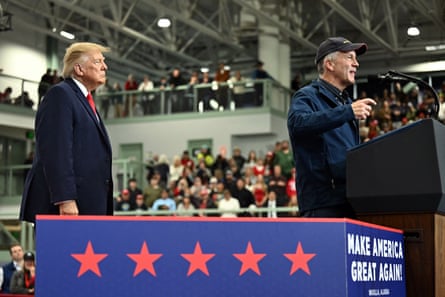
On 23 October, the justice department sued Alaska and asked a judge to block certification “pending an investigation to determine whether votes cast for Daniel J. Sullivan were meant to be cast for Senator Sullivan”. It’s unclear how such an investigation would take place after an election, since U.S. voters cast their ballots secretly. Trump said he ordered the justice department to file the lawsuit.
The saga got more complicated days later when the New York Times reported that operatives aligned with Peltola were behind the effort to get Dan J Sullivan on the ballot as part of an effort to siphon votes away from the Republican candidate. Democrats had denied being behind the effort. Trump reacted angrily to the report. “Mary Peltola should suffer the Legal and Political consequences for what she has done, A FRAUD ON THE AMERICAN PUBLIC, and Dan Sullivan should be allowed to run without either Mary Peltola or FAKE Dan Sullivan on the Ballot,” he wrote on Truth Social.
The justice department’s legal argument for stopping certification is also extremely thin. In its lawsuit, the justice department pointed to broad language in the preamble to the 1993 National Voter Registration Act that says one of the purposes of the law is to “protect the integrity of the electoral process”. Election experts have said it is not possible to hang a legal case on such vague language.
The justice department knows it is going to lose the Alaska lawsuit, but may have another goal in mind, Richard Pildes, an election law scholar at New York University, wrote in a blog post.
“Even if DOJ loses in the federal courts, as it will, the litigation will give ammunition to anyone in the certification process, particularly the Lt. Gov., who might seek to delay or deny certification to the Democrat, Mary Peltola, if she wins, based on the claim that voters who voted for Daniel J. Sullivan (and perhaps ranked no other candidate) meant to vote for in the incumbent Republican Senator, Daniel S. Sullivan,” he wrote. In Alaska, the governor and Lt. Gov sign the certificate for the winning candidate that is sent to the US Senate.
Noncitizen voting
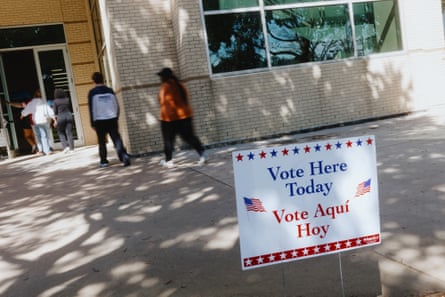
A key element of the Trump administration’s efforts to interfere in the election is a push to create the false impression that there are large numbers of noncitizens on the rolls who are voting – and perhaps to use that argument to mount post-election legal challenges. Studies have shown that noncitizen voting is exceedingly rare and that when it does occur, it is because of confusion.
The administration’s push to find noncitizen voters began last year, when the justice department filed lawsuits across the country seeking to have states turn over their voter rolls – each state is in charge of its own list of registered voters and there is no single federal voter database in the United States. In an extraordinary rebuke, more than two dozen different federal judges – including some appointed by Trump – rejected the requests from the government, saying they were unlawful.
Unable to get voter lists directly from the states, the Department of Homeland Security obtained public voter roll information and began running it against its own records to hunt for noncitizens. It has not been transparent about its methodology, and many experts have been skeptical of its accuracy.
On 13 October, the justice department delivered a USB drive with a password written on a Post-it note to election officials in Los Angeles county purporting to contain the names of 20,000 noncitizens on the voter rolls (there are more than 23 million registered voters in California). It gave the state 48 hours to review the names and sequester ballots cast by anyone whose citizenship had not been confirmed.
The state refused, citing concerns about cybersecurity and the administration’s methodology. On 15 October, the justice department sued California, asking a judge to order the state to sequester the ballots. As the justice department pushed the claims, they also announced the arrest of 28 noncitizens who allegedly had voted at one point in the state. US district judge David O Carter ruled against the justice department on Wednesday. The government is appealing that decision.
On 26 October, the justice department made a similar demand in Washington state, asking election officials to investigate the citizenship of 400 voters and sequester ballots for those whose citizenship it could not confirm.
The justice department has also threatened to prosecute election officials who process ballots from noncitizens.
Despite the aggressive approach from the justice department, there’s reason to be skeptical of their list in California. When local election officials sampled 200 names from the list they provided, they found many of them had already been canceled. Election officials also said a “high percentage” of those flagged appeared to be born in the United States. Washington secretary of state Steve Hobbs, a Democrat, responded to the justice department on Wednesday, saying it believed the list the government provided was inaccurate.
While the justice department’s efforts to get ballots segregated before the election are unlikely to succeed, they could offer a pretext for a post-election effort to challenge the results.
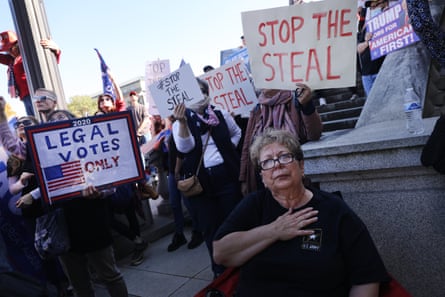
“There will be an argument – I can almost guarantee it – that a bunch of ballots in California should be thrown out because they didn’t segregate them,” said Ben Berwick, an election lawyer at Protect Democracy, a nonprofit that works on democracy issues. “I think this will be laughed out of court if they try to bring this past post-election.”
“That doesn’t mean we shouldn’t be worried or we don’t need to prepare for it,” he added.
Justin Levitt, a former justice department and White House official who worked on voting rights issues, said the government’s case was so weak it would have little chance of succeeding before or after election day. The administration’s lawsuits, he said, are best understood as press releases masquerading as legal complaints.
“There’s no part of the administration’s file that is designed to operate in a fashion where a court will make any meaningful ruling,” said Levitt, who is a professor at Loyola law school in Los Angeles. “There are ways in which the law works where a good claim today that cannot be brought just because it’s too early becomes a viable claim tomorrow. But time does not transmogrify crap into gold.”
Efforts to delay certification at the local and state level
After the 2020 election, Trump and allies put pressure on little-known officials at the local and state level to try and halt the certification of election winners. None of that worked, but election deniers have gained a foothold on local election boards throughout the country – positions from which they could try and slow down the certification process.
Election lawyers are well prepared for this possibility and are confident that judges would quickly end such efforts and order officials to certify the valid winners of elections. In the past, courts have stepped in to force election officials to certify.
“Ultimately, you cannot pull a contested election out of thin air, and there are processes here and you can’t just manufacture contests where they aren’t real,” Lang said. “I don’t imagine it looking all that different than it has in past election cycles where we’ve seen some issues with certification that ultimately come to a resolution. We’ve had counties that don’t want to certify; we’ve dealt with that before.”
Shenanigans on 3 January 2027
Efforts to delay or halt certification could be aimed at 3 January 2027, the date when the new Congress convenes. There’s concern that the Trump administration could use its various legal and rhetorical challenges to the results as a basis to try and block new members from being seated. The US constitution says: “Each House shall be the Judge of the Elections, Returns and Qualifications of its own Members,” giving both the US House and Senate leeway to handle disputed elections.
Federal law requires the governor and secretary of state to sign a certificate certifying a senator-elect’s win and send it to the Senate. In the past, when there has been a post-election dispute about the winner of a Senate race, the candidate who has the certificate gets seated provisionally while the Senate rules committee investigates. In cases where the margin of the race is close and there is no certificate, no senator has gotten seated until the dispute is resolved at the state level. After the 2008 elections, for example, a US Senate seat from Minnesota remained vacant for months while Norm Coleman and Al Franken battled in a close recount for months (Democrat Franken was eventually certified the winner).
“We’ve had disputes over Senate elections, like Coleman versus Franken in Minnesota in 2008, but they never determined which party is the majority,” Foley said. “If partisan control over the Senate hinges on something like Coleman verses Franken, it will be a politically consequential and fraught moment as the dispute remains unsettled. It also depends on how irresponsible the rhetoric is around the dispute.”
There have been lengthy post-election disputes over US Senate seats before. Pildes, the NYU election expert, suggested that the justice department’s efforts to interfere in Alaska may be aimed at bringing such a long-shot challenge in the US Senate.
Trump himself has suggested that Republicans refuse to seat Peltola if she wins.
“You’re going to have to see what happens. It’s hard to believe that she could even be allowed to run. Frankly, I don’t know how you could allow somebody like that to run. It’s so unfair when you look at that,” Trump said on Thursday.
In the US House, there is also the possibility of maneuvering, though it is more complicated.
Unlike the Senate, the House is not a continuing body and ceases to exist at noon on 3 January. That means that any challenge to a member-elect would be heard by the new House – one where Democrats are expected to have a majority.
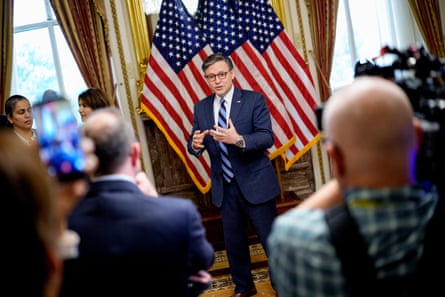
There’s worry about another longshot strategy. A single bureaucratic official, the clerk of the House, is responsible for putting together the roll of new members. There’s some speculation that Mike Johnson, acting under pressure from Trump, could fire the current clerk of the House and replace him with a loyalist willing to exclude some Democratic members-elect from the roll. Republicans could then theoretically move to hold a speaker vote and try and maintain their majority without the seated Democrats – a strategy that would require the support of the other Republicans in the House.
Democrats would assuredly go to federal court to stop such an effort.
Many scholars are skeptical it would work. Derek T Muller, a law professor at the University of Notre Dame, has described the speculation about replacing the clerk of the House as “sophisticated disaster porn”. Johnson has also pledged to seat Democrats who win.
“It strikes me as quite unlikely, to me, at least, that this group of Republicans–the one that takes days to choose a speaker and that regularly cannot maintain order in its ranks–is going to have the cohesion and coordination to pull off this kind of activity, which, to emphasize, can be thwarted by other means, either politically or judicially,” he wrote earlier this year.
But Brian C Kalt, a professor at Michigan State University who has written about contested house elections, said: “I think it’s very hard after January 6th to just write off concerns like this.
“It’s reasonable for people to study the issue, think about the issue, worry about the issue. But I don’t think that it’s some imminent threat,” he added. “If there are going to be any shenanigans, there will be initial steps, signs that will be available. This isn’t just something they can spring.”
Interference at the polls
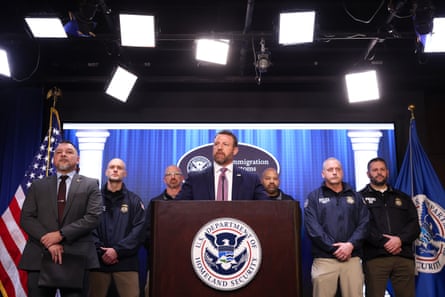
The Trump administration has refused to rule out the possibility of immigration agents being at the polls, a move that would violate federal law. Speaking in September, DHS secretary Markwayne Mullin refused to categorically rule it out. DHS agents were also canvassing houses earlier this year, inquiring about people’s citizenship and whether they had voted. (A federal court blocked the government from continuing to do this in October). Federal law prohibits armed troops from being at the polls.
“The only reason why we would be at polling places is if there is a threat to that polling place or we’re serving a warrant on someone that we have been actively tracking down,” Mullin said. “ICE’s job is immigration, customs enforcement. That’s their job … if we’re serving a warrant we will be where we need to be,” he said. Asked about the possibility of ICE agents at the polls, Harmeet Dhillon, the assistant attorney general for the justice department’s civil rights division, told 60 Minutes recently that “there is no plan to do that.” The justice department, which plans to conduct a significant poll-monitoring operation on election day, has also said it will not use ICE or FBI agents as poll monitors.
Still, election officials are planning on what to do if immigration officers do show up at the polls and there are several lawsuits seeking to block them from being deployed. Democrats are also planning on sending their own monitors to the polls to ensure voters aren’t intimidated or interfered with.
Ballot seizures
One of the Trump administration’s most aggressive efforts to intervene in elections came in January, when FBI agents descended on an election warehouse in Fulton county, Georgia, and seized all ballots from the 2020 presidential election.
Trump lost Georgia in 2020 by 11,779 votes – a result that was confirmed by both recounts and audits. Trump has been obsessed with overturning the result ever since the election and he and allies have pushed several conspiracy theories since 2020 to argue that he didn’t lose. Those theories have all been debunked, which is why it was stunning that a federal magistrate judge signed off on a warrant to seize the ballots in January based on the same theories. (As is customary, the judge did not give a reason for why she felt there was enough probable cause).
Now, there is concern that the Trump administration could try a similar approach elsewhere and convince sympathetic judges to approve warrants to seize ballots. Such an effort could be done with an eye towards making it harder for election results to be certified at the local and state level, Berwick said.
“There’s a big leap between what happened in Fulton county, which was a magistrate being willing to sign a warrant for materials that were over five years old, and a magistrate being willing to sign a warrant for live ballot materials,” Lang said. “Everybody is preparing for every worst-case scenario, but I am very hopeful that we are unlikely to see a warrant signed for live materials.”
The Guardian wp:paragraph
هلدینگ کاسپین استانبول | خرید ملک در ترکیه | صرافی معتبر ایرانی در ترکیه | خرید و فروش طلا در ترکیه | مهاجرت به ترکیه | واردات و صادرات در ترکیه | نیازمندیهای ترکیه | اخبار ترکیه | اخبار جهانی | توریست ایران | خدمات توریستی در ایران | تورهای گردشگری ایران | هلدینگ اول | خدمات کاریابی و فریلنسری و شغل | مرجع اطلاعات ایران (همه چیز در ایران) | کیف پول و خدمات مالی و پرداخت یار | اخبار ایران | تابلو زنده قیمت ارز در ترکیه و استانبول | صرافی آنلاین ترکیه | قیمت طلا و نقره در ترکیه | سرمایه گذاری در ترکیه | جواهرات در ترکیه | نرخ لحظه ای ارزها در استانبول | قیمت دلار امروز در ترکیه | قیمت دلار استانبول امروز | قیمت لحظه ای دلار | اخبار روز ترکیه استانبول | اپلیکیشن ISTEX | اپلیکیشن قیمت لحظه ای دلار و یورو و لیر و ارزها در ترکیه
/wp:paragraph wp:paragraph /wp:paragraph
About the Author