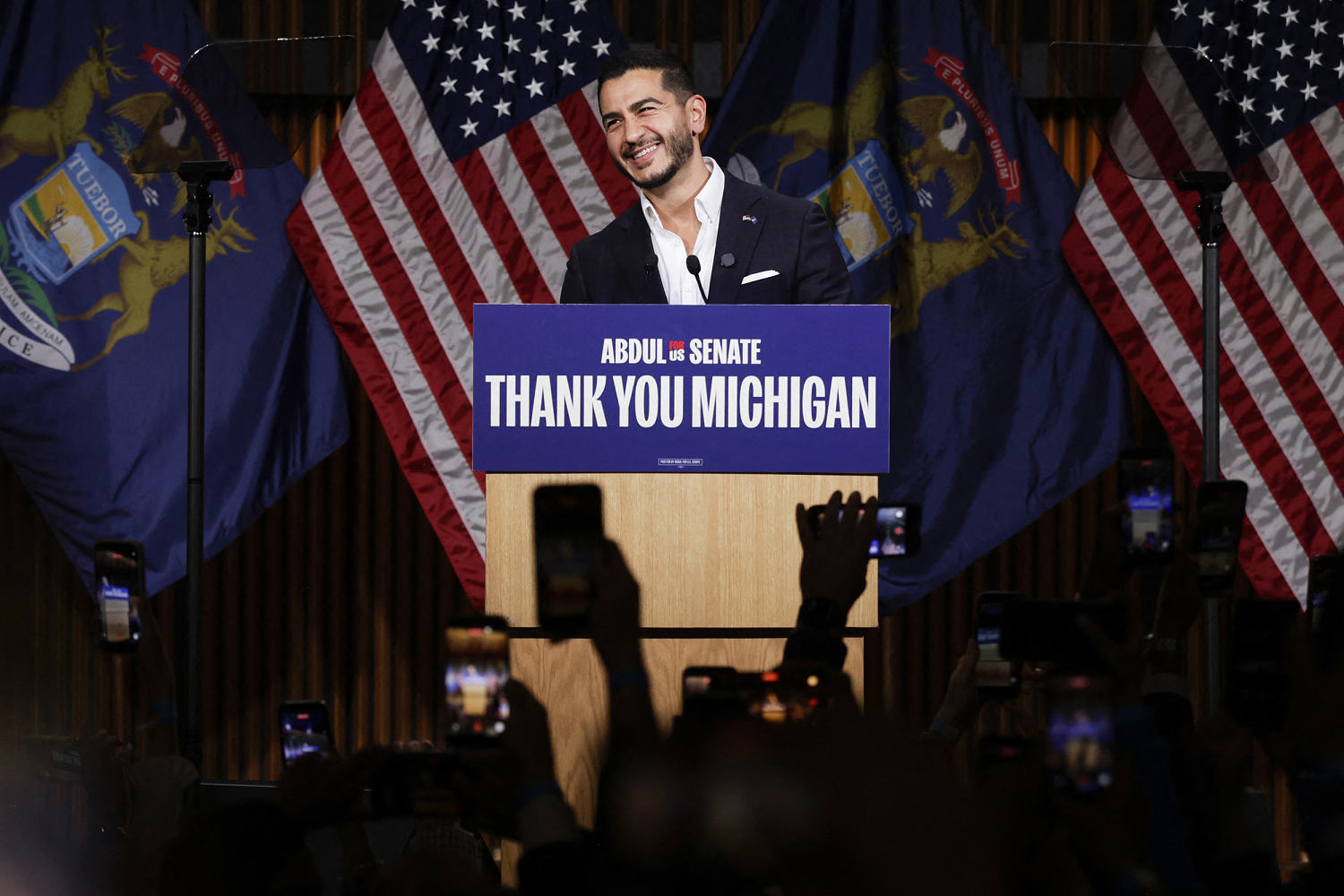
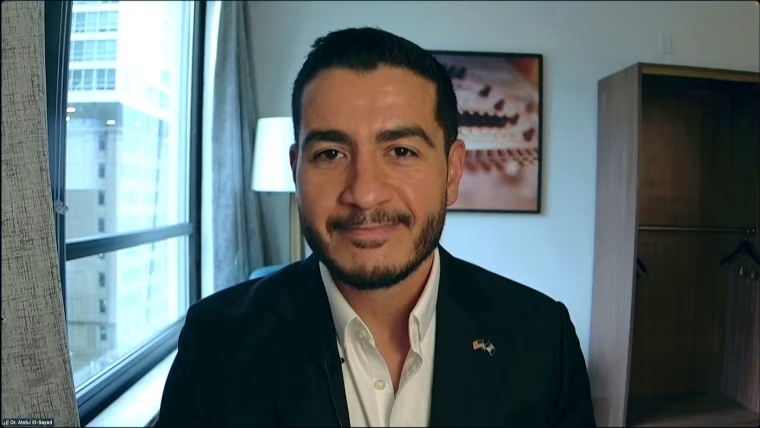
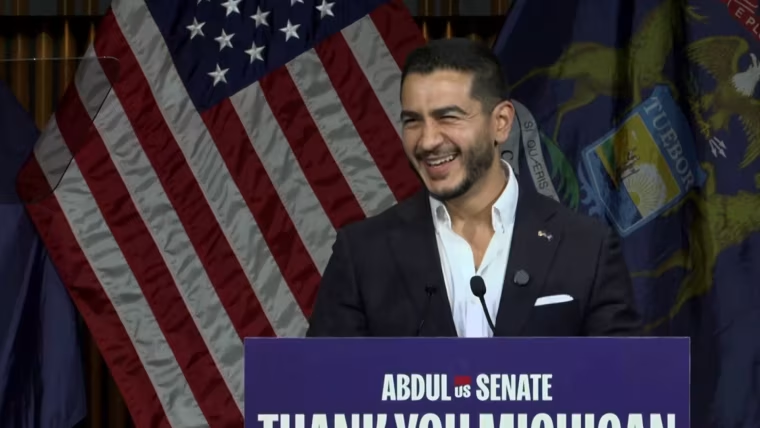
Abdul El-Sayed, an epidemiologist and former public health official aligned with the Democratic Party’s left flank, has won Michigan’s highly hostile Senate race, defeating his Republican rival, former Rep. Mike Rogers, NBC News projects.
El-Sayed, 42, overcame a raft of Islamophobia fomented by President Donald Trump and others to become the first Muslim elected to the chamber.
He also overcame a last-minute defection from Rep. Haley Stevens, a vanquished primary rival who reneged on her pledge to support him and endorsed Rogers after she attended church with him Sunday.
Follow live updates on the midterm elections
“They tried to confuse you, so let me just set the record straight,” El-Sayed told supporters early Wednesday. “I love America”
El-Sayed also had sharp words for those who had made an issue of his religion, from Rogers on up to Trump. He said he relished that it would be Vice President JD Vance, with whom he has tangled publicly, who swears him into the Senate.
“So Mike, enjoy your retirement,” said El-Sayed, referring to Rogers. “See, you chose hate, and Michigan chose hope. May we never have to see the likes of you in this state again.”
El-Sayed’s victory extends a long-running GOP drought in the state. A Republican has not won a Senate seat in Michigan since 1994. El-Sayed will succeed retiring Democratic Sen. Gary Peters.
The clash between El-Sayed and Rogers, 63, was rated among the country’s most closely watched and aggressively fought, given El-Sayed’s alliance with progressive firebrands such as Sen. Bernie Sanders, I-Vt., and Rep. Alexandria Ocasio-Cortez, D-N.Y. El-Sayed’s criticism of the Israeli government, which he has accused of genocide, was also a consistent flash point.
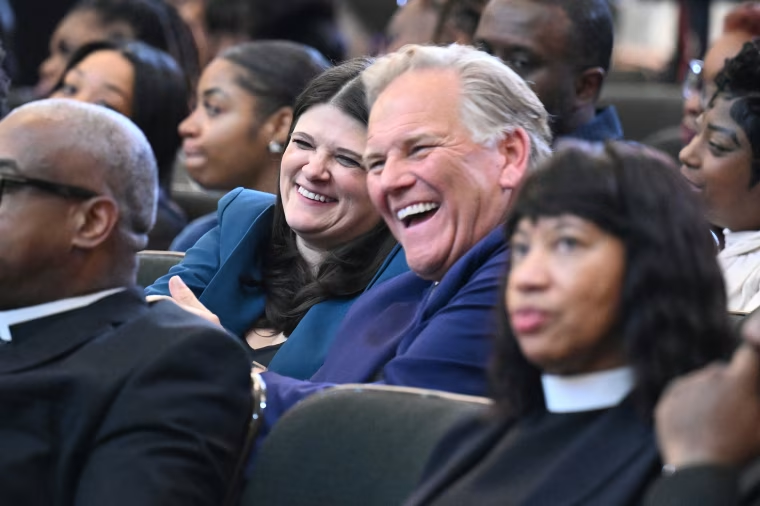
A group affiliated with the pro-Israel group AIPAC spent more than $30 million in an unsuccessful effort to lift Stevens over El-Sayed in the Democratic primary and re-engaged in Michigan in the closing weeks of the general election. Stevens, meanwhile, linked her defection from El-Sayed to his position on Israel and his campaign’s suggestion that she was not welcome at his campaign events after she began voicing her criticism more in the race’s closing days.
Rogers and his Republican allies tried to spin El-Sayed’s anti-Israel stance into attacks that evoked his religion and raised questions about his loyalties. Vance, in particular, routinely attacked El-Sayed — a rift that grew out of El-Sayed’s sarcastic questioning of whether Vance’s late, white Appalachian-born grandfather would have approved of his Indian American wife.
Trump’s attacks on El-Sayed’s faith went furthest.
Within days of El-Sayed’s August primary victory, Trump began falsely asserting that “jihadists” were gaining purchase in U.S. politics and government. The attacks escalated over the next three months, with Trump at one point whipping a crowd in Youngstown, Ohio, into a frenzied chant of “Deport! Deport!” He often referred to El-Sayed by his middle name, Mohamed.
El-Sayed had a handy retort for that one.
“That’ll be Sen. Mohamed to you, bro,” he said at an Oct. 25 event with Sanders.
NBC News Top Stories
About the Author