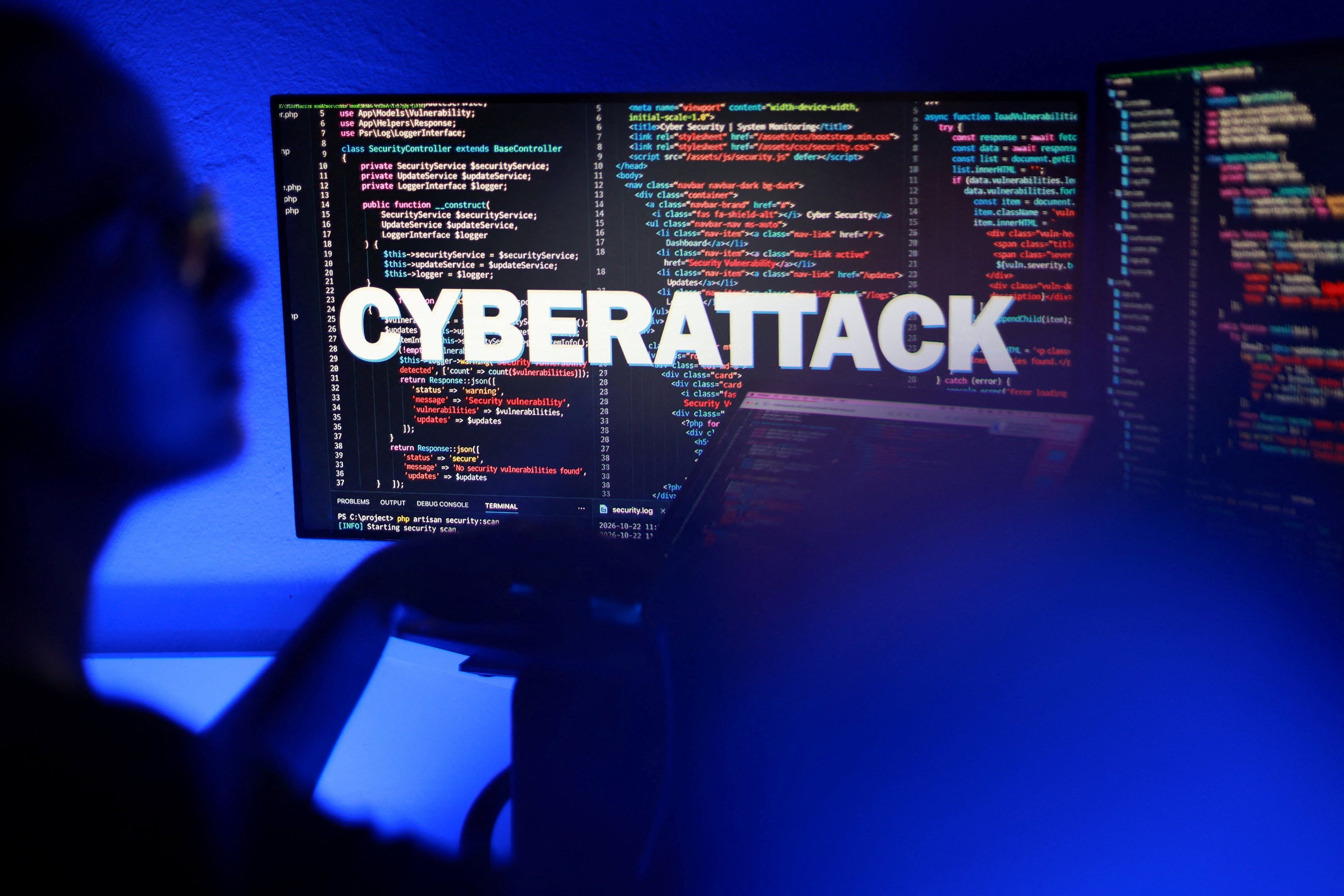
In just the past month, cyberattacks have not been limited to finance. An exchange, a bank, a finance ministry and the refrigeration systems of hundreds of supermarkets in Europe were all targeted.
The largest financial loss hit Binance. The most visible impact on daily life was in France, where food spoiled and banking apps were blocked. The incidents do not look like a single, centrally directed campaign. The actors and methods differ. What they share is that attackers went after people and remote access first, while AI tools made attacks cheaper and faster.
Perhaps the only good news is that the most effective measures for individuals are still simple and cheap.
Binance attack
The loss from the hack of the world’s biggest cryptocurrency exchange Binance on Oct. 29, which is also serving Türkiye, is estimated at about $6.3 billion.
Attackers first infiltrated an employee’s computer through a fake job interview, then used stolen credentials to reach the wallet-signing service. Most of the money left through 10 different blockchains in about 20 minutes.
The FBI linked the incident to a North Korea-affiliated group. About $2.85 billion was frozen or blocked. Binance says it will cover users’ losses itself and has announced that it has restored 98% of the affected token assets.
In France, about 118 million euros ($131.90 million) is said to have been affected following an attack on lender Credit Mutuel Arkea. Blockchain researcher ZachXBT and local press reported that about $133 million was converted into cryptocurrency within a few days.
The bank confirmed the attack, fraudulent transactions and the suspension of some transfers. However, it did not confirm the amount and said customer assets were not affected. Transfers in the banking app were temporarily halted.
At the Belgian Ministry of Finance on Oct. 28, several online services, including the tax portal, were shut down as a precaution. Initial findings show no sign of personal data theft.
Attacks on refrigeration systems
Supermarket refrigeration systems in France and across Europe were targeted on Oct.12 and Nov. 2. Attackers remotely changed the defrost settings through controllers made by the supplier Danfoss. Cabinets and freezers warmed up overnight, reaching as high as 50 degrees in some places.
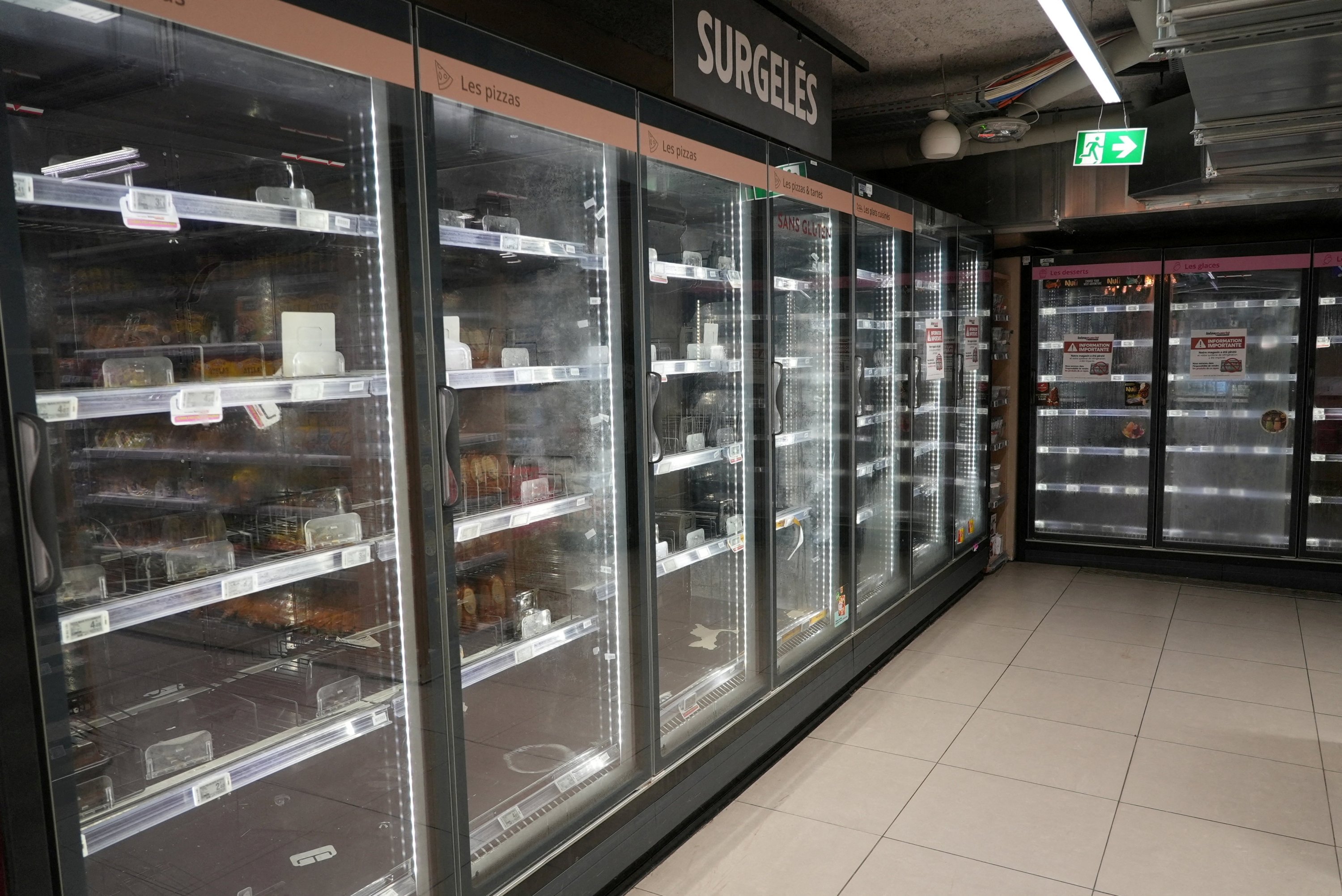
French media reported hundreds of affected stores (up to 700 in some sources). About 300 Intermarche stores were reportedly affected, with a risk of losses running into multiple millions of euros. At two Intermarche stores in Haguenau, 270,000 euros worth of products were thrown away.
On Nov. 2, similar incidents spread to stores in Belgium, Estonia, Finland, Ireland, Italy, Luxembourg, the Netherlands, Portugal and Sweden (Delhaize, Carrefour, Intermarche, Spar).
In the first reports from France, no one had claimed responsibility. An earlier study by Claroty, an industrial cybersecurity firm, had shown that a compromised Danfoss controller could switch cooling off while showing false temperature readings. This is a serious example of an incident that concerns food safety rather than finance.
Simple digital precautions for accounts
Use a different, long password for every account. A password manager makes this easier.
Use app-based verification or a hardware security key instead of SMS. Prioritize your crypto and bank accounts.
Turn on the security settings your exchange or bank offers, such as a withdrawal address whitelist, a waiting period after withdrawals, and login alerts.
Forward email notifications from your bank and exchange to a separate, strongly protected email address.
Keep your devices’ operating systems and apps up to date. Don’t put yourself at risk by postponing updates.
Don’t download files, plug-ins or “coding assignments” from unknown sources. This was exactly the first step of the Binance attack.
If possible, use a separate, clean device or a separate browser profile for banking and crypto transactions. Reduce your browser extensions and delete the ones you don’t use.
If you get a call claiming to be from your bank or exchange, hang up and call the number on the back of your card or in the official app yourself.
Don’t trust messages that rush you or tell you to “act now.”
Instead of clicking a link, open the app or type the address yourself.
Be especially careful with fake job offers. Anyone who asks you to download a file or set up remote access in the first interview is not trustworthy.
Extra precautions for crypto assets
Keep long-term holdings not on an exchange but in a hardware wallet under your own control.
Don’t keep all your assets on a single exchange or in a single wallet.
Never store wallet recovery words (seed phrases) digitally and never share them with anyone.
Don’t grant approval to a smart contract you don’t know and revoke permissions you no longer use.
Even when an exchange says “we cover user losses,” that is not a guarantee. The company’s resources and regulatory oversight matter.
Türk Telekom’s open-source cloud stands out in data sovereignty debate
As the question of where organizations host their data becomes decisive in the cloud market, Türk Telekom is pressing its claim in this area with its data center infrastructure and a domestic platform developed with the Informatics and Information Security Research Center BILGEM of the Scientific and Technological Research Council of Türkiye (TÜBITAK)
Fiber infrastructure, data centers and domestic platform allow the leading Turkish telecom operator to offer organizations an end-to-end package. The real test in the coming period will be how well domestic platforms can compete with global hyperscale providers on feature richness and scalability.
Türk Telekom has made available to the public and private sectors an open-source-based domestic cloud platform developed in cooperation with TÜBITAK BILGEM. The service, called Türk Telekom Cloud, lets organizations host their critical data on domestic infrastructure and is built on open-source technologies. The platform is not only offered to customers; it is also used within Türk Telekom itself.
Holding sensitive data
Alongside its data centers, the company offers both global and domestic cloud solutions. This structure gives organizations the flexibility to choose different models depending on their workloads. For those who want to keep sensitive data inside the country, the domestic platform stands out.
On the data center side, which cloud services rely on, the use of domestic technology also draws attention. At its Esenyurt Data Center, Türk Telekom put into live operation, for the first time in Türkiye, a Liquid Immersion Cooling System that it had been testing since 2021, in January 2026. Technologies such as AI, video services, 5G and the Internet of Things (IoT) are increasing power density in data centers and cooling solutions of this kind are gaining importance for managing capacity efficiently.
Domestic cloud option
According to industry assessments, one of the domestic cloud’s standout strengths is public procurement. These assessments say the requirement in tenders that data be kept in Türkiye is met by the domestic cloud, and that companies using it can gain a scoring advantage in tenders. Locating domestic data centers close to 5G base stations could also speed up applications that need low latency, such as augmented reality, virtual reality and autonomous vehicles.
The 2026-2030 AI Action Plan, which came into force in August, targets raising data center capacity from 250 megawatts to 1 gigawatt by 2030. The same assessment says that foreign-currency-based global cloud costs and data privacy concerns have shifted businesses’ question to “where should my server sit.”
AI inference startup founded by Turkish entrepreneurs reaches $16B valuation
San Francisco-based AI inference startup fal announced it has raised $1.3 billion in the latest funding round, with the deal doubling its valuation from April.
Fal, whose image, video and audio models are used by content creators, designers and developers, has seen its valuation rising from $8 billion in April to $16 billion following the latest round led by led by existing investor Bessemer Venture Partners.
Although it was announced on Nov. 3, the round is said to have been completed in October. Participants include Nvidia, the AI chip giant, as well as Sound Ventures, HOF Capital and T. Rowe Price.
According to the company’s official blog, this round is a Series F. It follows a $350 million Series E in April, led by Sequoia Capital. In its own announcement, fal publicly disclosed the Sequoia-led Series E for the first time. Together, the two rounds come to about $1.65 billion.
Revenue tops $800 million
The company reported that its annualized revenue exceeded $800 million as of this September. This helps explain the investor interest of the past year.
Fal was valued at $1.5 billion in July 2025 and at $4.5 billion in December 2025, after a $140 million round led by Sequoia. In other words, its value has roughly quadrupled in under a year.
Couldn’t keep up with customer demand
According to CEO and co-founder Burkay Gür, demand surged so sharply over the summer that the company was unable to serve its customers and had to impose rate limits on its users. The new capital is planned primarily for expanding computing capacity and preventing similar bottlenecks.
Fal sells inference, meaning the work of running a trained model each time an image or video is requested. Developers access thousands of models through a single application programming interface (API), while model makers deploy and serve their work through fal.
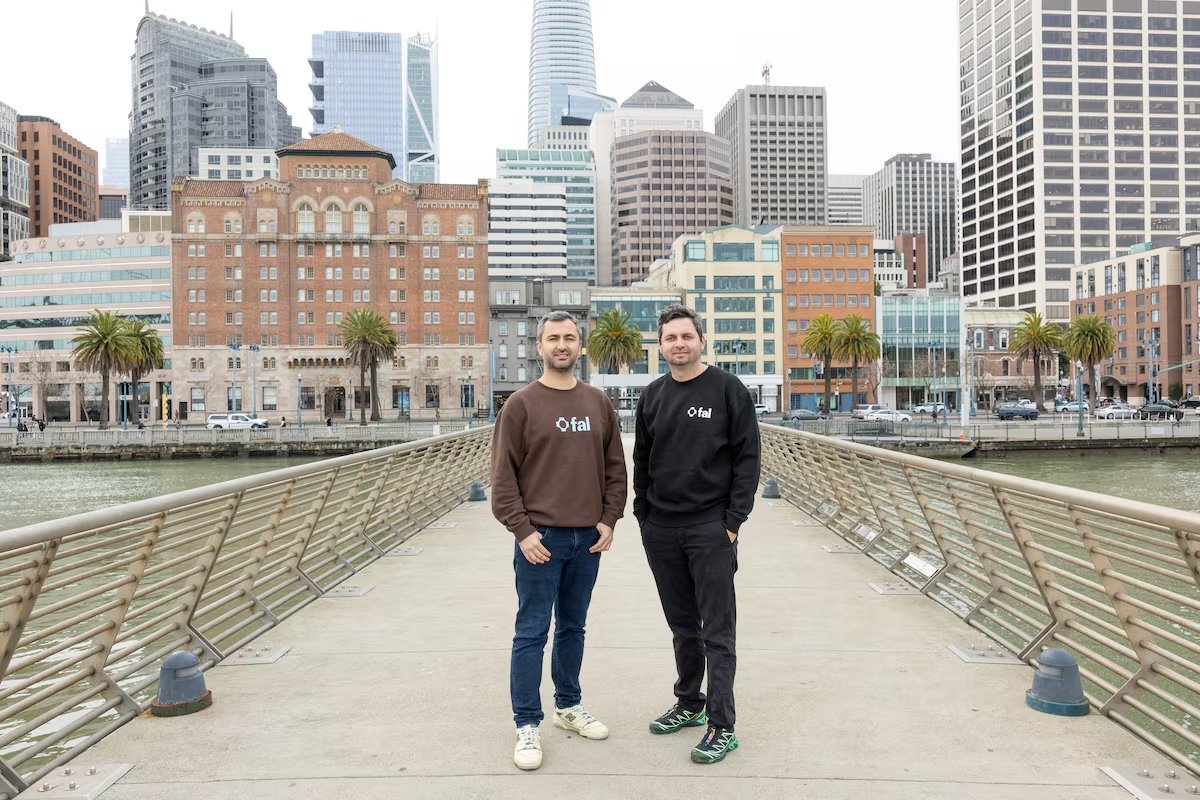
The company was founded in 2021 by Gür and CTO Görkem Yurtseven. The two had previously built machine learning infrastructure at Coinbase and Amazon.
DAILYSABAH wp:paragraph
About the Author