

Joyce San Pedro in New York asked in a reader callout: What changes can actually be implemented? Can we undo the Republican gerrymandering? Defund certain wars? Abolish ICE? Impeach Hegseth and Kennedy?
José Olivares, immigration reporter: The road to Abolish ICE would be a long and difficult one for Democrats.
It is also not clear whether the push to abolish the agency is a position that all Democrats are united on. For example, Illinois representative Delia Ramirez — one of the most vocal anti-ICE progressive Democrats — has introduced the “Reimagining Safety Act,” which would dismantle the Department of Homeland Security (DHS) and abolish ICE. In its place, Ramirez proposes creating the “Department of Community Safety.”

José continues: On the other hand, the more mainstream Democrats and leadership of the party have not explicitly called for abolishing the agency and instead have called for reforms. On Thursday, after the midterms, the House Judiciary Democrats posted on X — to much criticism — that it’s “time for ICE to take the masks off, turn the body cameras on, and start answering to the American people.” Essentially: ICE operations can continue, just without masks and with body cameras.
If Democrats were united in abolishing ICE, they could galvanize around Ramirez’s legislation. Even then, it would be a big task. DHS, despite it being a young department, carries out a tremendous amount of work and is significantly entrenched in border issues, disaster response, and an increasing role in the federal criminal justice system. Republicans and DHS supporters would put up a ferocious fight to preserve it, and likely accuse Democrats of being “weak on crime” and desiring “open borders.” Would mainstream Democrats and party leadership be able to push through those political accusations to eventually abolish ICE? It’s unknown, but unlikely.
Jim Garrett in Massachusetts asked in a reader callout: Where have Democrats flipped state legislatures, and what could be the impact of that? Also, what consequential ballot measures have passed?
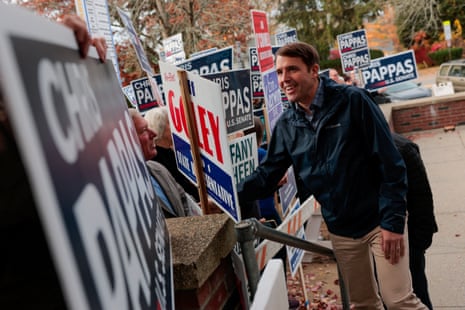
Lex McMenamin, movement building reporter: This week in New Hampshire — an important presidential primary battleground state, regardless of its small size — saw a seismic Democratic conquering in both its federal and its state races. More surprising than its congressional outcome for Chris Pappas, whose race was leaning his way before Tuesday, or the Dems winning both US house seats, state Dems flipped the whole state legislature, some 420 seats. New Hampshire’s unique five person statewide executive council, which makes budget and spending decisions, is going from 4-1 conservative control to, for the first time ever, Democrats in all five seats. State Dems were hoping to maybe win the State House; this outcome is one they were totally unprepared for, and will change the state’s agenda over the next two years, laying the groundwork to potentially reverse some anti-LBGTQ laws passed in the last few years of a Republican majority; and finally legalize marijuana, a bipartisan goal.
Steven Williams from Kentucky asked in a reader callout: Who do you see as front runners, from both parties, for 2028?
Lauren Gambino, senior political correspondent: Any Democrat with ambitions of running for president in 2028 could make a case based on the results of 2028. Progressives won, populists won, moderates won, conservative Democrats won – all across the country.
The names still being discussed are Jon Ossoff, who easily won re-election on Tuesday to his Georgia Senate seat, AOC, who campaigned for many progressives, as well as more moderate figures like NY governor Kathy Hochul. There is already an effort to draft congressman Ro Khanna into the race (though I don’t think that will be very hard!) Kamala Harris campaigned in swing states around the country – and Mississippi, which looks like an incredible move given the nail-biting Senate race there. Gavin Newsom, of course whose bet to redistrict his state is paying off.
On the Republican side, all this maneuvering away from Trump and speaking out about the war can be read as potential 2028 hopefuls thinking about a potential candidacy. JD Vance will likely be considered a contender, but I think Tuesday’s results shattered his frontrunner status a bit. As Kamala Harris knows, its very hard to put distance between an unpopular president having served as their vice president. Ron DeSantis will likely run, Marco Rubio, possibly someone from the Never Trump movement or a Trump detractor like Chris Christie or Nikki Haley.

Sid in California asked in a reader callout: How can Democrats help stop the Iran war and what are their options to do it? How much time would it take to for Democrats to stop the Iran war and would Trump veto any legislation they pass?
Chris Stein, senior politics reporter: The first tool Democrats have to force an end to the war with Iran is a war powers resolution. If they don’t try to force one through Congress before this year ends, they may do so next year, when they will officially take control of the House and Senate. But such resolutions don’t have much of a track record of working, at least not under Trump — the president has ignored the one that Democrats passed earlier this year with a handful of Republican votes. And so it’s likely that Democrats will take more forceful action, such as holding up funding for the defense department to force Trump into ending the war. There are a few different avenues to do that, potentially even before the new Congress begins in January. We’ll see how it turns out.

Grauniad9999 asks in the comments: With the Democrat Senate majority and the likelihood of Maga / Republican splintering, what is the odds of achieving impeachment numbers in the Senate?
Lauren Gambino, senior political correspondent: I think it would very much depend on who was being impeached. There is a lot of anger at the defense Sec. Hegseth. And we could have an early test of who might be willing to side with Democrats on an impeachment if Congressman Massie, the Kentucky Republican who lost his primary to a Trump-backed rival, does move forward with impeachment articles against Hegseth, as he’s said he’ll do. Massie will leave office in January, so this would be brought in final days of the outgoing Congress. He’d just need 218 votes and then it’d get sent to the Senate. As for impeachment against Trump, that is a trickier question that Democrats are wrestling with, particularly in the House where impeachment articles are brought. Voters made clear on Tuesday they wanted to punish Trump and put a check on his agenda. And of course many Democrats, and a few Republicans, feel he’s committed high crimes and misdemeanors. The opposing view is that impeachment is all-consuming and would distract from their legislative efforts

Dee Kee in California asked in a reader callout: How does it affect me? Will anything affect the cost of food and cost of gas?
Dominic Rushe, US business editor: Democrats are keen to end the war in Iran and some Republicans – most notably JD Vance – are blaming their losses on the war’s impact on the price of oil. So a resolution to that conflict now looks more likely and traders are already predicting oil prices will come down. That will filter through to prices at the pumps. But it wont be immediate. Food prices are another matter. Inflation is now 3.7% and is rising faster than wages. Trump’s tariffs continue to filter through to consumers. With Trump threatening to veto any bills he does not like, it seems unlikely that Democrats will be able to pass legislation that will meaningfully bring down prices.

In the comments, reader Heavycola asks: Why is the count in Mississippi taking so long?
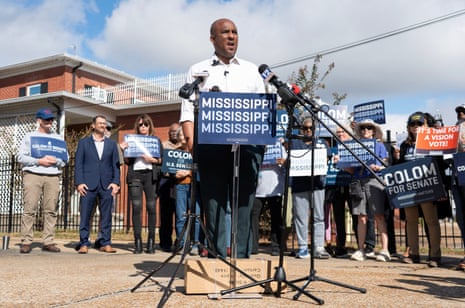
Adria R. Walker, a reporter on the race and equity team: As of Thursday, according to Mississippi Secretary of State Michael Watson, there are between 12,000 and 20,000 affidavit ballots that are still uncounted in Mississippi’s Senate race. Because thousands of voters were inaccurately marked inactive, due to the Secretary of State’s office using unverified Experian data, Mississippi received a historic number of affidavit ballots. Voters who cast an affidavit ballot because they didn’t have a photo ID have five days (until 10 November) to cure their ballots. Additionally, there are outstanding mail-in ballots that have until 10 November to reach precincts to be counted. Because the race remains so close, it’s necessary to wait to receive all votes before calling it.
The 2026 US midterm elections were a forceful rebuke of Donald Trump and the Republicans as Democrats captured control of Congress.
Democrats hoping for a “blue wave” saw a blue tsunami as they triumphed in deep-red states such as Texas, Kansas and South Carolina to build comfortable majorities in both the Senate and House of Representatives. Voters also elected Democratic governors in Texas, Georgia, Iowa, Wisconsin and Ohio, all states Trump won in 2024.
Over the last month, we’ve been answering your questions in a series of reader conversations from how immigration and the economy’s impact on voters, to who is spending the most on campaigns.
So how did Democrats pull off the win for Congress, and what’s next for them and for Trump? Join us at noon ET on Friday November 6, when the Guardian’s political reporters will answer all your questions on the midterms results.
Sign in or sign up to join the conversation.
The Guardian
About the Author