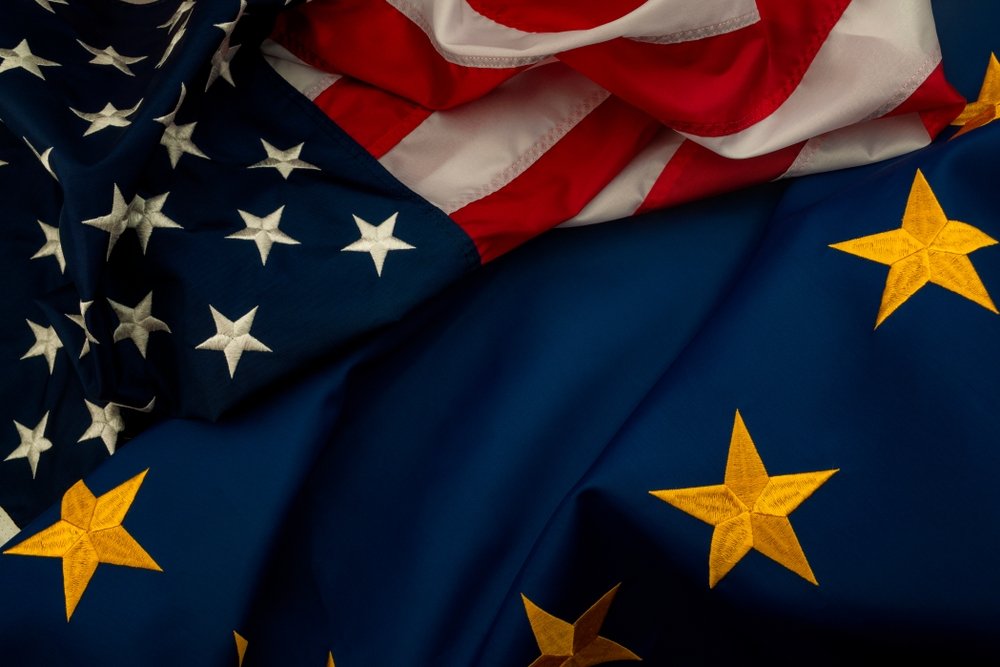
For months, experts have been debating what EU members should do in response to Trump 2.0’s erratic approach to trans-Atlantic ties. Some believe that his reelection would serve as a turning point for members to reconsider their commitment to nation-state reflexes, while others are skeptical of the idea of defending Europe autonomously. So far, Brussels-based academic circles have made normative policy recommendations to European policymakers, suggesting that EU members must act as one in capacity-building, despite long-standing clashes over autonomy delegation to the EU bureaucracy and its harmful effects on the sovereignty of individual states. Without unity across Europe, Trump’s “America First” strategy is thought to leave old allies vulnerable to Russian and Chinese great power politics. Conversely, skeptics adhere to the constant element of realism, the anarchical dynamics of relations between member states.
False dichotomy
Collectively empowering French nuclear capabilities for a standalone security umbrella or aligning with the German high-tech industry to become competitive against a weaponized world economy under the guidance of a Brussels-based bureaucracy is a viable strategy for neither due to the zero-sum nature of relations. That is why they claim that an absolute deadlock is inevitable for the EU strategy. However, the framed debate between hope and scepticism is a false dichotomy. Neither does the lack of convergence in security policies lead directly to weakness against rivals, nor does anarchy render the EU functionless. The unipolarity remains, and U.S. isolation does not mean a radical departure from trans-Atlantic relations. NATO is still the main deterrent factor for Europeans, and therefore, keeping the EU alive is not a choice, but rather a necessity. Nuance is that American isolation opens up a window of opportunity for better self-reliance. This also makes the EU conducive to use for members, as it has been since the ECSC.
In his second term, Trump’s approach to global hot spots has shown certain patterns in his foreign and security policy. Although his isolationist aims – clearly outlined in the National Security Strategy – have been perceived as causing uncertainty, American foreign policy relies on Trump’s two-fold motivations stemming from his populism and systemic pressure. Trump 2.0 has calibrated its means of domestic political revenge, targeting the sacred values of the Democrats or the establishment outside of the U.S. While his tendency to seek stability, one way or another, in Syria, Ukraine or Gaza could be seen as part of positioning the U.S. for systemic rivalry by managing the costs of these crises, his derisive approach to the EU and its members feeds his populism. Hence, the makeup of trans-Atlantic relations has not changed, but has been utilized by Trump’s domestic political concerns for the first time among U.S. presidents.
Recalibration of members’ interests
Trans-Atlantic relations have long been known as schizophrenic in nature. For the first time, after the Pleven Plan in the 1950s, EU members decided to establish an autonomous capability by integrating the European Security and Defence Identity (ESDI) mechanism into the EU in the 1990s. This new project reminded them how asymmetrical relations with the U.S. encircled their decision-making mechanism and sovereignty. Former U.S. Secretary of State Madeleine Albright’s 3Ds formula (no decoupling, no duplication, no discrimination) for a European security and defense initiative was not just a framework for EU members, but it was clear red lines. Nevertheless, Europeans riding free under the U.S. security umbrella has also been a point of contention in the U.S. In other words, Trump’s ongoing pressure on EU members regarding defense spending is not a new phenomenon in trans-Atlantic relations.
Trump’s derisive approach to Europeans is not indicative of a departure in trans-Atlantic relations. However, ongoing efforts such as the published European Defense Industrial Strategy (EDIS), the declared European Defence Industry Programme (EDIP), the SAFE Programme, the German “Zeitenwende,” the Anglo-German Trinity House, the Anglo-French Lancaster House 2.0, and German-French Nuclear Cooperation have been seen as a policy recalibration in response to the fear of abandonment. At this point, the distinction between the drivers of these initiatives and the main motivation needs to be clearer.
For sure, the challenges of today’s world are not the same. Both sides of the Atlantic must adapt to the new competitive landscape, including the China-Russia axis, supply chains of rare earth elements and semiconductors, and chip technology. How to compete with them, despite European industry’s production costs and inflation, seems to be one of the most significant concerns. Considering their liberal attitudes, welfare systems and public expenditures, implementing a protectionist economic model would be risky for current EU governments. However, similar concerns exist in the U.S. as well. Trump’s perhaps vital role here is to dispel the illusions of European elites and media regarding their dreams of political integration. So, it is true that the Trump presidency is the driver of these initiatives, but not because Trump has “woken them up.” Instead, American disengagement has allowed them to increase their autonomy, which has long been pressured by the asymmetrical dynamics of trans-Atlantic relations.
The key point is that EU members are engaging in reformed bandwagoning, aiming to secure their varying interests against recent challenges in a more autonomous way due to Trump’s disengagement from European matters, while still maintaining trans-Atlantic ties. What they are trying to do is not a fear of abandonment, but rather an opportunistic gain policy. Since the disasters in the Balkans, EU members have, for the first time, found room to maneuver on this scale.
EU’s new role
When it comes to the false dichotomy, anarchy remains the constant element of intra-EU relations. Therefore, EU members engage in policies that align with their own agendas. The well-known motto “unity in diversity” remains an illusion. The long-lasting Atlanticist-Europeanist tension between the United Kingdom-Germany axis, and, on the other hand, French or up-to-date “made in Europe” / “made with Europe” divergence in the defense industry signals that each member determines their needs in the system.
France, as a nuclear power, has been trying to use this temporary opportunity by embracing more protectionist and radical moves. On the other hand, Germany and the Baltic members prefer cautious and flexible reforms. What is common is that both sides have been utilizing the economic credibility of the EU’s collective weight, such as the SAFE Program and the potential EDIP budget. Therefore, the EU’s role in the new era is precisely to provide the funding and markets to support members’ individual defense industry and economic reforms.
In conclusion, for the time being, neither the changing dynamics of great power competition nor anarchy will make the EU functionless despite the diversity of members’ interests. In the short term, Trump’s populist tendencies might only be a game-changer for them, similar to Albright’s red lines in the 1990s. In the long run, the EU’s function and its members’ individual resilience against new great power competition will depend on whether unipolarity persists or not.
The views and opinions expressed in this article are solely those of the author. They do not necessarily reflect the editorial stance, values or position of Daily Sabah. The newspaper provides space for diverse perspectives as part of its commitment to open and informed public discussion.
DAILYSABAH
About the Author