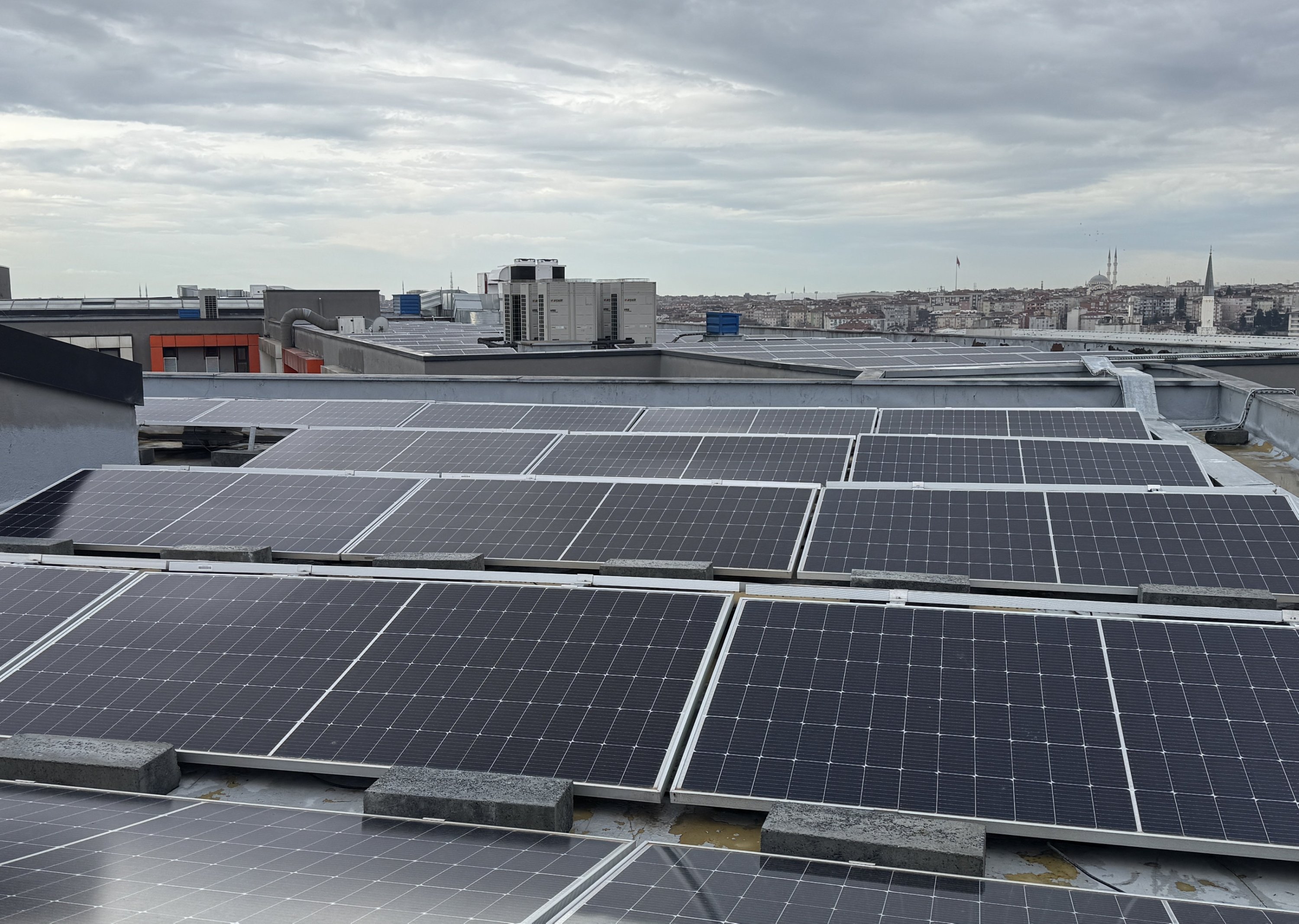
Türkiye’s total installed solar and wind capacity surpassed the 40,000-megawatt (MW) level as of the end of January, the Energy and Natural Resources Ministry said in a statement on Monday, describing the expansion in the renewable energy field as a “silent revolution.”
The country’s installed electricity capacity rose to 123,284 megawatts as of the end of January, the ministry said, while the total installed capacity of solar and wind reached 40,689 megawatts – corresponding to over 40 gigawatts (GW) and holding a 33% share.
According to a written statement shared by the ministry, the share of renewable energy in general in installed power capacity also continued its upward trend.
Some 77,114 megawatts or 62.5% of total installed electricity capacity comes from renewable energy sources, it said.
As of the end of January, solar energy’s share in installed capacity increased to 25,827 megawatts, representing 20.9%, while wind energy’s share also rose to 14,862 megawatts, maintaining its 12.1%. The combined installed capacity of solar and wind reached 40,689 megawatts in January, making up a 33% share.
In the statement, Energy and Natural Resources Minister Alparslan Bayraktar reiterated that Türkiye aims to increase its installed solar and wind capacity to 120,000 megawatts by 2035.
“We have (literally) undertaken a silent revolution in the field of renewable energy over the past 23 years in our country. We have increased our installed capacity in solar and wind, which was almost zero, to over 40,000 megawatts today,” he said.
“Thus, we have achieved one-third of our 120,000-megawatt target in wind and solar,” he added.
Bayraktar also emphasized that they are applying different models to reach the 120,000-megawatt goal, adding: “One of these is the Renewable Energy Resource Areas (YEKA) model. In YEKA tenders, which draw great interest from investors, last year we allocated 3,800 megawatts of capacity.”
“From now on, we will continue to organize at least 2,000 megawatts of YEKA tenders each year,” he noted.
“In addition, the interest of especially our industrialists in solar power plants for self-consumption purposes continues,” he suggested.
“Within this framework, we announced in January that we would allocate a capacity of 3,500 megawatts for self-consumption purposes. Here, we will give priority to public institutions and strategic sectors that will generate electricity for their own consumption.”
Bayraktar also noted that they are developing large-scale and much more competitive projects through intergovernmental agreements, and pointed to the deal with Saudi Arabia, which will build solar and wind power plants with a total capacity of 5,000 megawatts in Türkiye.
The first phase of the deal covering the first 2,000 MW of solar projects in Türkiye’s central provinces of Sivas and Karaman was signed in a ceremony last Friday.
“With the first stage, the 2,000 megawatts of solar power projects we have signed will allow us to buy Türkiye’s cheapest electricity at a fixed price for 25 years,” Bayraktar said.
“Acting on the principle of win-win, we may sign new bilateral agreements in the upcoming period. New agreements will further advance our installed capacity and supply security,” he added.
According to the graph shared by the ministry, the hydroelectric energy capacity stands at the forefront with 32,324 MW or 26.2% in total share.
DAILYSABAH
About the Author