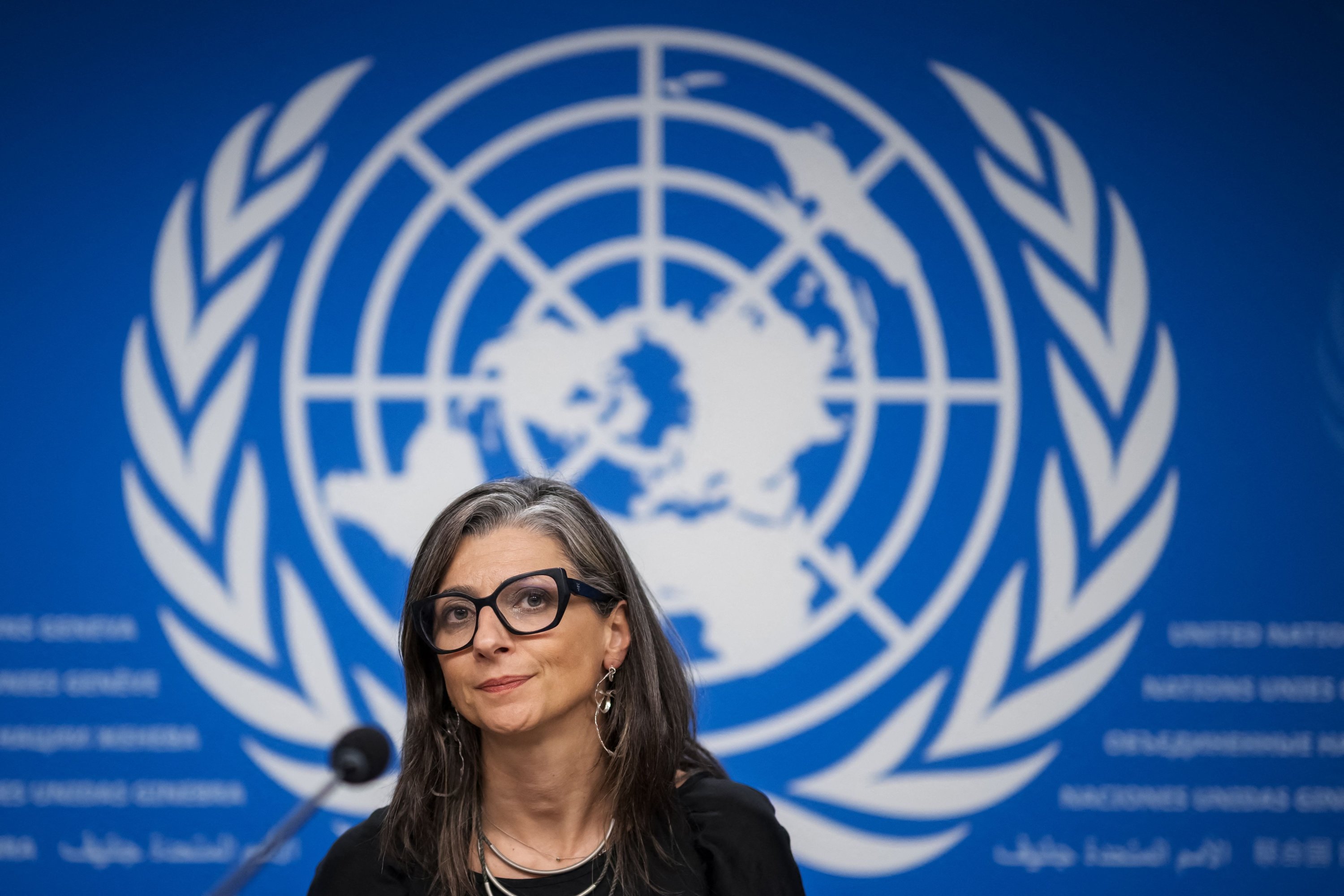
The family of independent U.N. investigator Francesca Albanese have filed a lawsuit against the Trump administration, challenging U.S. sanctions imposed on her last year over her criticism of Israel’s genocidal actions in Gaza, saying that the measures infringe on her First Amendment rights.
Meanwhile, Albanese, special rapporteur on human rights in the occupied Palestinian territories, denounced on Thursday what she described as “toxic” attacks impacting her personal life and work, after a number of European states called for her resignation.
In a lawsuit filed Wednesday in the U.S. District Court in Washington, Albanese’s husband and minor child outlined the serious impact those sanctions have had on the family’s life and work, including the ability to access their home in the nation’s capital.
“Francesca’s expression of her views about the facts as she has found them in the Israeli-Palestinian conflict and about the work of the ICC is core First Amendment activity,” the lawsuit says, referring to the International Criminal Court. That tribunal has issued arrest warrants against Israeli officials, including Prime Minister Benjamin Netanyahu, over allegations of war crimes.
“At its heart, this case concerns whether Defendants can sanction a person – ruining their life and the lives of their loved ones, including their citizen daughter – because Defendants disagree with their recommendations or fear their persuasiveness,” according to the filing.
Albanese, the U.N. special rapporteur for the West Bank and Gaza, is a member of a group of experts chosen by the 47-member U.N. Human Rights Council in Geneva. She has been tasked with investigating human rights abuses in the Palestinian territories and has been vocal about what she has described as the genocide by Israel against Palestinians in Gaza.
Both Israel and the United States, which provides military support to its close ally, have denied the genocide accusation. Washington imposed sanctions on her in July after an unsuccessful American pressure campaign to force the international body to remove her from her post.
‘Toxic,’ personally damaging
In recent weeks Germany, France, Italy and others have called for Albanese to step down over her criticism of Israel.
“I can tell you how toxic and personally damaging for me and for my family these past days, weeks and months have been,” Albanese told reporters via video link from Jordan on Thursday.
She had described sanctions as being part of a broader strategy by the current U.S. administration to weaken international accountability mechanisms.
“These smears, the sanctions, the continuous attacks from all over, from those very states who should use that energy as stamina to go after those who are accused by the highest court in the world of war crimes, crimes against humanity and genocide,” she said on Thursday.
The president of the U.N. Human Rights Council, Sidharto Reza Suryodipuro, on Monday expressed concern and regret at personal attacks directed “against certain mandate holders” at the Council and reiterated his support for them.
“Their independence and protection remains essential to the effectiveness, credibility and legitimacy of the council’s collective action.”
Shortly after being sanctioned, the Italian human rights lawyer talked about the effect it would have on her, both personally and professionally.
“My daughter is American. I’ve been living in the U.S. and I have some assets there. So of course, it’s going to harm me,” Albanese told an interview with The Associated Press (AP) last summer. “What can I do? I did everything I did in good faith, and knowing that, my commitment to justice is more important than personal interests.”
But the sanctions have not dissuaded Albanese from her work or her viewpoints. She has continued to issue scathing reports about Israel’s activity, including one focused on what she said was the country’s “genocidal economy” in Palestinian territories.
Israeli strikes have repeatedly disrupted the U.S.-brokered cease-fire deal from Oct. 10, which intended to halt Israel’s two-year offensive that has killed more than 72,000 people, mostly women and children, wounded over 171,000 people, and destroyed roughly 90% of civilian infrastructure in Gaza.
Gaza’s Health Ministry reports at least 818 Palestinians killed and 1,663 injured since the cease-fire began, with 96 deaths attributed to direct Israeli fire, including 36 women, children and elderly.
An additional 326 people were wounded by tanks, drones and sniper fire along the boundary.
DAILYSABAH
About the Author