A panel in the Turkish capital concluded that NATO remains a resilient and adaptive alliance despite mounting global challenges, emphasizing its capacity to evolve in response to a rapidly transforming security environment, even as the alliance traverses one of its rockiest periods in decades, marked by internal divisions, geopolitical conflicts and debates over its future role.
The panel, titled “NATO and the Changing Security Environment,” was held in Ankara in cooperation with the Presidency’s Directorate of Communications and the Foundation for Political, Economic and Social Research (SETA). It brought together international experts to assess the alliance’s trajectory amid mounting global uncertainty.
Moderated by professor Murat Yeşiltaş of Ankara Social Sciences University, the panel featured Akif Çağatay Kılıç, chief advisor to the president on foreign policy and security; Italian scholar Valeria Giannotta; Patrice Moyeuvre from the French Institute for International and Strategic Affairs (IRIS); and specialist Yavuz Türkgenci.
Türkgenci said NATO has faced challenges for more than 70 years and “has somehow solved its problems,” stressing that its evolution can be understood through its strategic concepts. “NATO always tries to overcome problems by creating concepts related to changing issues,” he said, adding the alliance is once again “facing the same problems” in a new global context.
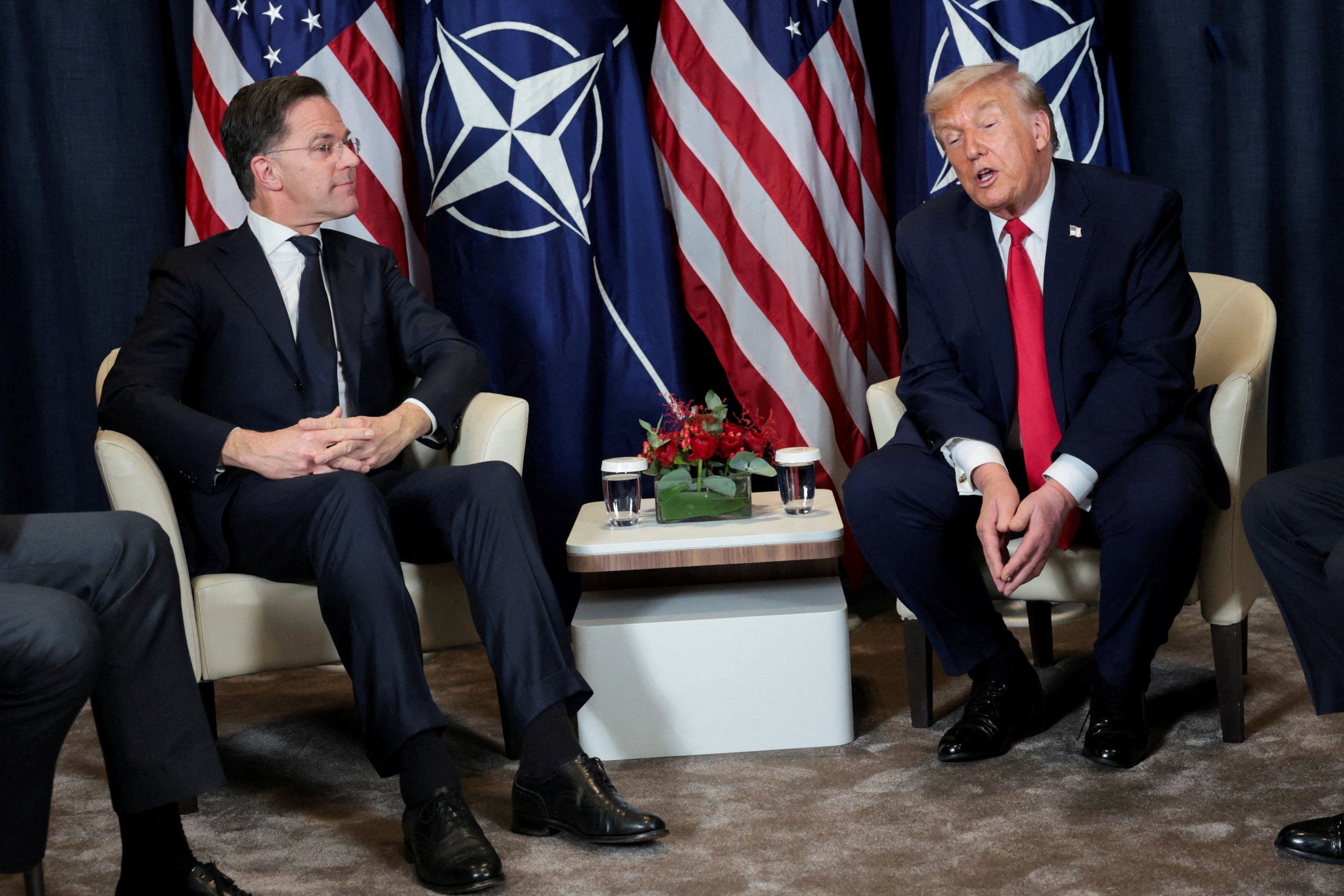
The remarks come as NATO grapples with a sharp deterioration between Washington and its European allies in recent months, including tensions over the U.S.-Israel war on Iran, disagreements among allies on burden-sharing and U.S. President Donald Trump’s threats to leave the alliance. Analysts have argued the alliance is facing a “crisis point,” with U.S. criticism and European hesitation exposing fractures in trans-Atlantic unity.
Referring to NATO’s latest strategy following the Russia-Ukraine war, Türkgenci described it as “actually a reaction to the war,” suggesting “there may be a new supplement or document published in Ankara” as the alliance adapts further.
Giannotta argued the current environment reflects bigger structural change. “I think there is a transformation, rather than a temporary crisis,” he said, pointing to a “multipolar system” and rising conflicts. “There are areas where violence is escalating, presenting certain challenges to NATO,” he added, while highlighting the “very important central role of the U.S.”
Recent developments appear to support this assessment. U.S. President Donald Trump has repeatedly criticized NATO as “very disappointing” and even raised the possibility of withdrawing, while European allies debate greater strategic autonomy and defense responsibilities.
At the same time, NATO has sought to adapt through increased defense spending and new initiatives, including efforts to strengthen its presence in strategic regions such as the Arctic and to boost military capabilities across Europe.
Moyeuvre recalled that NATO’s future was once in doubt after the Cold War. “NATO did not disintegrate,” he said, attributing this to political trust among member states.
“It’s very easy to dismantle something, but very difficult to build it, especially if we’re talking about something that works,” he said, adding that NATO remains “the only organization” capable of coordinating multinational missions. “This is something no other organization can do.”
“NATO continues to be an extremely reliable and stable organization,” he said, reinforcing the panel’s central conclusion that despite mounting pressures, the alliance retains its core strength as a unifying security framework.
DAILYSABAH
About the Author