Are straight male writers scared of writing about sex? If you read modern fiction it’s hard to conclude otherwise. Maybe we’re worried that the very presence of a sex scene in our book would feel somehow exploitative or gratuitous. Or maybe we feel our gender has simply said enough on the subject so we should shut up.
Women writing about straight relationships don’t seem as nervous. In fact, sex is often a central element of narrative, and of nuanced portrayals of masculinity; from the slow-burn tenderness and awkwardness of intimacy in Sally Rooney’s work, to the surreal celebrations of and lamentations for the erotic in Diane Williams’s extraordinary short stories.
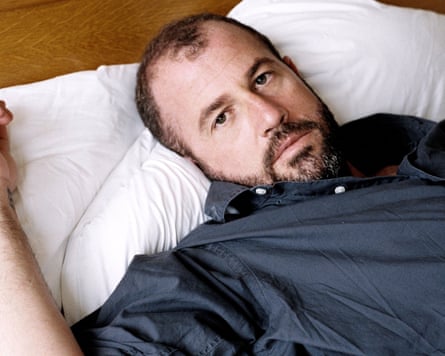
The Bad Sex in Fiction award wrapped up in 2019. It is not missed – for me, its offence was that it conflated comically bad writing about sex with great writing about sex that happened to be bad. Still, the funniest and most excruciating winners were straight men trying and failing to write sincerely and exuberantly about sex, and landing somewhere between the ludicrously metaphorical and the shoddily pornographic or exoticising. Past winners have included James Frey (“Blinding breathless shaking overwhelming exploding white God I cum inside her …”) and Didier Decoin (“Katsuro moaned as a bulge formed beneath the material of his kimono …”).
Perhaps it’s no coincidence that, in the 21st century, it feels as if straight male authors have gone off writing about sex altogether. And that’s a shame: as writers we’re naturally obsessed with relationships, the ways we treat each other, fail each other or fulfil each other; how we might connect despite our ultimate unknowability. To leave sex out of this is to neglect both the minutiae and excesses of human experience.
I tried not to shy away from writing about sex in my latest novel, Black Bag, because it’s part of what forms a character. In a sex scene, each detail, or desire, is described for a reason, telling us where a character stands in relation to their own sexuality, their treatment of the other and of themselves.
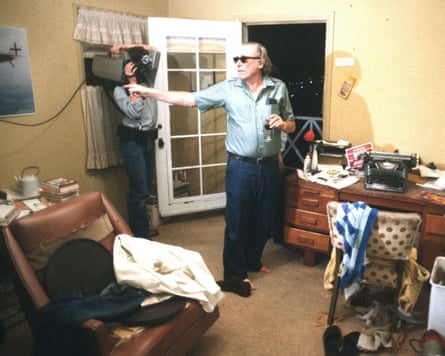
Nobody wants to emulate Henry Miller’s or Charles Bukowski’s pathological misogyny and coldly itemised conquests. Neither would we want to take John Updike’s waspish, suburban proto-polyamory starter kit as a blueprint. Whether urbane or grotesque, it still feels like the voice of a priapic pub bore. It is good that we know what to avoid, but we don’t really know what to do either.
We’re uncomfortable, and so what we tend to do is decorously fade to black, and rejoin our characters when they are finished. The next day, if possible. “Well now that’s done: and I’m glad it’s over”, as the typist says in Eliot’s The Waste Land. Keiran Goddard’s debut novel, Hourglass, is heartbreakingly candid on its narrator’s post-breakup grief, but the physical is sublimated into a masochistic dedication to long-distance running; sex is notable by its absence. Joe Dunthorne’s scintillating comedy of manners The Adulterants brilliantly presents a sexless open marriage (“Lee thinks I sleep with other people but I don’t”). The central couple in Vincenzo Latronico’s Perfection strongly feel they should be having more adventurous sex as it would accessorise nicely with their houseplants and expat Berliner lifestyle, but they try going to a sex-positive club and find that they don’t like it one bit. In my second novel, The Answer to Everything, I actively avoided writing about sex by making all the characters young parents – thus too exhausted to consummate their emotional affairs. And when they finally did, I just described them buttoning up their shirts afterwards, shuddering with remorse.
In David Foster Wallace’s 1999 short story collection Brief Interviews with Hideous Men, the anonymous subjects are left to talk until they condemn themselves, largely concerning how much they hate women but love having sex with women; they list seduction techniques, smirk, brag, seem on some level to lack human emotion altogether. This was not so much satire as a bitter revelation: the end of the reign of Roth, Updike and Bellow – a death knell and perhaps an apology.
As Luke Brown wrote in 2020: “Heterosexual male desire has been linked so closely to abuses of power for so long that the two seem inextricable.” The traditional campus novel turns this power imbalance into something of a trope: a vaguely depressed, self-absorbed, middle-aged lecturer begins an affair with one of his students and ruins everyone’s lives. This device is configured brutally in JM Coetzee’s Disgrace; tragically in David Gilmour’s Sparrow Nights; and satirically in Percival Everett’s American Desert.
I’m not waiting for an uplifting, life-affirming novel by a straight man about how wonderful he thinks sex is. Gross. Get a hobby. But I do think that we write to discover, and that we have some serious hang-ups, and we’re not quite giving ourselves the space to explore or understand them. Maybe the hang-ups themselves are too embarrassing to admit to: sex as a kind of competitive sport, the attendant performance anxiety. If the stakes are high in trying to write about sex, and the risk of failure so starkly embarrassing, it might be because men are actually quite insecure about sex in general, but would never want to admit it because to do so would in itself be unsexy, un-masculine.
There are innumerable examples of good writing about sex in queer fiction: I’m always desperate for Brandon Taylor’s self-loathing, misunderstood protagonists to find some kind of release in the physical; and Djamel White’s just-published debut, All Them Dogs,sets its devastatingly authentic intimacy against the hyper-masculine world of west Dublin gang culture. Some of the best writing about sex acknowledges power, or plays with the power dynamic. In Exciting Times, Naoise Dolan writes: “There was something Shakespearean about imperious men going down on you: the mighty have fallen.”
The narrator of my new novel, Black Bag, an out-of-work actor, gets into an unconventional relationship with a professor of posthumanism at the university where he has been temporarily employed in a psychological experiment. This felt like a good inversion of the traditional campus novel’s leering suggestiveness. It’s never really consummated because he spends the duration of their romance encased in a black, oblong leather bag, but their sex life becomes one of constant edging, where she tortures him with interrupted stories of her exploits in the mode of 1,001 Nights– something he enjoys very much. He finds joy and satisfaction in being submissive, but also in a relationship that more or less removes him from the equation.
When it’s done well, sex in novels can be a transformative reading experience. Maybe because the fantasies it gives definition to are private in the same way that reading is private, and thus without shame. And maybe because the imagination is just as important an element as the physical. In researching Black Bag I read Leopold von Sacher-Masoch’s Venus in Furs, infamously overwritten and melodramatic, but he did literally give his name to the kink so it seemed worth consulting. The best lines are given to the narrator’s lover, Wanda von Dunajew, particularly when she spells out the terms of their arrangement. “‘Know that henceforth you are less than a dog, something inert; you are my own thing, my toy, which I can break merely as a pastime. You are nothing and I am everything. Do you understand?’ She laughed and embraced me again and a kind of shudder went through me.” A lot of our behaviour arises from looking for that “kind of shudder”, so it feels fairly important to try, however complex or strange it may be, to put it into words.
The Guardian wp:paragraph
هلدینگ کاسپین استانبول | خرید ملک در ترکیه | صرافی معتبر ایرانی در ترکیه | خرید و فروش طلا در ترکیه | مهاجرت به ترکیه | واردات و صادرات در ترکیه | نیازمندیهای ترکیه | اخبار ترکیه | اخبار جهانی | توریست ایران | خدمات توریستی در ایران | تورهای گردشگری ایران | هلدینگ اول | خدمات کاریابی و فریلنسری و شغل | مرجع اطلاعات ایران (همه چیز در ایران) | کیف پول و خدمات مالی و پرداخت یار | اخبار ایران | تابلو زنده قیمت ارز در ترکیه و استانبول | صرافی آنلاین ترکیه | قیمت طلا و نقره در ترکیه | سرمایه گذاری در ترکیه | جواهرات در ترکیه | نرخ لحظه ای ارزها در استانبول | قیمت دلار امروز در ترکیه | قیمت دلار استانبول امروز | قیمت لحظه ای دلار | اخبار روز ترکیه استانبول | اپلیکیشن ISTEX | اپلیکیشن قیمت لحظه ای دلار و یورو و لیر و ارزها در ترکیه
/wp:paragraph wp:paragraph /wp:paragraph
About the Author