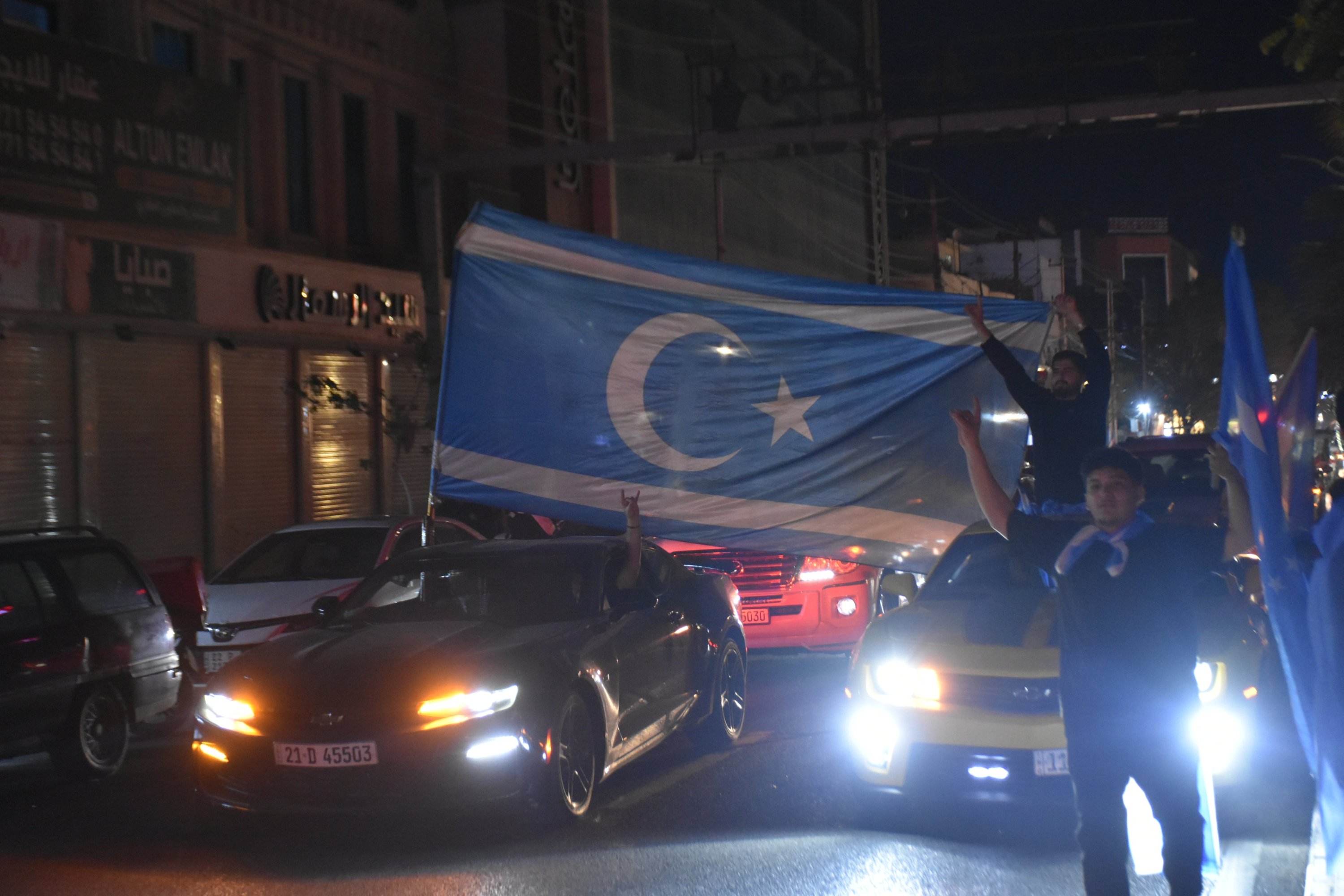
The Turkish Foreign Ministry issued a congratulatory message for the election of Mohammed Samaan Agha as governor of Iraq’s Kirkuk province. The ethnic Turkmen, who was chairperson of the Iraqi Turkmen Front, was elected by the Kirkuk Provincial Council on April 16 and started his tenure officially on Tuesday.
In the statement on Tuesday, the ministry, using the Turkish pronunciation, Mehmet Seman Ağaoğlu, for the new governor, said the election of a Turkmen to the post in Kirkuk, “a province with cultural diversity and plural social fabric, is a highly significant and historic development in terms of inclusivity, fair representation, and consolidation of social peace.”
“We also view this as a long-overdue acknowledgement of a legitimate right for our Turkmen kinsmen, who are an integral component of Iraq and Kirkuk. The rotational sharing of high-level administrative positions in Kirkuk among its components on the basis of consensus is a fair and equitable gain not only for the Turkmen but for all components that make up Kirkuk. We hope that this development will contribute to the peace, security, and prosperity of Iraq and the people of Kirkuk,” the statement said.
Kirkuk has a sizeable population of Turkmens and has been a contested area in terms of elections due to its diverse demographics. It has also been a place contested between the Iraqi administration in Baghdad and Iraq’s Kurdistan Regional Government (KRG), which controls most of northern Iraq. It was once part of Mosul province, which Türkiye wanted to control after the fall of the Ottoman Empire following World War I. Kirkuk’s last governor of Turkmen origin was Fettah Pasha, who governed during the Kingdom of Iraq, which was under British mandate.
Speaking to Anadolu Agency (AA) last week, Agha has pledged to serve as the governor of “every resident of Kirkuk, not just Turkmens.” Kirkuk has a rotating power-sharing model, divided between Arabs, Kurds and Turkmens but the system did not produce a Turkmen governor until Agha. He said that they advocated a rotating governorship system since the fall of the Baathist regime in 2003. Agha underlined that it was a challenging process for them to convince Arabs and Kurds.