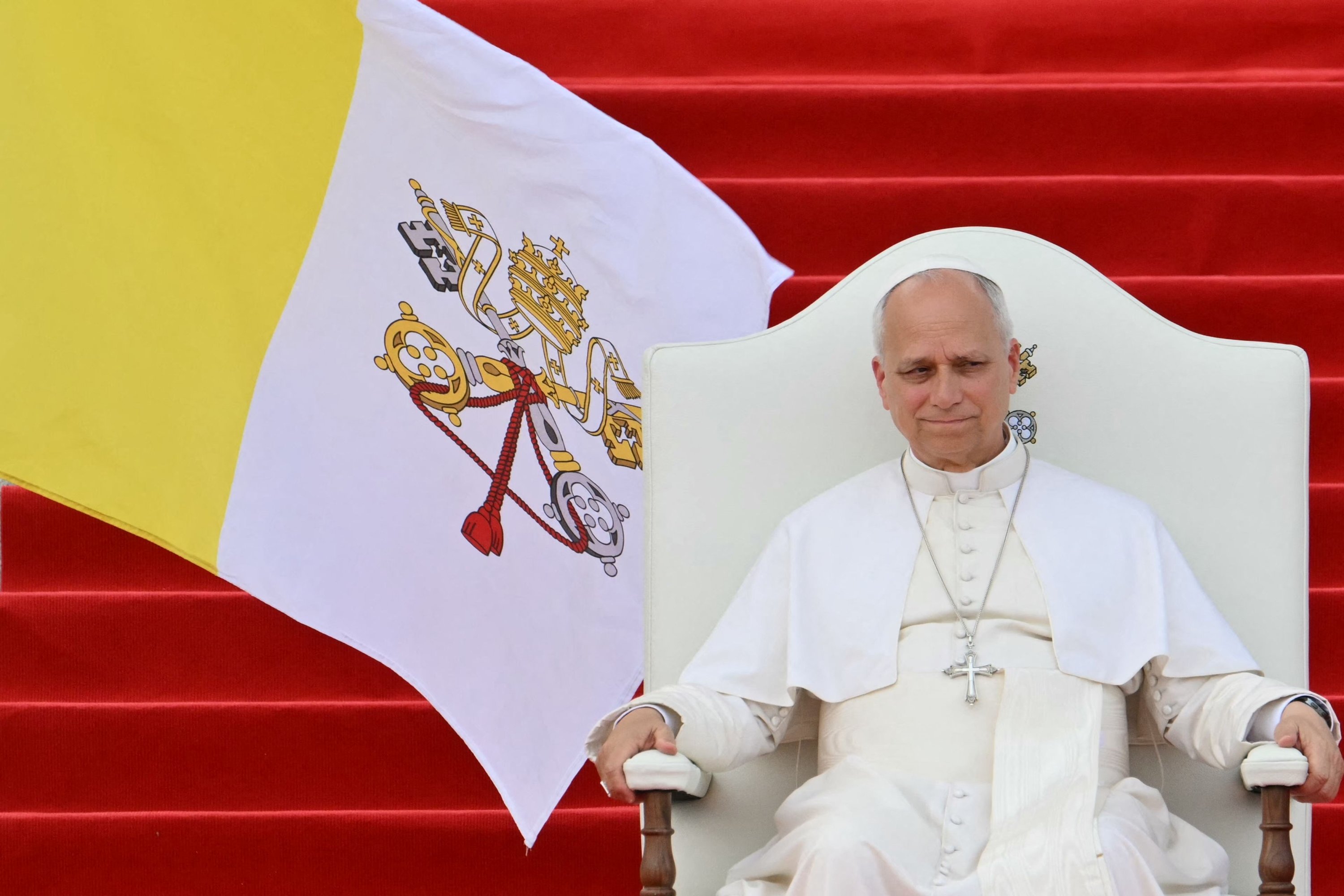
The deepening divide between Pope Leo XIV and U.S. President Donald Trump represents a historic clash between political realism and ethical universalism.
A significant fracture has emerged between Pope Leo XIV, the spiritual leader of the world’s 1.3 billion Catholics, and the 47th president of the United States, Donald Trump. While this is not Trump’s first confrontation with the Holy See – recalling the ideological friction that began during the papacy of Pope Francis – it marks a new and more volatile chapter in the tension between global political power and religious authority.
Trump’s recent descriptions of the Pope as “weak on crime” and “disastrous in foreign policy” go beyond mere political rhetoric. By accusing the Vatican of positioning itself against him through the election of an American Pope, Trump has crossed traditional diplomatic boundaries. His claim, “If I weren’t in the White House, Leo wouldn’t be in the Vatican,” is not just a critique; it is a direct assault on the Vatican’s political independence and sovereign legitimacy.
In the eyes of the Trump administration, the Vatican is often viewed as a “corporation” or a “rival state” to be negotiated with or coerced. However, the Vatican remains a moral compass. In this asymmetric struggle between Trump’s power and the Pope’s moral authority, history typically favors the permanence of the ethical over the transactional.
Evangelical-Zionism vs. Vatican
Trump’s aggression is not merely personal; it represents an effort by the Evangelical-Zionist bloc to marginalize the Catholic Church’s doctrine of “universal justice” and replace it with an “apocalyptic-oriented foreign policy.” By refusing to align with Trump’s coercive strategies toward Iran and Venezuela, the Vatican denies the U.S. administration the moral legitimacy it seeks for its more aggressive global maneuvers.
To fully grasp the scope of this tension, one must look at the other front of this global ideological war. While Trump, a close ally of Israeli Prime Minister Benjamin Netanyahu, directs criticism at the American Pope Leo, another of Netanyahu’s allies, Argentine President Javier Milei, has targeted the Argentine-born Pope Francis with equal vehemence.
During his election campaign, Milei launched a series of unprecedented attacks on Pope Francis, labeling him a “communist,” an “imbecile” and a “leftist who sides with murderers” and even “the representative of the devil on Earth,” accusing him of violating the Ten Commandments.
Both Trump and Milei have weaponized religion for political gain, yet their strategy is specific: they play the “Judeo-Christian values” card to appeal primarily to the Zionist-aligned Evangelical base.
Their rhetoric often teeters on the edge of the messianic: Trump has not shied away from comparisons between himself and Jesus, while Milei has fashioned himself as a modern-day Moses. However, considering their actions and speech, this pattern reveals that for these leaders, religious rhetoric is not a matter of faith but a strategic political tool.
From Iraq to present
A retrospective look at the past 25 years of Vatican-U.S. relations reveals that the current friction is not an isolated incident, but rather part of a recurring historical pattern. During the 2003 Iraq War, Pope John Paul II famously opposed President George W. Bush, labeling the invasion “immoral and unjust.” Decades later, history vindicated the Vatican’s caution.
Turning to the Trump era, the confrontation between Pope Francis and Trump dates back to February 2016, when Trump was still a presidential candidate. Even as years have passed and the Papacy has changed, this discord has endured due to the fundamental divergence between Trump’s and the Vatican’s perspectives on society.
In contemporary conflicts, from Ukraine and Gaza to Nigeria, the Vatican has maintained a peace-centered stance. This role is critical in regions like Nigeria, where the Trump administration attempted to frame local terror as a “religious crusade.” The Vatican’s insistence that these acts are terrorism affecting both Christians and Muslims – thwarted an attempt to trigger a global religious conflict for geopolitical gain. The Vatican’s refusal to participate in these narratives has only intensified Trump’s hostility.
Far-right’s silence
What is truly striking is the stance of Europe’s leading Catholic radical-right parties. Despite years of mobilizing voters through “Christian values” and identity politics, many of these actors remained silent in the face of blatant disrespect toward the Pope.
In Spain, the far-right party VOX has consistently garnered votes by fueling Islamophobia and emphasizing Catholic identity. Yet, they have “played deaf” regarding the severe insults directed at the Pope. Santiago Abascal, the ultraconservative leader who also chairs the right-wing populist Patriots group in the European Parliament, is known for his closeness to Netanyahu. It appears he prioritizes the U.S.-Israel alliance over the Catholic values he claims to defend. Ironically, Abascal built his election propaganda on the concept of the “Reconquista,” even using imagery of himself as a Catholic cavalryman to symbolize Catholic sanctity.
On the other side of the spectrum, Prime Minister Pedro Sánchez, despite being a known atheist, along with other leftist political actors, reacted strongly to the insults against the Pope, labeling them “unacceptable.” This situation reinforces the criticism that, in Spanish politics, the radical right uses Catholicism not as a matter of faith, but merely as a tool for political mobilization.
In contrast, Italy presents a starkly different picture from Spain. Political actors from across the entire spectrum, including Prime Minister Giorgia Meloni, who is otherwise known for her closeness to Trump, unanimously characterized Trump’s rhetoric as “disrespectful.” This cross-party consensus demonstrates that, despite Italy’s strong economic and security ties with the U.S., the country can take a principled stand when it comes to faith and tradition.
In France, the contrast between President Emmanuel Macron’s support for the Pope and the silence of the far-right opposition leader Marine Le Pen was equally remarkable. While Le Pen’s party frequently utilizes “Christian values” to fuel its anti-Islam rhetoric, she has remained silent while Trump attempts to discredit the Vatican. She listens without objection.
The stance of Abascal and Le Pen raises critical questions about the European Right’s core principles.
While some critics accuse the Vatican of playing politics, the Holy See does not seek to be a “Kingmaker” in negotiations. For example, although the Vatican is strongly against the Gaza war, it declined a role in the U.S.-led Gaza Peace Committee, asserting that peace-building must be the responsibility of the United Nations. The Trump administration and the Vatican appear likely to remain polarized due to ongoing wars.
Ultimately, amid these debates, the Pope used a meaningful phrase in his speech that recalls Exodus 20:7: “Woe to those who use the name of God for military, economic, or political interests.”
DAILYSABAH
هلدینگ کاسپین استانبول | خرید ملک در ترکیه | صرافی معتبر ایرانی در ترکیه | خرید و فروش طلا در ترکیه | مهاجرت به ترکیه | واردات و صادرات در ترکیه | نیازمندیهای ترکیه | اخبار ترکیه | اخبار جهانی | توریست ایران | خدمات توریستی در ایران | تورهای گردشگری ایران | هلدینگ اول | خدمات کاریابی و فریلنسری و شغل | مرجع اطلاعات ایران (همه چیز در ایران) | کیف پول و خدمات مالی و پرداخت یار | اخبار ایران | تابلو زنده قیمت ارز در ترکیه و استانبول | صرافی آنلاین ترکیه | قیمت طلا و نقره در ترکیه | سرمایه گذاری در ترکیه | جواهرات در ترکیه | نرخ لحظه ای ارزها در استانبول | قیمت دلار امروز در ترکیه | قیمت دلار استانبول امروز | قیمت لحظه ای دلار | اخبار روز ترکیه استانبول | اپلیکیشن ISTEX | اپلیکیشن قیمت لحظه ای دلار و یورو و لیر و ارزها در ترکیه
About the Author