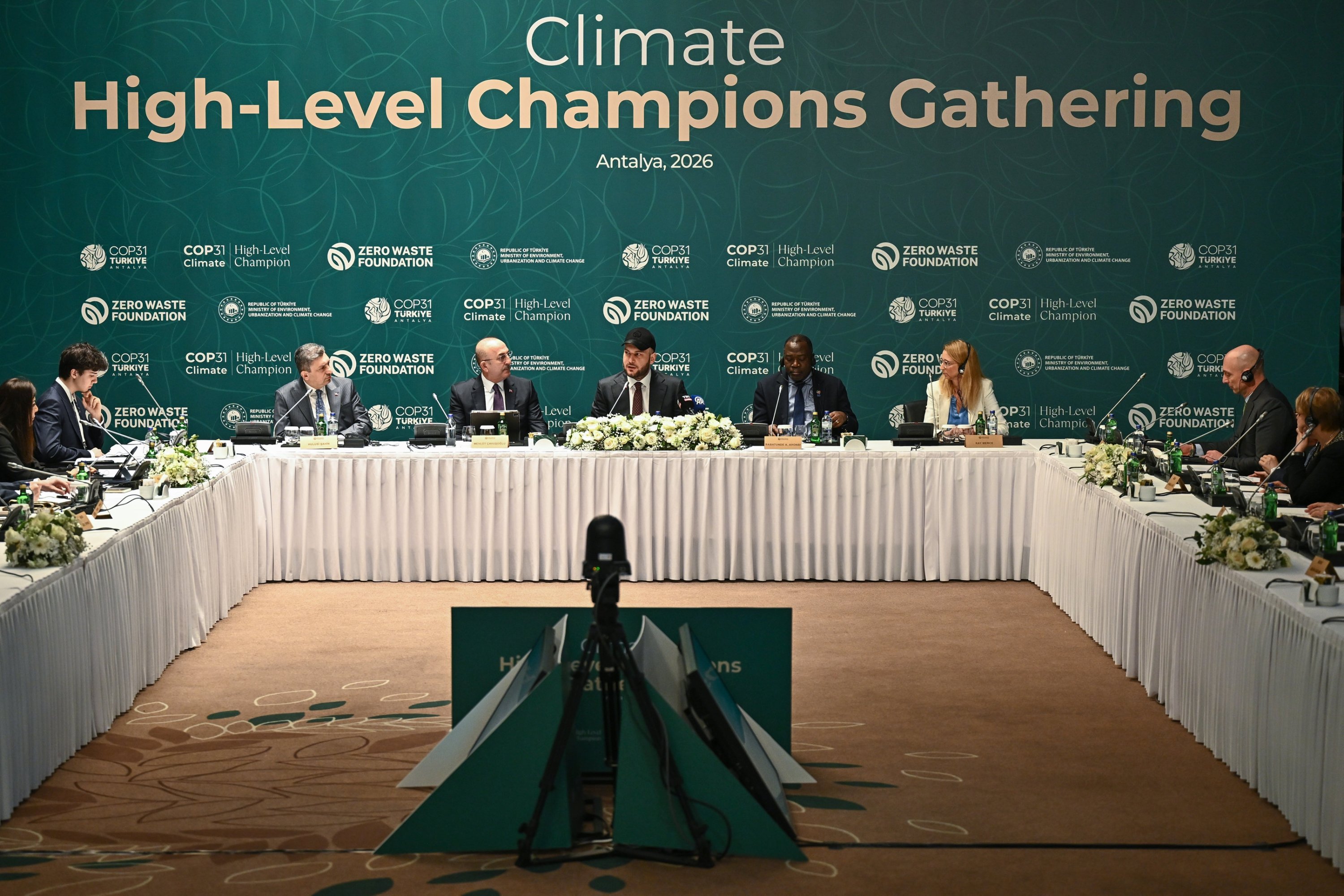
International environmental governance efforts are increasingly converging on Istanbul as more than 10 global organizations prepare to establish operational offices in the city within the next five years, aligning with Türkiye’s expanding zero waste agenda.
The planned expansion is being coordinated through the Zero Waste Foundation, operating under the leadership of Emine Erdoğan, whose Zero Waste Movement has evolved into a cross-border platform engaging governments, municipalities and civil society actors worldwide.
Foundation President Samed Ağırbaş said the initiative has moved beyond a national framework and is now delivering measurable environmental and policy-level impact across multiple regions.
He noted that nearly every country is now engaging with or observing the model, reflecting growing demand for structured waste management and sustainability frameworks.
A key milestone in this expansion will be the Zero Waste Forum scheduled for June 5-7, expected to bring together representatives from more than 150 countries and over 5,000 participants.
The forum is designed to function as a high-capacity coordination platform, integrating public sector leadership with private sector innovation to accelerate implementation of zero waste systems.
More than 200 mayors are expected to attend, alongside stakeholders from urban governance, environmental policy and industry. The agenda will prioritize scalable solutions, regulatory alignment and financing mechanisms required to transition toward circular economy models.
Ağırbaş emphasized that the platform differentiates itself by enabling open dialogue among global environmental organizations. He said the structure allows participants to exchange insights without institutional constraints, increasing both participation and policy relevance.
The initiative also aligns with broader strategic positioning outlined by President Recep Tayyip Erdoğan, who has articulated a vision to elevate Istanbul into a central node for international diplomacy and multilateral cooperation. Environmental governance, particularly zero waste policy, is emerging as a core pillar within that vision.
As part of this road map, the United Nations Human Settlements Programme (UN-Habitat) has already established an operational presence in Istanbul following a bilateral agreement. Additional U.N. entities are expected to follow, creating a clustered ecosystem of sustainability-focused institutions operating from the city.
With more than 8,000 years of urban history, Istanbul is being repositioned not only as a cultural and economic center but also as a global coordination hub for environmental policy and zero waste implementation.