Japan’s decision to ease its weapons export rules has been framed by some as a betrayal of its postwar identity. That’s understandable, given how central pacifism has been to modern Japan’s self-image. But it’s a framing that probably misses the point. What’s actually happening feels less like an ideological U-turn and more like a country quietly running the numbers and deciding the old rules no longer add up.
For over seven decades, Tokyo held to some of the strictest arms export policies in the world, a deliberate and consciously maintained restraint born from the wreckage of World War II. That wasn’t just legal architecture, it was identity. And for a long time, it worked. Japan rebuilt, prospered and projected soft power in ways that felt genuinely distinct from the old militarist model. The restraint was real and it meant something.
But the region around Japan today looks very different from the one that the framework was designed for. China’s official defense budget now exceeds $225 billion annually and most analysts believe the real figure is considerably higher once off-budget spending is counted in. Its navy is now the largest in the world by ship count and its presence in the East China Sea has become a daily fact of life rather than a distant geopolitical abstraction. For Japan, this isn’t theoretical. Roughly 90% of its energy imports travel through maritime routes that China increasingly patrols and contests.
Then there’s North Korea, which has conducted over 100 ballistic missile tests in the past decade alone. Several of those missiles flew directly over Japanese territory. In 2022, Pyongyang launched a record number in a single year, including systems theoretically capable of reaching more than 13,000 kilometers. At some point, living next door to that kind of programme forces hard questions about what “defensive posture” actually means in practice.
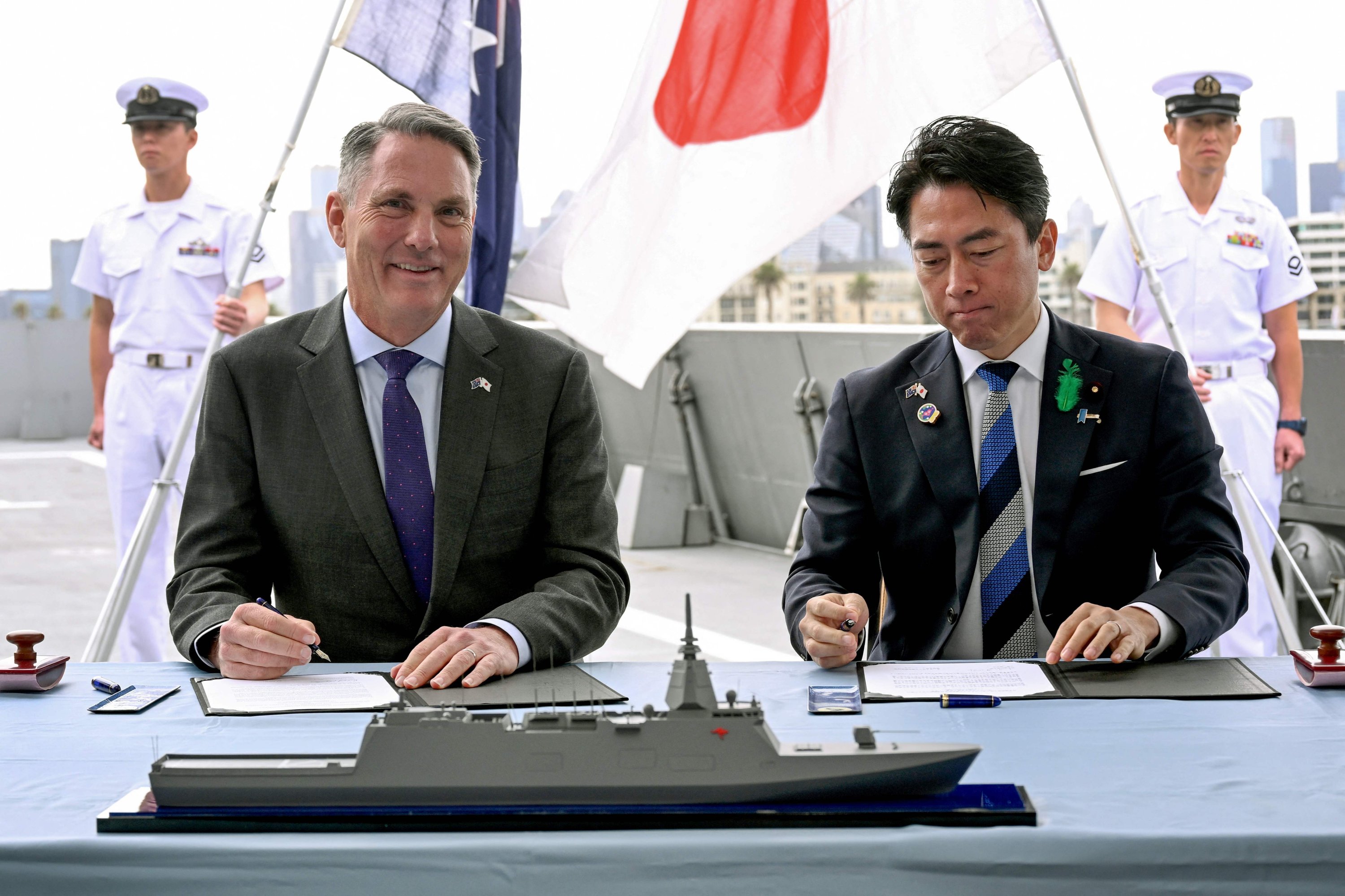
It’s against this backdrop that Japan’s shift needs to be understood. The revised export rules allow for lethal systems, including missiles, warships and fighter jet components to be exported, subject to government approval and restrictions on active conflict zones. That’s a real change. But it’s been framed, deliberately and not entirely dishonestly, as a move toward collective security rather than aggressive projection.
The numbers behind Japan’s broader defense buildup make that case harder to dismiss as spin. Defense spending is on track to hit roughly $60 billion per year by the end of the decade, with a five-year commitment totalling around $300 billion. The goal of reaching 2% of GDP by 2027 brings Japan in line with NATO-style benchmarks and reflects genuine political will, not just rhetorical positioning. Alongside roughly 50,000 U.S. troops still stationed on Japanese soil, this is a country preparing seriously for a future it clearly thinks might get worse before it gets better.
Supporters of the policy argue that Japan can’t remain a passive consumer of alliance security while its partners expect more industrial integration and burden-sharing. There’s a reasonable logic to that. Joint missile defense development with the United States, for instance, increasingly requires shared supply chains. Staying out of the global defence industry while participating in its strategic benefits was always a somewhat awkward arrangement.
None of which makes the critics wrong to be cautious. Once the line between domestic production and arms exports is crossed, the institutional logic tends to push toward expansion. Each exemption creates a precedent and each precedent becomes the new baseline. Japan’s postwar restraint wasn’t just about rules; it was about a broad social consensus that actively resisted military normalization. That consensus hasn’t disappeared, but it’s being stretched, and the question of how far it can go before something fundamental changes is not trivial.
There’s also something worth sitting with about the symbolic shift. Japan built its modern identity partly around not being the country it was before 1945. Arms exports don’t automatically unravel that, but they do alter the image and images matter, both domestically and across Asia, where historical memory of Japanese militarism remains sharp.
What seems clear is that Japan’s leadership has made a calculated bet. That selective participation in the defence export market, paired with stronger alliances and sustained domestic spending increases will strengthen deterrence rather than fuel escalation. It’s a defensible bet. It’s also one that depends heavily on how the broader region moves and right now, that’s genuinely hard to predict.
If Indo-Pacific tensions continue rising, Japan’s shift may eventually look like prudent realism. If things spiral further, the critics who warned about incremental erosion will have a point worth taking seriously. What’s no longer really in question is whether Japan is willing to stand still. That decision appears to have already been made.
The views and opinions expressed in this article are solely those of the author. They do not necessarily reflect the editorial stance, values or position of Daily Sabah. The newspaper provides space for diverse perspectives as part of its commitment to open and informed public discussion.
DAILYSABAH
هلدینگ کاسپین استانبول | خرید ملک در ترکیه | صرافی معتبر ایرانی در ترکیه | خرید و فروش طلا در ترکیه | مهاجرت به ترکیه | واردات و صادرات در ترکیه | نیازمندیهای ترکیه | اخبار ترکیه | اخبار جهانی | توریست ایران | خدمات توریستی در ایران | تورهای گردشگری ایران | هلدینگ اول | خدمات کاریابی و فریلنسری و شغل | مرجع اطلاعات ایران (همه چیز در ایران) | کیف پول و خدمات مالی و پرداخت یار | اخبار ایران | تابلو زنده قیمت ارز در ترکیه و استانبول | صرافی آنلاین ترکیه | قیمت طلا و نقره در ترکیه | سرمایه گذاری در ترکیه | جواهرات در ترکیه | نرخ لحظه ای ارزها در استانبول | قیمت دلار امروز در ترکیه | قیمت دلار استانبول امروز | قیمت لحظه ای دلار | اخبار روز ترکیه استانبول | اپلیکیشن ISTEX | اپلیکیشن قیمت لحظه ای دلار و یورو و لیر و ارزها در ترکیه
About the Author