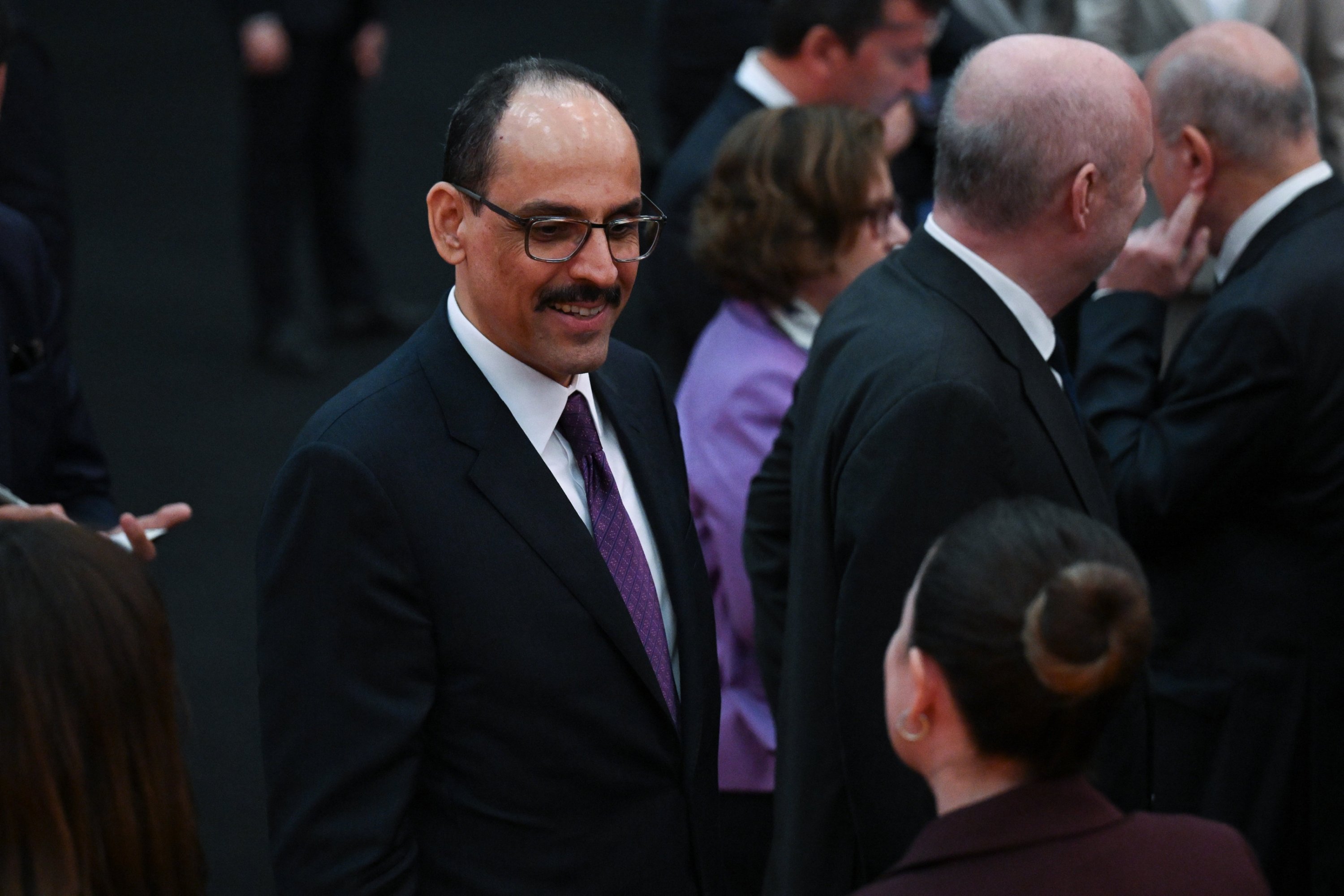
This article is not merely an assessment of the Stratcom speech. For nearly three years, I have been compiling National Intelligence Organization (MIT) chief Ibrahim Kalın’s public speeches, writings and interviews. I have cross-referenced each of them with information obtained from classified sources. Texts from the National Intelligence Academy (MIA), 99th-anniversary writings, STRATCOM sessions and the background of foreign contacts are all on the table.
The resulting picture can be summarized in a single sentence: Turkish intelligence has entered a new phase defined by five main pillars, which form the foundation of this article.
First, MIT is shifting toward preventive intelligence and a structure is being established that intervenes not after an event occurs but before it happens.
Second, cyber homeland, next-generation counterintelligence and artificial intelligence (AI) will be the three pillars of the next five years.
Third, intelligence diplomacy is no longer an option; it is now a direct doctrine. The international literature now refers to this as the “Kalın’s vision.”
Fourth, Turkish intelligence is establishing its own conceptual framework. It is time to take its place on the world stage with its own signature.
Fifth and latest, high-level appointments within the agency signal that both operational sharpness and diplomatic clout will increase simultaneously in the coming period.
Now I will break down these five pillars one by one through Kalın’s writings.
Insight of 20 years
I have been following the intelligence world for 20 years. I served as the director of special intelligence at Sabah Newspaper for exactly 12 years. In the field, both domestically and abroad, I have authored hundreds of intelligence reports. I have written about the behind-the-scenes of state operations. That is why in this article, you will not see a theoretical assessment, but rather the language of the field and the events as they unfolded firsthand.
Let me explain what I mean by “the field.” One of my most striking cases was the Revolutionary Headquarters (DK). Following the Dec. 26, 2011, Sabah headline “MIT dismantled the Headquarters,” we went into the field to uncover the organization’s European branch. It took about two years.
My 10-person special intelligence team and I spread out across Europe. We monitored every critical date on the socialist movement’s calendar, starting with May Day, on the ground in Europe. We calculated every possible scenario one by one. We tracked down the leads of the safe houses one by one. We patiently unraveled a network stretching from Zurich, Switzerland, to the Netherlands and Germany.
On Oct. 16-17, 2013, I made the headlines in Sabah with the titles “And Here Is the Ghost” and “Here Is the Brain of the Revolutionary Headquarters.” Serdar Kaya, the organization’s leader, whose current photo wasn’t even available in Turkish intelligence units, was seen for the first time. The lesson that has stayed with me from that day to this is clear: You understand intelligence not from a desk but from the field.
Who was Serdar Kaya?
You might ask, “Who is this person?” Let me briefly remind you.
Born in 1955, Kaya was an organization leader who emerged from the old leftist movements, fled to Germany following a 1998 arrest warrant issued in absentia and founded the Revolutionary Headquarters. He was both its political leader and its theorist.
The organization’s record was grim: the killing of two police officers, the wounding of 11 police officers and bombing attempts targeting the Selimiye Barracks and the Justice and Development Party (AK Party) Istanbul Provincial Headquarters building.
The attempt to link Police Chief Hanefi Avcı to the case, however, turned out to be a setup orchestrated by the Gülenist Terror Group (FETÖ) – this must be noted separately. Despite being wanted under an Interpol diffusion order, Kaya had been living freely in Germany for years. His base was in Nuremberg, but he also had a highly secret address in Berlin. He was at the head of a European network stretching from Germany to Switzerland and then to the Netherlands.
Organization neutralized
I am not writing these lines merely as a journalistic achievement; they also indirectly led to a security and intelligence success. Immediately following the “And Here Is the Ghost” headline, the Revolutionary Headquarters Armed Terrorist Organization issued a special statement on its official website the day after the story was published. Kaya, in his own words, stated that he understood the message conveyed to him by the intelligence agency affiliated with the Turkish state.
From that day forward, the organization effectively halted its terrorist activities. It has not carried out a single new armed attack in Türkiye since 2013. Even when transformed into a newspaper article, two years of patient field surveillance proved capable of silencing an entire terrorist organization.
The lesson to be drawn from this is clear: Properly conducted field surveillance can sometimes create a stronger preventive defense than the thickest of reports. The reflex that Stratcom Director Kalın referred to today when he said, “We neutralize risks before they turn into threats,” is actually the very foundation on which good intelligence work operates.
Harsh conditions
In the final weeks of the surveillance, we had narrowed the circle significantly. We were in Berlin. The temperature was minus 5 degrees Celsius. We continued the physical surveillance of the organization’s leader for days on end in the freezing streets. At one point, my body could no longer endure it and gave out. I had contracted pneumonia. Returning to Türkiye would mean throwing a two-year operation down the drain. We were just one step away from the target. I could not step away from the operational mission.
First, I went to a German hospital in Berlin. The doctors told me that my lungs had deteriorated severely, that my treatment would take a long time and that I absolutely had to return to Türkiye to complete it there.
I couldn’t go back. But if I didn’t get treatment, I wouldn’t even be able to stand. I was practically caught between two necessities and had to find a third way.
I found an undocumented doctor living in Berlin who had fled Syria. He told me I needed urgent treatment. But the doctor was undocumented and so was the patient. He couldn’t write a prescription. I got the penicillin I needed from a pharmacy using a fake name we made up with the doctor.
Every day, I went to that doctor’s place to get my injections in secret. In the field, I was both an illegal patient and an undercover agent. I didn’t step away from my mission for a single moment. Finally, after two years, we tracked down Kaya in Berlin and documented every single cell network of the organization.
Face to face with death
Another scene from the same operation unfolded in Nuremberg. To track the DK safe house, we discreetly placed my teammate in the trunk of a vehicle we were using for surveillance. We’d cut a small hole in the trunk. He would use it to monitor the safe house. I opened the hood and disconnected a cable. The goal was to make it look like a broken-down car stranded on the road. I turned on the hazard lights and pretended to go look for a mechanic. With the windows closed, I locked the doors, drove a lap on the main street, and then took my position at the pre-designated spot across the street for the reconnaissance operation.
That day, the weather turned out to be hotter than we’d expected. The surveillance and waiting dragged on. I sent a message to my journalist friend; no reply. I sent another; still nothing. I called; no answer. A bad feeling came over me. I rushed to the car. When I opened the door, my friend had fainted from lack of oxygen in the trunk and was on the verge of death. I pulled him out immediately and made sure he got some air. Thinking back on it later, I shuddered: If I had been just a few minutes later, he would have suffocated to death. We saved his life by the skin of his teeth.
I’m sharing this anecdote not as a tale of heroism but to highlight a reality experienced in the field. Turkish intelligence was once practically the backyard of foreign services. Today, that structure has been completely dismantled. Because the following doctrine has now been officially accepted: You must build your own intelligence agency; otherwise, you cannot survive in the field. During Director Ibrahim Kalın’s three-year tenure, MIT’s overseas field capabilities have continued to grow exponentially.
What Kalın said
When Kalın took the stage on March 28 for the Stratcom 2026 Summit, the following phrase was displayed behind him: “A Break in the International System: Crises, Narratives and the Search for Order.”
The room was filled with diplomats, intelligence officers and academics. I tried to interpret Kalın’s statements through an intelligence-driven lens, analyzing which side they were aimed at and what message they conveyed. I took notes. I highlighted key points. I re-read Mr. Kalın’s remarks again and again.
What I’ve learned from 20 years of experience is this: What an intelligence chief says is just as important as what he doesn’t say. Kalın’s Stratcom speech was exactly such a text. This was not an assessment but a clear road map.
Looking at it through the eyes of an intelligence analyst, I saw that this speech had seven layers. Now I am unpacking each layer one by one.
1st layer: Quality of information
Kalın stated that they are moving forward with a qualitative rather than quantitative analysis of the intelligence gathered. He explained that they are transforming big data into strategic intelligence.
As soon as I heard this sentence, I wrote the following in my notebook: “The classic MIT is over.”
In the past, the success criterion was singular: “How much information are you gathering?”
Now the issue has changed. The structure Kalın described is an analytical machine capable of processing, interpreting and translating data into state intelligence. It is not an organization with reports that run for pages, but one with intelligent reports. This statement is not a simple expression, it was the declaration of a cultural shift within the organization that would unfold over many years.
Atasagun era
To grasp the scale of this transformation, we need to look back a bit. The greatest vulnerability during Şenkal Atasagun’s tenure as MIT director was this: The state’s official intelligence archive remained open to unverified information. The defense line was weak. “Ergenekon tip-off CDs” sent via mail from outside were unfortunately placed in the official MIT archive as if they were genuine without verifying the source, questioning their authenticity or conducting cross-checks.
This is one of the gravest scandals in the history of intelligence. An agency’s archive is the state’s most secure memory. Every document entered there carries the weight of an official record. Placing an unverified CD there amounts to making a lie part of the state’s official record.
You can only truly grasp how critical a turning point the emphasis on “preemptive intelligence” and “qualitative analysis” during the Kalın era represented by recalling what that period was like. The transition from a period when the MIT simply archived every piece of information as it came in, to today’s structure – which questions that information, cross-verifies it, subjects it to qualitative analysis, and only then records it – is not a simple “reform.” This is a transformation that is rebuilding the state’s memory.
Baransu era
To grasp the magnitude of this transformation, one more reminder is necessary. Recall the legislative process aimed at granting MIT access to the databases of official state institutions, particularly Turkish Airlines. During those days, dozens of articles and columns critical of MIT were published in the Taraf newspaper by Mehmet Baransu, a FETÖ-affiliated journalist who remains in detention to this day. Headlines like “MIT is watching us” and “Why does MIT want access to Turkish Airlines’ data?” were thrown around one after another.
There was a very clear plan behind the scenes. A global mindset that could not tolerate the state even accessing the databases of its own official institutions wanted to deprive Turkish intelligence of its own country’s data.
The goal was simple: prevent the MIT from growing stronger. Because a strong Turkish intelligence agency would have narrowed that global mind’s operational space in Türkiye.
Baransu’s series of articles from that period serves as clear evidence of FETÖ’s plan to deprive the state of its own intelligence capabilities.
Today, the situation has reversed. MIT has transformed into an institution that comprehensively analyzes the data architecture of a nation of 80 million, one that produces preventive intelligence and counter-espionage. Those who once could not even tolerate the MIT accessing official institutional data are now forced to watch the MIT’s AI-integrated data analysis architecture. That external intelligence has now been dismantled. This is one of the greatest silent victories in the history of Turkish intelligence.
2nd: Preventive intelligence
Kalın stated that the agency operates based on a preventive intelligence approach.
Only those who have been following this field for years can grasp the weight of this statement. It marks a fundamental shift in the agency’s historical doctrine. For years, the MIT was an organization that stepped in after an incident occurred. An attack would happen, and analysis would begin. A spy would be captured, and a network would be dismantled. The sentence Kalın constructed, however, says the exact opposite: an organization that prevents incidents before they occur. I had noticed the first stirrings of this transformation during the final two years of Fidan’s tenure. Under Kalın, it has now become official doctrine.
I am intimately familiar with this preventive logic, because the same method applies in journalism. Gather field intelligence, verify it, analyze it and write the next day’s headline in advance. In the past, MIT often recorded the information it received as archival data. Today, however, it evaluates field intelligence based on potential scenarios that have not yet occurred. It prepares a solution before the threat materializes. I now see that this logic has become MIT’s institutional doctrine.
3rd: Agent networks
Kalın stated that the agent networks established against our country in recent years have begun to be dismantled one by one. He listed the new methods of espionage: front companies, organized crime gangs and private detectives.
Here’s the signal I picked up: The MIT has moved beyond the traditional understanding of counter-espionage. I’ve been writing about this for years. Iranian operations, Mossad agent networks and Russian channels were always monitored in Türkiye using classic methods.
Over the past seven years, the methods have changed fundamentally. The spy you’re facing is no longer a man in a suit. It could be an accountant, a private investigator or a member of an organized crime syndicate. With this statement, Kalın is saying: “We are now a new organization capable of catching them.”
4th layer: Cyber homeland
Kalın emphasized that national defense is not limited to physical borders. He particularly highlighted the concept of “cyber homeland.”
I have closely tracked the introduction of this concept into Turkish intelligence literature.
In the final years of the Fidan era, the influence of the Cyber Security Directorate had grown significantly.
Kalın, however, transformed this structure into a doctrinal concept. Now, it is not just land, sea and air; servers, data centers, telecommunications infrastructure and even a citizen’s cell phone are part of the homeland. Kalın’s articulation of this concept is the clearest message that Türkiye has shifted from defense to initiative in the cyber domain.
5th: From Fidan to Kalın
At this point, we must pause to make an important observation. To understand what Kalın is saying, one must know the legacy he inherited from Fidan. The mathematical key to that legacy is a document written in 1999.
Any journalist seeking to understand how Fidan transformed the MIT must read the 86-page master’s thesis written by Hakan Fidan – then a 31-year-old non-commissioned officer – in May 1999 at Bilkent University under the supervision of his thesis advisor, Dr. Mustafa Kibaroğlu. The thesis is titled: “Intelligence and Foreign Policy: A Comparison of British, American and Turkish Intelligence Systems.”
I personally went to Bilkent in December 2012 to read this thesis. At that time, Fidan had been serving as director of MIT since May 27, 2010. Following the attempted arrest in the context of the “MIT plot” on Feb. 7, 2012, he had begun to be referred to as the “treasure trove of secrets” by then-Prime Minister Erdoğan himself. I was one of the first journalists in Türkiye to read this thesis. Together with my esteemed journalist colleague Ferhat Ünlü, we analyzed the thesis line by line. Ünlü’s Sabah articles titled “The New State’s Treasure Trove of Secrets” and “The State’s Treasure Trove of Secrets: Hakan Fidan” were published in January 2013, approximately one month after our visit to Bilkent.
When we got our hands on the thesis, we realized this: What we had before us was not just an ordinary textbook written by a 31-year-old lieutenant. What we held was the road map of Turkish intelligence. The thesis was woven into three intertwined layers. The first compared the three schools of world intelligence history: British, American and Soviet. The second analyzed which of these three the Turkish intelligence community aligned with. The third, however, contained something far more valuable: concrete proposals regarding the direction Turkish intelligence should evolve toward.
What truly excited us was the third layer. Because Fidan wasn’t just making a diagnosis, he was also prescribing a remedy. His prescription was very clear and equally bold: Turkish intelligence must shed the remnants of the Soviet school, align with the Anglo-Saxon model, strengthen foreign intelligence, and eventually structure domestic and foreign intelligence as two separate agencies.
But at this very point, Fidan issued a very sharp warning regarding Türkiye’s unique conditions: In this country, external security always has an internal dimension as well. Therefore, abruptly and completely separating the two was risky. He proposed a smart solution for the transition period: separate units responsible for domestic and foreign intelligence should be established within the MIT.
This single sentence is the mathematical key to the structure Fidan later implemented at MIT. Today, the framework between the “Foreign Operations Directorate” within MIT and the “Security Intelligence” structure inside the country is the living embodiment of the model outlined in that thesis.
As we left Bilkent that day, Ferhat and I said to each other: The man who wrote this thesis had officially laid out on paper how he would transform MIT, and when he took the seat of MIT Undersecretary 11 years later, he had already announced long in advance what he would do.
“Good intelligence does not always guarantee good foreign policy. But bad intelligence leads to wrong policy.”
Fidan’s 1999 thesis
This single sentence actually summarizes the 13-year doctrine of the Fidan era. The foundation of what we witnessed during Kalın’s tenure also lies here. The MIT Directorate of Foreign Operations experienced a historic leap across a wide range of areas, from cross-border operations to international intelligence contacts and from the fight against FETÖ to the PKK/YPG front. Fidan was silent; we hardly ever heard his voice. But his mark was everywhere on the ground.
Kalın, however, adds a diplomatic layer on top of this massive operational power. The MIT now speaks not only on the ground but also at the negotiating table. The organization, whose voice was not heard during Fidan’s tenure, has become visible at the table under Kalın. This is not a sign of weakness. On the contrary, it is the trail of a new strategy. Fidan laid the groundwork and Kalın built a bridge from that ground to the table.
Recent high-level appointments also signal that the agency will grow even stronger in the coming period and develop a more operational reflex in the field. Based on 20 years of observation, I can predict the following: In the coming period, MIT will be one of the rare intelligence services to simultaneously enhance both its operational sharpness and its diplomatic clout.
I would like to draw a comparison based on my firsthand experience in foreign intelligence matters. In foreign files like those of Serdar Kaya, I used to encounter the following situation: MIT personnel stationed at foreign missions, and I must say this reluctantly, were hesitant to even step outside the consulate.
There were, unfortunately, no intelligence officers on the ground, no one moving around, making contacts, recruiting agents or tracking safe houses. There was a historical weakness in the organization’s reflexes regarding overseas operations.
Today, however, the picture has changed completely. The multilayered covert structures established under the Directorate of Foreign Operations (DOB) reached their peak operational capacity during Kalın’s tenure.
Now, the MIT is on the ground. There is a Turkish intelligence agency that is visible, makes contact, takes risks and conducts operations. I say this not just in words, but as a journalist-turned-intelligence officer who once walked alone in those very fields.
Conversation on the plane
At this point, I’d like to share an anecdote I’ve never been able to forget. During my one-day visit to Berlin, Germany, on Nov. 17, 2023, as our plane was flying over European skies, I was telling President Recep Tayyip Erdoğan about the reports I had been covering at the time. My reports on the European networks of FETÖ, the PKK and other terrorist organizations, including my field investigations that went as far as tracking down the addresses of their cells, had caught the president’s attention. Kalın had taken over as head of the MIT just five months prior and had only recently assumed the role.
At that moment, our president turned to me and said, “Abdurrahman, you are a skilled investigative journalist who understands the intelligence world well.”
With Kalın standing beside him, I thanked him. For a journalist, the significance of such an assessment coming from the very top of the government is indescribable.
Immediately afterward, our president turned to MIT Director Kalın, and said, “Ibrahim, Abdurrahman is tracking down these Fethullahists all over the world, filming them and identifying their addresses. You, too, must capture them and bring them back to the country.”
Kalın turned and replied: “Understood, sir. We will intensify our efforts in this regard.”
This brief exchange I witnessed on the plane was, in fact, one of the first directives issued during Kalın’s tenure as MIT director regarding FETÖ. The fact that our president set a target for a newly appointed MIT director, Kalın’s immediate acceptance of this target was amplified by his pledge to “intensify our efforts.” The operations that saw FETÖ fugitives, even if not from Europe, captured one by one from all corners of the world and brought back to Türkiye over the next two years, point to this resolve. Despite a wide lack of cooperation from European circles, MIT went on to conduct dozens of successful overseas operations. Being a firsthand witness to one of the moments when the spark of this transformation was ignited is a source of particular pride for me.
6th: Intelligence diplomacy
Kalın explained that intelligence has moved beyond being merely a structure that gathers information; it has transformed into a tool that manages crises and acts as a mediator.
I’ve been writing this sentence for months, Kalın officially announced it at Stratcom. Istanbul has now become a safe haven for covert intelligence diplomacy. Even rival intelligence services in the field are sitting at the tables Türkiye has set up. This approach, now referred to as the “Kalın Vision” in international circles, has become the signature of Turkish intelligence opening up to the world.
Ankara spy exchange
If I were to name the moment when Kalın’s intelligence diplomacy truly reached its peak, I would point without hesitation to the historic spy exchange carried out in Ankara on Aug. 1, 2024. On that day, the agency orchestrated the largest exchange operation of the post-Cold War era. A total of 26 individuals held in prisons across seven countries were exchanged simultaneously in Ankara. From the very beginning of the negotiation process to its final moments, all security measures, logistical planning and communication coordination for the exchange were directly managed by the MIT. This was an operation conducted directly under MIT’s organization and based on a foundation of trust.
At the center of the exchange were the world’s three most powerful intelligence services. The Central Intelligence Agency (CIA) on behalf of the U.S., the Foreign Intelligence Service of the Russian Federation (SVR RF) and the Federal Security Service of the Russian Federation (FSB) on behalf of Russia, and the Federal Intelligence Service (BND) on behalf of Germany were on the scene. These three agencies are rival organizations that have been conducting fierce operations against one another in the field for years.
But on that day in Ankara, thanks to the coordination framework established by Türkiye, they parked their planes on the same runway and, with MIT’s approval, took custody of the hostages and transported them back to their respective countries. Poland, Slovenia, Norway and Belarus were the other four countries involved in the exchange.
The scale of the operation was almost unimaginable. A total of seven planes – two from the U.S. and one each from Germany, Poland, Slovenia, Norway and Russia – landed simultaneously at Esenboğa airport. Ten people, including two children, were handed over to Russia, 13 to Germany, and three to the U.S. The process of removing the hostages from the aircraft, transporting them to secure areas, conducting health checks, taking fingerprints, verifying identities and boarding them onto the aircraft bound for their respective countries, every step was carried out under the supervision of MIT personnel and in accordance with MIT’s instructions. Even the takeoff of the aircraft occurred with MIT’s approval.
To grasp the international significance of this event, consider the following scene: U.S. President Joe Biden and Vice President Kamala Harris watched live from the White House as the hostages were handed over to them. Russian President Vladimir Putin personally went to Moscow’s Vnukovo Airport to greet the exchanged Russians on the red carpet. German Chancellor Olaf Scholz greeted the return flight in Cologne. The fact that the world’s three most powerful leaders took the stage on the same day, during the final phase of the same operation, signified one thing: The process was managed by a single country and that country was Türkiye.
This foundation of trust was not built in a single day. Kalın personally oversaw months of behind-the-scenes contacts, quiet visits to various capitals and the management of both direct and indirect channels. In July 2024, the parties were brought together in Türkiye; the mediation process from start to finish was undertaken by the MIT. Every aspect of this exchange bears Ankara’s signature; the name behind that signature is Kalın.
As a journalist who has been following the international intelligence world for 20 years, I can confidently say: There are very few intelligence services in the world capable of coordinating the CIA and the SVR to operate at the same airport, at the same minute, with the same level of coordination. The MIT achieved this not merely because of its capacity, but because both sides placed full trust in Türkiye’s role as a mediator. This is precisely what intelligence diplomacy is all about. What the military cannot resolve and what the diplomat cannot reach, an intelligence service resolves. The doctrine we call the “Kalın Vision” materialized into a concrete event on the runway at Esenboğa on Aug. 1, 2024.
The prestige this operation brought to T opened the door to subsequent prisoner exchanges between Ukraine and Russia, cease-fire negotiations in Gaza, mediation between Pakistan and Afghanistan, and the current diplomatic traffic between Dolmabahçe and Antalya. The pinnacle of intelligence diplomacy was reached in August 2024; today’s harvest season is a direct legacy of that peak.
7th: Knowing what is yours
“What you don’t name is not yours,” was the most philosophical statement in Kalın’s speech. He said we cannot tell our own story using others’ words; he emphasized that we must establish our own concepts and our own language.
This sentence speaks volumes. When intelligence is mentioned worldwide, people always think of the British school, the American school or the Russian school.
Kalın, however, says, “Now there is a Turkish school too,” and not with concepts imported from the West, but with our own words. That is why the National Intelligence Academy (NIA) was established. It will not train a new generation of intelligence officers, but a new generation of thinkers.
At the Bebek Hotel
At this point, I’d like to share a very special memory. Years ago, I met with Sönmez Köksal, one of the first civilian undersecretaries of MIT, at the Bebek Hotel in Istanbul. Köksal spoke very frankly to me: “Abdurrahman, it’s very difficult for Turkish intelligence to reach the level of British MI6. We won’t produce a James Bond from our own ranks,” he said.
At that time, Emre Taner was at the helm of MIT. Köksal saw no chance of Turkish intelligence making it to the world stage. Not long after those words were spoken, I wrote about Hakan Fidan’s rise from deputy undersecretary to the undersecretary. Throughout Fidan’s 13-year tenure, that sentence from the Bebek Hotel kept coming to mind. Because MIT did not remain where Köksal had predicted, it rose a little higher each year.
Today, under Kalın’s leadership, the issue is no longer even about resembling others. In his Stratcom speech, Kalın clearly states: “We will forge our own vocabulary.” Turkish intelligence no longer aims to mimic others; it is establishing its own school of thought.
I can say this: For an intelligence service to establish its own conceptual framework is the first condition for entering the world league. Kalın has clearly declared this condition. In the years since that conversation at the Bebek Hotel, I’ve seen this: If you believe, you will succeed. The MIT believed, and succeeded. Now, alongside Kalın, it is naming its own school of thought.
Human, machine, AI
Kalın explained that MIT blends human intelligence, technical intelligence, and information gathered from open sources (OSINT) with artificial intelligence.
The secret lies precisely here. The world is spinning very fast. Hypersonic missiles operate in a matter of seconds. Satellites see everything. Artificial intelligence can make decisions on its own. To survive in this rapidly evolving world, it is essential to enhance the reflexes of the traditional intelligence officer. The MIT described by Kalın is a structure that combines human experience with the speed of machines and the processing power of artificial intelligence. I believe this integration will make Türkiye a game-changer in the coming decade.
I also highlighted this point in an article in Sabah: Behind a hypersonic missile capable of reaching speeds of Mach 15 or higher, there is inevitably a pioneering intelligence network spanning decades. The ability of such systems to have a multiplier effect on physics and mathematical engineering is only possible with the involvement of advanced intelligence.
China and Russia have long grasped this reality. Today, Chinese intelligence ranks among the world’s most effective users of technology espionage; it directly converts the technological information it gathers into state power. Wars are no longer won on the battlefield but through data obtained in advance. The model established by Kalın directly addresses this reality.
Türkiye setting agenda
“Türkiye is no longer merely a country that meets its own needs in the defense industry. It has transformed into an actor that sets the agenda and determines the balance both on the battlefield and at the negotiating table. This transformation will continue to be supported by strong political will and determination.”
Toward the end of the Stratcom 2026 Summit, Kalın’s sentence summed it all up for me. Aselsan sees the battlefield. Rokesan strikes. Havelsan manages. Turkish Aerospace Industries (TAI) provides depth. But the entity that identifies the target for this massive capability is MIT. Kalın established this coordination. Now, the target is determined by intelligence, and the strike is carried out by the defense industry. This is the security architecture of the new Türkiye.
I had also discussed this formula in detail in my article titled “Intelligence Wars and the Information Age” dated March 29, 2026. Türkiye has become a game-changer in unmanned aerial vehicles (UAVs) and unmanned combat aerial vehicles (UCAVs). Now it’s time to complete this success with intelligence, data and technology. A Türkiye that achieves this will not only be strong; it will also rewrite the rules of war.
Harvest has begun
As I listened to Kalın’s Stratcom speech in the hall, I thought to myself: This man isn’t making a routine assessment; he’s mapping out a road map. In my February 2025 article titled “MIT Everywhere in the World,” I had already signaled the arrival of this transformation. After attending the international conference hosted by the MIA for three days in October 2025, I said, “Istanbul is now the safe haven of intelligence diplomacy.”
Today, these words are not merely a wish on paper; they are finding their place on the ground, at the negotiating table, and behind the scenes. MIT is no longer an institution that merely gathers information but one that generates it. It no longer merely follows events but anticipates them. It is an institution that holds sway not only within the country but across the globe. With the recent appointments, I foresee this power growing significantly in the coming period.
This approach, known as the “Kalın Vision” and the “Istanbul Model,” can now be summarized in a single word: the “Turkish School.”
As a journalist who has been following this field for 20 years, let me conclude with this: A new era has already begun within the agency. This period will be the most productive decade for Turkish intelligence. The rule of the new order of warfare is clear: It is not the one with the money who wins, but the one who controls the information. Türkiye, meanwhile, is now moving forward with determined steps on the path to controlling information.
DAILYSABAH
هلدینگ کاسپین استانبول | خرید ملک در ترکیه | صرافی معتبر ایرانی در ترکیه | خرید و فروش طلا در ترکیه | مهاجرت به ترکیه | واردات و صادرات در ترکیه | نیازمندیهای ترکیه | اخبار ترکیه | اخبار جهانی | توریست ایران | خدمات توریستی در ایران | تورهای گردشگری ایران | هلدینگ اول | خدمات کاریابی و فریلنسری و شغل | مرجع اطلاعات ایران (همه چیز در ایران) | کیف پول و خدمات مالی و پرداخت یار | اخبار ایران | تابلو زنده قیمت ارز در ترکیه و استانبول | صرافی آنلاین ترکیه | قیمت طلا و نقره در ترکیه | سرمایه گذاری در ترکیه | جواهرات در ترکیه | نرخ لحظه ای ارزها در استانبول | قیمت دلار امروز در ترکیه | قیمت دلار استانبول امروز | قیمت لحظه ای دلار | اخبار روز ترکیه استانبول | اپلیکیشن ISTEX | اپلیکیشن قیمت لحظه ای دلار و یورو و لیر و ارزها در ترکیه
About the Author