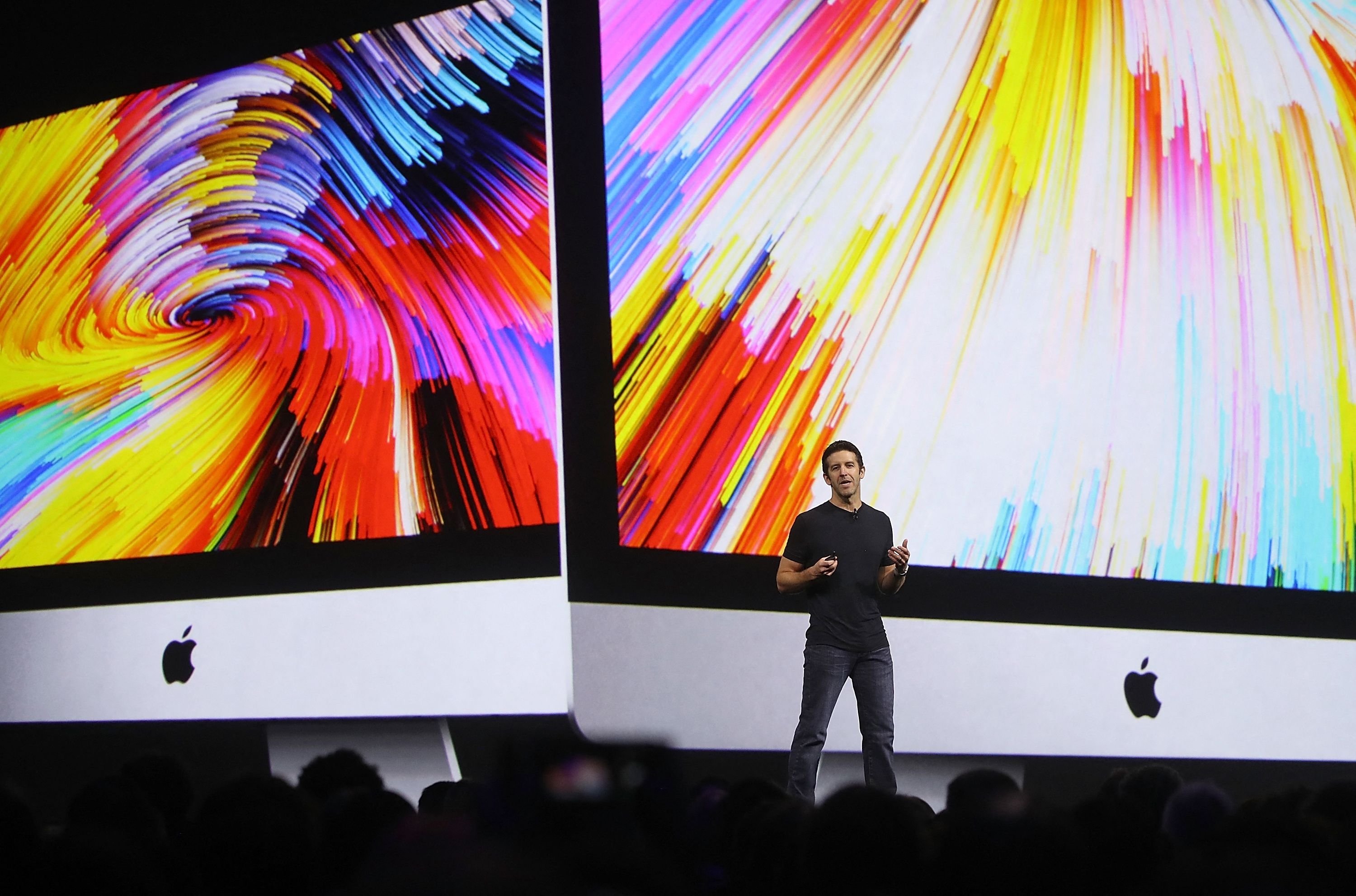
“Don’t ask what I would do,” Steve Jobs once told Tim Cook. “Just do the right thing.”
Years later, Cook offered similar advice to John Ternus: focus on the right path forward rather than trying to retrace a predecessor’s footsteps.
That line defines Apple’s succession model better than any org chart ever could. We are watching an engineer step into the shoes of an operations guy.
Jobs was a product visionary who bent reality to ship things the world didn’t yet know it wanted. Cook mastered the complex machinery of global operations. When Cook took over, critics never fully accepted that shift. In 2012, TheStreet published a piece declaring that Jobs would fire Cook if he were still alive. By early 2013, as Apple’s stock plunged below $400 a share on a pre-split basis, “Tim Cook Must Go” campaigns dominated the headlines. The assumption was always that Apple needed another Jobs. It didn’t. It needed someone who could make Apple scalable, predictable and globally dominant.
Cook did exactly that. Under his leadership, Apple became the first publicly traded U.S. company to reach a $1 trillion market capitalization in 2018, and then the first to cross $3 trillion. He built the services business, Apple Pay, Apple Music, Apple TV+, into a recurring-revenue engine that now generates more annually than most Fortune 500 companies earn in total.
But that playbook is starting to show limits.
Falling to fifth place in China wasn’t just a market fluctuation; it showed how quickly competitors can close the gap. Xiaomi has even pulled off what Apple studied for a decade before abandoning: successfully building an electric car. Now, government subsidies push consumers toward domestic brands. Regulatory delays kept key Apple Intelligence features out of reach.
Even though Apple rebounded to second place in China on the strength of the iPhone 17, the larger issue remains unresolved. Apple looks slower and more incremental. Siri reflects that gap. So do recent product cycles that feel evolutionary instead of decisive. This is the company John Ternus steps into as the new CEO.
What Ternus will bring
John Ternus represents something different in Apple’s lineage, not a break from Cook or Jobs, but a response to what Apple has become under their combined legacy. He is an engineer by training, but, more importantly, he is an engineer shaped by Apple’s modern constraints. He joined Apple in 2001, spent his early years on the Cinema Display, and rose through the hardware ranks to oversee the iPad, AirPods, the Mac’s transition to Apple silicon, and eventually the iPhone itself. He holds more than 130 patents and is widely described as decisive, collaborative and deeply trusted within Apple’s culture.
He also carries the weight of decisions that didn’t work. Bloomberg has reported that Ternus was a driving force behind the MacBook Pro’s Touch Bar and the butterfly keyboard, two of Apple’s most high-profile hardware missteps of the past decade. Both were eventually killed. That record is not a liability, but it is a signal: Ternus is willing to bet on unconventional ideas, and he is willing to kill them when the evidence turns against him. After years in which Apple’s product strategy has been criticized for excessive caution, that tolerance for risk may be exactly what the company needs.
But that instinct will be tested in an environment far less forgiving than the one that defined most of Cook’s tenure.
Cook largely led Apple during an era of historically low interest rates, when capital was cheap, supply chains were stable and investors rewarded companies that could scale efficiently and return enormous amounts of cash to shareholders. The cost of capital is higher now. Investors are becoming less patient. Expensive product bets carry greater risk, especially in a technology industry increasingly shaped by artificial intelligence (AI) and rapid shifts in consumer behavior. The next Apple CEO will not have the same luxury of compounding returns through operational efficiency alone. Eventually, the market will demand a new growth story.
AI is reshaping the industry around speed, infrastructure spending and rapid iteration. Microsoft, Alphabet, Amazon and Meta are collectively pouring somewhere between $635 billion and $700 billion into capital expenditure in 2026 alone, much of it tied to AI infrastructure.
Yet the defining challenge of a Ternus era will likely not be decided in Cupertino. It will be decided in Beijing and Washington simultaneously.
Innovation next to politics
China is no longer just one of Apple’s largest markets. It is deeply embedded in the company’s operational structure. At one point, roughly 80% of iPhones were manufactured there. Entire layers of Apple’s supply chain, precision assembly, component scaling and advanced manufacturing coordination were optimized inside a system that took decades to build. But that system no longer exists in politically neutral territory.
In 2017, Apple removed VPN apps from the Chinese App Store after Beijing tightened cybersecurity regulations. The company also transferred Chinese users’ iCloud data to servers operated by a state-linked partner inside the country, with encryption keys stored there as well.
Those choices continue to shape how Apple is perceived by regulators, governments and consumers alike. They now form part of the structural reality Ternus inherits, along with the scrutiny that comes with them.
He faces twin challenges: competing in an increasingly fractured consumer market while simultaneously trying to reduce reliance on the country as a supplier. He can’t afford to alienate Beijing politically, but Washington is pressuring Apple to bring manufacturing stateside.
Trade tensions, regulation and supply chain exposure require someone who can manage governments as effectively as products. This is why Cook staying on as the Executive Chairman of Apple changes the equation. Cook has spent 15 years building the kind of high-level government relationships that take decades to develop. In 2025, Cook made headlines for personally donating $1 million to U.S. President Donald Trump’s inaugural committee, a move that drew scrutiny from lawmakers and commentary from across the political spectrum. But that also underscored Cook’s operating philosophy: Apple’s success depends as much on access and alignment as it does on innovation. Whether one reads that donation as pragmatism, self-interest or institutional loyalty, the strategic function is clear. Few executives do that better than Cook does.
And that brings us back to the original line: Don’t try to be Jobs. For Apple, that’s never worked.
DAILYSABAH
هلدینگ کاسپین استانبول | خرید ملک در ترکیه | صرافی معتبر ایرانی در ترکیه | خرید و فروش طلا در ترکیه | مهاجرت به ترکیه | واردات و صادرات در ترکیه | نیازمندیهای ترکیه | اخبار ترکیه | اخبار جهانی | توریست ایران | خدمات توریستی در ایران | تورهای گردشگری ایران | هلدینگ اول | خدمات کاریابی و فریلنسری و شغل | مرجع اطلاعات ایران (همه چیز در ایران) | کیف پول و خدمات مالی و پرداخت یار | اخبار ایران | تابلو زنده قیمت ارز در ترکیه و استانبول | صرافی آنلاین ترکیه | قیمت طلا و نقره در ترکیه | سرمایه گذاری در ترکیه | جواهرات در ترکیه | نرخ لحظه ای ارزها در استانبول | قیمت دلار امروز در ترکیه | قیمت دلار استانبول امروز | قیمت لحظه ای دلار | اخبار روز ترکیه استانبول | اپلیکیشن ISTEX | اپلیکیشن قیمت لحظه ای دلار و یورو و لیر و ارزها در ترکیه
About the Author


