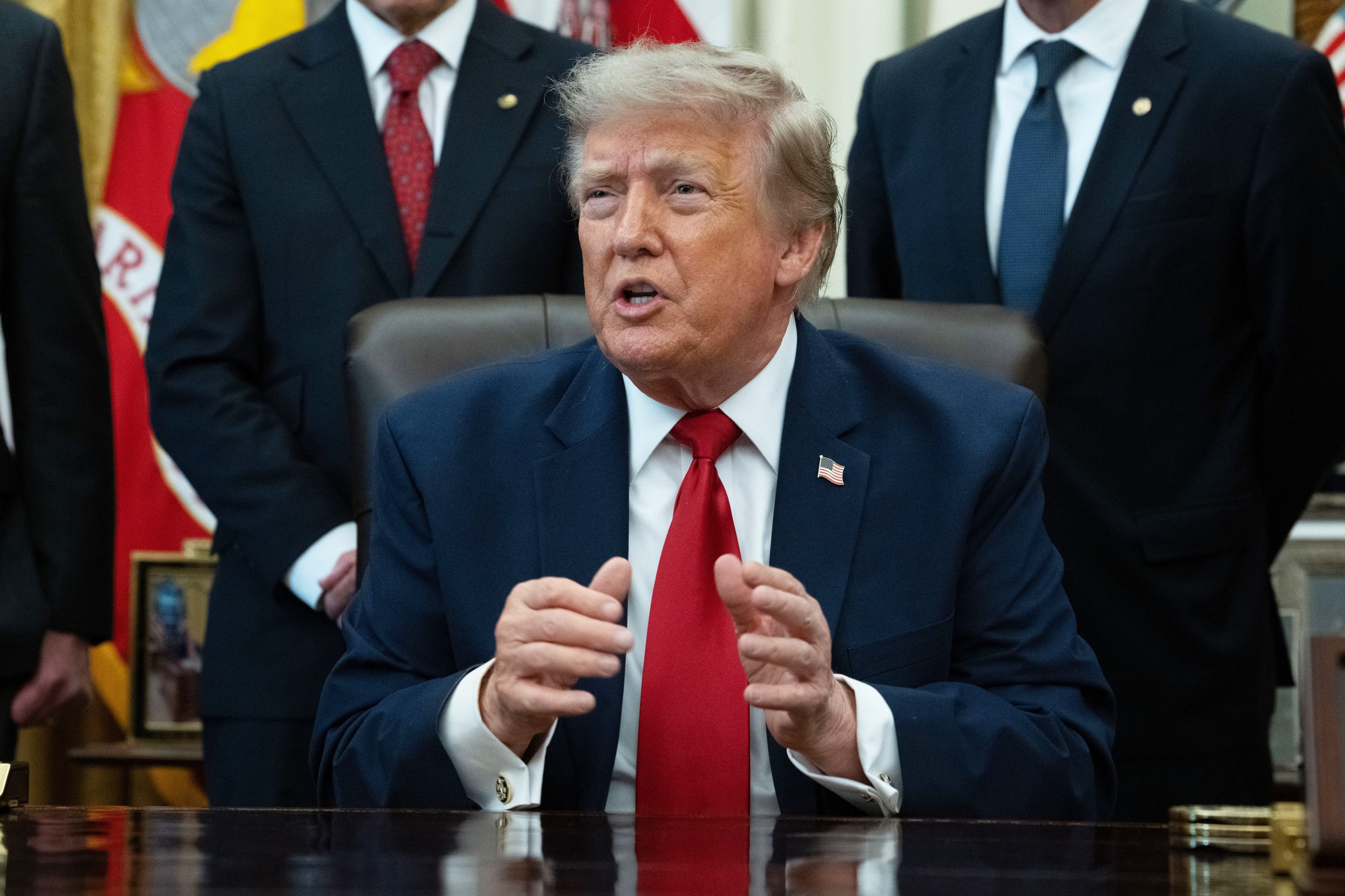
As U.S. President Donald Trump prepares to embark on a visit to China to meet his counterpart Chinese President Xi Jinping this week, the American auto industry and lawmakers on both sides of the aisle are united in a message: Please don’t offer China any access to the U.S. car market.
Trump in January told the Detroit Economic Club that it would be “great” if Chinese automakers wanted to build plants in the U.S. and employ Americans, adding: “I love that. Let China come in, let Japan come in.”
His comments rang alarm bells in an industry that had systematically lobbied successive administrations to bar Chinese cars from the U.S. market with tough data security rules and high tariffs on electric vehicles.
So automakers, suppliers, steelmakers, unions and politicians have redoubled their efforts, arguing that Chinese automakers, with limitless state support, massive scale, an EV technology edge and rock-bottom prices, would crush domestic and other foreign producers, hollowing out the core of the U.S. manufacturing base.
Democratic Senator Elissa Slotkin of Michigan went to the same forum in Detroit on Thursday specifically to urge Trump not to make a deal with Xi to allow Chinese investment in the U.S. auto sector that brings Chinese-brand cars into U.S. dealerships.
‘A bad deal’
“Please don’t make a bad deal,” said Slotkin, who also promoted her bipartisan bill with Republican Senator Bernie Moreno of Ohio that would explicitly bar Chinese vehicles over data collection concerns.
Their Connected Vehicle Security Act, which has a bipartisan companion bill in the House of Representatives, would codify a data rule effectively banning Chinese vehicles implemented by former President Joe Biden, making a reversal extremely difficult.
The House bill would go further, banning industry partnerships with Chinese companies. Congressional aides told Reuters that with broad support, the legislation could pass this year, possibly attached to a transportation spending bill.
“Every vehicle on American roads is a rolling data collection device, capturing information on location, movement, people, and infrastructure in real time, and we cannot allow Chinese vehicles or components to be a part of that system,” sponsoring representatives Debbie Dingell, a Democrat, and John Moolenaar, a Republican, said in a joint statement.
They are both from auto-heavy districts in Michigan. Some 74 House Democrats and 52 House Republicans signed letters recently urging Trump not to allow Chinese automakers to enter the American market.
Industry backs Chinese auto ban
The U.S. auto industry has shown unusual unity in supporting a ban.
Groups representing U.S. and foreign-brand automakers, car dealers and parts manufacturers in March told the administration that China’s efforts to dominate global auto production and gain access to the U.S. market “pose a direct threat to America’s global competitiveness, national security and automotive industrial base.”
Steel industry groups followed through with a similar letter on April 30, and the Information Technology and Innovation Foundation (ITIF), which has criticized Trump’s past tariffs on Chinese imports, also applauded the legislation to ban Chinese vehicles.
“Chinese automakers are not normal market competitors. Their EVs are the product of decades of state-backed mercantilism designed to help China capture global leadership in advanced industries,” said ITIF vice president Stephen Ezell.
“Once China’s subsidized firms are embedded in the U.S. market, the economic and national security damage would be far harder to reverse – and it would not be limited to Detroit,” Ezell added.
U.S. Trade Representative Jamieson Greer said in Detroit in April that there were no plans to change the connected car rule, and that autos were not on the agenda at the Beijing summit.
Commerce Secretary Howard Lutnick also has ruled out Chinese investments in the U.S. autos sector.
But Scott Paul, president of the Alliance for American Manufacturing, a domestic industries group, said there is a strong concern that Trump, who often talks of attracting more auto assembly plants to the U.S., could act alone.
“He’s left wiggle room in dealing with the auto sector,” Paul said.
Any plant approved would take two to three years to launch production, leaving consequences for Trump’s successor.
The White House and the Chinese embassy in Washington did not respond to requests for comment on the matter.
Low prices, market share gains
The industry wants to avoid a repeat of Chinese automakers’ steady market share gains in Europe and Mexico. A growing auto affordability crisis in the U.S., where Kelley Blue Book estimates the average vehicle list price now exceeds $51,000, makes existing producers especially vulnerable to cheaper Chinese models.
Last year, Chinese brands doubled their share of Europe’s car market to 6%, but took 14% of Norway’s market, 9% in Italy, 11% in Britain and 9% in Spain, and consumer interest in Chinese EVs is growing as the Iran war spikes gasoline prices.
Canada is beginning to import 49,000 Chinese EVs annually, and 34 Chinese auto brands are now on sale in Mexico, accounting for about 15% of that market at prices far below anything available in the U.S.
Geely’s EX2 EV starts at about $22,700 in Mexico, more than twice its price in the cut-throat Chinese market, but far below the cheapest Tesla Model 3 U.S. price of $38,630.
Even Toyota, which undercut Detroit automakers in the 1980s and 1990s, is having difficulty with Chinese pricing in the Mexican market, said Toyota Motor North America division manager David Christ.
“Obviously, there’s some level of government support, or else they couldn’t transact at that price,” Christ said in an interview. “So it has a huge impact on business.”
DAILYSABAH
هلدینگ کاسپین استانبول | خرید ملک در ترکیه | صرافی معتبر ایرانی در ترکیه | خرید و فروش طلا در ترکیه | مهاجرت به ترکیه | واردات و صادرات در ترکیه | نیازمندیهای ترکیه | اخبار ترکیه | اخبار جهانی | توریست ایران | خدمات توریستی در ایران | تورهای گردشگری ایران | هلدینگ اول | خدمات کاریابی و فریلنسری و شغل | مرجع اطلاعات ایران (همه چیز در ایران) | کیف پول و خدمات مالی و پرداخت یار | اخبار ایران | تابلو زنده قیمت ارز در ترکیه و استانبول | صرافی آنلاین ترکیه | قیمت طلا و نقره در ترکیه | سرمایه گذاری در ترکیه | جواهرات در ترکیه | نرخ لحظه ای ارزها در استانبول | قیمت دلار امروز در ترکیه | قیمت دلار استانبول امروز | قیمت لحظه ای دلار | اخبار روز ترکیه استانبول | اپلیکیشن ISTEX | اپلیکیشن قیمت لحظه ای دلار و یورو و لیر و ارزها در ترکیه
About the Author