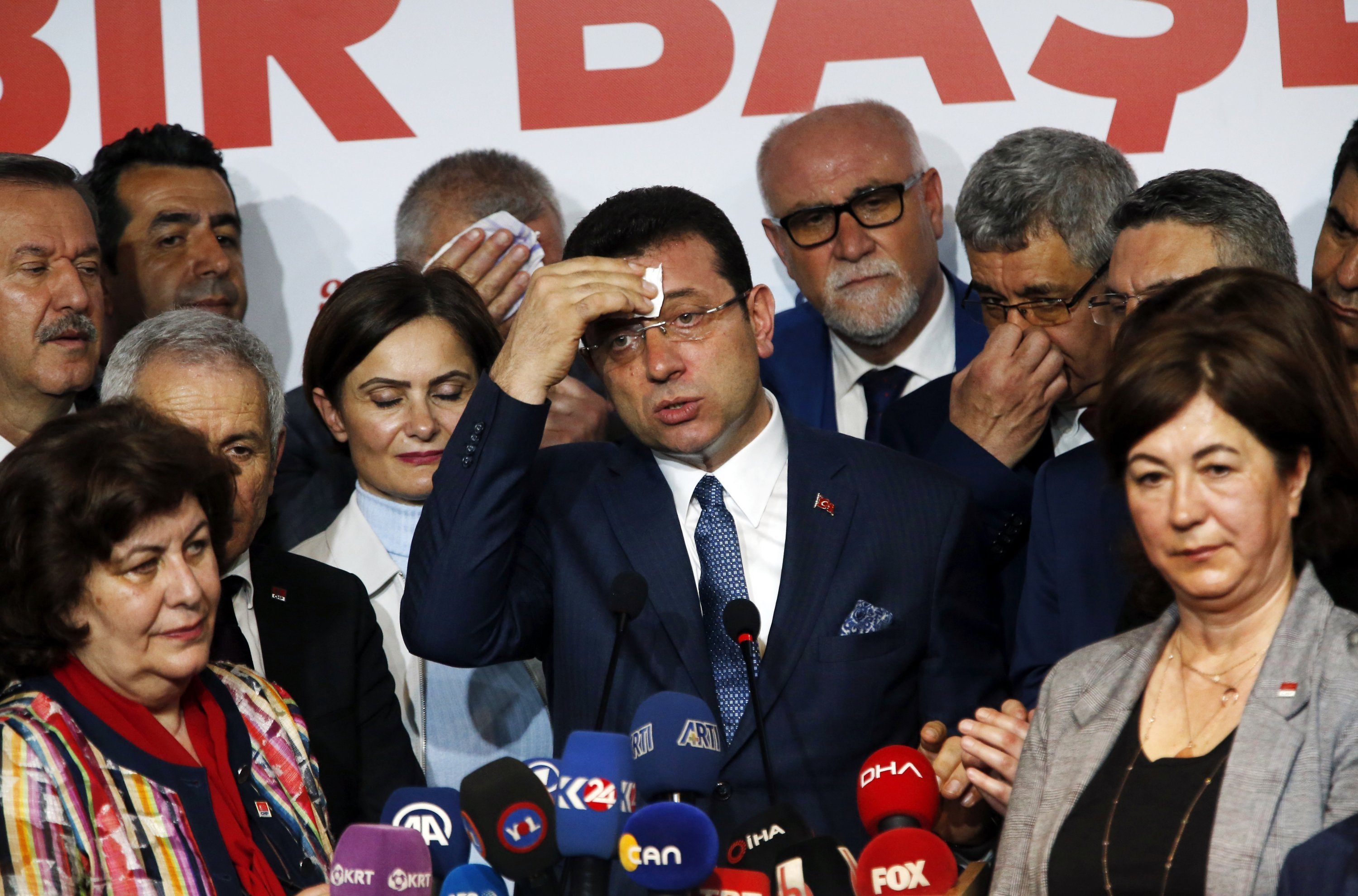
Two new reports have laid bare how Istanbul, one of the world’s largest metropolises, has been left reeling by the seven-year rule of former CHP Mayor Ekrem Imamoğlu, who is facing major corruption charges.
The recently released IBB Activity Report and the 2025 Audit Commission Report have sparked discontent and controversy after exposing major shortcomings in the city’s transportation and public services during Imamoğlu’s seven-year rule.
The report has brought the spotlight back on the corruption investigation, completed on Nov. 11, 2025, with a 3,809-page indictment that identifies Imamoğlu as the alleged “leader of a criminal organization.”
The former mayor stands accused of multiple offenses, including bribery, laundering criminal proceeds, fraud against public institutions and organizations, recording personal data, illegally obtaining and disseminating personal data, concealing criminal evidence, obstructing communications, damaging public property, receiving bribes, publicly spreading misleading information, extortion, laundering assets derived from crime, and rigging tenders.
Prosecutors are seeking a prison sentence ranging from 828 years and two months to 2,352 years for Imamoğlu over 142 alleged acts. The first hearing was held on Monday, March 9.
Transportation collapse
The 2025 audit report on the CHP-led Istanbul Metropolitan Municipality (IBB)’s public transportation authority has revealed mounting operational failures and deepening financial issues at the city’s bus operator, fueling criticism from AK Party members of the city council who accuse the IBB administration of mismanagement and waste.
The report by the IBB Audit Commission found that buses operated by public transport authority IETT suffered 65,527 breakdowns during 2025, averaging around 180 vehicles being taken out of service each day. The disruptions contributed to route cancellations, overcrowded bus stops and growing complaints over maintenance failures in Türkiye’s largest city.
According to the report, more than 402,000 complaints and over 162,000 service requests were filed regarding IETT operations in 2025 alone. Most complaints focused on canceled services, delays and poor vehicle maintenance.
The report also highlighted the agency’s deteriorating financial position. IETT’s debt reportedly climbed to TL 34.69 billion (about $761 million), exceeding the legal borrowing limit by 110%. This raises concerns over the sustainability of Istanbul’s transportation network.
The findings also intensified criticism from members of the People’s Alliance during discussions at the IBB Council over IETT’s 2025 activity report. Council members from the ruling Justice and Development Party (AK Party), the Nationalist Movement Party (MHP) and the Great Unity Party (BBP) accused the CHP-run municipality of driving the institution into financial crisis while failing to deliver promised infrastructure investments.
Ahmet Cin, the mayor of Istanbul’s Pendik district, accused the municipality’s CHP administration of pushing the city into “a cycle of debt, corruption and collapse.”
Speaking during budget discussions last November, Cin alleged that the municipality had turned the administration into “a political financing apparatus.”
Cin said IBB’s overall debt burden had reached the equivalent of $6.1 billion and criticized delays in metro construction projects.
He also pointed to inconsistencies in completion timelines for the M10 Pendik-Fevzi Çakmak metro, saying city officials had previously promised the line would open in 2026 before revising the date to 2027.
“It is unacceptable that a metro line tendered again in 2022 has still not been completed after six years,” Cin said, arguing that repeated delays were particularly damaging given the district’s dense population.
He also rejected claims by CHP officials that the central government had restricted funding for the municipality. He said budget data showed the municipality had received more central government funding than expected and claimed the share of government transfers in IBB revenues had risen from 72% in 2019 to 91% today.
The council members also criticized what they described as declining infrastructure investment despite worsening traffic congestion across Istanbul. Cin added that annual asphalt paving had dropped sharply, while traffic congestion rates had exceeded 80% citywide.
During council debates, AK Party council member Eyüp Uyanık said IETT’s debt had surged from TL 725 million in 2019 to nearly TL 33 billion in 2025.
“This is a clear sign of financial bankruptcy,” Uyanık said.
MHP council member, Şule Hayal, said many of IETT’s strategic targets had failed to materialize. She said the agency had not purchased any of the 555 buses planned for 2025, failed to build any of the 300 new enclosed bus stops included in its targets and made no progress on a planned electric bus conversion program.
Urban renewal disappointment
Key motions regarding urban transformation projects and disaster preparedness were approved at the IBB Council. According to motions submitted by members of the AK Party, urgent measures are needed to address the urban transformation process from a social justice perspective and to make Istanbul more earthquake resilient.
During the council meetings in January, one of the members continued by asking, “Despite the CHP mayor of Istanbul pledging during the elections to transform 100,000 housing units within five years, why has not even one-tenth of that target been achieved after seven years? Are you planning to complete the remaining target within the next three years?”
She reminded that research into the activities of IBB’s real estate subsidy, KIPTAŞ, and the IBB’s Urban Transformation Directorate shows that between 2019 and 2025, only over 7,000 housing units were transformed.
Moreover, sharing striking data on Istanbul’s building stock, Acting Mayor Nuri Aslan said that most of the city’s nearly 800,000 buildings were constructed before 1999 and that around 200,000 face a high risk of severe damage in a major earthquake.
Aslan said that more than 130,000 buildings have been inspected since 2020, adding that half of the inspected structures fall into the high-risk category. He noted that the “Istanbul Renews” project aims to transform 50,000 risky buildings.
However, in a post shared on X in December 2025, KIPTAŞ said: “In six years, we transformed risky structures across Istanbul and delivered them to rightful owners. We introduced a concrete and transparent solution for urban transformation by establishing the Istanbul Renews system. Within the scope of urban transformation, we laid the foundations for 5,734 independent units in 26 projects. We completed 18 projects and one urban transformation phase, delivering 7,670 independent units to rightful owners.”
The company added, “We remain committed to working and producing decisively for an earthquake-resistant and safe Istanbul.”
Former Mayor İmamoğlu, meanwhile, rejected claims related to his earlier urban transformation pledges during remarks on Feb. 7, 2024.
Although his Oct. 14, 2019 “Earthquake Mobilization Plan” had included a “Program for Intervention in Structures Expected to Sustain Damage,” promising the strengthening and renewal of 20,000 buildings annually and 100,000 buildings within five years in an event, Imamoğlu later said, “There was no such thing in our 2019 promises,” openly denying the pledge.
Rising costs, debts, waste
Promises made by the jailed mayor regarding cheaper utilities and lower living costs for Istanbul residents have also come under renewed scrutiny following debates over the IBB’s latest activity report and rising municipal debt figures.
During his 2019 election campaign, jailed Imamoğlu pledged to provide cheaper water services, offer a 40% discount for low-income families and make tap water clean and drinkable within five years. “We will eliminate everything that has been neglected and that makes life more expensive,” he had said at the time.
Speaking at an IBB council session, AK Party council member Süheyla Topçu accused the municipality of implementing what she described as a “systematic policy of price hikes” between 2019 and 2026.
Topçu said water prices increased by 1,222%, public transportation fares by nearly 1,200%, while parking fees rose more than thirtyfold during the period. “This is no longer a price adjustment, but a systematic policy of hikes,” she said.
According to Topçu, the cost of 1 cubic meter of water rose from TL 4 in 2019 to TL 52.88 in January 2026.
Parking fees operated by municipal subsidiary ISPARK also saw sharp increases. The municipality approved a 62.5% rise in parking charges effective Jan. 1, 2026.
In central districts including Beşiktaş, Kadıköy, Şişli and Üsküdar, hourly parking fees increased from TL 100 to TL 140, while rates in the Historic Peninsula and Kadıköy waterfront areas climbed from TL 150 to TL 200.
The increases drew criticism because Imamoğlu had previously promoted a “Park and Continue” transportation model during the 2019 campaign, promising wider integration between parking facilities and public transportation, including free transit access for drivers using designated parking areas.
Separately, Abdullah Özdemir criticized the municipality’s vehicle management policies, saying the number of municipal vehicles increased from 1,857 in 2019 to 7,784 in 2026.
In a social media statement, Özdemir said 3,565 of those vehicles allegedly lacked tracking systems.
“It is unknown who used these unregistered vehicles, where they were used and for what purpose. Istanbul residents expected service, but instead they were met with political showmanship,” he said.
Furthermore, a total of nine subsidiaries of the IBB, including BELTUR, ISBAK and ISFALT, Metro Istanbul and Halk Ekmek, were found to have recorded financial losses last year, according to the IBB’s 2025 Activity Report, which included information from the Subsidiaries Coordination Directorate.
The municipality’s 2025 activity report also showed IBB debt reaching TL 261.9 billion by the end of the year. Including debts from municipal affiliates the Istanbul Water and Sewerage Administration (ISKI) and IETT, the total debt burden rose to TL 336.9 billion .
DAILYSABAH
هلدینگ کاسپین استانبول | خرید ملک در ترکیه | صرافی معتبر ایرانی در ترکیه | خرید و فروش طلا در ترکیه | مهاجرت به ترکیه | واردات و صادرات در ترکیه | نیازمندیهای ترکیه | اخبار ترکیه | اخبار جهانی | توریست ایران | خدمات توریستی در ایران | تورهای گردشگری ایران | هلدینگ اول | خدمات کاریابی و فریلنسری و شغل | مرجع اطلاعات ایران (همه چیز در ایران) | کیف پول و خدمات مالی و پرداخت یار | اخبار ایران | تابلو زنده قیمت ارز در ترکیه و استانبول | صرافی آنلاین ترکیه | قیمت طلا و نقره در ترکیه | سرمایه گذاری در ترکیه | جواهرات در ترکیه | نرخ لحظه ای ارزها در استانبول | قیمت دلار امروز در ترکیه | قیمت دلار استانبول امروز | قیمت لحظه ای دلار | اخبار روز ترکیه استانبول | اپلیکیشن ISTEX | اپلیکیشن قیمت لحظه ای دلار و یورو و لیر و ارزها در ترکیه
About the Author